Support

Natural History Museum

About

Imagine a place where the history of the Earth comes to life within the walls of an old 17th-century barracks. The Natural History Museum in the city of Dijon is not just a repository of antiquities, but a dynamic scientific center located in the picturesque Arquebuse Park. As part of the "Jardin des Sciences" complex, it invites travelers visiting France to immerse themselves in the world of biological diversity and geological discoveries.
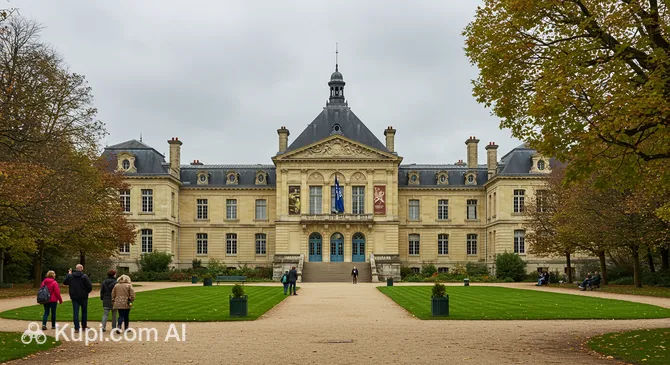
Natural History Museum of Dijon
Natural History Museum of Dijon. Иллюстрация. Источник: Kupi.com AI

The museum covers an area of over 1,000 m² and offers guests a modern exhibition, fully renovated in 2013. It surprisingly combines classic taxidermy and rare fossils with multimedia installations and interactive models. The site's status as a municipal museum and its participation in the national network of natural collections, RECOLNAT, add to its significance.

Every year, this place attracts more than 100,000 visitors, and it's no wonder: free admission makes knowledge about nature accessible to everyone. The museum is ideal for family leisure, offering a fascinating journey from the study of Burgundy's minerals to the mysteries of Egyptian mummies and the planet's exotic ecosystems.

Contacts

To check current information about special exhibitions or educational programs, you can use the official communication channels. The museum is managed by municipal authorities and is always open to dialogue with visitors.

How to contactContact
AddressMuséum d'histoire naturelle, 1 Av. Albert 1er, 21000 Dijon, France
Phone+33 3 80 48 82 00
Websitewww.dijon-metropole.fr

What to Do

Your journey begins on the first floor, dedicated to geology and paleontology. Here you can see first-hand how the region's landscape was formed: from ancient Jurassic rocks to Quaternary deposits. Visitors are particularly delighted by the giant ammonites and impressive Ice Age finds — a mastodon tusk and femur, as well as the massive antlers of an Irish elk.

Moving up to the second floor, you will find yourself in the animal kingdom. The exhibition is divided into two parts: one introduces the nature of the local Côte-d'Or department, while the other transports you to global ecosystems — from the African savanna to tropical forests. Children love looking at the realistic models of birds and beasts, while history buffs will appreciate the preserved 19th-century section featuring unique shells from polar expeditions and Egyptian artifacts.

The third floor is a true paradise for entomology lovers. It presents rich collections of butterflies, beetles, and spiders, complemented by clear explanations of metamorphosis processes. After exploring the halls, be sure to stop by the planetarium or take a walk through the botanical garden, which features unique grape varieties and medicinal plants.

Getting There

The museum is located at 1 Av. Albert 1er, making it extremely accessible for travelers. Thanks to its central location in the picturesque Arquebuse Park, reaching it is easy from any part of the city.

If you are arriving by train, you're in luck: Dijon Railway Station is in the immediate vicinity. A walk from the station to the museum entrance takes only 10–15 minutes at a leisurely pace. You can also use the city's tram or bus network, with stops located at the edge of the park.

For those who prefer a taxi or a private car, parking areas are available near the park. Given the museum's focus on ecology and biodiversity, many guests choose to arrive by bicycle — the city has an excellent network of cycle paths leading directly to the science complex.

Ближайший город: Dijon

History & Facts

The history of this scientific institution began in 1836, thanks to the initiative of the naturalist Léonard Nodot. A local native, he donated his personal collections to the city, which were later supplemented by the collection of Monsieur de Chamblanc. For a long time, until 1969, the museum's development was managed by passionate volunteers and professors from the local faculty of sciences.

The building itself has a unique history. The Pavillon de l'Arquebuse is a former barracks for arquebusiers, built around 1608. Today, this historic building with its elegant arcades harmoniously combines with modern museum technology, creating a special atmosphere of continuity of knowledge.

In the late 20th and early 21st centuries, the museum underwent several important transformations. In 1992, a large-scale renovation took place with the participation of the famous scientist Théodore Monod, and in 2001, the museum merged with the botanical garden to form a single "Science Garden" (Jardin des sciences). The latest update in 2013 finally turned it into a modern center focused on sustainable development and the conservation of the planet's biodiversity.

Time Needed

To explore all three floors of the main exhibition without rushing and to delve into the details of the interactive stands, the average visitor will need between 1.5 and 2.5 hours. This is enough time to study the fossil collections, admire the rare butterflies, and learn about the region's ecosystems.

If you plan to round out your visit with a walk through the magnificent botanical garden, a visit to the Hubert Curien Planetarium, or the temporary exhibitions in the Raines Pavilion, we recommend setting aside 3–4 hours. The museum complex is perfect for a leisurely family outing where learning turns into an exciting adventure.

Working Hours

The museum follows a convenient schedule, though it's worth noting the midday break. On Mondays and from Wednesday to Friday, the doors are open from 9:00 AM to 12:30 PM and from 2:00 PM to 6:00 PM. On Saturday and Sunday, the exhibition is open only in the afternoon — from 2:00 PM to 6:00 PM.

Please note that Tuesday is the closing day. Admission to the museum is free, allowing you to plan your visit spontaneously without worrying about buying tickets in advance.

DayWorking hours
Понедельник9:00 – 12:30, 2:00 – 18:00
ВторникЗакрыто
Среда9:00 – 12:30, 2:00 – 18:00
Четверг9:00 – 12:30, 2:00 – 18:00
Пятница9:00 – 12:30, 2:00 – 18:00
Суббота2:00 – 18:00
Воскресенье2:00 – 18:00

Nearby

The museum's location in the heart of the city makes it easy to combine natural science exploration with a stroll through historical sites. Leaving the quiet alleys of Arquebuse Park, you will almost immediately find yourself among the magnificent architecture for which the capital of Burgundy is so famous.

Exploring the surrounding area will help you feel the region's atmosphere more deeply: from ancient gates and old mansions to monumental palaces where the fate of Europe was once decided. Below are the most interesting sites within walking distance.

NameDistance
Arquebuse Botanical Garden0.1 km
Le Jura Bar0.2 km
Dijon Cathedral0.4 km
Place Darcy0.4 km
Darcy Garden0.4 km
Porte Guillaume0.5 km
L'Alsacien Dijon0.6 km

Reached the end of the page?

That means the route is fully explored