Support

Memorium Nuremberg Trials

About

The Memorium Nuremberg Trials (German: Memorium Nürnberger Prozesse) is a significant museum and historical site located in the Palace of Justice in Nuremberg, Germany. This memorial complex is dedicated to one of the most pivotal moments in world history—the Nuremberg trials, which took place in this building from 1945 to 1949. Visiting the memorium provides a deep understanding of the events preceding the trials, their course, and their global influence on the development of international law.
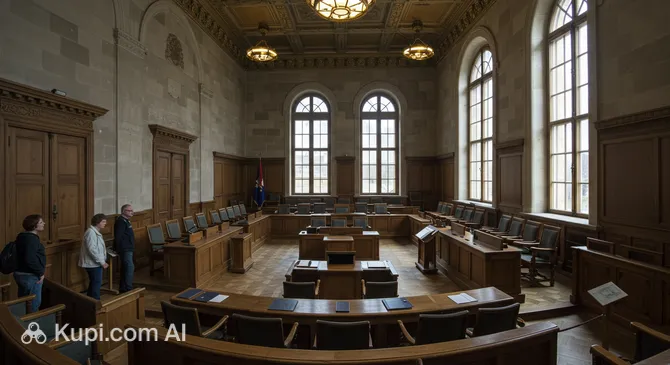
Memorium Nuremberg Trials. Illustration.
Source: Kupi.com AI

Traveler photos:

The heart of the memorium is the legendary "Courtroom 600", located in the east wing of the Palace of Justice. It was in this jury courtroom that justice was administered to high-ranking officials of the Nazi regime after World War II. Today, the courtroom retains its historical atmosphere and is open to visitors, allowing them to literally touch history. The memorium offers a detailed exhibition that tells not only about the trial sessions themselves but also about the context of that era and the consequences of these events.

The museum's exhibition carefully documents the preparation, conduct, and outcomes of the Nuremberg trials. Visitors can view original documents, photographs, and audio and video materials that shed light on the complex legal and moral aspects of the trials. The Memorium Nuremberg Trials plays an important role in preserving historical memory and serves as a reminder of the importance of justice and accountability for crimes against humanity. This is a place that prompts reflection and offers valuable lessons for future generations.

Contacts

For up-to-date information on opening hours, ticket prices, and available tours at the Memorium Nuremberg Trials, it is recommended to visit the attraction's official website. Detailed information can also be found at tourist information centers in Nuremberg.

How to contactContact
AddressBärenschanzstraße 72, 90429 Nürnberg, Germany
Phone number+49 911 23128614
Websitemuseen.nuernberg.de

What to Do

The central highlight for visitors to the Memorium Nuremberg Trials is undoubtedly the famous "Courtroom 600". Here, you can see firsthand the historical site where the trial sessions were held. The room's original setting has been carefully preserved: you can see the judges' bench, which was situated beneath the flags of the Allied powers, the defendants' docks, and the areas designated for defense lawyers and prosecutors. Particular attention is drawn to the simultaneous interpretation booths, from which the proceedings were broadcast simultaneously in four languages—English, Russian, French, and German—highlighting the international nature of the tribunal.

In addition to viewing the courtroom, your journey through history continues in the museum exhibition located in the attic of the Palace of Justice. This exhibition provides a detailed account of the history of the Nuremberg trials, their prerequisites, and their aftermath. The exhibition was created based on a project presented in 2005, and conversion work for the museum began in December 2008. From the grounds of the Palace of Justice, you can also see the surviving prison block building where the defendants were held during the trial, adding another important layer to the understanding of those events.

Getting There

The Memorium Nuremberg Trials is located in the Palace of Justice (Justizpalast) in the city of Nuremberg. The main facade of this impressive complex, where the visitor entrance to the memorial is located, faces Fürtherstraße. This street name will be your primary landmark when searching for the attraction.

There are several ways to reach the Palace of Justice. Nuremberg has a well-developed public transport network. You can take the metro (U-Bahn), tram, or bus to the stop nearest to the Palace of Justice. We recommend checking the current route numbers and schedules on the official website of the Nuremberg transport company or using online maps. A taxi ride from the city center or the main railway station is also a convenient option; simply ask the driver for the Palace of Justice on Fürtherstraße.

Given the significance of the Palace of Justice, it is a well-known landmark in Nuremberg, so finding it or asking locals for directions should be easy. It is important to remember that the Memorium Nuremberg Trials is located within an active judicial facility, where the appellate, regional, and local courts, as well as the public prosecutor's office, continue to operate. This imposes certain rules of conduct for visitors, which are worth keeping in mind when planning your visit.

Nearest city: Nuremberg

History & Facts

The Palace of Justice itself, which today houses the Memorium Nuremberg Trials, has a rich history predating the events of the mid-20th century. Its construction took place from 1909 to 1916 based on a design by architects Hugo von Höfl and Günther Blumentritt. The building was erected in the Franconian Neo-Renaissance style, and its construction cost an impressive sum for that time—7,137,923 marks. The architectural ensemble originally consisted of a main building with three courtyards and atriums, as well as western and eastern wings connected by bridges on the first floor.

It was the eastern wing of this majestic Palace of Justice that was chosen in 1945 for the Nuremberg trials—the first and most crucial in a series of legal proceedings against Nazi Germany's war criminals, which took place here until 1949. In those years, the building complex included not only the palace itself but also the adjacent prison where the defendants were held. On the grounds, there was also a gymnasium building which, unfortunately, became the site for the execution of death sentences handed down by the tribunal.

The idea of memorializing these historical events in the form of a museum emerged significantly later than the trials themselves. The Memorium Nuremberg Trials as such was not created immediately. The project for the future exhibition was first presented to the public in 2005. Practical steps to create the museum began in December 2008, when work started on converting the attic spaces of the Palace of Justice to house a permanent exhibition dedicated to the trials and their enduring significance for the international legal order.

Time Needed

When planning a visit to the Memorium Nuremberg Trials in the city of Nuremberg, you should expect that a thorough exploration will take an average of 2 to 3 hours. This time will allow you to explore the main exhibition located on the top floor of the Palace of Justice at a relaxed pace and, of course, visit the famous "Courtroom 600" where the historical trial sessions took place. This is a place that requires thoughtful immersion.

The duration of your stay may vary depending on the depth of your interest. If you plan only a brief look at the main exhibits and the courtroom itself, 1.5 to 2 hours might be enough. However, for a more detailed study of all the documents, photographs, and audio and video materials that detail the course of the trials and their historical context, it is better to set aside at least 3 hours, or even half a day. Many visitors find the information so captivating that they spend more time here than originally planned.

Please note that the visit duration may also depend on the availability of an audio guide (if offered and you choose to use it) or temporary thematic exhibitions that may complement the main display. In any case, the Memorium Nuremberg Trials is not a place to be seen in a rush if you want to fully grasp its historical significance and the lessons it carries.

Working Hours

The opening hours of the Memorium Nuremberg Trials can vary, especially regarding access to the historical "Courtroom 600", which is still used for court proceedings today. Because of this, it is strongly recommended to check the current schedule and any possible restrictions on the memorium's official website before planning your visit. This will help you avoid unforeseen changes and ensure that you can see all the exhibits you are interested in.

Generally, the Memorium Nuremberg Trials is open to visitors year-round; however, changes in the schedule may occur on public holidays or during special events. While advance ticket booking is usually not mandatory for individual visitors, it is best to inquire about the necessity in advance during periods of high tourist activity or for group visits. Current information on this matter should also be sought on the attraction's official web resource.

DayOpening hours
Monday9:00 – 18:00
TuesdayClosed
Wednesday9:00 – 18:00
Thursday9:00 – 18:00
Friday9:00 – 18:00
Saturday10:00 – 18:00
Sunday10:00 – 18:00

Nearby

A visit to the Memorium Nuremberg Trials certainly leaves a deep impression and invites reflection on many important issues. However, to make your journey to Nuremberg even more fulfilling and multifaceted, it is worth taking the time to explore other nearby attractions. Discovering the surroundings will allow you to better experience the atmosphere of this historic city and uncover new and interesting facets of its culture and daily life.

The city of Nuremberg is rich in diverse landmarks, and many of them are relatively close to the Palace of Justice, where the Memorium Nuremberg Trials is located. These can be other museums and historical monuments, as well as places for rest and entertainment. Below is a list of some interesting places you can visit to complement your impressions of the city.

NameDistance
Nuremberg Children's Museum in the Kachelbau1.3 km
Mata Hari Bar1.7 km
Escape Room Nuremberg1.8 km
The Flower of Hawaii1.8 km
Nuremberg Historic Rock-Cut Cellars1.9 km
Albrecht Dürer House1.9 km
Nuremberg Toy Museum1.9 km

Have you reached the end of the page?

So the route has been studied inside and out