Support

Zeppelinfeld

About

Zeppelinfeld is one of the most famous historical landmarks in Nuremberg, located in the southeast of this city in Germany. Consisting of a vast open area with monumental grandstands, it is a significant witness to 20th-century events and attracts the attention of both tourists and history researchers.
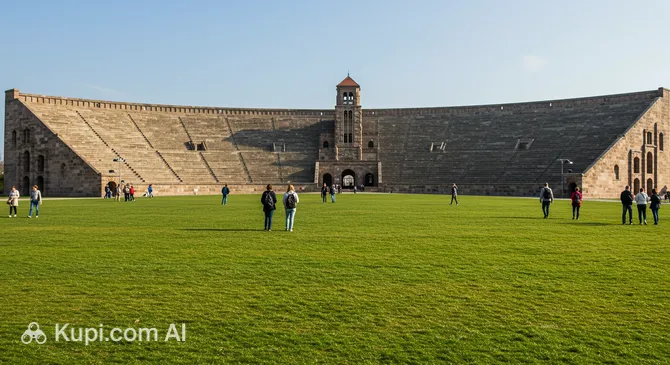
Zeppelinfeld. Illustration.
Source: Kupi.com AI

Traveler photos:

The architectural ensemble of Zeppelinfeld was created in the 1930s according to the designs of Albert Speer. It was originally intended for mass gatherings, parades, and various public and cultural events. The huge field and grandiose grandstands were meant to emphasize the scale and significance of the events taking place here.

Today, Zeppelinfeld stands as an impressive example of the monumental architecture of its time. Despite the passing decades, the site has preserved its historical appearance, including the main grandstand, the vast field, and its surrounding elements. Now a protected historical monument, it is open to the public. A walk through Zeppelinfeld allows you to touch the past and reflect on complex chapters of European history.

Contacts

Zeppelinfeld is a significant open-air historical complex, so it may not have a single visitor contact center. For up-to-date information on access, possible tours, and events, it is best to check the official Nuremberg tourism website or local tourist information points.

The complex is located in the southeastern part of Nuremberg and is easily accessible from the city center by public transport, following the relevant signs.

How to contactContact
AddressZeppelinstraße, 90471 Nürnberg, Germany
Phone number+49 911 2312628

What to Do

When visiting Zeppelinfeld, you can fully experience the scale of this historical complex. Walk along the famous grandstands, climb the surviving steps, and imagine the events that once unfolded here. To gain a deeper understanding of the site's significance and its role in the history of Nuremberg, look for the information boards featuring photographs and historical background located throughout the area.

For history enthusiasts, Zeppelinfeld offers a unique opportunity to connect with the past. You can examine in detail the remaining architectural elements that bear witness to a bygone era. It is worth noting that one of the buildings in the complex previously housed the exhibition "Fascination and Terror" ("Fascination und Gewalt"), dedicated to complex periods of Nuremberg's history. This site consistently attracts researchers and anyone interested in the events of the 20th century.

Beyond its historical significance, Zeppelinfeld remains a point of interest today. Various cultural and sporting events are often held on its vast field and the surrounding areas, including dog shows and large-scale festivals, which bring a modern dynamic to this historical space. Additionally, the site is very popular with photographers and enthusiasts of architecture and urbanism, who find inspiration and unique shots for their work here.

Getting There

Getting to Zeppelinfeld is quite simple, as it is located in the southeastern part of Nuremberg, near the stadium and major exhibition complexes. The most convenient way is by public transport. Trams and buses run regularly from Nuremberg Central Station to Zeppelinfeld, making it easy to plan your trip.

The nearest public transport stops, from which you can quickly walk to Zeppelinfeld, are "Dutzendteich" or "Zeppelinfeld." If you get off at the "Dutzendteich" stop, the walk to the historical complex will take you approximately 10–15 minutes. The surrounding area is well-developed for pedestrians, and the picturesque Dutzendteich lake is nearby, where you can enjoy some time before or after your visit.

For those who prefer more flexibility or are traveling by car, Zeppelinfeld can be reached by taxi from anywhere in the city or by rental car. There are parking spaces available on and near the site, making this option quite convenient as well.

Nearest city: Nuremberg

History & Facts

The name Zeppelinfeld has an interesting history directly linked to a pioneer of aviation. It originated after a landmark event on August 28, 1909, when the Zeppelin III airship, piloted by Count Ferdinand von Zeppelin himself, landed on this vast field. Since then, the site has borne his name, immortalizing the memory of this early aviation achievement.

Decades later, between 1935 and 1937, Zeppelinfeld underwent cardinal changes. Based on the designs of architect Albert Speer, a monumental complex intended for mass events was built here. The scale of the structure is truly impressive: the total area of the complex is equivalent to approximately twelve football fields. This enormous space could simultaneously accommodate up to 320,000 people, of whom 70,000 could be seated in specially built grandstands.

The architectural appearance of the Zeppelinfeld grandstands was designed with meticulous detail to emphasize the grandiosity of the concept. They were adorned with 34 towers, which served not only as decorative elements but also had a functional purpose: flagpoles and powerful searchlights were installed on them, creating impressive light effects during events. Today, Zeppelinfeld holds the status of a protected historical monument, granted in 1973. In the 1980s, restoration work was carried out to preserve this significant architectural heritage and adapt the space for modern needs, including exhibitions and various cultural events.

Time Needed

To explore Zeppelinfeld and get a general sense of this massive historical complex, most visitors will need about 1-2 hours. This time is usually sufficient to walk around the grounds, climb the main grandstand for a view of the entire field, and read the information boards explaining the history and significance of the site.

By planning a couple of hours for your visit to Zeppelinfeld, you will be able to see the main structures and take some impressive photographs. If you are particularly interested in the history and architecture of this period or plan to attend any special exhibitions or events that may be held on the grounds, it might be worth setting aside a little more time. However, even a relatively short visit will allow you to feel the monumentality of the place and reflect on its past.

Working Hours

Since Zeppelinfeld is a vast open-air territory, access to the field itself and the exterior viewing of the grandstands is generally possible at any time of day, year-round. This allows visitors to walk freely through the historical complex and view its main elements.

However, if special exhibitions, events, or guided tours with access to interior spaces (if any are open to the public) are taking place on the Zeppelinfeld grounds, they may have specific operating hours and require ticket purchases. In such cases, it is highly recommended to check the current schedule and visiting conditions in advance on the official Nuremberg tourism website, the Zeppelinfeld website (if available), or at local information centers. Advance booking may be necessary for certain tours or popular events.

DayOpening hours
Monday9:00 – 18:00
Tuesday9:00 – 18:00
Wednesday9:00 – 18:00
Thursday9:00 – 18:00
Friday9:00 – 18:00
Saturday10:00 – 18:00
Sunday10:00 – 18:00

Nearby

A visit to Zeppelinfeld is, without a doubt, an immersion into an important part of Nuremberg's history. However, to make your journey even more enriching and complete, it is worth looking at other interesting places located nearby. Exploring the surroundings will allow you to better understand the context in which this iconic landmark exists and see more facets of this multifaceted city.

Near Zeppelinfeld, there are sites of both historical and cultural value, as well as places for recreation and entertainment. This provides a great opportunity to diversify your program and gain a more complete impression of Nuremberg.

NameDistance
Nuremberg Arena0.5 km
Congress Hall0.9 km
Documentation Center Nazi Party Rally Grounds0.9 km
Nuremberg Zoo2.3 km
Langwasser Center3.5 km
New Museum Nuremberg3.7 km
Kokono Nürnberg3.7 km

Have you reached the end of the page?

So the route has been studied inside and out