Support

Qaarsut

About

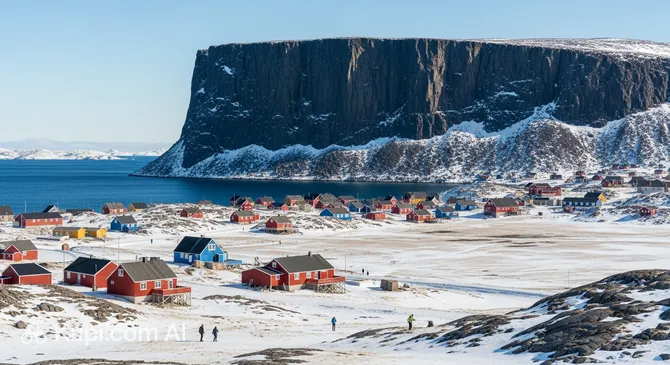
Nestled on the northern shores of the Nuussuaq Peninsula, Qaarsut is a small but significant settlement in northwestern Greenland. Despite its modest size, this village plays a vital role in the region's connectivity and offers travelers a genuine glimpse into life above the Arctic Circle. The settlement is surrounded by dramatic landscapes, where the stark beauty of the tundra meets the icy waters of the Uummannaq Fjord.

Qaarsut. Source: Kupi.Binoculars

With a population of approximately 160 residents, Qaarsut is a quiet and tight-knit community within the Avannaata Municipality. The village is perhaps best known for its airport, which serves as the primary gateway to the nearby town of Uummannaq. While many travelers pass through on their way to other destinations, the village itself boasts a unique atmosphere defined by its isolation and the majestic backdrop of Mount Qilertinnguit, the highest peak on the peninsula, which rises impressively behind the colorful houses.

The settlement has a deep connection to the land and natural resources. Visitors interested in the local heritage can explore the history of Qaarsut, which holds the distinction of being the site of Greenland's first coal mine, operated between the late 18th and early 20th centuries. Today, the village offers a peaceful retreat where one can witness the traditional Greenlandic lifestyle, heavily reliant on hunting and fishing, amidst a breathtaking Arctic environment.

Whether you are transiting through or planning a stopover, Qaarsut provides a rare opportunity to experience the profound silence and raw beauty of the High Arctic. It is an ideal destination for those seeking to step off the beaten path and immerse themselves in the unhurried rhythm of a remote polar settlement.

Weather Overview

Qaarsut experiences a true Arctic climate, defined by long, freezing winters and short, cool summers. The coldest period typically spans from January to March, with February seeing average temperatures plummet to -18.9°C and often reaching lows of -21.5°C. Visitors during this time must be well-equipped for extreme cold.

The summer months bring milder conditions, although temperatures remain low compared to southern latitudes. July is the warmest month, with an average of 5.3°C and maximums around 7.4°C. Interestingly, while the total precipitation volume is minimal throughout the year (often just 1-2mm), the summer season sees a higher frequency of wet days, particularly in June and July.

To help you prepare for these unique conditions, we recommend checking the detailed forecast for weather in Qaarsut before your trip. Generally, you can expect cold, dry winters and cool summers with occasional light precipitation.

Interesting Facts

Beyond its role as a regional transit hub, Qaarsut holds several fascinating secrets that reveal its deep connection to Greenlandic history and nature.

  • Gateway to the Mummies: Located east of the village and across the fjord from the town of Uummannaq, the abandoned settlement of Qilakitsoq is a site of global archaeological significance. It was here in 1972 that eight remarkably preserved mummies from the 15th-century Thule culture were discovered, offering a unique window into the past.

  • The Airport Anomaly: It is quite unusual for a settlement of this size to possess a paved airport. The facility was constructed here solely because the main regional town, Uummannaq, is situated on a rugged, mountainous island with absolutely no flat land suitable for a runway.

  • A Name Etched in Stone: The name Qaarsut translates to "bare rock" or "cliffs," a fitting title given its location at the foot of the massive Mount Qilertinnguit. Rising to 1,977 meters, this peak not only dominates the skyline but also creates a microclimate by sheltering the village from coastal winds, occasionally causing warm "foehn" winds even in winter.

  • Dual-Purpose Community Heart: In a charming example of village efficiency, the local school and church share the same building. This structure serves as the central gathering point for the community's educational and spiritual life.

  • Modern Connection: The Qaarsut Airport was officially inaugurated in 1999, marking a turning point for the region. Before its construction, travel to this part of the Arctic relied heavily on helicopters and ships, making the new runway a critical lifeline for connecting the remote Uummannaq Fjord system with the rest of the world.

How to Get There

Reaching this remote settlement in the Avannaata Municipality is an adventure that offers spectacular views of the Arctic landscape. Due to the rugged terrain and lack of inter-city road networks in Greenland, air travel is the primary mode of transport. For those planning their journey, you can find detailed information and all ways to reach the city on our dedicated page.

The most convenient entry point is the local Qaarsut Airport (IATA: JQA), situated just 3.6 km from the settlement's center. Unlike many smaller Greenlandic villages that rely solely on heliports, Qaarsut boasts a runway capable of handling fixed-wing aircraft, serving as a vital hub for the Uummannaq Fjord region. Upon landing, the short transfer to the village takes approximately 25 minutes by local transport.

Since direct international flights to Qaarsut are not available, most travelers will first fly into a larger regional hub such as Ilulissat Airport (IATA: JAV). Located in the city of Ilulissat, approximately 175 km south of Qaarsut, this is one of the busiest airports in the country. From Ilulissat, you can catch a connecting domestic flight to Qaarsut. Another option for connections is Aasiaat Airport (JEG), situated about 222 km away, which also serves the Disko Bay area.

For clarity, here is a summary of the main airports facilitating travel to the region:

Airport Name City Passenger Traffic Km from City
Ilulissat AirportIlulissatHigh175.1
Aasiaat AirportAasiaatMedium222.8
Qaarsut AirportQaarsutMedium3.6
Upernavik HeliportUpernavikSmall261.8

Main Attractions

While Qaarsut is primarily known as a transit hub, this small settlement offers a handful of unique sights and experiences for travelers willing to explore the immediate surroundings. The village's location at the foot of towering peaks and along the icy fjord provides a stunning backdrop for outdoor activities and cultural discovery.

Undoubtedly the most prominent landmark is Mount Qilertinnguit. Rising majestically to 1,977 meters, it is the highest peak on the Nuussuaq Peninsula and dominates the village skyline. For adventurous visitors, the mountain offers challenging hiking opportunities and the chance to witness breathtaking panoramic views of the Uummannaq Fjord system. Even from the ground, the sheer scale of the "bare rock" cliffs, which give the village its name, is a photographer's dream, especially when the midnight sun casts a golden glow on the rugged slopes.

History enthusiasts will find the area's industrial past intriguing. Qaarsut was the site of Greenland's first coal mine, which operated from the late 18th century until 1924. Although the mine is long closed, the geological features that led to its creation are still visible. Walking along the coastline, visitors can observe the distinct dark strata in the cliffs and the black sand beaches, offering a tangible connection to the settlement's history as a resource outpost.

Finally, the Qaarsut Airport itself is a point of interest for many. As one of the few paved runways in northern Greenland, it is a marvel of engineering in a harsh environment. Watching small aircraft navigate the approach between the mountains and the sea is a fascinating sight. Just beyond the runway, the shores of the fjord provide excellent spots for spotting icebergs drifting from the nearby glaciers, allowing visitors to experience the serene power of the Arctic nature without leaving the village limits.

Local Cuisine

The culinary landscape of Qaarsut is deeply rooted in the traditions of the Arctic, where the menu is dictated by the seasons and the catch of the day. In a settlement of this size, you will not find fine dining establishments or international food chains. Instead, the local cuisine offers an authentic taste of the hunter-gatherer lifestyle, focusing on fresh, organic ingredients harvested directly from the surrounding fjord and tundra.

The most iconic dish to try is suaasat, a traditional Greenlandic soup that serves as a staple comfort food. It is typically made from seal meat, though reindeer, seabirds, or whale can also be used, boiled with onions and potatoes, and often thickened with rice or barley. Another delicacy for the adventurous palate is mattak, raw whale skin with a thin layer of blubber, revered for its high vitamin C content and unique, nutty flavor. Given the village's location by the Uummannaq Fjord, fish plays a central role, with Greenland halibut, cod, and trout featuring heavily in local diets, often prepared simply to highlight their freshness.

When it comes to beverages, coffee is the undisputed king of social life. The tradition of kaffemik—a social gathering with coffee and cakes—is central to community bonding, though as a visitor, you are most likely to encounter strong, hot coffee at the airport or guesthouses. For something purely local, nothing beats the taste of the tap water, which is essentially melted glacial ice—incredibly pure and refreshing. While alcohol is available, the most "local" experience is often a warm cup of tea or coffee shared while looking out over the frozen landscape.

Regarding the food scene, tourists should manage their expectations. There are no standard restaurants in the village. The primary spot for a hot meal or a quick snack is often the cafeteria at Qaarsut Airport, which serves both travelers and locals. Here, you might find simple dishes like hot dogs, burgers, or daily specials alongside Danish pastries. For self-catering travelers, the local Pilersuisoq supermarket provides essential groceries, including dried fish and preserved meats, allowing you to assemble a rustic picnic to enjoy amidst the stunning scenery.

Travel Tips

Visiting a remote settlement like Qaarsut requires a bit more preparation than your average holiday, but the reward is an authentic experience of the High Arctic. To help you navigate the logistics of this small community and make the most of your stay, we have compiled a list of essential practical tips.

  1. Clothing and Gear: The Arctic weather is unpredictable, so the "layering principle" is your best friend. Even in summer, bring thermal underwear, a warm fleece, and a windproof and waterproof outer shell. Sturdy, waterproof hiking boots are essential for the uneven, rocky terrain. If you are visiting between June and August, a mosquito net for your face and strong insect repellent are absolute must-haves, as the insects can be intense on calm days.
  2. Transportation: In a village with a population of around 160, there is no public transport, metro, or ride-hailing service. The entire settlement can be easily explored on foot. For travel outside the village, you will rely on helicopters or boats to reach nearby Uummannaq. If you have heavy luggage upon arrival at the airport, transport to the village center (about 3.6 km away) is typically arranged via the local accommodation provider or the airport shuttle.
  3. Finances: The local currency is the Danish Krone (DKK). While the local Pilersuisoq supermarket and the airport cafeteria accept major credit cards (Visa, Mastercard), it is highly recommended to carry cash. There are no banks or ATMs in the village itself, and technical glitches with card terminals can happen. Withdraw sufficient cash in Ilulissat or Aasiaat before flying north.
  4. Health and Safety: Qaarsut is extremely safe regarding crime, but the natural environment demands respect. There is a small local nursing station for basic medical needs, but serious emergencies require evacuation to Uummannaq or Nuuk. Always bring a personal supply of prescription medications. Be cautious when walking near the shoreline or on ice, and never hike alone in the mountains without informing someone of your plans.
  5. Communication: The primary language is Greenlandic (Kalaallisut), with Danish being the second language. English is spoken by staff at the airport and some younger residents, but do not expect it to be widely understood by everyone in the village. A smile and hand gestures go a long way. Mobile coverage (Tele-Post) is available, but check your roaming rates. Wi-Fi is generally only available at the airport or possibly your guesthouse.
  6. Local Etiquette: Greenlanders are friendly but value privacy. Always ask for permission before taking photos of locals, especially children. If you are invited into a private home for a traditional kaffemik (coffee gathering), remember to take off your shoes at the door. It is polite to greet people you pass on the road with a nod or a smile.
  7. What to Avoid: Never approach or try to pet sled dogs. They are working animals, not pets, and can be dangerous. They are usually chained outside houses; keep a safe distance. Additionally, avoid walking on sea ice unless you are with a local guide who knows the conditions, as currents can make the ice unstable even in winter.
  8. Shopping Essentials: The village relies on the Pilersuisoq store for almost everything, from groceries to hardware. Be aware of its opening hours, which can be limited, especially on weekends. Alcohol sales are often restricted to specific hours or days, so if you plan to enjoy a drink, check the local regulations upon arrival.

By keeping these tips in mind, you will be well-equipped to enjoy the tranquility and raw beauty of Qaarsut without any logistical hiccups. Embrace the slow pace of life, respect the local customs, and you are sure to have an unforgettable Arctic adventure.

Entertainment & Nightlife

When it comes to nightlife in Qaarsut, it is essential to adjust your expectations before you arrive. In a settlement of approximately 160 people, you will not find bustling nightclub districts, neon-lit bars, or late-night concert venues. Instead, the "nightlife" here is defined by the profound silence of the Arctic, the company of fellow travelers, and the spectacular natural light shows in the sky. The atmosphere is intimate and relaxed, far removed from the noise of a city, offering a rare chance to disconnect and unwind in total tranquility.

The social hub of the village is undoubtedly centered around the Qaarsut Airport complex. Since the airport serves as the regional gateway, its facilities often double as the primary meeting point for both locals and visitors. The Qaarsut Airport Cafeteria is the closest thing to a restaurant or bar you will find. While it generally operates according to flight schedules and does not stay open late into the night like a traditional pub, it is the best place to enjoy a warm drink, a simple meal, and conversation with people passing through the Uummannaq Fjord region.

For those staying overnight, the Hotel Qaarsut (often integrated with the airport facilities) provides a warm and comfortable environment. Evenings here are typically spent in the common areas, sharing stories with other guests or reading a book while looking out at the darkened fjord. There is no dress code; practical, warm clothing is the standard attire for everyone. If you wish to enjoy a beer or a glass of wine in the evening, the "DIY" approach is best. You can purchase alcohol at the local Pilersuisoq supermarket during opening hours, but be aware that alcohol sales in Greenland are often restricted to specific times, so it is wise to stock up in the afternoon.

The true star of the night entertainment in Qaarsut is nature itself. In the winter months, the lack of light pollution makes the village a prime location for viewing the Northern Lights (Aurora Borealis). Simply stepping outside your accommodation can provide a front-row seat to dancing green and purple lights over Mount Qilertinnguit. Conversely, during the summer, the Midnight Sun means the "night" never truly begins, allowing for surreal late-night walks along the shore under a golden sky. Safety is paramount during these nocturnal excursions; always stay within the village limits to avoid getting lost, and be mindful of loose sled dogs. There are no taxis, but the entire village is walkable within minutes.

During the daytime, entertainment is equally low-key and nature-focused. There are no amusement parks or theaters here. Instead, visitors spend their time hiking the foothills of the mountains, watching icebergs drift by in the fjord, or simply observing the daily rhythm of a traditional hunting community. For a cultural touch, a walk around the settlement reveals the local architecture and the historic atmosphere of the old coal mining area, offering a quiet but enriching experience before the sun—or the stars—come out again.

Parks & Museums

In a settlement as intimate and remote as Qaarsut, you will not find manicured city parks with benches or sprawling museum complexes with audio guides. Instead, the "parks" here are the boundless Arctic wilderness that begins right at your doorstep, and the "museums" are the historical remnants etched into the landscape itself. The village offers a raw, unfiltered connection to nature and history, where the environment serves as both a playground and a gallery of cultural heritage.

Mount Qilertinnguit serves as the area's ultimate natural park. Rising majestically behind the village, this 1,977-meter peak is not just a scenic backdrop but a destination for hikers and nature enthusiasts. The slopes offer varying levels of difficulty, from gentle walks at the base to challenging ascents for experienced climbers. In the summer, the mountainside is dotted with Arctic flora, transforming the stark rock into a subtle garden of resilient wildflowers, while the summit offers unparalleled views of the Uummannaq Fjord system.

The Qaarsut Coastline and Black Sand Beaches provide a unique natural space for relaxation and exploration. Unlike the white sandy beaches of the south, the shores here are dark, a testament to the region's volcanic and geological history. Walking along the water's edge, visitors can admire the contrast between the black sand and the sparkling white icebergs drifting in the fjord. It is a serene spot for photography, meditation, or simply watching the play of light on the water, acting as the village's primary promenade.

While there is no formal building labeled "Museum," the Old Coal Mine Site functions as an open-air historical exhibit. Qaarsut was home to Greenland's first coal mine, which operated from the late 1700s until 1924. Visitors can explore the area to find traces of this industrial past, including the old mine entrance and geological strata that reveal the resource-rich nature of the land. It offers a fascinating glimpse into the early attempts at industrialization in the Arctic, allowing you to walk through history rather than just view it behind glass.

The Village Church and School represents the cultural heart of the community. Housed in a shared building, this dual-purpose structure reflects the practical and communal lifestyle of the settlement. While not a museum in the traditional sense, it is a significant cultural landmark where the spiritual and educational lives of the residents intersect. The architecture is simple yet iconic, painted in bright colors typical of Greenland, standing as a monument to the resilience and tight-knit nature of the local population.

For a truly authentic experience, take a moment to observe the Traditional Drying Racks scattered around the village. These wooden structures, used for drying fish and meat, are living exhibits of the Inuit hunting culture that sustains the community. Seeing the catch of the day being prepared and preserved offers a direct insight into the subsistence lifestyle that has defined this region for centuries, far more vivid than any static display.

Getting Around

Due to the small size and remote nature of Qaarsut, the public transport system is vastly different from what you might expect in a typical city. There are no metros, trams, trolleybuses, or scheduled city bus networks operating here. The settlement, with its population of approximately 160 residents, is compact enough that the primary mode of transportation within the village limits is simply walking. The infrastructure is minimal, consisting of gravel roads that connect the houses, the school, and the store.

The only form of motorized "public" transport you are likely to encounter is the shuttle service connecting the settlement to Qaarsut Airport. Since the airport is located about 3.6 kilometers from the village center, a transfer vehicle—typically a minibus or a large van—operates in coordination with flight arrivals and departures. This service is essential for travelers with luggage, as the walk can be long and exposed to the elements. This shuttle is not a scheduled city bus but runs specifically to serve airport passengers.

Regarding payment systems, there are no travel cards, monthly passes, or mobile transport apps in Qaarsut. For the airport transfer, payment is usually arranged directly with the driver or included in your accommodation package if you are staying at the local hotel or guesthouse. If you need to pay on the spot, cash in Danish Krone (DKK) is the standard method. Credit cards might be accepted depending on the specific provider, but carrying cash is always the safest option in such remote areas to avoid issues with connectivity.

For tourists, the best practical advice for navigating Qaarsut is to bring appropriate footwear. Since walking is the main way to get around, sturdy, waterproof hiking boots are indispensable, regardless of the season. In winter, the roads can be icy and snow-covered, while in summer, they can be dusty or muddy. There are no tickets to validate or operating hours to check for moving around the village itself; you simply step outside and walk. However, always be mindful of the weather conditions, as blizzards can reduce visibility quickly.

Alternatives such as taxis, ride-sharing apps like Uber, or commercial bike rental stations do not exist in Qaarsut. You will not find car rental agencies in the village either. Local residents move around using All-Terrain Vehicles (ATVs) in the summer and snowmobiles or dog sleds in the winter. While you cannot rent these through a public system, you might be able to arrange a private tour or transfer through a local guide or your accommodation host if you wish to experience these traditional modes of Arctic travel.

Accommodation

Where to Stay:

Accommodation in Qaarsut is quite limited, reflecting its status as a small settlement and a transit hub rather than a mainstream tourist destination. The range of options is narrow, typically consisting of a single hotel facility and potentially a small guesthouse or private rental. Visitors should not expect luxury resorts or a wide selection of budget hostels; instead, the available lodging is functional, comfortable, and designed primarily to accommodate travelers passing through the airport or those seeking a quiet base for Arctic exploration.

The choice of location essentially comes down to two areas: the airport vicinity and the village settlement. Staying near the airport is the most convenient option for transit passengers, especially those with early flights or short layovers. It minimizes travel time and keeps you close to the region's main transport link. Alternatively, staying within the village itself (approximately 3.6 km from the airport) offers a more authentic experience of local life, placing you closer to the harbor, the grocery store, and the hiking trails at the foot of the mountains.

The most well-known establishment is Hotel Qaarsut, which is often integrated with or situated very close to the airport terminal. This facility serves as the primary accommodation provider in the area. It offers standard rooms with basic amenities, a dining area, and sometimes shared facilities. It is the go-to choice for travelers whose flights have been delayed or those using Qaarsut as a jumping-off point for the Uummannaq Fjord. In the village, options are more sporadic and may consist of small guesthouses run by locals, offering a "bed and breakfast" style experience that requires direct inquiry.

Booking Tip: Due to the extremely low number of beds available, it is absolutely critical to book your accommodation well in advance. During the summer high season or in the event of flight cancellations due to weather, the few available rooms can fill up instantly. Do not arrive without a reservation.

Regarding costs, the price range is generally mid-range to high, which is typical for remote accommodation in Greenland where logistics are challenging. Budget options are virtually non-existent. Booking methods can be old-fashioned; while the hotel may appear on some online platforms, it is often more reliable to contact them directly via phone or email, or to arrange your stay through a travel agency specializing in Greenlandic tours.

Nearby Cities

For those looking to explore the surroundings, Qaarsut serves as an excellent base for day trips to several interesting nearby locations:

The most accessible and popular destination is undoubtedly Uummannaq. Located just 18 km away across the fjord, this town is famous for the iconic heart-shaped mountain that towers 1,170 meters above the colorful houses. A short helicopter ride or boat trip (in summer) brings you to this vibrant community, where you can visit the Uummannaq Museum, see the historic turf huts, and experience the bustling harbor life. It is the perfect spot to witness the blend of traditional hunting culture and modern Arctic living.

Although further away, Ilulissat is the primary hub of the region and a worthy excursion for those willing to take a short connecting flight. Known for the spectacular Ilulissat Icefjord, a UNESCO World Heritage site, it offers breathtaking views of massive icebergs calving from the Sermeq Kujalleq glacier. While it requires air travel, the opportunity to sail among the ice giants makes it a highlight of any trip to Western Greenland.

City Population Distance (km)
Sisimiut5582424
Ilulissat4737177
Aasiaat3069225
Uummannaq140718
Upernavik1092262

These nearby destinations offer a glimpse into the diverse culture and landscapes of the region.

Shopping & Souvenirs

Shopping in Qaarsut is an experience in Arctic minimalism and practicality. Given the settlement's small size, with a population of roughly 160 people, there is no commercial shopping scene in the traditional sense. You will not find high streets, fashion boutiques, or souvenir shops here. Instead, the retail environment is designed entirely to sustain the local community, offering a fascinating glimpse into how remote villages in Greenland maintain their supply lines. For tourists, "shopping" here is less about leisure and more about acquiring essentials or discovering unique, locally made handicrafts directly from the residents.

There are no designated shopping districts or promenades in Qaarsut. The commercial activity is concentrated in the heart of the village, where the primary general store is located. This area serves as the meeting point for residents and is the only place where you can purchase goods. Travelers staying near the airport might find a very limited selection of items at the terminal kiosk, but for anything substantial, a walk into the settlement center is necessary.

The concept of a shopping mall does not exist in Qaarsut. However, the local branch of the Pilersuisoq chain fulfills a similar, albeit much smaller, role. This state-run supermarket is the village's lifeline, stocking everything from groceries, fresh produce, and baked goods to hardware, rifles, clothing, and household supplies. For a visitor, wandering through the aisles of Pilersuisoq is an interesting cultural experience, showing the diversity of goods required to keep a remote settlement running year-round.

While there are no flea markets or covered bazaars, you may encounter the local "Brættet" (open-air market). In Greenlandic towns and settlements, this is where hunters and fishermen sell their fresh catch of the day. Depending on the season and the luck of the hunt, you might see fresh halibut, seal meat, or seabirds being sold. It is a raw and authentic part of the local economy, though it is strictly for food and not for general browsing.

When it comes to souvenirs, you will not find a dedicated gift shop. The best souvenirs in Qaarsut are authentic Greenlandic handicrafts made by local artisans. These might include tupilaks (traditional carved figures), intricate beadwork, or items made from seal skin and reindeer antler. Since these are not sold in a formal store, the best way to find them is to ask at your accommodation or at the airport if anyone in the village has items for sale. Occasionally, the airport terminal may display a small selection of local crafts for transit passengers.

Store opening hours in Qaarsut are limited compared to larger towns. The Pilersuisoq store typically opens around 09:00 or 10:00 and closes by late afternoon, often around 17:00 on weekdays, with reduced hours on Saturdays and usually closed on Sundays. It is crucial to plan your purchases of food or supplies accordingly.

Regarding payment, the Danish Krone (DKK) is the official currency. The Pilersuisoq supermarket generally accepts major credit cards (Visa, Mastercard), but technical issues with connection can occur due to the remote location. Therefore, it is highly recommended to carry sufficient cash for small purchases or if you are buying handicrafts directly from a local artist, as they will likely not have card terminals.

Tax-free shopping and VAT refunds are not available in Qaarsut. The settlement does not have the infrastructure to process such requests, and the goods sold are primarily non-luxury daily necessities. Travelers should not expect to find Global Blue or similar refund services in this part of the Arctic.
Reached the end of the page?

That means the route is fully explored