Support

Qeqertaq

About

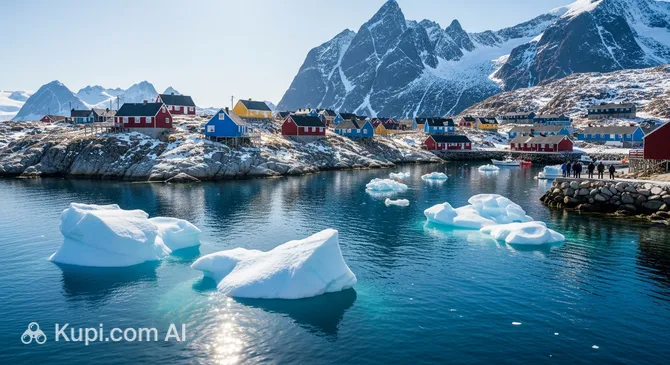
Welcome to Qeqertaq, a picturesque settlement whose name translates simply to "The Island." Located in the spectacular Disko Bay region of Greenland, this small village sits on an island just off the southern coast of the Nuussuaq Peninsula. It offers travelers a serene escape and a genuine glimpse into the quiet rhythm of Arctic life, far removed from the bustle of larger towns.

Qeqertaq. Source: Kupi.Binoculars

Home to a close-knit community, the village is deeply rooted in traditional livelihoods. The local economy is primarily driven by fishing, particularly for Greenland halibut, which thrives in the surrounding icy waters. Those interested in the history of Qeqertaq will discover a settlement that has maintained its cultural heritage and resilience through generations of hunters and fishermen, adapting to the harsh yet beautiful Arctic environment.

Visitors are drawn here for the breathtaking natural scenery that surrounds the island. The views of massive icebergs drifting from the nearby glaciers are truly mesmerizing, especially when illuminated by the midnight sun in summer or the northern lights in winter. Hiking around the island provides panoramic vistas of the bay, while boat tours offer excellent opportunities to spot whales and seals in their natural habitat.

If you are looking for an authentic off-the-beaten-path experience, Qeqertaq is a perfect destination. Its peaceful atmosphere and stunning Arctic landscapes promise an unforgettable adventure for nature lovers and explorers seeking the true essence of the North.

Weather Overview

The climate in Qeqertaq is distinctly Arctic, defined by long, freezing winters and short, cool summers. Travelers should be prepared for sub-zero temperatures for much of the year, with the landscape often covered in snow and ice. To help plan your trip around specific conditions, you can consult the detailed guide to the weather in Qeqertaq.

During the coldest months, particularly February, average temperatures drop significantly, often reaching lows of around -20.2°C. Summer brings a brief thaw, with July being the warmest month, seeing average highs of approximately 11.2°C. Expect cool summers with light precipitation and extremely cold winters where thermal layers are a necessity.

While the volume of precipitation is quite low, typically ranging between 1mm and 2mm per month, the frequency of precipitation remains relatively consistent, with about 6 to 11 wet days each month. This means that while heavy downpours are rare, light snow or drizzle is a common feature of the local weather pattern.

Interesting Facts

Beyond its reputation as a quiet fishing village, Qeqertaq holds fascinating secrets that reveal the resilience of life in the Arctic. From its simple name to its strategic location near one of Greenland's most productive ice fjords, this settlement offers more than meets the eye.

  • A Name That Says It All: The name "Qeqertaq" literally translates to "The Island" in Greenlandic. During the colonial era, it was officially known by the Danish equivalent, Øen. Despite this simple moniker, archaeological findings of stone tools on the site suggest that the island was inhabited by indigenous hunters long before the settlement was formally founded as a trading post in 1830.

  • Gateway to the Ice: Qeqertaq is situated just south of the Nuussuaq Peninsula, overlooking the mouth of the Torsukattak Icefjord. This location makes it an unsung vantage point for witnessing massive icebergs calving and drifting into Disko Bay, offering views that rival those of more famous tourist hubs but without the crowds.

  • The Halibut Heartland: While many towns in the region fish, Qeqertaq is particularly renowned for its dependence on Greenland halibut. The deep, icy waters surrounding the island are rich breeding grounds for this flatfish, and during winter, local fishermen traditionally use dog sleds or snowmobiles to reach fishing holes cut directly into the sea ice.

  • A Helicopter Lifeline: Due to its island location and lack of runways, Qeqertaq relies heavily on its helistop for year-round connection to the outside world. In winter, when sea ice can block boat access, the Air Greenland helicopter service becomes the village's only lifeline for passengers, mail, and urgent supplies.

How to Get There

Reaching this remote island settlement requires some planning, as there are no direct international flights to the village itself. However, the journey through the Arctic landscape is part of the adventure. You can find more about how to get to Qeqertaq and the specific transfer options in our detailed guide.

The city of Qeqertaq does not have its own airport suitable for fixed-wing aircraft, but you can fly into Ilulissat Airport (JAV) in the city of Ilulissat, which is about 85 km from Qeqertaq. This is the most significant hub in the Disko Bay region and the most common entry point for international travelers. From Ilulissat, visitors typically connect to Qeqertaq via a scheduled helicopter flight or, when ice conditions permit, by boat.

Another viable option is Qaarsut Airport (JQA), located in Qaarsut approximately 97 km away. It is a smaller regional airport but serves as a key connector for the area. You might also arrive via Aasiaat Airport (JEG), situated in Aasiaat roughly 154 km from the settlement. Since there are no roads connecting these towns, transfers from any of these airports rely on air or sea transport rather than taxis or buses.

For clarity, here is a summary of the main airports:

Airport Name City Passenger Traffic Km from City
Ilulissat Airport Ilulissat High 84.9
Aasiaat Airport Aasiaat Medium 153.9
Qaarsut Airport Qaarsut Low 97.4

Main Attractions

Although Qeqertaq is a small settlement, its location in the heart of the Disko Bay region makes it a hidden gem for travelers seeking raw Arctic beauty. The attractions here are not museums or commercial centers, but rather the majestic natural features that define the landscape of Greenland.

Torsukattak Icefjord is undoubtedly the most significant natural landmark in the vicinity. Located just east of the village, this active fjord spews massive icebergs into the bay. Visitors can witness the awe-inspiring sight of these frozen giants drifting past the island. It is a photographer's paradise, offering the chance to capture the sheer scale of the ice against the deep blue water without the crowds found in larger tourist towns.

For those who enjoy exploring on foot, Hiking on Qeqertaq Island offers a rewarding experience. The terrain provides elevated vantage points that look out toward the imposing Nuussuaq Peninsula. The contrast between the rugged, dark mountains of the peninsula and the glistening white icebergs in the sea creates a breathtaking panorama. Hiking here is about finding solitude and connecting with the vastness of the Arctic wilderness.

The waters surrounding the settlement are part of the greater Disko Bay area, a world-renowned destination for Whale Watching. During the summer months, the nutrient-rich waters attract various species, including humpback, fin, and minke whales. Taking a local boat tour provides an intimate encounter with these magnificent creatures as they feed and breach among the ice, often much closer than one might experience in busier hubs.

Finally, a walk through the village itself reveals the charming Qeqertaq Church. Like many Greenlandic settlements, the church is a focal point of the community, painted in a distinctive red hue that stands out vividly against the snow and rock. It offers a moment of quiet reflection and a glimpse into the spiritual and social life of the resilient inhabitants who call this remote island home.

Local Cuisine

The culinary experience in Qeqertaq is deeply tied to the rhythms of the Arctic nature surrounding it. In a settlement of this size, you will not find Michelin-starred restaurants or bustling street food markets. Instead, the "food scene" is defined by subsistence, freshness, and the catch of the day. For visitors, dining here offers a rare opportunity to taste ingredients that are sourced directly from the icy waters and rugged tundra, often prepared with simple, traditional methods that have sustained the Inuit people for centuries.

Given the village's reputation as a hub for fishing, it comes as no surprise that Greenlandic halibut is a staple on almost every table. The deep fjords around Qeqertaq produce some of the finest halibut in the world. It is enjoyed in various forms: dried (known as nikku), smoked, or simply boiled to highlight its delicate, fatty texture. Another local delicacy worth trying for the adventurous eater is mattak—the skin and blubber of a whale. It is traditionally eaten raw and is prized for its crunch and high vitamin C content, often served with a dash of sea salt or soy sauce.

For a warm and hearty meal, look for suaasat, which is widely considered Greenland's national dish. This thick, nourishing soup is typically made from seal meat, though reindeer or seabirds are sometimes used. The meat is boiled with onions and potatoes, and rice or barley is often added to thicken the broth. It is the ultimate comfort food during the cold Arctic winters and provides the energy needed for life in this harsh climate.

When it comes to beverages, coffee plays a central role in social life. The tradition of kaffemik—a social gathering celebrating birthdays or special events—is where the community comes together over coffee and an abundance of cakes and pastries. If you are looking for something stronger to warm up after a day of watching icebergs, try a Greenlandic Coffee. This popular alcoholic drink combines hot coffee with whiskey, Kahlua, and Grand Marnier, topped with a mountain of whipped cream, often set aflame to represent the Northern Lights.

Travelers should be aware that dining out options in Qeqertaq are extremely limited due to its small population. There are no standard commercial restaurants. Most visitors rely on meals provided by their guesthouse or host. Alternatively, you can purchase supplies at the local Pilersuisoq grocery store, which stocks both imported goods and local game. The best way to experience the true flavor of Qeqertaq is to accept an invitation to a local home or ask your accommodation host if they can prepare a traditional Greenlandic meal for you.

Travel Tips

Visiting a remote settlement like Qeqertaq is a unique privilege that requires a bit more preparation than a standard tourist destination. To help you make the most of your stay in this peaceful Arctic community, we have compiled a list of essential practical tips.

  1. Clothing and Gear: The weather in the Disko Bay region can change rapidly, so the "onion principle" of dressing in layers is non-negotiable. Bring thermal underwear (wool is best), a warm middle layer, and a windproof and waterproof outer shell. Sturdy, insulated hiking boots are essential for the rugged terrain. If you visit during the summer, a mosquito head net is highly recommended, as insects can be intense on calm days.

  2. Transportation: Within the village itself, your own two feet are the only transport you need; the settlement is small enough to walk everywhere. There are no taxis, buses, or car rental agencies here. For travel outside the village to nearby settlements or fishing spots, you will rely on boats in the summer or helicopters and dog sleds in the winter.

  3. Finances: The local currency is the Danish Krone (DKK). While the local Pilersuisoq store usually accepts international credit cards (Visa/Mastercard), connection issues can occur. Crucially, there are no ATMs in Qeqertaq, so you must withdraw sufficient cash in Ilulissat or Aasiaat before you arrive to cover small purchases, souvenirs from locals, or tips.

  4. Health and Safety: The village has a small nursing station for basic medical needs, but there is no hospital or pharmacy. You must bring a full supply of any prescription medications you need, along with a basic first-aid kit. Be aware that medical evacuation to a larger town is weather-dependent. Regarding safety, never walk on sea ice without a local guide, as currents can make it unstable.

  5. Communication: The primary language is Greenlandic (Kalaallisut), and many locals also speak Danish. English proficiency varies, so learning a few basic words like "Aluu" (Hello) and "Qujanaq" (Thank you) goes a long way. Mobile coverage is provided by Tusass; it is wise to buy a SIM card in a larger town upon arrival in Greenland, as Wi-Fi is not standard in all accommodations.

  6. Local Etiquette: The community is small and private. Always ask for permission before taking photographs of locals, their children, or their houses. It is customary to remove your shoes immediately upon entering a private home or certain public buildings. A friendly nod or smile to passersby is the norm and helps build a rapport with the residents.

  7. What to Avoid: Never approach or try to pet sled dogs. In settlements like Qeqertaq, these are working animals, not pets, and they can be dangerous if they feel threatened. Keep a safe distance, especially if they are chained.

  8. Shopping Tip: The local Pilersuisoq store is the lifeline of the village, selling everything from food to rifles. However, opening hours can be limited, especially on weekends. Be sure to check the hours posted on the door upon arrival so you don't find yourself without dinner ingredients.

By keeping these tips in mind, you will be well-equipped to enjoy the tranquility and raw beauty of Qeqertaq. Respecting the local customs and coming prepared for the elements ensures a warm welcome and an unforgettable Arctic experience.

Entertainment & Nightlife

Travelers arriving in Qeqertaq expecting a bustling scene of nightclubs, cocktail bars, or neon-lit districts will quickly find that the definition of "nightlife" here is vastly different. In this remote settlement, the evening entertainment is dictated by nature rather than commercial venues. The atmosphere is profoundly peaceful, characterized by total silence broken only by the cracking of distant icebergs or the howling of sled dogs. Instead of crowded dance floors, the main attraction after dark is the sky itself.

During the winter months, Qeqertaq becomes a prime location for viewing the Northern Lights (Aurora Borealis). With zero light pollution from the surrounding wilderness and very little from the village itself, the conditions are perfect. The "nightlife district" is effectively anywhere you can find a clear view of the sky, often just a few steps from your accommodation. In the summer, the concept of "night" disappears entirely under the Midnight Sun, allowing for surreal experiences like reading a book outside at 2:00 AM or watching the icebergs drift in the bay under a bright, golden sky.

There are no commercial bars, pubs, or restaurants open late in the village. Social life takes place almost exclusively in private homes. If you wish to enjoy a drink in the evening, you must plan ahead. Alcohol and snacks can be purchased at the local Pilersuisoq store, which serves as the village's general supplier. However, be mindful of the opening hours, as the store closes early—typically in the late afternoon—and is not open at night. It is common for visitors to buy their own supplies and enjoy a quiet evening at their guesthouse or host's home.

Safety during the evening in Qeqertaq is generally about environmental awareness rather than avoiding crime. The village is extremely safe for walking, but the lack of streetlights in some areas means you should always carry a flashlight or headlamp in winter to avoid slipping on ice or stumbling on uneven terrain. Additionally, while rare in the settlement itself, polar bears are a reality in the Arctic; it is advisable not to wander far beyond the village limits into the darkness without a local guide or proper safety knowledge.

While the nights are for relaxation and stargazing, daytime entertainment revolves around immersing yourself in the local culture and landscape. Since there are no cinemas or amusement parks, visitors spend their days exploring the coastline, observing the daily activities of the fishermen at the harbor, or simply enjoying the slow pace of life. For a deeper dive into the region's heritage, engaging with locals—perhaps while they repair nets or feed their dogs—provides a form of cultural entertainment that is far more enriching than any ticketed attraction.

Parks & Museums

In a remote settlement like Qeqertaq, the concepts of "parks" and "museums" take on a different meaning. You will not find manicured botanical gardens, ticketed art galleries, or enclosed historical exhibitions here. Instead, the entire island serves as a vast, open-air national park, and the daily life of the community acts as a living museum of Inuit culture. The attractions are elemental and raw, defined by the untouched Arctic wilderness and the enduring traditions of the people who call it home.

The Qeqertaq Hinterland serves as the village's primary "green space," though for much of the year, it is white with snow. In summer, the rocky hills behind the settlement transform into a vibrant tundra carpeted with moss, lichen, and wildflowers. This natural area is free to explore and offers hiking opportunities that rival any designated park in the world. Visitors can walk up the gentle slopes to reach high vantage points that offer sweeping 360-degree views of the Disko Bay and the majestic icebergs grounding near the shore. It is a place of profound silence and fresh air, perfect for solitary reflection.

Another significant natural area is the Coastal Periphery. Unlike the sandy beaches of the south, the "shoreline park" here consists of rugged rocks and ice-choked waters. Locals and visitors alike gravitate towards the water's edge, not to sunbathe, but to witness the ever-changing sculpture gallery of ice. The massive icebergs that drift from the Torsukattak Icefjord are nature's art installations, shifting daily with the currents. Sitting on the rocks here provides a front-row seat to one of Greenland's most spectacular natural shows.

Regarding cultural institutions, there are no formal museums within Qeqertaq itself. However, the Qeqertaq Church stands as the most significant cultural and architectural landmark. Painted in the traditional bright red that contrasts sharply with the snow, this wooden structure is the heart of the community. While it is an active place of worship rather than a museum, its simple interior and history reflect the spiritual resilience of the village. It is often possible to visit during the day; the modesty of the building speaks volumes about the settlement's history and priorities.

The Harbor and Drying Racks function as an open-air exhibition of the local way of life. If you want to understand the history and culture of Qeqertaq, simply walk down to the water. Here, you will see the modern hunters and fishermen preparing their gear, much as their ancestors did. You will likely spot wooden racks draped with drying fish (halibut or cod) and occasionally seal meat. This "living museum" offers a genuine look into the subsistence lifestyle that has sustained the Inuit in this harsh environment for centuries, far more vividly than any display case could.

For those seeking a formal museum experience, the nearest institutions are located in the city of Ilulissat, a helicopter or boat ride away. There, one can find the Ilulissat Museum (Knud Rasmussen's birthplace) and the Icefjord Centre. However, in Qeqertaq, the history is not stored in a building; it is etched into the landscape and the daily routines of its inhabitants.

Insider Tip: For a unique local experience, ask if there is a football match happening on the gravel pitch. Football is huge in Greenland, and the local "stadium"—usually a flat patch of gravel or sand—is where the community's passion comes alive. Watching a game here, surrounded by icebergs and mountains, is a cultural event in its own right.

Getting Around

Travelers accustomed to extensive urban networks of metros, trams, and trolleybuses will find a completely different reality in Qeqertaq. Due to the settlement's small size and remote island location, there is no internal public transport system within the village itself. There are no bus routes, train stations, or taxi companies. The entire "network" consists of unpaved paths and gravel tracks, making walking the primary and most efficient mode of getting around. You can cross the entire village on foot in a matter of minutes, enjoying the fresh Arctic air and silence that no city traffic can offer.

While there is no intra-city transit, the "public transport" connection to the outside world is vital and operates much like a bus service would in other regions, just via air and sea. The Air Greenland helicopter service acts as the main lifeline, shuttling passengers between the village helistop and the regional hub in Ilulissat. In the summer months, Disko Line passenger boats provide a scenic alternative, navigating the waters of Disko Bay to connect Qeqertaq with neighboring settlements. These services are the only scheduled means of entering or leaving the island.

Regarding payment and tickets, the concept of travel passes, validation machines, or "tap-and-go" cards does not apply here. For the helicopter and boat services, tickets must be booked in advance, typically online through the carrier's website or at travel offices in larger towns like Ilulissat. Prices are fixed and can be quite high compared to standard public transit, reflecting the complexity of Arctic logistics. There are no conductors to check tickets within the village; your reservation is verified upon boarding the aircraft or vessel at the harbor or helistop.

For alternatives to walking, the options depend entirely on the season. In winter, when the ground is covered in snow and the sea freezes, dog sleds and snowmobiles become the de facto vehicles. While there is no "Uber" or formal car-sharing app, locals are often willing to transport visitors or luggage on their snowmobiles or all-terrain vehicles (ATVs) for a negotiated fee. This is an informal arrangement rather than a regulated service, so it is best to ask your accommodation host to help facilitate such rides if needed.

Practical advice for navigating Qeqertaq revolves around preparation for the terrain and elements rather than studying route maps. Since you will be walking everywhere, waterproof and insulated footwear with good grip is essential, as paths can be icy or muddy. Be aware that the "schedules" for helicopters and boats are highly dependent on the weather; fog or high winds can cause cancellations on short notice. Always have a flexible itinerary and keep your travel documents handy on your phone, as internet connectivity can be intermittent for last-minute downloads.

A unique feature of transport here is the traditional dog sled, which is not just a tourist attraction but a working vehicle for local fishermen. While you cannot simply hail one like a taxi, arranging a sled tour offers both transport across the ice and a deep dive into the local culture. It is the closest thing to a "historic transit system" you will find, using methods that have remained largely unchanged for centuries.

Accommodation

Accommodation options in Qeqertaq are extremely limited, reflecting the settlement's small size and remote location. Travelers should not expect standard hotel chains, luxury resorts, or extensive amenities. Instead, the available lodging primarily consists of small, family-run guesthouses, bed and breakfasts, or private room rentals within local homes. These options offer a rustic and authentic experience, often providing a warm insight into the daily lives of the residents.

Given the compact nature of the village, the "best area" to stay is simply within the settlement itself. Everywhere is within walking distance of the heliport, the harbor, and the local Pilersuisoq store. Most accommodations are situated to take advantage of the stunning views over Disko Bay, meaning you can often watch icebergs drifting by right from your window. The silence and proximity to nature are the main luxuries here.

Booking Tips: Due to the very low number of beds available on the island, it is absolutely essential to book your accommodation well in advance, especially if you plan to visit during the summer high season or the winter dog-sledding season. Arriving without a reservation is risky, as there may be no vacancies left. It is often advisable to arrange your stay through a tour operator in the nearby city of Ilulissat, as they frequently have established contacts with local hosts.

Regarding prices and booking methods, costs can be relatively high due to the scarcity of supply and the logistics of the Arctic. While some options may be listed on major online booking platforms, many local guesthouses operate offline or through regional tourism websites. Payment methods vary; while some hosts may accept transfers or cards, it is wise to carry cash (Danish Krone) as a backup for incidental expenses or direct payments to smaller operators.

Nearby Cities

For those looking to explore the surroundings, Qeqertaq serves as an excellent base for day trips to several interesting nearby locations. While the distances in Greenland often require travel by boat or helicopter, the following settlements offer unique experiences within the wider Disko Bay and Uummannaq Fjord regions.

Ilulissat is the most popular destination in the region and is located approximately 87 km from Qeqertaq. Known as the "City of Icebergs," it is home to the UNESCO World Heritage-listed Ilulissat Icefjord. A short visit here allows travelers to hike the boardwalk to the Sermermiut settlement, witness the colossal icebergs at the mouth of the fjord, and experience the amenities of a larger town, including museums and restaurants.

Situated roughly 82 km away, Uummannaq is famous for the heart-shaped mountain that towers over the town. Often referred to as the "Riviera of the North" due to its sunny weather, it offers a dramatic landscape that is quite distinct from the Disko Bay area. Visitors can explore the historic colonial buildings, visit the Santa Claus House, and enjoy the breathtaking scenery of the Uummannaq Fjord system.

Another interesting option is Aasiaat, located about 156 km south of Qeqertaq. Known as the "City of Whales," it sits within a vast archipelago of thousands of islands. It is a center for education and culture, featuring local art sculptures scattered throughout the town. A trip here offers excellent opportunities for kayaking and spotting marine life in the intricate waterways surrounding the settlement.

City Population Distance (km)
Sisimiut 5582 354
Ilulissat 4737 87
Aasiaat 3069 156
Uummannaq 1407 82
Upernavik 1092 355

These nearby destinations offer a glimpse into the diverse culture and landscapes of the region, ranging from active glaciers to peaceful archipelagos.

Shopping & Souvenirs

Shopping

Shopping in Qeqertaq is a far cry from the commercial experience found in larger cities. As a small settlement with a population of roughly 120 people, the village does not have shopping malls, boutiques, or souvenir shops. Instead, commerce here is purely functional, focused on providing the community with essential goods for daily survival in the Arctic. For visitors, this offers a glimpse into the logistical reality of life in a remote island settlement, where the arrival of a supply ship is a major event.

The entire retail scene revolves around a single establishment: the Pilersuisoq store. This chain of general stores is the lifeline of rural Greenland, and the branch in Qeqertaq is no exception. Located centrally in the village, it serves as a supermarket, hardware store, clothing outlet, and bakery all rolled into one. Here, you can purchase groceries, toiletries, rifles, fishing gear, and occasionally household electronics. For tourists, it is the only place to buy snacks, drinks, or ingredients for a meal if you are self-catering.

There are no shopping malls or pedestrian shopping streets in Qeqertaq. The "shopping district" is essentially the immediate area around the Pilersuisoq and the harbor. Visitors should not expect to find fashion items or luxury goods; the selection is strictly utilitarian. However, browsing the aisles is an interesting cultural experience, revealing what products are prioritized in a community where the nearest large supermarket is a helicopter ride away.

While there are no formal markets, the local Brættet (The Board) is a key part of the village's economy. This is an open-air or small sheltered area where local hunters and fishermen sell their fresh catch of the day. Depending on the season and the luck of the hunt, you might find fresh halibut, seal meat, mattak (whale skin), or seabirds. It is a cash-only environment and offers the freshest possible food, sourced directly from the surrounding waters of the Disko Bay.

Regarding souvenirs, you will not find a dedicated gift shop. However, Qeqertaq is home to skilled craftspeople who create traditional Greenlandic art in their homes. If you ask around or speak to your accommodation host, you may be able to purchase handmade items such as tupilaks (carved figures), beadwork, or items made from seal skin and reindeer antler directly from the artisan. Buying these items supports the local economy directly, but be aware of export regulations regarding products made from marine mammals before taking them out of the country.

Opening hours in the settlement are limited. The Pilersuisoq store typically opens around 9:00 or 10:00 AM and closes in the late afternoon, often with reduced hours on Saturdays and closures on Sundays. Payment at the store can usually be made with major credit cards (Visa/Mastercard) and Danish Krone (DKK). However, for purchasing fresh food at the market or crafts from locals, cash is essential. Since there are no ATMs in Qeqertaq, you must ensure you bring enough physical currency from Ilulissat or Aasiaat to cover these purchases.

Tax-free shopping and VAT refunds are not applicable in Qeqertaq. Greenland operates outside the EU VAT area, and the prices you see on the shelf are the final prices. Given the high cost of transporting goods to such a remote location, expect prices for imported groceries to be significantly higher than in Europe or North America.
Reached the end of the page?

That means the route is fully explored