Support

Funabashi Andersen Park

About

Funabashi Andersen Park is a charming theme park infused with a Danish atmosphere, located in the city of Funabashi, Chiba Prefecture, Japan. The park owes its name to the world-famous Danish storyteller Hans Christian Andersen. Its creation became a symbol of friendship between the Japanese city of Funabashi and the writer's birthplace, Odense, Denmark, which are sister cities.
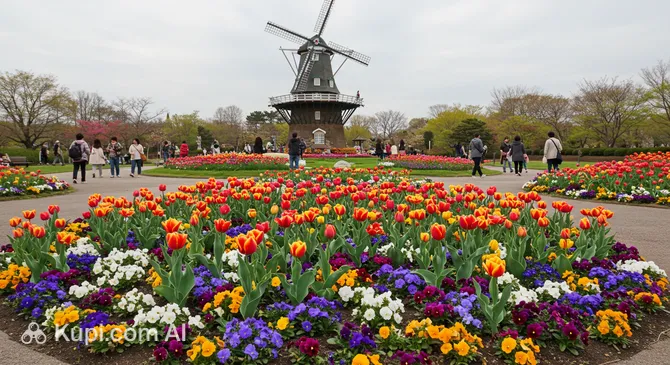
Funabashi Andersen Park. Illustration.
Source: Kupi.com AI

Traveler photos:

The park's territory is extensive and thoughtfully divided into five unique themed zones, each offering its own entertainment and discoveries. Visitors can explore the Wanpaku Kingdom Park, immerse themselves in the magic of the Fairy Tale Hill Zone, unleash their creativity in the Children's Art Museum Zone, enjoy being close to nature in the Nature Experience Zone, and admire the beauty of the Castle of Flowers Zone.

A special feature of Andersen Park is its harmonious fusion with nature. The natural landscape and wooded areas are skillfully used, and seasonal flowers add vibrant colors throughout the year. It is a wonderful green space where the whole family can enjoy relaxation, games, and a fairytale atmosphere, making it a popular destination year-round.

Contacts

To find the current opening hours for Funabashi Andersen Park, ticket prices, and contact details, we recommend visiting the park's official website. Additionally, you can obtain detailed information on the most convenient ways to reach the park from the city of Funabashi or other parts of Chiba Prefecture at local tourist information centers.

How to contactContact
Address525 Kanehorichō, Funabashi, Chiba 274-0054, Japan
Phone number+81 47-457-6627
Websitewww.park-funabashi.or.jp

What to Do

At Funabashi Andersen Park, visitors can immerse themselves in the world of Danish fairy tales and enjoy a variety of entertainment. A highlight is the Fairy Tale Hill Zone, dominated by a large windmill built by Danish craftsmen following all traditions. Nearby is a picturesque fountain decorated with seasonal flowers and inspired by the famous fairy tale "The Ugly Duckling." Also close by is the Community Center—a red Western-style building housing a souvenir shop and an exhibition hall. Every detail here creates a magical atmosphere, perfect for memorable photos.

One of the main pleasures in the park is watching the changing floral seasons. Year-round, the park is adorned with about 50,000 plants of 100 different varieties, so a riot of colors is guaranteed whenever you visit. In spring, you can admire the blooming of 800 delicate cherry blossoms of ten different types. In summer, an impressive maze of 20,000 sunflowers awaits guests in the Fairy Tale Hill Zone. In autumn, the park is transformed by 50,000 cosmos flowers of ten different varieties. And in winter, from December to January, be sure to see the rare "ice tulips" blooming during this unusual time of year.

Getting There

There are several ways to reach Funabashi Andersen Park, depending on your convenience and starting point. The park is located in the city of Funabashi, Chiba Prefecture, and is accessible by both public transport and car.

One of the most popular methods is using public transport. Generally, travelers first take a train to one of the nearest railway stations. These include Misaki on the Shin-Keisei Line, Komuro on the Hokuso Line, or Funabashi-Hōten on the JR Musashino Line. From these stations, local buses usually run to the park. It is highly recommended to check current route numbers and schedules on the park's official website or Japan transportation websites, as they are subject to change.

If you prefer a more direct and faster way, you can take a taxi from one of the mentioned railway stations or from central Funabashi. This is more convenient, especially if you are traveling with children or a lot of luggage, though it is slightly more expensive. For those planning a trip by private or rental car, the park is also easily accessible. Parking spaces are usually provided on or near the park grounds. Use a navigation system to find the most convenient route to Funabashi Andersen Park.

Nearest city: Chiba

History & Facts

The history of Funabashi Andersen Park is inextricably linked to the rich past of Funabashi itself. Archaeological finds indicate that people inhabited this area, which is now part of Chiba Prefecture, as far back as the Jomon period, which began around the 14th millennium BC. The city of Funabashi, where the park is located, received official status on April 1, 1937, though the first mentions of a settlement here date back to 1186, highlighting the ancient roots of these lands.

A key event leading to the creation of Andersen Park was the establishment of friendly ties between the city of Funabashi and the Danish city of Odense—the birthplace of the famous storyteller Hans Christian Andersen. The park was named in his honor. The sister-city agreement laid the foundation for this unique theme park, which aims to recreate the spirit of Danish culture and the magical world of Andersen's fairy tales on Japanese soil in Japan.

Since its founding, Funabashi Andersen Park has quickly gained popularity and become an important cultural attraction not only for the city but for the entire region. Its uniqueness lies in the harmonious blend of Japanese hospitality and landscaping with elements of Danish culture and the great writer's rich heritage. Thus, the park is not just a recreation area, but a cultural bridge uniting Japanese and Danish traditions, offering visitors unforgettable experiences.

Time Needed

To fully enjoy everything Funabashi Andersen Park has to offer and explore its diverse corners, visitors typically need from half a day to a full day. This timeframe allows you to leisurely stroll through all five themed zones, admire the seasonal floral arrangements, and perhaps take part in activities or workshops frequently held on-site.

The duration of your visit will depend on your interests and pace. If you want to explore each zone in detail—from active play in the Wanpaku Kingdom and the fairytale atmosphere of Fairy Tale Hill with its famous windmill to creative activities in the Children's Art Museum, educational walks in the Nature Experience Zone, and admiring the beauty of the Castle of Flowers Zone—it is best to plan for a longer stay. This is especially relevant if you are traveling with children, who are sure to find many engaging activities here. For a shorter, introductory visit, 2-3 hours might be enough, but in this case, you will have to choose only the locations that interest you most.

Working Hours

For the most up-to-date information on the opening hours of Funabashi Andersen Park, we strongly recommend visiting the park's official website or contacting the administration directly. Generally, hours may vary depending on the season, day of the week, and special events. Some attractions or zones within the park may also have their own schedules.

While pre-booking tickets is not always mandatory for general admission, it is worth checking if it is recommended, especially if you plan to visit during peak season, on holidays, or are interested in participating in special workshops or exhibitions. This will help avoid potential queues and guarantee your visit. Funabashi Andersen Park is typically open to visitors year-round, offering different charms in every season; however, it is always useful to check current information before your trip to ensure that all zones and activities of interest are available.

DayOpening hours
MondayClosed
Tuesday9:30 – 16:00
Wednesday9:30 – 16:00
Thursday9:30 – 16:00
Friday9:30 – 16:00
Saturday9:30 – 17:00
Sunday9:30 – 17:00

Nearby

A visit to Funabashi Andersen Park will undoubtedly provide you with many vivid impressions. However, to make your trip to Chiba even more fulfilling and memorable, it is worth exploring other interesting places nearby. Discovering the surroundings will allow you to dive deeper into the culture and atmosphere of this region of Japan, revealing new facets of its charm.

There are several attractions near Funabashi Andersen Park that can complement your itinerary. Below is a list of some of them, including approximate distances to help you plan your route.

NameDistance
Kona's Coffee Makuhari11.5 km
Chiba Museum of Science and Industry12.6 km
Sakura Castle Ruins Park14.7 km
National Museum of Japanese History14.7 km
Tojo-tei House14.8 km
Yoshitaka's Great Cherry Tree15.6 km
Tora-san Museum16.3 km

Have you reached the end of the page?

So the route has been studied inside and out