Support

Kameido Tenjin Shrine

About

**Kameido Tenjin Shrine** is a famous Shinto shrine located in Chiba, Japan. It is dedicated to Sugawara no Michizane, an outstanding 9th-century Japanese scholar, poet, and statesman. After his death, Sugawara no Michizane became revered as Tenjin—the deity of education, scholarship, and calligraphy, which is why the shrine is particularly popular among students praying for success in their studies.
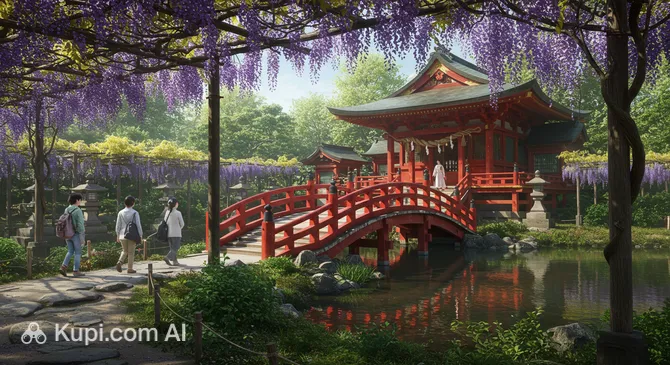
Kameido Tenjin Shrine. Illustration.
Source: Kupi.com AI

Traveller photos:

The Kameido Tenjin temple complex is renowned for its incredible beauty, especially in spring. Its grounds are adorned with picturesque ponds crossed by elegant arched bridges, creating a peaceful atmosphere. However, the shrine's main pride is the magnificent blooming wisteria. During their blooming period, usually from late April to early May, long lavender, purple, and white clusters cover specially installed pergolas, turning the place into a true fairy-tale garden and attracting photographers and lovers of beauty.

Walking through the shrine grounds allows you to enjoy traditional Japanese architecture and harmony with nature. One of the most recognizable elements is the red drum bridge (Taikobashi), which symbolically reflects life's path and its difficulties. Legend has it that crossing this bridge helps overcome obstacles. The shrine is surrounded by traditional Japanese lattices, which completes its authentic appearance.

Besides its aesthetic appeal, **Kameido Tenjin Shrine** is an important cultural and historical site in the region. Traditional festivals are held here regularly, the most famous being the Wisteria Festival. It is not just a religious center, but also a place where you can touch Japanese traditions, enjoy peace and beauty, making it an interesting stop for tourists interested in Japanese culture.

Contacts

To find up-to-date information about the operations of **Kameido Tenjin Shrine**, including visiting hours and potential events, we recommend checking the official tourism resources of Chiba or searching for the shrine's official website. Usually, such significant cultural sites in Japanese cities are easily accessible by public transport; it is best to check the exact route on-site or using online maps before your trip.

How to contactContact
Address3-chōme-6-1 Kameido, Koto City, Tokyo 136-0071, Japan
Phone+81 3-3681-0010
Websitekaemidotenjin-sha.jp

What to Do

At **Kameido Tenjin Shrine**, one of the main attractions is the annual **wisteria (fuji) blooming festival**. This colorful event usually takes place from late April to early May, when numerous trellises over the ponds are covered with magnificent cascades of lavender and purple flowers. The sight attracts many photographers and nature enthusiasts. Visitors can enjoy walking across the picturesque arched bridges, admiring the reflection of the blooming wisterias in the water, and, of course, taking unforgettable photos.

**Kameido Tenjin Shrine** is also known as an important pilgrimage site for students and their families. People come here to pray for success in studies, admissions, and passing exams, as the deity Sugawara no Michizane, to whom the shrine is dedicated, is revered as the **patron of education and scholarship**. At the shrine, visitors can purchase special amulets (omamori) for academic luck or leave their wishes on wooden plaques (ema).

In addition to the festival and pilgrimage, **Kameido Tenjin Shrine** attracts visitors with its **traditional Japanese architecture** and peaceful atmosphere. It is a wonderful place for a leisurely walk at any time of year, where you can enjoy the silence, the beauty of the well-kept grounds, and get a deeper look at Japanese traditions. Every corner here is permeated with calm and harmony, inviting contemplation and rest from the city's hustle and bustle.

Getting There

Getting to **Kameido Tenjin Shrine**, located in the Kameido district of eastern Tokyo, is quite simple, especially if you use the Japanese capital's extensive public transport system. This is a popular spot, so routes to it are well-known and convenient for tourists.

The most convenient way is by train. The nearest station to the shrine is **Kameido Station**, served by the **JR Sobu Line**. From the station exit to the shrine gates, a pleasant walk awaits you, taking about **10 minutes**. This route also allows you to get a feel for the atmosphere of the Kameido district.

Alternatively, you can use **Kinshicho Station**. Both the **JR Sobu Line** and the **Tokyo Metro Hanzomon Line** pass through it. The walk from Kinshicho Station to **Kameido Tenjin Shrine** is slightly longer, about **15-20 minutes**, but it is also a good option if it is more convenient for you to arrive via one of these lines from other parts of Tokyo.

For those who prefer traveling by car, there are paid parking lots near the shrine. However, keep in mind that during festival periods, especially the famous wisteria festival, the number of visitors increases dramatically. On these days, it is highly recommended to use public transport to avoid difficulties finding a parking spot and potential traffic congestion.

Nearest city: Chiba

History & Facts

**Kameido Tenjin Shrine** has a rich history dating back to the 17th century. According to various sources, it was founded in 1661 or 1662. A key moment in its founding was the installation of a statue of Sugawara no Michizane, a revered 9th-century scholar, poet, and statesman. Notably, the statue was carved from plum wood—Michizane's favorite tree—which adds special symbolism to the site. The shrine's emergence is closely linked to the growing popularity of the cult of Sugawara no Michizane, whose challenging life and posthumous deification as the patron of learning and calligraphy became an important part of Japanese culture and beliefs.

Originally, **Kameido Tenjin Shrine** was built on the eastern bank of the Sumida River. Its construction occurred during a period of active urban expansion in **Tokyo** following a devastating earthquake. Such a strategic location and timely appearance contributed to the shrine's rapid rise in fame among city residents. It integrated seamlessly into the developing urban environment and almost immediately became a significant spiritual center for the local population.

Over time, **Kameido Tenjin Shrine** has not only maintained but also increased its popularity. It remained one of the most visited temples through several eras of Japanese history—Edo, Meiji, Taisho, Showa—and continues to attract many pilgrims and tourists today. The shrine's cultural significance has grown steadily, turning it into an integral part of historical and spiritual heritage. Its famous festivals, especially the wisteria blossoms, and its connection to the patronage of scholarship make it a unique and revered place.

Time Needed

To fully enjoy a visit to **Kameido Tenjin Shrine**, including exploring its picturesque grounds, walking across its famous bridges, taking photos, and perhaps visiting the souvenir stalls, it is recommended to set aside approximately **1.5 to 2 hours**. This amount of time is generally sufficient for a leisurely introduction to the shrine's main sites.

This timeframe will allow you not only to see the architectural features of **Kameido Tenjin Shrine** and its well-maintained gardens but also to soak in the special atmosphere of the place. If your visit coincides with the wisteria blooming season or other festivals, you might want to stay longer to fully enjoy the spectacle and take more photos. However, for a standard introductory visit, an hour and a half to two hours will be quite enough to leave you with vivid impressions.

Working Hours

**Kameido Tenjin Shrine** is usually open to visitors daily. Standard operating hours are typically from early morning, around **6:00 AM**, until sunset, approximately **5:00 PM – 6:00 PM**. It's worth noting that during holidays and festivals, opening hours may be extended so that everyone can visit this iconic site.

While special ticket bookings or advance registration for a regular visit are generally not required, it is always recommended to check current information before your visit. To get the most accurate data on opening hours, especially on holidays, as well as possible changes or special events, it is best to consult the shrine's official website or other local information resources. The shrine is open for visits year-round, but its peak popularity occurs during the wisteria blooming season.

Open 24/7

Nearby

A visit to **Kameido Tenjin Shrine** will undoubtedly leave you with vivid impressions, but exploring its surroundings can make your trip to Chiba even more rewarding and memorable. The area around the shrine, like the city itself, offers many interesting places that allow you to dive deeper into the culture of Japan and see other facets of this amazing region.

From picturesque parks to unique museums, exploring nearby attractions will help you form a more complete picture of the life and traditions of local residents. This is an excellent opportunity to expand your itinerary and discover something new, complementing the spiritual experience gained at the shrine with other fascinating discoveries.

NameDistance
Shiomi Skippers4.8 km
Shunkaen Bonsai Museum6.1 km
Tokyo Metro Museum6.5 km
Kasai Rinkai Park7.7 km
Tora-san Museum8.1 km
Yamamoto-tei8.1 km
Urayasu City Folk Museum9 km

Reached the bottom of the page?

Looks like you know this route inside out