Support

Suizenji Jojuen Garden

About

Suizenji Jojuen (水前寺成趣園) is a magnificent example of traditional Japanese landscape art located in Kumamoto, Japan. Known for its refined beauty and tranquil atmosphere, this garden is one of the region's main attractions, drawing many visitors who wish to experience Japanese culture and enjoy the harmony of nature.
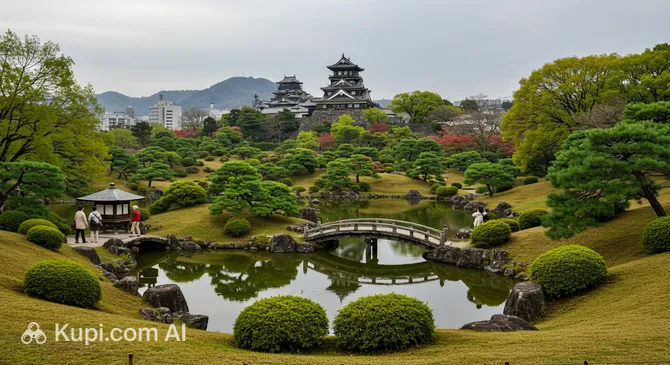
Suizenji Jojuen Garden. Illustration.
Source: Kupi.com AI

Traveler photos:

Suizenji Garden belongs to the "tsukiyama" style, which features artificial hills and ponds that skillfully mimic natural landscapes in miniature. One of its central features is a large, picturesque pond inhabited by colorful koi carp, located at the foot of the main tsukiyama—a man-made hill. Strolling along the winding paths, visitors can admire carefully selected plants, stones, and small architectural forms that create a unified, harmonious composition.

Due to its unique natural beauty and historical value, Suizenji Jojuen has been officially designated by the government of Japan as a National Historic Site of Scenic Beauty. It is not just a park for walking, but a living work of art reflecting the deep philosophical and aesthetic principles of Japanese gardening. A visit to the garden offers an opportunity to escape the city's hustle and bustle and immerse yourself in a world of tranquility and contemplation.

Contacts

To find the most up-to-date information on opening hours, ticket prices, and how to contact the Suizenji Jojuen garden administration, we recommend visiting the attraction's official website or contacting the tourist information centers in Kumamoto. There, you can obtain the most accurate and current details to help plan your visit.

How to contactContact
Address8-1 Suizenji Kōen, Chuo Ward, Kumamoto, 862-0956, Japan
Phone number+81 96-383-0074
Websitewww.suizenji.or.jp

What to Do

At Suizenji Jojuen, visitors can embark on an amazing journey through Japan in miniature. One of the garden's highlights is the skillfully crafted replicas of the country's famous landmarks. Here, you can see a majestic Mount Fuji, as if transported from Shizuoka, and recognize a scaled-down version of the famous Fushimi Inari Shrine from Kyoto. Furthermore, the arrangement of the pond, trees, and hills—including the Fuji replica—symbolically recreates the 53 stations of the Tokaido, the legendary historical road that once connected Edo (the old name for Tokyo) and Kyoto.

A walk through Suizenji Jojuen involves more than just contemplating natural beauty and architectural miniatures. Guests can also discover sculptures dedicated to famous Japanese emperors and deepen their knowledge of Kumamoto's history. Izumi Shrine, nestled in the northern part of the park, is a particular draw for photographers and those seeking quietude. It is a wonderful place for finding peace and taking memorable photos.

In addition to sightseeing, Suizenji Jojuen offers other ways to immerse yourself in the atmosphere of traditional Japan. For instance, you can enjoy a cup of fragrant Japanese tea in one of the teahouses while taking in picturesque views of the garden. Such a leisurely stroll allows you to experience the spirit of old Japan, transport yourself back to a time when kimono and geta were part of everyday life, and simply relax your soul in harmony with nature.

Getting There

Getting to Suizenji Jojuen is quite straightforward, as it is located within the city of Kumamoto, close to the city center and the famous Kumamoto Castle. This convenient location makes it easily accessible for tourists wishing to experience this masterpiece of Japanese landscape art.

The primary way to reach Suizenji Jojuen is by Kumamoto public transport. You can take city buses or trams that run along various routes. It is recommended to check the specific route numbers and the stops closest to the garden in advance. This information is available at local tourist centers or on Kumamoto transport websites.

For those who prefer exploring the city on foot, especially if you are in central Kumamoto or visiting Kumamoto Castle, walking to Suizenji Jojuen can also be a pleasant option. This allows you not only to enjoy the city views but also to better experience its atmosphere. While the exact travel time will depend on your starting point, the garden is located reasonably close to major tourist sites.

Nearest city: Kumamoto

History & Facts

The history of Suizenji Jojuen is inextricably linked to the Hosokawa clan, the powerful daimyo (feudal lords) of the region. The creation of this magnificent garden began in the 17th century, specifically in 1636, at the initiative of Tadatoshi Hosokawa, the third Kumamoto ruler from this clan. Interestingly, the garden took its name from Suizenji Buddhist Temple, which unfortunately has not survived to this day. However, Izumi Shinto Shrine still stands on the garden grounds, where several members of the Hosokawa family were enshrined, highlighting the deep connection between this place and the clan's history.

The garden's design was truly grand for its time. Although a temple might have originally stood on the site, it was under the Hosokawa leadership that the area was transformed into an extensive strolling park. A unique feature of Suizenji Jojuen is its symbolic meaning: key landscape elements—the pond, man-made hills, and carefully selected trees—were arranged to recreate the famous 53 stations of the Tokaido. This legendary road held immense strategic and cultural importance in feudal Japan, connecting the Shogunate capital of Edo (modern-day Tokyo) with the Imperial capital, Kyoto.

Over the centuries, Suizenji Jojuen has been carefully preserved and maintained, becoming one of the most prominent symbols of Kumamoto's cultural heritage. Its unique beauty and profound historical significance have not gone unnoticed. The government of Japan has officially recognized the garden as a Place of Special Scenic Beauty and Historical Value, highlighting its outstanding role in Japanese landscape gardening and the country's history. This recognition confirms the garden's status as an important site, worthy of attention for anyone interested in the culture of Japan.

Time Needed

To enjoy a leisurely stroll through all corners of Suizenji Jojuen, admire its miniature landscapes—including the famous Mount Fuji—and soak in the peaceful atmosphere, most visitors usually need between 1 and 2 hours. This time is generally sufficient to walk the main paths, take beautiful photos, and experience the serenity of the place.

If you plan on a more immersive experience—for example, visiting the teahouse for a traditional Japanese tea ceremony or wanting to examine each of the symbolic "53 stations of the Tokaido" in detail—you should set aside a bit more time, perhaps up to 2.5–3 hours. Also, if you are a photography enthusiast or simply enjoy long periods of contemplating the beauty of nature and landscape design, your stay in the garden may naturally extend.

Ultimately, the length of your visit to Suizenji Jojuen will depend on your personal pace and interests. Some might explore the main alleys in an hour, while others may wish to spend more time meditating by the pond or studying the details of every corner of this remarkable garden in Kumamoto.

Working Hours

To obtain the most accurate and up-to-date information regarding Suizenji Jojuen opening hours, it is strongly recommended to consult official sources. Hours may vary depending on the season or special events held within the garden grounds. Therefore, before planning your visit, it is useful to check the official Suizenji Jojuen website or clarify details at Kumamoto city tourist information centers.

Generally, Japanese gardens of this type are open to the public year-round, allowing you to enjoy their beauty in any season. However, it is always worth confirming if there are any schedule changes due to public holidays or weather conditions. As for the need to book tickets in advance, it is usually not required for strolling gardens like Suizenji Jojuen. Nevertheless, if your visit coincides with the peak tourist season or you plan to visit during special festivals or events, it makes sense to check the official website beforehand to avoid potential inconveniences and plan your time effectively.

8:30 – 17:00

Nearby

A visit to Suizenji Jojuen garden will undoubtedly leave you with lasting impressions. However, to make your trip to Kumamoto even more fulfilling and complete, it is worth spending time exploring the surroundings of this famous attraction. Often, nearby sites help provide a deeper understanding of the city's culture and atmosphere, opening up new dimensions of your travel experience.

Several interesting places near Suizenji Jojuen can complement your visit. Below is a list of some of these attractions, including approximate distances, so you can easily plan your route and make the most of your time in Kumamoto.

NameDistance
Monkey D. Luffy Statue0.8 km
Kengun Shrine2.1 km
Kumamon Square2.3 km
Kumamoto City Zoo and Botanical Gardens2.3 km
Chopper Statue2.3 km
Ichinosoko2.5 km
Contemporary Art Museum Kumamoto2.5 km

Have you reached the end of the page?

So the route has been studied inside and out