Support

Kinkaku-ji

About

Kinkakuji, also known as the Golden Pavilion, is one of the most recognizable and delightful landmarks not only in the city of Kyoto but in all of Japan. Located within the Rokuon-ji temple complex, this Zen Buddhist temple captures the imagination with its radiant appearance. The top two floors of the pavilion are completely covered in gold leaf, making it sparkle dazzlingly in the sun and creating a truly magical sight.

Originally built in 1397 as a retirement villa for shogun Ashikaga Yoshimitsu, the pavilion was converted into a temple after his death. The uniqueness of Kinkakuji lies in its three-story structure, where each level is designed in its own architectural style. The first floor, built in the palace style, was used as a reception hall; the second, in the style of samurai residences, was intended for musical evenings; and the third, in the style of a Zen temple, served for religious ceremonies and houses relics of the Buddha.
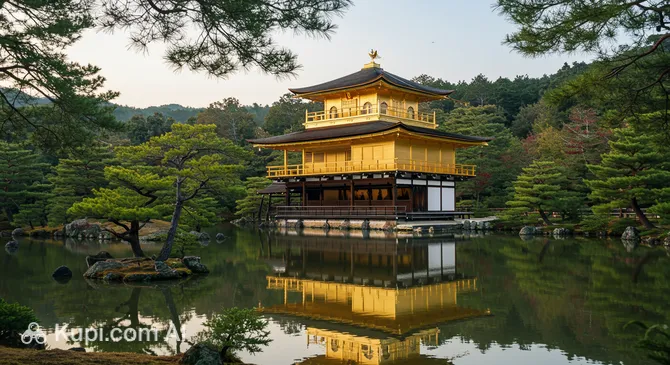
Kinkaku-ji. Illustration.
Source: Kupi.com AI

Traveler photos:

The pavilion's charm is enhanced by its harmonious union with the surrounding landscape. Kinkakuji stands on the bank of the picturesque Kyokochi pond, which translates as "Mirror Lake". Its golden walls are elegantly reflected in the calm water, creating an almost unreal, floating image that lingers in the memory. Around it stretches a traditional Japanese strolling garden, created back in the 14th century, with its winding paths, stone lanterns, and islands symbolizing Buddhist cosmology.

It is important to know that the current building is a meticulously executed reconstruction from 1955. The original pavilion, which survived many historical events, was tragically destroyed in an arson attack in 1950. Nevertheless, its restored version precisely conveys the grandeur and beauty of the original, continuing to attract travelers from all over the world and remaining a vivid symbol of Japanese aesthetics.

Contacts

To plan your visit to Kinkakuji, it is recommended to use official sources for the most up-to-date information on opening hours and special events. Key contact details, as well as ways to get to the temple, will help you better prepare for your trip.

Getting to the Golden Pavilion from Kyoto Central Station is quite simple. The most convenient way is to take city buses No. 101 or No. 205. The journey takes about 40 minutes, and you should get off at the Kinkakuji-michi stop, which is just a few minutes' walk from the entrance to the temple complex.

How to contactContact
Address1 Kinkakujichō, Kita Ward, Kyoto, 603-8361, Japan
Phone number+81 75-461-0013
Websitewww.shokoku-ji.jp

What to Do

Visiting Kinkakuji is primarily an opportunity to enjoy its unique aesthetics. The main activity for guests is contemplating the Golden Pavilion itself from various viewpoints located around the pond. An especially impressive sight is the reflection of the glowing temple in the calm waters of the Kyokochi pond, which translates as "Mirror Lake". This view, creating an almost magical effect, has become the hallmark not only of the temple but of all Kyoto, which is why most visitors strive to take memorable photos here.

In addition to admiring the pavilion, visitors can take a leisurely stroll through the picturesque garden that surrounds the temple. This garden, which has preserved its original design from the late 14th century, is a classic example of Japanese landscape art. The thoughtfully designed curves of the paths reveal the most beautiful corners to guests: Anmintaku Pond, which, according to legend, never dries up, and various stone compositions filled with symbolic meaning. A walk through the garden allows you to fully experience the atmosphere of harmony and tranquility inherent in Zen Buddhist shrines. At the end of the route, you can visit the Sekkatei teahouse, where guests are offered traditional matcha tea with sweets.

Getting There

In addition to direct buses, Kinkakuji can be reached via a combined route, which is often faster and helps avoid traffic jams in the center of Kyoto. To do this, take the Karasuma Subway Line to Kitaoji station—it takes about 15 minutes. From there, you can either take a quick taxi ride to the temple (approximately 10 minutes) or transfer to one of the city buses (e.g., No. 101, 102, 204, or 205) that go to the Kinkakuji-michi stop.

For maximum convenience, you can always take a taxi, especially if you are traveling with a family or are short on time. However, to optimize costs, it is worth considering the purchase of a Subway & Bus One-Day Pass. It entitles you to unlimited rides on the subway and most bus routes during the day. This pass will not only pay for itself when visiting several attractions, including Kinkakuji, but will also save you from having to buy a ticket every time, making travel around Kyoto as simple and cost-effective as possible.

Nearest city: Kyoto

History & Facts

Behind the glittering facade of Kinkakuji lies a rich and dramatic history that makes it more than just a beautiful building, but a true symbol of resilience. The history of the pavilion began in 1397, when it was built as a retirement villa for the powerful shogun Ashikaga Yoshimitsu. Having lost interest in politics, he spent the last years of his life here. According to his will, after his death in 1408, the luxurious residence was converted into a Zen Buddhist temple of the Rinzai school and received the official name Rokuon-ji, meaning "Deer Garden Temple".

In the 20th century, the pavilion went through two pivotal moments. First, it was threatened with total destruction during World War II, but as the story goes, the sanctuary was saved thanks to the intervention of the Russian Japanologist Sergei Eliseev. He appealed to the American command to preserve the cultural treasures of Kyoto, and this helped save the city from bombing.

However, a real tragedy occurred in peacetime. On the night of July 2, 1950, a young monk suffering from a mental disorder set the pavilion on fire. The priceless structure, which had survived centuries of war, burned to the ground along with all its treasures. This event shocked all of Japan and became the basis for Yukio Mishima's famous novel "The Temple of the Golden Pavilion". Nevertheless, the Japanese people showed an incredible will to restore their heritage. As early as 1955, an exact reconstruction of the pavilion was completed, returning this unique monument to the world. The current building, although a replica, precisely conveys the grandeur of the original and continues to fascinate millions of visitors.

Time Needed

When planning a visit to Kinkakuji, you can expect a standard tour to take you approximately 40 minutes to 1 hour. This time is quite enough to leisurely follow the entire route, take photos, and soak up the atmosphere of this amazing place. The temple grounds are organized so that visitors move along a predetermined path that circles the pond and the Golden Pavilion itself, making it impossible to get lost.

The bulk of the time is spent contemplating the pavilion from the main viewing platform by the Kyokochi pond, where everyone takes classic shots of its reflection in the water. Further along, the route will lead you through a picturesque garden, past a small waterfall and the Sekkatei teahouse. It is important to note that entry into the Golden Pavilion itself is closed to visitors. The entire path is a smooth walk that concludes at the small Fudo temple, souvenir shops, and a place where you can try local sweets.

If you want to stay longer, you can allocate extra time to visit the teahouse, which serves traditional matcha tea, or more carefully browse the souvenirs. It is also worth considering that during peak hours and tourist seasons, such as the cherry blossom season or autumn foliage, the grounds can be crowded, which will slightly increase the time spent on the route. However, even accounting for queues, a visit rarely takes more than an hour and a half.

Working Hours

You can visit Kinkakuji any day of the year, as the temple is open to guests seven days a week. The opening hours are set from 9:00 AM to 5:00 PM. This allows tourists to flexibly plan their itinerary around Kyoto's attractions.

Special ticket booking for individual visits is generally not required—they can be purchased directly on-site at the ticket office by the entrance. Nevertheless, it is always useful to check the temple's official website before visiting. Occasionally, information about temporary schedule changes related to special ceremonies, public holidays, or weather conditions may appear there.

9:00 – 17:00

Nearby

A visit to Kinkakuji alone leaves an unforgettable impression, but exploring its surroundings will help you dive deeper into the unique atmosphere of Kyoto. This district, like the rest of the city, is saturated with history and culture, and just a short drive from the Golden Pavilion are other iconic sites that will perfectly complement your walk.

Exploring nearby attractions is a great way to optimize your itinerary and see more in one day. From ancient shrines to majestic castles and picturesque gardens, the area around Kinkakuji offers a variety of experiences, allowing you to gain a full understanding of the rich heritage of Japan's former capital.

NameDistance
Nijō Castle3.3 km
Kyoto Imperial Palace3.4 km
Kyoto Gyoen National Garden3.5 km
Shinpuhkan4.3 km
Kyoto Samurai and Ninja Museum4.7 km
IMU Bar Kyoto4.9 km
The Pink Kyoto5 km

Have you reached the end of the page?

So the route has been studied inside and out