Support

Matsue Castle

About

Matsue Castle is an outstanding historical monument and one of the main attractions of the city of Matsue in Japan. It is one of twelve original Japanese castles that have survived to this day in almost their original form, having escaped destruction from wars, fires, or earthquakes. This makes it a unique example of military architecture from the early Edo period.

The castle is strategically located on a hill and surrounded by picturesque moats filled with water. Due to its walls clad in dark wooden panels, it earned the famous nickname "Black Castle." Its austere and practical design was created for defense, although the castle never actually saw battle.
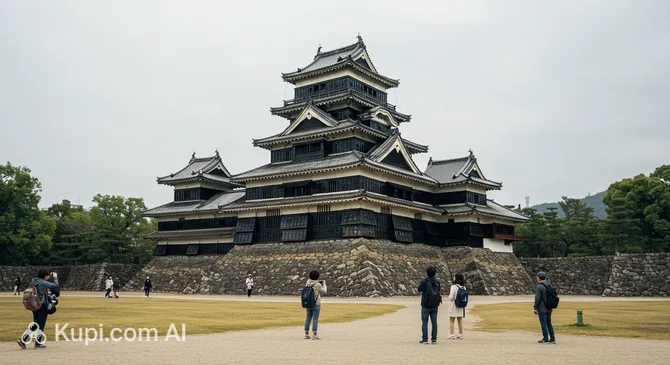
Matsue Castle. Illustration.
Source: Kupi.com AI

Traveller photos:

Today, a museum operates inside the main tower of Matsue Castle. Visitors can immerse themselves in the region's history by exploring a rich collection of artifacts, including authentic samurai armor and weapons belonging to the Matsudaira clan, who ruled here for many generations. The top floor of the tower offers a magnificent panoramic view of the city and Lake Shinji.

Contacts

To plan your visit and find the latest information on opening hours, ticket prices, or special events, you can contact the Matsue Castle administration. For the most up-to-date details, it is recommended to call the provided phone number.

How to contactContact
Address1-5 Tonomachi, Matsue, Shimane 690-0887, Japan
Phone+81 852-21-4030
Websitewww.matsue-castle.jp

What to Do

A visit to Matsue Castle offers guests a variety of experiences. The highlight is, of course, exploring the castle tower itself. You can climb to its upper floors, where an observation deck is located. From here, you can enjoy a magnificent panoramic view of Matsue city, the sprawling Lake Shinji nearby, and the picturesque mountain ranges on the horizon. Inside the tower, museum exhibits await, introducing you to the castle's rich history and the life of the samurai. Authentic armor, weapons, and everyday items from the Edo period are on display, allowing for a deeper immersion into the atmosphere of Japan's past.

Equally engaging activities await outside the main tower. A beautiful park surrounds the castle, which becomes especially stunning in the spring during the cherry blossom season. It is an ideal place for a leisurely stroll. One of the most popular activities is a traditional boat ride along the wide moat surrounding the castle. This excursion provides a unique perspective of the massive walls and towers. Additionally, during the warmer months of summer and autumn, various cultural events and festivals are often held on the castle grounds, adding vibrant colors to your visit.

Getting There

Matsue Castle is conveniently located in the heart of Matsue city, making it easily accessible for tourists. If you are arriving at JR Matsue Station, you have several options. The most pleasant way is a leisurely walk, which takes about 20–25 minutes. Alternatively, you can use local buses that depart regularly from the station and other key points in the city, stopping right by the castle complex. For instance, the convenient Lakeline tourist bus connects the station with all major attractions.

For those traveling by car, there are convenient parking lots near the castle. The city of Matsue itself has good transport links with major regional centers such as Okayama and Hiroshima, reachable by train or bus. To travel from more distant metropolises like Tokyo or Osaka, you can take JR trains, transferring to a high-speed train in Okayama, which will take you directly to Matsue.

Nearest city: Matsue

History & Facts

The history of Matsue Castle is inextricably linked with the name of the daimyo (feudal lord) Yoshiharu Horio. Construction of the fortress began in 1607 and was completed in 1611. The choice of location for the new castle was strategic: Yoshiharu Horio decided to move his residence from the old mountain fortress of Gassan-Toda, considering it inconvenient for managing a flourishing city and defending his lands. The new castle, located near the abundant water resources of Lake Shinji, provided better defensive capabilities and control over the surrounding territory.

In 1638, the castle and its surrounding lands passed to the Matsudaira clan—a branch of the powerful Tokugawa clan that ruled Japan at the time. This marked the beginning of the longest period in the castle's history; the Matsudaira clan ruled from here for ten generations until the end of the samurai era in 1871. An interesting fact: the castle still houses a war fan that, according to legend, was given to the young Matsudaira Naomasa by his famous opponent Sanada Yukimura as a sign of respect for the valor shown at the Siege of Osaka.

After the Meiji Restoration in the 19th century, when Japan set out on the path of modernization, many feudal castles were destroyed by order of the new government. This fate could have befallen the castle in Matsue as well; most of its structures were dismantled in 1875. However, the main tower survived thanks to the efforts of concerned locals who bought it to ensure its preservation. In the mid-20th century, from 1950 to 1955, an extensive reconstruction was carried out, helping to preserve this unique monument for future generations.

Today, Matsue Castle is not just a historical building, but one of the National Treasures of Japan, a status it was granted in 2015. It is one of only twelve original castles in the country to have preserved their main towers in their original form and is the only such castle in the entire San'in region. It is also known as "Chidori-jo" or "Plover Castle" because its curved gables resemble the wings of that bird.

Time Needed

When planning your visit to Matsue Castle, you should consider how much time you want to dedicate to exploring it. For a thorough yet relatively quick tour of the main tower and the surrounding grounds, it is recommended to set aside 1.5 to 2.5 hours. This is enough time to leisurely climb all floors, explore the museum exhibits featuring armor and artifacts, and enjoy the panoramic view of the city and Lake Shinji from the top observation deck.

If you want to get the most out of your experience and soak in the atmosphere without rushing, you should allow up to 3 hours or more. An extended program can include not only a detailed exploration of the castle itself but also a walk through the scenic Jozan Park that surrounds it. Of particular note is the popular excursion on a traditional boat along the ancient moat—it allows you to see the massive walls and towers from a completely different perspective and takes about 50 minutes. Thus, a visit to Matsue Castle can be either a short informative stop or a fascinating half-day adventure.

Working Hours

Matsue Castle is open to visitors year-round, but the opening hours change depending on the season. During the warmer months, from April to September, the castle is open from 8:30 to 18:30. In the autumn-winter period, from October to March, the hours are shorter—from 8:30 to 17:00. It is important to remember that entry to the grounds stops 30 minutes before the official closing time.

Generally, advance ticket booking is not required for a standard visit to the main castle tower. However, if you plan to visit during national holidays or special events, it is recommended to check the official website for any changes to the schedule and entry conditions. This will help you plan your trip as effectively as possible and avoid any surprises.

8:30 – 18:00

Nearby

A visit to Matsue Castle is just the starting point for discovering the rich history and culture of the region. Many of the city's iconic landmarks are located in the immediate vicinity of the castle, making it easy to plan a full walking itinerary. Exploring the surroundings will give you a more complete picture of samurai life, local traditions, and the people who left their mark on the history of Matsue.

A stroll through the castle grounds and neighboring streets will reveal many interesting spots. From historical museums and former samurai residences to cozy restaurants and picturesque parks—everything is within walking distance. Below is a list of nearby attractions to help enrich your journey.

NameDistance
Kounkaku0.2 km
Matsue History Museum0.3 km
Lafcadio Hearn Memorial Museum0.5 km
Kamiyo Soba0.5 km
Oideyasu Ookiniya0.7 km
Shirakata Park1.3 km
Shimane Art Museum1.7 km

Reached the bottom of the page?

Looks like you know this route inside out