Support

Mobara

About

Mobara is a charming city that offers a sense of comfort and tranquility, perfect for those seeking an authentic Japanese experience away from the noise of major metropolises. It is famous for its welcoming atmosphere, where modernity harmoniously blends with centuries-old traditions.

Located in the heart of Chiba Prefecture on Honshu Island, Mobara is just an hour's drive from Tokyo. The city is nestled among picturesque plains and hills, with surroundings adorned by green rice fields and tidy tea plantations. Due to its proximity to the Pacific Ocean, a mild climate prevails here, making Mobara attractive to visit at any time of year. The city's population is approximately 86,000 people, allowing it to maintain the atmosphere of a small but significant administrative center in Japan.
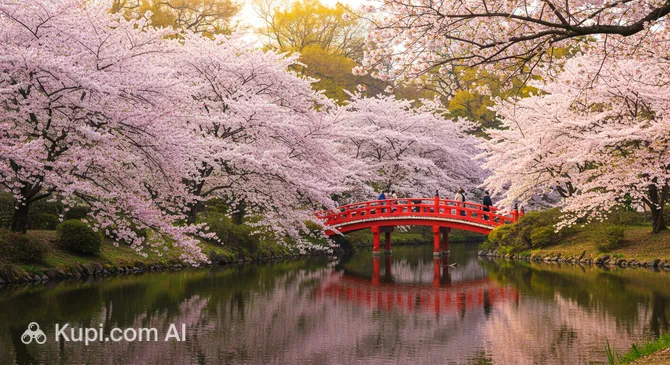
Mobara. Illustration.
Source: Kupi.com AI

Mobara offers many interesting places and activities for its guests. Here you can enjoy the beauty of local parks, especially in spring during the cherry blossom season or in autumn when everything is painted in golden-red tones. Culture enthusiasts will appreciate the opportunity to visit authentic festivals and ancient temples. Additionally, the city is known for its hot springs where you can relax and unwind, as well as try traditional Japanese cuisine in cozy local cafes.

If you want to get to know the real Japan, its calm pace of life, and its rich culture, Mobara will be an excellent choice for your journey. This is a city you will want to return to, leaving you with the warmest memories.

You can find more interesting facts on the history of Mobara page

Weather Overview

The weather in Mobara is characterized by warm and humid summers, as well as cool and relatively dry winters. Summer months, especially July and August, bring average maximum temperatures of around 29-30°C, while in winter, in January and December, average minimum temperatures drop to 3-6°C. Precipitation is distributed throughout the year, with some increase in the summer and autumn months, especially in June, September, and October, when the number of rainy days reaches 15-16. The least amount of precipitation falls in January and December.

Expect a warm summer with occasional rain and cool winters with less precipitation. To learn more about weather conditions at different times of the year, you can view the detailed Mobara climate.

Average monthly temperature

Average monthly precipitation

Interesting Facts

In addition to its main attractions and hospitable residents, the city of Mobara holds many fascinating secrets and little-known details that make it truly unique. Here are just a few of them:

  • Few people know, but Mobara has a proud past as the "Iodine Capital of Japan." For a long time, the city was a key center for iodine extraction — an element vital for medicine and industry — and local residents are proud of this contribution to the country's development.

  • Every July, Mobara comes alive thanks to the "Mobara Dance Matsuri" festival. This is not just a holiday, but a true transformation of the city into a massive open-air stage where thousands of people — from young to old — unite in a single dance impulse to the sounds of traditional music and the glitter of parades.

  • In Mobara, ancient traditions and rituals are still alive, such as those related to the rice harvest. It is said that you can hear completely unique folk songs here that are performed nowhere else in Japan, conveying the spirit of old celebrations marking the change of seasons.

How to Get There

The most convenient way to reach the city of Mobara, located in Chiba Prefecture, is through the major international airports serving Tokyo. There is no direct airport in Mobara itself, but thanks to Japan's advanced transport system, the journey from the nearest air hubs won't take much time.

The primary and closest option is Narita International Airport (NRT). This major international airport is located in Tokyo, approximately 38.3 km from Mobara. A trip by car or taxi from Narita to Mobara usually takes between 1 hour 15 minutes and 1 hour 30 minutes, depending on traffic. Narita Airport handles many international and domestic flights, making it a convenient point of arrival for most tourists.

Another significant option is Haneda Airport (HND), also located in Tokyo. It is situated a bit further away, approximately 48.1 km from Mobara. Travel time by car or taxi from Haneda will be about 1 hour 30 minutes to 1 hour 45 minutes. Haneda Airport is one of the busiest in the world and offers a wide route network both within Japan and abroad.

From both Narita and Haneda airports, Mobara can be reached in various ways. The most popular options are Japan Railways (JR) trains and private lines, as well as limousine buses going to major stations where you can transfer. Of course, a taxi or car rental directly at the airport is always an available option.

For clarity, here is summary information on the main airports through which you can reach Mobara:

AirportPassenger trafficDistance
Narita International Airport40.8 mln38 km
Haneda Airport85.7 mln48 km
Ibaraki Airport776 06384 km
Fukushima Airport250 000200 km
Shizuoka Airport691 274204 km

In addition to air travel, it is worth noting that Japan is famous for its excellent railway network. If you are already in the country, you can reach Mobara by express or local trains from various regions. Bus service between cities is also common. We recommend checking public transport schedules and routes in advance to plan the most convenient path.

Main Attractions

Mobara, despite its size, is ready to offer travelers several notable places that allow for a better understanding of the culture and nature of this corner of Japan. Among them, several attractions particularly stand out.

One of the city's main treasures is Mobara Park (Mobara Kōen). It is famous throughout the country as one of the best places for cherry blossom viewing — in spring, thousands of cherry trees bloom here, creating a truly magical atmosphere. The park is also beautiful in other seasons, offering well-kept paths, a pond with a traditional pavilion, and spots for quiet relaxation in nature.

For those interested in the spiritual side of Japan, the Sogen-ji Temple is a must-visit. This is a significant Buddhist temple of the Nichiren sect, boasting a rich history and serving as an important cultural center of the Kanto region. Visitors can appreciate its beautiful architecture, peaceful setting, and learn more about local religious traditions.

To dive deeper into the history and art of the region, it is worth stopping by the Mobara City Museum of Art and Local History (Mobara Shiritsu Bijutsukan Kyōdo Shiryōkan). It features exhibitions dedicated to archaeological finds, local history, as well as works of art related to the city of Mobara and its surroundings. It is an excellent place for understanding the cultural heritage of the city and its development.

Local Cuisine

The gastronomic world of Mobara is a true discovery for connoisseurs of Japanese cuisine, especially if you love the freshest gifts of the sea. Due to its close proximity to the Pacific Ocean, local restaurants and markets abound with fresh fish and seafood. Be sure to try traditional sushi and sashimi here, prepared from the catch of the day. Of special note is "kaisen-don" — an appetizing bowl of rice with an assortment of fresh fish, roe, and seaweed, which fully reflects the bounty of local waters.

However, the true hallmark of the city is rightfully considered to be "Mobara yaki-soba." This is not just fried noodles with vegetables and meat, but an entire culinary performance. The noodles are stir-fried according to a special local recipe over an open fire, which gives them a unique smoky aroma, and served with an original homemade sauce. The best places to taste this dish are lively street festivals and local markets, where it is prepared right before your eyes, creating an atmosphere of a true feast of flavor.

For those with a sweet tooth, Mobara offers delicate "mochi" rice cakes, often filled with sweet adzuki red bean paste or seasonal fruits. As for drinks, the absolute favorite is the aromatic green tea grown on nearby plantations. It is served in traditional tea houses where you can not only enjoy the taste but also participate in a real tea ceremony. At festivals and local establishments, you can also find other traditional Japanese drinks to complement your meal.

The food culture in Mobara is quite diverse: from cozy family restaurants serving classic Japanese dishes made from the freshest seafood to lively street stalls during the city's numerous festivals. It is the gastronomic festivals, especially popular in the summer and autumn periods, that turn the city into a true paradise for gourmands. Here you can taste fresh farm products, unique local specialties such as "Mobara yaki-soba," as well as various traditional snacks and drinks. This is a great opportunity not only to eat delicious food but also to chat with hospitable locals who are happy to share the secrets of their culinary traditions and let you feel the authentic spirit of Japan.

Travel Tips

Planning a trip to Mobara? To make your visit to this cozy corner of Japan as comfortable as possible and leave you with only the warmest memories, we have prepared a few useful tips for you.

  1. Seasonal Clothing and Essentials: The climate in Mobara, as in all of Chiba Prefecture, has pronounced seasonality. In summer (June-August), it is hot and humid, so choose light, breathable clothing. In winter (December-February), it can be quite cool, so don't forget warm clothes, including a hat and gloves. Spring and autumn are the most comfortable times with moderate temperatures. Be sure to bring comfortable shoes, as you will be walking a lot. Don't forget a universal adapter for electronics. If you plan to visit temples, choose clothing that covers your shoulders and knees.
  2. Getting Around the City: In Mobara, buses will likely be your main form of public transport. For trips to other cities in Chiba Prefecture or to Tokyo, JR trains are convenient to use. Taxis are available but can be expensive. Car rental may be an option if you plan to actively explore the surroundings, but keep in mind that traffic in Japan is left-handed, and parking can be paid and limited. For convenience in paying for public transport fares, consider purchasing IC cards like Suica or Pasmo.
  3. Financial Matters: The official currency is the Japanese yen (JPY). Credit cards are accepted in many hotels, large shops, and restaurants; however, it is always useful to have some cash on hand, especially for small establishments, markets, or when paying at temples. You can exchange currency at the airport, banks, or specialized exchange offices. ATMs that accept international cards can most often be found in post offices (Japan Post Bank) and 7-Eleven stores. Tipping in Japan is not practiced and may even be perceived as an insult.
  4. Health and Safety: Japan is one of the safest countries in the world, and Mobara is no exception. Pharmacies (薬, kusuri) are easy to find, but many medications may require a prescription or have different names. Basic medical care is available to tourists, but communication may be difficult without knowledge of Japanese. It is recommended to have travel insurance. Observe basic precautions: keep an eye on your belongings in crowded places.
  5. Language and Connectivity: The official language is Japanese. In tourist centers of large cities, staff may speak English, but in Mobara, the level of English proficiency may be lower. Learning a few basic phrases in Japanese (greetings, thank you, asking for help) will significantly ease your stay and be appreciated by local residents. For constant internet access, consider purchasing a local SIM card or renting a pocket Wi-Fi router. Free Wi-Fi is not available everywhere.
  6. Local Etiquette: Japanese people are very polite and value respect for traditions. Greetings are usually accompanied by a bow. In public places, especially on transport, try not to talk loudly on the phone. Remove your shoes when entering homes, some temples, and traditional restaurants. When using chopsticks, do not stick them vertically into rice or pass food with chopsticks to another person.
  7. What to Avoid: Try not to eat or drink while walking on the street, unless it is a specially designated area (e.g., food festivals). Do not point at people or objects with your finger — use an open palm. Smoking on the streets is allowed only in specially designated areas.
  8. Enjoy the Local Flavor: Mobara is not as large a metropolis as Tokyo, and that is its charm. Take the opportunity to dive into a calmer and more authentic atmosphere of the Japanese countryside. Peek into small local shops and cafes, try regional dishes of Chiba Prefecture — it's a great way to get to know the real Japan.

We hope these tips help you better prepare for your trip and get the most enjoyment out of discovering Mobara. Have a smooth journey and bright impressions!

Entertainment & Nightlife

Evening and nightlife in Mobara offer guests the chance to immerse themselves in the authentic atmosphere of the Japanese countryside, distinct from the hustle and bustle of megacities. While you won't find massive night clubs operating until dawn here, Mobara can surprise you with the coziness of its establishments and the friendliness of the local residents.

The main points of evening attraction in Mobara are concentrated around JR Mobara Station, especially at its east exit (Higashi-guchi), where more commercial establishments are traditionally located. Take a stroll along the main streets branching off from the station, and also peek into the adjacent side streets — it is often there that the most authentic places are hidden. Look out for illuminated signs and traditional chochin (提灯) lanterns at the entrances. Since specific names of popular bars or clubs in Mobara are difficult to provide without up-to-date local information, exploring on your own will become part of your adventure.

In Mobara, you will encounter typical evening leisure formats for Japan. The most common are:

  • Izakaya (居酒屋): These are traditional Japanese pubs where you can not only drink sake, beer, or shochu, but also have a full dinner with a variety of snacks — from sashimi and yakitori to fried dishes and salads. The atmosphere in an izakaya is usually lively and informal, making it a great place for socializing. Look for signs with the characters 居酒屋.
  • Snack Bars (スナックバー or スナック): Small, often family-run bars with a more intimate setting. Here the focus is on chatting with the hostess (mama-san) or staff, and they often feature karaoke. Snack bars can be a bit mysterious for foreigners but offer a unique experience of immersion into the local culture.
  • Karaoke Boxes (カラオケボックス): An invariably popular entertainment in Japan. These are private rooms equipped with karaoke systems where you can sing with a group of friends without feeling self-conscious around strangers. Look for signs that say カラオケ.

To find a suitable spot, don't hesitate to ask for recommendations from your hotel staff or local residents if you know at least the basics of the Japanese language.

The atmosphere in Mobara's nightspots is usually very relaxed and welcoming. The crowd is mixed: locals unwinding after a workday and a few tourists looking for local flavor. There is no specific dress code in most places; comfort and simplicity are valued. Establishments begin to come alive toward evening, especially on Fridays and Saturdays, but peak activity usually occurs between 7:00 PM and midnight.

When planning your evening entertainment in Mobara, keep in mind that public transport here, as in many small Japanese cities, finishes its service earlier than in metropolises. Check the schedule for the last trains from JR Mobara Station if you don't want to rely on taxis. Taxis can be found at stands by the station, or you can ask the staff at your venue to call one. Popular Japanese taxi-hailing apps can also be useful. Prices in Mobara's bars and restaurants are usually pleasantly surprising for their affordability compared to major tourist centers like Tokyo or Kyoto.

Regarding safety, Mobara, like most Japanese cities, is a very safe place. Night walks along well-lit central streets should not cause any concern. Nevertheless, it is always useful to observe standard precautions and be aware of your surroundings.

During the day, Mobara also offers interesting leisure options for its guests. Be sure to walk through Mobara Park (茂原公園), which is particularly beautiful in spring during the cherry blossom and azalea season. Visit local temples and shrines, such as the Sogen-ji Temple (藻原寺), to touch upon traditional Japanese culture. You may also find a small local history museum in the city that tells the story and traditions of the Chiba region.

Parks & Museums

The city of Mobara offers its guests both pleasant green corners for outdoor relaxation and opportunities to touch upon local culture and history. Here you can find both picturesque parks and interesting cultural sites reflecting the spirit of this Japanese city in Chiba Prefecture.

The main green gem of Mobara is Mobara Park. It is especially transformed in spring, when more than 2,800 cherry trees envelop it in soft pink blossoms, attracting crowds for traditional hanami — cherry blossom viewing. The park features a picturesque pond, convenient walking trails, and picnic areas, making it a favorite relaxation spot year-round. In addition to this extensive park, the city offers other well-kept green spaces. For example, Chuo Park, though smaller in size, serves as a wonderful place for quiet rest and family walks, offering playgrounds and shaded paths. Small squares and gardens are also scattered throughout the city, providing places to hide from the urban bustle.

For those seeking a deeper understanding of Mobara's culture and history, the city offers several interesting sites. A key cultural institution is the Mobara City Museum of Art and Local History (Mobara Shiritsu Bijutsukan Kyōdo Shiryōkan). Here, visitors can get acquainted with a collection of artworks by local artists, as well as exhibits detailing the history, daily life, and traditional crafts of the region. It is an excellent place to get an idea of the city's development and its unique heritage. Another significant site is Sogen-ji Temple, known for its centuries-old history and beautiful traditional architecture. A visit to the temple allows one to experience Buddhist traditions and enjoy a peaceful atmosphere.

In addition to Sogen-ji Temple, which is a significant architectural and historical monument in its own right, in Mobara you can also spot preserved elements of traditional Japanese architecture in certain parts of the city. A walk through the streets can reveal unexpected views of old houses or small family shrines (kamidana), each carrying a piece of history and local culture.

For more authentic impressions of Mobara, try visiting local markets, if any are being held, where you can see the daily life of the townspeople and perhaps try fresh local products. Exploring small, lesser-known temples and shrines that may be scattered around the city and its outskirts can also provide a unique experience and an opportunity for quiet contemplation away from the tourist routes.

Getting Around

When planning your travels around Mobara, you will find that the city's transport system is quite convenient for tourists, although not as extensive as in megacities. The foundation of public transport here consists of trains and buses.

Trains: Railway communication plays a key role, especially for trips to neighboring cities and regions. Mobara Station is served by JR East lines, providing links to larger transport hubs. Trains run on a schedule, which is usually available at stations and online. This is a reliable and relatively fast way to travel medium and long distances.

Buses: Local bus routes cover most of the city and its surroundings, taking passengers to areas not reached by the train. Buses in Japan are generally very punctual. Stops are clearly marked, often with a schedule. Entry is usually through the back or middle door, and exit is through the front, where payment is made.

Payment System: To pay for travel on trains and buses in Mobara, as in many other cities in Japan, rechargeable IC cards such as Suica or Pasmo are widely used. These cards can be purchased and topped up at railway stations at machines or ticket offices, as well as in some convenience stores. They are very convenient as they allow you to pay for travel with a simple touch to the reader at a turnstile or on a bus. Cash payment is also possible, especially on buses (prepare coins, as the driver cannot always provide change for large bills), or you can buy single train tickets at station machines. The fare depends on the distance.

Practical Tips for Tourists:

  • Purchase an IC card upon arrival if you plan to use public transport actively — this will save time and eliminate the need to buy a ticket every time.
  • When entering a train (through the turnstile) and bus, as well as when exiting, do not forget to tap your IC card against the reader to correctly deduct the fare. If you pay by cash on a bus, a ticket is usually taken upon entry (if it is a numbered ticket system indicating the boarding zone) or payment is made upon exit.
  • Check the schedule in advance, especially if you plan to travel early in the morning or late at evening, as the frequency of transport may decrease. Schedules are available at stations and bus stops, as well as on transport company websites.
  • Remember the rules of conduct: it is not customary to talk loudly on the phone in Japanese public transport.

Alternative Ways to Get Around:

  • Taxis: Available in the city, especially near the railway station and in busy areas. This is a more expensive but comfortable way to travel, especially with luggage or for groups.
  • Bicycle Rental: Mobara and its surroundings can be pleasant to explore by bicycle, especially in good weather. Inquire about bicycle rental options — it can be a great way to see the city at your own pace.

Overall, navigating Mobara's public transport system should not cause major difficulties, especially if you prepare a bit in advance and use convenient IC cards.

Accommodation

When planning a trip to Mobara, you can choose from a variety of accommodation options to suit different budgets and preferences. The city offers both traditional Japanese inns and more modern hotels, as well as potential short-term rental apartments.

When choosing a place to stay in Mobara, you should pay attention to areas close to major transport hubs, such as Mobara Railway Station. This will ensure convenience for moving around the city and its surroundings, as well as easy access to local restaurants, cafes, and shops. Staying in the central part of the city can also be convenient for getting to know its atmosphere.

In Mobara, you will find various accommodation options, including local hotels, such as business hotels that offer comfortable stays. To find specific hotels, read reviews, and compare prices, it is recommended to use popular online booking platforms. There you can find up-to-date information on available options and choose the one that best suits your needs.

To guarantee the best choice and prices, especially if your trip coincides with the peak tourist season or during local festivals, it is recommended to book your accommodation in advance. This will help avoid situations where all suitable options are already taken.

The price range for accommodation in Mobara varies from budget options to mid-range hotels. You can book accommodation through well-known international and Japanese online booking services, which offer a wide selection and convenient search filters. Some hotels also provide the option of direct booking through their websites.

Nearby Cities

For those who want to explore the surrounding area, Mobara serves as an excellent starting point for day trips to several interesting nearby places:

CityPopulationDistance
Chosei13 6566 km
Shirako10 2808 km
Oamishirasato47 72211 km
Togane57 56016 km
Otaki8 76216 km

Each of these cities offers something unique for the curious traveler:

Chiba, the administrative center of the prefecture, attracts visitors with its modern cityscape, including the Chiba Port Tower with panoramic views, as well as the extensive Aobanomori Park, ideal for walks and relaxation. You can also find interesting museums and shopping centers here.

Ichihara is known for its picturesque natural landscapes, including the Yoro Valley and Awamata Falls. The city also offers opportunities for outdoor activities such as golf and hiking along numerous trails.

Sakura is a city with a rich history where you can visit the National Museum of Japanese History and stroll through old samurai quarters. In spring, the city is especially beautiful due to the blooming cherry blossoms (sakura) that gave it its name.

Kisarazu, located on the shore of Tokyo Bay, attracts tourists with its sea views and is the starting point for a trip across the famous Tokyo Bay Aqua-Line bridge-tunnel. You can also enjoy fresh seafood here.

Yotsukaido offers a calmer pace of life and a chance to get to know the local culture. The city is surrounded by countryside and parks, making it a pleasant place for leisurely walks and a break from the city bustle.

These nearby destinations provide an insight into the diverse culture and landscapes of the region.

Shopping & Souvenirs

Shopping in Mobara offers tourists a chance to immerse themselves in the atmosphere of local Japanese daily life, rather than a race for global brands. Here, you are more likely to find small authentic shops offering locally produced goods and unique souvenirs reflecting the culture of Chiba Prefecture. The city is not famous for any specific goods on an international level, but that is precisely its charm — the opportunity to find something truly special and local.

The main shopping points in Mobara are likely concentrated in the central part of the city, possibly along the main streets or near the railway station if it serves as a transport hub. These can be individual shops as well as small shopping rows where you can find everything from food to clothing and household goods. A stroll through such streets can be an interesting experience in itself.

In cities the size of Mobara, large multi-story shopping centers in the style of megacities are less common. However, it is quite possible there are local department stores or small shopping complexes oriented toward the daily needs of residents. It is also worth paying attention to supermarkets, which in Japan often offer not only food but also a good selection of household goods, cosmetics, and even souvenirs.

Markets in Mobara may be represented in the form of traditional morning or farmers' markets, where locals sell fresh vegetables, fruits, seafood, and other local products. Visiting such a market is a great way to get acquainted with local gastronomy and perhaps purchase fresh seasonal delicacies. Sometimes you can also find handmade items at these markets.

As souvenirs from Mobara and the Chiba region, it is worth considering traditional Japanese items: ceramics, textiles, chopsticks, and fans. Pay special attention to local sweets (wagashi) and various types of green tea. Since Chiba Prefecture is known for its peanuts, look for original products and treats based on them. You can also find small souvenirs with the symbols of the city or prefecture.

Most shops in Mobara, as in Japan as a whole, usually operate from 10:00 or 11:00 AM to 7:00 or 8:00 PM. Small family-run shops may have individual schedules. Regarding payment, cash (Japanese yen) is still very important, especially in small shops and markets. Credit cards from international payment systems are accepted in larger retail outlets and department stores, but it is always better to have some cash on hand.

Foreign tourists in Japan can take advantage of the tax refund system (Tax Free). Look for shops with the corresponding "Tax Free Shop" logo. Generally, to process a tax refund, you must make a purchase of over 5,000 yen (excluding tax) in one shop within one day and present your passport at the checkout. Goods purchased under the Tax Free system are usually packed in a special bag that is not recommended to be opened before leaving the country. Check the details and conditions directly in the shops.

Reached the end of the page?

That means the route is fully explored