Support

Murakami

About

Murakami is a charming and cozy city located in the northern part of Niigata Prefecture, on the picturesque coast of the Sea of Japan. It is surrounded by magnificent nature: mighty mountains rise on one side, and spacious beaches washed by waves stretch on the other. A special atmosphere of tranquility reigns here, and the fresh sea air fills every corner with vigor and harmony.
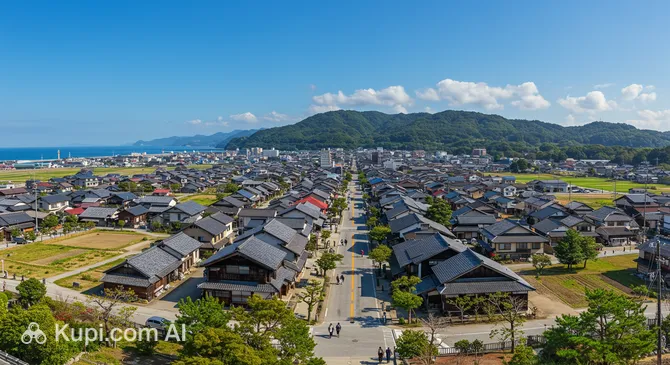
Murakami. Illustration.
Source: Kupi.com AI

The population of Murakami is about 56,000 residents, and the city is famous for its compactness and measured way of life. In the past, Murakami was a significant castle town, and this historical heritage is still felt in its appearance and architecture. Today, it is an important cultural and tourist center of the region, where centuries-old traditions and modernity are harmoniously interwoven.

The main highlight of Murakami is its genuine authenticity. Here you can see various types of traditional Japanese houses: from merchant mansions with shops in the center to fishing dwellings on the coast and peasant houses on the outskirts. The city is also known for its hot springs (onsens), preserved samurai houses, and ancient, cozy streets. It is an ideal place for those looking for peace and wanting to experience the real Japan far from the bustle of megacities.

Murakami is a city that can enchant at first sight. It will be an excellent starting point for getting to know the Japanese countryside, offering something for every traveler, whether it be immersion in history, enjoying nature, or discovering local gastronomy.

You can find more interesting facts on the Murakami city history page.

Weather Overview

The weather in Murakami offers guests a distinct change of seasons. Expect warm summers with occasional rain and cool, humid winters. The average temperature of the warmest month, August, is about 25.9°C, and the coldest, January, is about 1.5°C. The highest amount of precipitation falls in July and December (about 10 mm), while April is usually the driest month (about 4 mm). For a more detailed forecast and climate information, visit the weather in Murakami page.

Average monthly temperature

Average monthly precipitation

Interesting Facts

In addition to its picturesque landscapes and rich history, Murakami hides many amazing details that make it truly special. Ready to learn some interesting facts about this charming city in Japan?

  • Murakami is one of the few cities in Japan where you can still see authentic samurai houses. Five of them have survived to this day, and the Wakabayashi House has even received the status of an "Important Cultural Property of Japan."

  • The city has such a close connection with salmon that there is a unique museum entirely dedicated to this fish! In Murakami, people have not only caught and cooked salmon according to ancient recipes for centuries but also engage in its breeding and release into the natural habitat.

  • Murakami is famous throughout Japan for its unique art of carved lacquerware. Local craftsmen create true works of art using ancient techniques and secret recipes passed down from generation to generation.

  • Ancient traditions are carefully preserved in the city. Colorful festivals dedicated to salmon and local crafts are held annually, and on the streets, you can meet descendants of old merchant and samurai families who proudly share their history.

How to Get There

You can reach the city of Murakami, located in Niigata Prefecture, in several ways. The most common options for tourists, especially those arriving from afar, are flights to the nearest airports followed by a transfer by train or car, as well as travel via Japan's extensive railway network.

Although Murakami itself does not have its own airport, several air harbors are within a reasonable distance. One of the most convenient options is Niigata Airport (KIJ), located in the city of the same name about 43 kilometers southwest of Murakami. It is a medium-sized airport serving both domestic and some international destinations. The journey from Niigata Airport to Murakami by car or taxi will take approximately 1 hour 20 minutes to 1 hour 40 minutes.

For travelers who prefer larger international hubs, Sendai Airport (SDJ) is worth considering. It is located in Sendai, at a distance of about 126 km east of Murakami. Being a major international airport, it offers a wider choice of flights. A trip from Sendai Airport to Murakami by car can take about 3 – 3.5 hours.

Another option is Shonai Airport (SYO), located in the city of Sakata, about 71 km north of Murakami. This regional airport serves mainly domestic flights. Travel time from Shonai Airport to Murakami will be about 2 hours by car.

For clarity, here is a summary of the main airports from which you can reach Murakami:

AirportPassenger trafficDistance
Niigata Airport1.1 mln43 km
Shonai Airport364 81571 km
Junmachi Airport223 11181 km
Sendai Airport3.5 mln126 km
Fukushima Airport250 000139 km

In addition to air travel, the railway plays an important role in Murakami's transport connection. The city has its own railway station — Murakami, which is served by the JR Uetsu Main Line. This provides convenient connections with other settlements in Niigata Prefecture and neighboring regions. For travel from more distant parts of Japan, such as Tokyo or Osaka, a transfer is usually required at major hub stations like Niigata, from where Murakami can be reached by a regional train. Traveling by train in Japan is not only efficient but often a very scenic way to get around.

Main Attractions

Murakami, a charming city in Niigata Prefecture, Japan, offers travelers a unique combination of rich history, distinctive culture, and interesting gastronomic traditions. When planning a trip to Murakami, be sure to include the following attractions in your itinerary to get a deeper look at this amazing place.

One of the main historical gems of the city is the Murakami Castle Ruins (Murakami-jō Ato). Located on top of Mt. Garyu, these ruins were once part of a majestic castle that served as the residence for local feudal lords. Today, this place attracts visitors not only for its historical significance but also for its breathtaking panoramic views of the city, surrounding landscapes, and the Sea of Japan. A walk through the ruins will allow you to touch the past and enjoy a calm, peaceful atmosphere.

Salmon Museum "Iyoboya Kaikan" (Iyoboya Kaikan) is a unique place entirely dedicated to the famous Murakami salmon and the centuries-old culture of its processing. "Iyoboya" means "salmon" in the local dialect. In the museum, you can learn everything about traditional fishing methods, as well as more than a thousand different ways of preparing and preserving it, which have been passed down in Murakami from generation to generation. It is a fascinating immersion into local gastronomic history, interesting for both foodies and curious travelers.

To feel the spirit of the old city, be sure to take a stroll along Kurokabe-dori Street. This is a picturesque historical quarter whose name translates as "Black Wall Street" due to the characteristic finish of the traditional house facades. Here you will find many ancient buildings, craft workshops, and shops selling local souvenirs and delicacies, including, of course, the famous salmon. A leisurely walk along this street will allow you to plunge into the atmosphere of past eras and take beautiful photos.

In addition to these key locations, Murakami is also known for its samurai residences (buke yashiki), some of which are open to the public, and the scenic Senami Onsen coast with its hot springs located nearby. Each of these attractions reveals the charm and uniqueness of Murakami in its own way.

Local Cuisine

The gastronomic scene of Murakami is a true immersion into the world of flavors of the Sea of Japan and the fertile lands of Niigata Prefecture. The city is rightfully proud of its culinary traditions, where the main character is, without a doubt, salmon. Local residents have honed the art of its preparation for centuries, turning it into a true symbol of the region.

Be sure to try the signature dish "sake-no-saka-na" — salmon seasoned in sake. This delicacy has an incredibly delicate taste and a subtle aroma. Salmon here is prepared in dozens of ways: it is salted, smoked, dried, boiled, and marinated, each time revealing new facets of the flavor of this noble fish. In addition to salmon, it is worth paying attention to the freshest seafood caught in the Sea of Japan — from grilled scallops to various soups and, of course, sashimi and sushi.

The cuisine of Murakami is not limited to gifts from the sea. The famous Koshihikari rice is grown here, which serves as an ideal accompaniment to main dishes. Depending on the season, you can enjoy other local products: young bamboo shoots in spring, and aromatic mushrooms and sweet chestnuts in autumn. Among the drinks, the local sake, for which the entire region is famous, is definitely worth appreciating.

You can get acquainted with the authentic cuisine of Murakami both in cozy small restaurants and in lively street markets. It is here that simple but incredibly tasty dishes prepared from the freshest ingredients are often served. If your trip coincides with one of the gastronomic festivals dedicated to salmon or other local products, do not miss the chance to try rare dishes and learn the secrets of their preparation from the masters themselves.

Travel Tips

Planning a trip to the charming city of Murakami? To ensure your journey goes smoothly and leaves only pleasant impressions, we have prepared some practical tips. This information will help you better prepare for meeting the culture and life of this corner of Japan.

  1. Clothing and Essentials:

    The climate in Murakami, located in Niigata Prefecture, is characterized by snowy winters and hot, humid summers. In winter (December-February), bring warm layered clothing, a waterproof jacket, and shoes. In summer (June-August), light, breathable clothing will be useful. In spring and autumn, the weather is milder, but rain is possible, so an umbrella or raincoat will come in handy. Be sure to bring comfortable shoes for walking. Don't forget a power adapter (type A, 100V). When visiting temples and shrines, choose modest clothing that covers shoulders and knees, and be prepared to remove your shoes.

  2. Transport in the City:

    Murakami is a relatively small city, and you can get around on local buses. The central transport hub is the JR Murakami railway station. For a more detailed exploration of the city and its picturesque surroundings, you can consider renting a bicycle. Taxis are available but can be an expensive pleasure for long trips. If you plan to explore Niigata Prefecture, renting a car might be a good option, but remember left-hand drive and the need to have an international driving permit.

  3. Financial Matters:

    The official currency is the Japanese yen (JPY, ¥). It is recommended to exchange money at the airport upon arrival in Japan or at major banks, as there may be fewer exchange points in Murakami. Credit cards (Visa, Mastercard) are accepted in hotels and large stores, but always have cash with you for small establishments, markets, and temples. ATMs accepting international cards can most often be found in post offices (Japan Post Bank) and 7-Eleven stores. Tipping in Japan is not practiced and can be perceived as impoliteness.

  4. Health and Safety:

    Murakami, like Japan in general, is considered a very safe place with a low crime rate. Pharmacies (look for the sign 薬) are easy to find, but staff do not always speak English. Have travel insurance with you. Japan is prone to earthquakes, so familiarize yourself with the safety instructions in your hotel. In case of emergencies, contact local hospitals.

  5. Communication:

    The primary language of communication is Japanese. English is common in tourist spots but not everywhere. Learn a few basic phrases: "Konnichiwa" (Hello), "Arigato gozaimasu" (Thank you very much), "Sumimasen" (Excuse me). For internet access, you can purchase a tourist SIM card, rent a pocket Wi-Fi router, or use free Wi-Fi in hotels and some public places. Apps like Google Maps and Google Translate will be useful.

  6. Local Etiquette:

    In Japan, politeness and respect for traditions are valued. A slight bow is a common form of greeting. In public places, especially on transport, try to speak quietly. Remove your shoes before entering homes, traditional restaurants, and temples. When using chopsticks (hashi), do not stick them vertically into rice and do not pass food with chopsticks to another person.

  7. What to Avoid:

    Do not leave a tip — it is not practiced and may cause confusion. Also, refrain from taking photos of people without their explicit permission, especially in temples or on private territory. Loud phone conversations in public places are considered bad manners.

  8. Specialty of Murakami:

    The city of Murakami is famous for its salmon (sake) and traditional lacquerware (Murakami Tsuishu). Be sure to try local salmon dishes — it is a true delicacy! It is also worth visiting workshops or shops where these unique craft items are presented. If your trip coincides with local festivals, such as Murakami Taisai in July, you will get even more vivid impressions.

We hope these tips help you plan an unforgettable trip to Murakami and enjoy every moment of your stay in this unique city in Japan. Have a nice trip!

Entertainment & Nightlife

Murakami, a cozy city in Niigata Prefecture, offers its guests various opportunities for recreation and entertainment, although its nightlife has characteristics typical of small Japanese cities. Evening here is more a time for quiet socializing and immersion in the local atmosphere rather than loud parties until dawn.

Nightlife in Murakami is mainly concentrated around traditional Japanese pubs — izakayas, small bars, and restaurants where you can try local delicacies and the famous sake of the Niigata region. The main establishments of this kind can be found in the central part of the city or near the railway station. There are no huge nightclubs or districts entirely dedicated to entertainment like in megacities, but this gives evening Murakami a special charm. The atmosphere in local establishments is usually very friendly and welcoming; the crowd is predominantly local, but tourists are also greeted warmly.

Most bars and restaurants work until late evening but not around the clock. They are usually open until about 11:00 PM or midnight. There is generally no dress code; casual clothing is welcome. Prices in Murakami establishments are usually moderate, allowing you to enjoy the evening without significant expense. The best time to visit is after 7:00 PM, when the city quietens down a bit after the daytime hustle.

As for practical advice, moving around Murakami at night on foot is quite safe, especially in central areas. Public transport stops relatively early, so if you plan to stay late, you should think about a taxi in advance. You can call a taxi through the staff of the establishment where you are relaxing or find a taxi stand at the station. Since specific data on popular nightlife spots with online booking or detailed information is not available in this overview, we recommend checking on the spot or asking locals for advice — they will always suggest good places for evening relaxation.

Although the focus of this story is on nightlife, it is worth mentioning that there is plenty to do in Murakami during the day. The city is famous for its history related to samurai and the salmon trade. You can visit historical quarters, local museums dedicated to the culture and life of the region, or simply walk through the picturesque streets. There are also beautiful natural parks in the city's surroundings where you can enjoy peace and fresh air.

Parks & Museums

The city of Murakami, nestled in Niigata Prefecture, offers its guests a harmonious combination of picturesque natural spots and rich cultural heritage. Here you can enjoy the tranquility of traditional Japanese gardens, explore fascinating museums, and touch the history of this charming place.

Among the city's green oases, Shiroyama Park, which spreads around the ruins of the ancient Murakami Castle, stands out. It is not just a park but a place with deep history, offering beautiful views of the city and surrounding landscapes. A walk along its paths will allow you to enjoy nature and imagine what life was like in the castle many centuries ago. Not far from the city is the famous Sasagawa Nagare Coast — an impressive stretch of coastline with bizarre rocks, crystal clear water, and small islands. Although it is more of a natural attraction than a city park, its beauty attracts many tourists wishing to take a boat trip or simply admire the rugged marine landscapes.

Murakami's cultural life is no less rich. The city's hallmark is the Salmon Museum Iyoboya Kaikan. Murakami is famous for its salmon preparation traditions, and this unique museum tells in detail about the history of fishing, processing methods, and its significance for the local culture. Here you can see the famous dried salmon "shiobiki-zake" hung up for curing. Another landmark is the Festival Float Exhibition Hall Omatsuri Yataikaikan, which displays the luxuriously decorated "yatai" floats used during the annual Murakami Taisai festival. This is a magnificent opportunity to appreciate the skill of local artisans. For a deeper immersion into the city's past, it is worth visiting the Murakami City Local History Museum, whose exhibitions cover various aspects of the region's history, from ancient times to the present day, including samurai household items and samples of local crafts.

In addition to parks and museums, ancient samurai residences have been preserved in Murakami, such as the Wakabayashi family house, where you can plunge into the atmosphere of feudal Japan. A walk through these historical quarters is in itself a fascinating journey through time.

For a complete experience, be sure to drop by one of the workshops where the famous Murakami-bori Tsuishu lacquered products are created — this is a unique local craft known for its intricate carving and deep color. And to get a real taste of the city, try traditional salmon dishes in one of the local restaurants — it will be an unforgettable gastronomic experience.

Getting Around

Getting around Murakami is quite convenient thanks to several types of transport suitable for a city of its size. Although there is no metro or trams here, the existing system allows tourists to reach the main places of interest.

The main form of public transport in Murakami is local buses. They run on various routes, connecting the city center with its districts and some suburban areas. Bus fares are most often paid in cash directly upon entry or exit; it is recommended to have small change, as change for large bills may not always be available. In some regions of Japan, IC cards (like Suica or Pasmo) are accepted on buses, but in small towns like Murakami, it is better to check this on the spot or be prepared to pay in cash. The fare usually depends on the distance.

For travel over longer distances or for arriving in and departing from Murakami, trains play an important role. Murakami railway station is served by JR East. Train tickets can be purchased at ticket offices or machines at the station. Here, major Japanese IC cards are generally accepted for fare payment.

Tourists should pay attention to several practical points. Bus tickets are usually bought or paid for with the driver. Bus schedules can be found at stops or sometimes on tourist information boards. Public transport in Japanese cities generally runs very strictly on schedule, but in small towns like Murakami, the last trips may end earlier than in megacities.

In addition to public transport, alternative ways of moving around are available in Murakami. Taxis can be found at the railway station and other key points in the city, but this is a more expensive option. Given Murakami's compact size and its picturesque streets, an excellent option for exploring the city is bicycle rental. Many local attractions are within walking distance of each other, making walking also a pleasant and convenient way to explore the city.

Accommodation

When planning a trip to Murakami, you will find various accommodation options that can satisfy different preferences and budgets. The city features both traditional Japanese inns (ryokans) and more modern hotels, as well as guest houses.

The choice of area to stay in Murakami depends on your plans. If you want to be in the center of events and have easy access to the main attractions and restaurants, you should consider options in the central part of the city. For a more secluded stay, you can look for accommodation on the outskirts or in the adjacent picturesque areas.

In Murakami, you can find both budget options and mid-range hotels offering comfortable accommodation with all the necessary amenities. Some travelers prefer to stay in ryokans to dive deeper into Japanese culture, enjoy traditional hospitality, and perhaps onsens (hot springs), if available at the ryokan.

Booking Tip: It is recommended to book your accommodation in advance, especially if your trip coincides with the peak tourist season or local festivals. This will help you secure the best choice and potentially better prices. Booking can be done through popular online platforms or directly on hotel websites.

Nearby Cities

For those who want to explore the surrounding area, Murakami serves as an excellent starting point for day trips to several interesting nearby places:

Among them is Niigata, a large port city known for its culinary traditions, especially rice and sake, as well as the beautiful Bandai Bridge and the historical Saito Villa. Yamagata attracts travelers with the famous Yamadera mountain temple (Risshaku-ji) and the Zao hot springs, where unique "snow monsters" can be seen in winter. Tsuruoka offers immersion in the spiritual atmosphere of the sacred Dewa Sanzan mountains and a visit to the unique Kamo Aquarium, famous for its jellyfish collection. It is also worth noting Shibata with its historical castle and Yonezawa, known for its beef and the samurai heritage of the Uesugi clan.

CityPopulationDistance
Tainai28 00419 km
Seiro13 82333 km
Shibata94 25833 km
Niigata790 64649 km
Agano40 38249 km

These nearby destinations provide insight into the diverse culture and landscapes of the region, offering travelers the opportunity to expand their experiences of a trip to Japan.

Shopping & Souvenirs

Shopping in Murakami is an opportunity to immerse yourself in the atmosphere of traditional Japan and purchase unique items from local masters. The city is not famous for huge shopping centers, but it offers charming small shops and boutiques where you can find authentic goods. Special attention should be paid to handmade items and local delicacies reflecting the culture and history of the Niigata region.

The main shopping opportunities in Murakami are concentrated along the city's central streets, as well as in the areas adjacent to historical landmarks. Strolling through the city, you will discover many family shops selling traditional goods. It is here that you can feel the slow pace of the Japanese province and find something truly special.

In Murakami, you are unlikely to find the large modern shopping malls typical of megacities. However, there may be small local department stores or shopping arcades known as "shotengai." These places usually feature everyday goods, clothing, as well as local food products and souvenirs. This is a good way to see how locals live and what they buy.

While there may not be giant markets in Murakami, it's worth asking locals or the tourist center about the availability of morning markets ("asaichi"). These markets often sell fresh local products, seasonal vegetables and fruits, seafood, and sometimes handmade crafts. This is a great opportunity to try local delicacies and dive into the daily life of the city.

From Murakami, you should bring back unique souvenirs that will remind you of your journey. Be sure to pay attention to Murakami Tsuishu — the famous carved lacquerware that is the pride of the city. Also, Japan and Niigata Prefecture are famous for their sake, and in Murakami, you can find products from local sake breweries. Don't forget traditional Japanese sweets (wagashi), local green tea, and perhaps dried seafood, given the proximity to the Sea of Japan. These authentic gifts will delight you and your loved ones.

Most small shops in Murakami usually operate from 10:00 or 11:00 AM until 6:00 or 7:00 PM. Some family shops may have a day off during the week. Larger stores, if any, may stay open longer. As for payment, in Japan, especially in small towns and traditional shops, cash remains the preferred method of payment. Credit cards are being accepted more widely, especially in tourist spots and large retail outlets, but it is always useful to have enough yen with you.

Foreign tourists in Japan can take advantage of the tax refund system (Tax Free) for purchases over a certain amount in licensed stores. Look for "Tax-Free Shop" or "Japan Tax-Free Shop" signs. Usually, your passport will be required to process the tax refund. This is a good opportunity to save on purchases of souvenirs and other goods.

Reached the end of the page?

That means the route is fully explored