Support

Tateyama

About

Tateyama is a true gem of Toyama Prefecture, nestled comfortably at the foot of one of Japan's most revered mountains—Mount Tateyama. This charming town, with a population of about 44,000, serves as the gateway to one of the country's most spectacular mountain regions, situated in a picturesque corner of the Northern Japanese Alps, where mighty peaks rise nearly three kilometers above sea level.
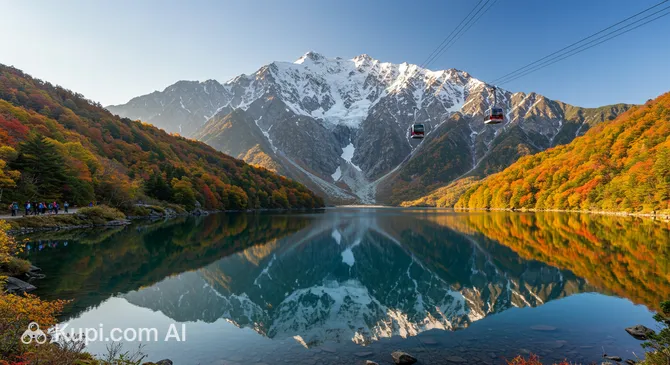
Tateyama. Illustration.
Source: Kupi.com AI

Tateyama is part of the Chubu Sangaku National Park and is famous for its unique natural landscape. Here, you will find dense forests, crystal-clear mountain lakes, and rushing rivers. One of the region's most famous features is the celebrated snow walls, which can reach heights of up to 20 meters along the roads in spring, creating a truly breathtaking sight. The town's atmosphere is permeated with tranquility and a sense of unity with nature, offering an ideal refuge from the urban hustle and bustle.

The main attraction drawing thousands of tourists from all over the world is the famous Tateyama Kurobe Alpine Route—one of the most spectacular high-altitude roads in the country. In addition, Tateyama offers an introduction to Japanese culture through visits to ancient temples and relaxation in modern thermal resorts.

If you value active recreation, breathtaking scenery, and authentic Japanese traditions, Tateyama will be an unforgettable discovery for you. Visit this corner of Japan to enjoy unique views, the purest mountain air, and one-of-a-kind experiences.

You can find more interesting facts on the Tateyama city history page.
Weather Overview

The weather in Tateyama has pronounced seasonal variations. Summers, especially in July and August, are warm here, with average maximum temperatures reaching 26.7°C in July and 27.9°C in August. Winters are cold, with the average temperature in January being around 0.9°C, and minimum values dropping to -1.8°C. Precipitation falls throughout the year, with the highest number of rainy days in January, July, and December (24 days), indicating a humid climate. Expect warm, humid summers and cold, also humid winters. For more detailed information on climatic conditions, including monthly data, visit the Tateyama Climate page.

Average monthly temperature

Average monthly precipitation

Interesting Facts

Beyond its breathtaking landscapes, Tateyama hides many amazing stories and features that not all travelers know about. Ready to learn some curious facts about this unique corner of Japan?

  • Sacred Peak: Mount Tateyama is considered one of Japan's three sacred mountains, along with the famous Mount Fuji and Mount Hakusan. Since ancient times, its peaks have attracted pilgrims believing that the ascent brings good luck and spiritual purification, and the mountain itself is shrouded in many legends and tales.

  • Record-Breaking Alpine Route: The famous Tateyama Kurobe Alpine Route is impressive in its scale: its length is about 37 kilometers, and the elevation gain reaches an impressive 2,450 meters! Notably, private vehicle traffic is strictly prohibited along the entire route, which helps preserve the unique ecosystem and makes the journey particularly peaceful and eco-friendly.

  • Corridors of Snow: One of the most incredible and photogenic attractions in Tateyama is the Yuki-no-Otani snow corridor. Every spring, you can walk here between giant walls of compacted snow, which can reach heights of 20 meters, creating a truly fairytale atmosphere of an icy kingdom.

  • Crater Lake and \"Hell Valley\": In the Murodo area, you'll find the picturesque mountain lake Mikuriga-ike, which formed in a volcanic crater. Not far away is the famous \"Hell Valley\" of Jigokudani, where hot volcanic gases and springs burst from the ground. Although the water and steam temperatures are too high for bathing, the clouds of steam enveloping the rocks create a mystical and mesmerizing landscape.

How to Get There

When planning a trip to the Japanese Alps, it is important to think through the logistics in advance, as the city is located in a mountainous area. You can find all the details and consider various routes on the how to get to Tateyama page, and below we will tell you about the main transportation hubs nearby.

Since Tateyama city does not have its own airport, travelers usually fly into neighboring cities. The closest and most convenient option is Toyama Airport (TOY). It is located in Toyama city, about 11.4 km from the center of Tateyama. This is a regional airport that accepts both domestic and some international flights. The journey by taxi or bus from here takes about 40 minutes.

For those arriving from further away or on international flights, Chubu Centrair International Airport (NGO) can be a good choice. This is a major aviation hub located in Nagoya city, about 205.5 km from Tateyama. Despite the distance, it offers a wide range of flights. A road trip from here will take about 5.5 hours, so many tourists prefer to combine the flight with a high-speed train ride.

Another option is Komatsu Airport (KMQ), located in Komatsu city. It is approximately 86.6 km from Tateyama. This is a medium-sized airport serving the Hokuriku region. Travel time by taxi or transfer will be roughly 2.5 hours.

For clarity, here is a summary of the main airports:

AirportPassenger trafficDistance
Toyama Airport736 74011 km
Noto Airport207 42777 km
Matsumoto Airport112 61878 km
Komatsu Airport1.8 mln87 km
Nagoya Airport735 000160 km

Railway connections also play a key role in the region's accessibility. Most tourists reach the prefecture's main station—Toyama—via the Shinkansen high-speed train (Hokuriku line), which connects the region with Tokyo and other major cities. From Toyama Station, you can transfer to the local Toyama Chiho Railway line, which leads directly to Tateyama Station—the starting point of the famous Alpine Route.

Main Attractions

The city of Tateyama and its surroundings are famous for breathtaking landscapes and unique attractions, many of which are connected to the famous Tateyama Kurobe Alpine Route. Here, everyone will find something for themselves, from relaxing hot springs to grand natural and engineering wonders.

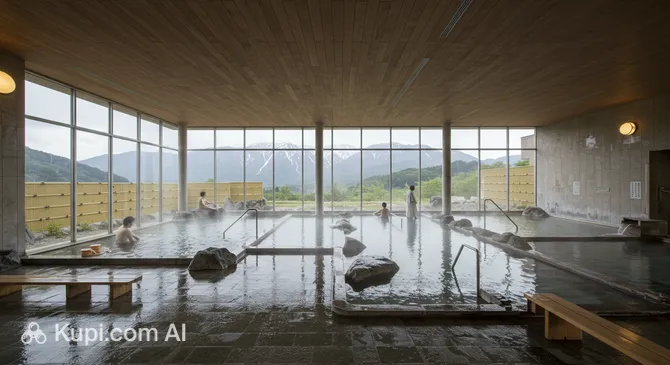
One place where you can rest and recharge is the Funahashi Tateyama Natural Onsen Yumegokochi. This natural hot spring offers visitors the opportunity to immerse themselves in traditional Japanese onsen culture. Here, you can enjoy healing baths that will help you relax after a full day of exploration and adventure in the Tateyama mountains.

Funahashi Tateyama Natural Hot Spring Yumegokochi. Illustration.
Source: Kupi.com AI

Traveler photos:

The hallmark of the region is undoubtedly the Tateyama Kurobe Alpine Route, and one of its most impressive parts is the Yuki-no-Otani Snow Corridor. In spring, usually from April to June, giant snow walls form here, reaching heights of up to 20 meters. Walking or taking a bus through this corridor leaves a truly unforgettable impression and is a unique opportunity to see the power of nature.

Another iconic structure on the Alpine Route is the Kurobe Dam. This is the tallest arch dam in Japan, striking in its scale and engineering brilliance. Tourists can walk along the crest of the dam, which offers magnificent views of the surrounding mountain peaks and the emerald Lake Kurobe. During the summer period, the powerful water discharge is particularly impressive, attracting many spectators.

Nature lovers should pay attention to Shomyo Falls, which is considered the highest waterfall in Japan—its waters plunge from a height of 350 meters. It is especially full and picturesque in the spring during the snowmelt. Often, another seasonal waterfall, Hannoki, can be seen right next to it. This site offers stunning views and the chance to feel the grandeur and beauty of Japanese nature.

Local Cuisine

The cuisine of Tateyama is a harmonious blend of the gifts from the Sea of Japan and the riches of the surrounding mountains. The city and the entire Toyama Prefecture are famous for the freshest seafood. Be sure to try "Toyama Baigan Don"—a delicious rice bowl topped with a variety of seafood delicacies, which may include sakura shrimp, squid, and the famous local translucent white shrimp. This dish allows you to fully appreciate the freshness and quality of the catch.

Beyond seafood delicacies, the mountainous areas of Tateyama offer their own gastronomic delights. Dishes made from wild herbs, mushrooms, and even game are popular here. Special attention should be paid to local soba noodles, which are often served with seasonal mountain vegetables and unique sauces characteristic only of this region. In street markets and small cafes, you can find appetizing grilled trout cooked over charcoal, as well as sweet rice cakes filled with bean paste—a great snack after an active day.

Funahashi Tateyama Natural Hot Spring Yumegokochi. Illustration.
Source: Kupi.com AI

Traveler photos:

Regarding drinks, in Tateyama, as in all of Japan, sake is highly valued. Local breweries produce it according to old recipes, and you will have the chance to try authentic varieties. Among non-alcoholic drinks, various Japanese teas are, of course, popular. Locals and tourists usually enjoy their meals in cozy restaurants, small family cafes, or try street food at markets. Gastronomic festivals are also regularly held in the city, where you can discover seasonal delicacies. One place where you can combine relaxation with a tasting of local dishes is Funahashi Tateyama Natural Onsen Yumegokochi, which offers visitors not only thermal springs but also restaurant services.

Travel Tips

Welcome to Tateyama, the gateway to the spectacular Kurobe Alpine Route and picturesque mountain landscapes! To ensure your adventure goes smoothly and leaves only the best impressions, we have prepared some practical tips.

  1. Clothing and Essentials:

    The climate in Tateyama and especially on the Alpine Route can be very changeable. The key word is layering. Even in summer, it can be cool at high altitudes, so bring a warm fleece sweater and a windproof, waterproof jacket. Comfortable, broken-in walking shoes are essential, preferably trekking shoes. Don't forget sunscreen, sunglasses, and a hat, as the mountain sun can be very intense. For electronics, you may need an adapter (Type A and B sockets are used in Japan). When visiting temples or shrines, even if there is no strict dress code, choose modest clothing that covers shoulders and knees out of respect for local traditions.

  2. Transportation Around Town and Surroundings:

    The main way to explore the region, and especially to experience the famous Tateyama Kurobe Alpine Route, is a combination of trains, buses, ropeways, and cable cars. In Tateyama itself and its surroundings, it is convenient to use local buses and trains. Taxis are available but can be an expensive pleasure. Renting a car can be useful for exploring Toyama Prefecture at a more leisurely pace, but it is not necessary for the Alpine Route itself, as it involves the use of specialized transport.

  3. Finances: Currency, Cards, Tipping:

    The local currency is the Japanese Yen (JPY). Although credit cards are accepted in many hotels, restaurants, and shops, especially in the tourist areas of the Alpine Route, always have some cash on hand for small purchases, paying for local buses, or in more remote areas. International cards usually work at Japan Post Bank ATMs and 7-Eleven convenience stores. Tipping in Japan is not accepted and can cause confusion; excellent service is already included in the price.

  4. Health and Safety:

    Tateyama is a very safe place for tourists. Pharmacies (look for the 薬 - kusuri sign) exist, but the staff may not always speak English, so it's best to have a basic first-aid kit (painkillers, plasters, antiseptic) with you. For serious medical help, contact your hotel or a tourist information center. Be sure to take out travel medical insurance before your trip. Main precautions are related to being in the mountains: monitor the weather forecast, dress accordingly, do not stray from marked trails, and be attentive to how you feel at high altitudes.

  5. Communication and Internet:

    The official language is Japanese. Staff at tourist centers, hotels, and Alpine Route facilities often speak English, but overall, the level of English proficiency may not be high. Knowing a few basic Japanese phrases (e.g., "konnichiwa" - hello, "arigato" - thank you, "sumimasen" - excuse me/sorry) will be very helpful and warmly received by locals. For constant internet access, consider purchasing a local SIM card or renting a pocket Wi-Fi device—this can be done at major airports upon arrival. Free Wi-Fi is often available in hotels and some public places.

  6. Local Etiquette and Traditions:

    Japanese people value politeness and respect for others. Greetings are often accompanied by a slight bow. Remove your shoes before entering homes, some temples, and traditional inns (ryokans)—pay attention to signs or the behavior of others. On public transport, try to be quiet and avoid talking loudly on the phone. Avoid eating and drinking on the go in public places unless it is a designated area (for example, at food festivals).

  7. What to Avoid:

    Misuse of chopsticks (o-hashi): Never stick your chopsticks vertically into a bowl of rice—this is associated with funeral rituals. Also, do not pass food from chopsticks to another person's chopsticks. Do not leave trash lying around: In Japan, people are very conscientious about cleanliness. If you can't find a bin (and they can be rare), take your trash back to your hotel or to a place where it can be properly disposed of.

  8. Additional Tip for Tateyama:

    Plan the Tateyama Kurobe Alpine Route in advance: This unique route is not open year-round (usually from mid-April to late November). Be sure to check the official website for current operating dates, the status of the route (especially the "Yuki-no-Otani" snow corridor in spring), and purchase tickets or passes in advance, especially if your trip falls during peak seasons (e.g., Golden Week in May or the autumn leaf-viewing period).

With these tips, your journey to Tateyama and your discovery of this amazing corner of Japan will be even more comfortable and memorable. Enjoy your trip and the incredible views!

Entertainment & Nightlife

Tateyama, known primarily for its breathtaking natural landscapes, offers a more peaceful and tranquil evening leisure experience compared to large metropolises. Here, nightlife focuses not on noisy clubs, but on cozy establishments where you can relax after a busy day.

Evening entertainment in Tateyama mainly revolves around restaurants and traditional Japanese pubs—izakayas. These places offer a great opportunity to enjoy local cuisine and drinks in a relaxed atmosphere. One such place where you can combine dinner with wellness treatments is Funahashi Tateyama Natural Onsen Yumegokochi. Here, you can not only enjoy a delicious meal but also relax in a hot spring (onsen), which is a perfect way to end the day.

Most establishments where you can spend the evening are likely to be concentrated around the Tateyama railway station or on the city's central streets. The atmosphere here is generally very welcoming and calm, ideal for those seeking solitude or pleasant conversation without loud music and commotion. Instead of large dance clubs, you will most likely find small local bars where you can try sake or other traditional drinks.

When planning an evening out, keep in mind that many small establishments in Tateyama may close earlier than in larger cities, so it is recommended to check opening hours in advance. Public transport may run less frequently late at night, but taxi services are available. It is better to plan your return route in advance, especially if you are not staying in the center.

Tateyama is considered a very safe city, and nighttime walks here generally do not cause concern. Nevertheless, it is always worth taking basic precautions and being mindful of your surroundings. Local police boxes (koban) are always ready to help if needed.

During the day, Tateyama offers many options for active recreation and cultural discovery. The region's main attraction is the famous Tateyama Kurobe Alpine Route, which draws nature and mountain lovers. You can also visit local temples, shrines, and small museums that tell the history and traditions of this part of Japan.

In general, evening in Tateyama is not about loud parties until dawn, but about the opportunity to enjoy delicious food, a peaceful atmosphere, and the beauty of the Japanese countryside. It is an ideal place for those who value serenity and want to take a break from the city bustle.

Parks & Museums

Tateyama, nestled comfortably at the foot of the majestic Japanese Alps in Toyama Prefecture, offers its guests a unique combination of breathtaking natural landscapes and opportunities for cultural enrichment. This city serves as the gateway to some of Japan's most impressive mountain scenery and preserves a rich heritage closely tied to nature and local traditions.

The region's main natural gem is undoubtedly the famous Tateyama Kurobe Alpine Route. This is not just a park in the usual sense, but an entire system of roads, cable cars, bus and trolleybus lines, and tunnels passing through the rugged Northern Japanese Alps. Tourists here are treated to truly stunning views, including the legendary Yuki-no-Otani snow corridor in spring, alpine meadows with rare flowers in summer, and the dazzling colors of autumn. A significant part of the route passes through the Chubu-Sangaku National Park, offering countless opportunities for hiking of various difficulty levels and enjoying untouched mountain nature. While there may not be extensive urban parks in the city of Tateyama itself, the entire surrounding area is one giant natural reserve.

To gain a deeper understanding of the history, culture, and nature of this unique region, several interesting museums are worth a visit. Key among them is the Tateyama Museum of Toyama. This extensive complex, which includes several pavilions and even a reconstructed historical village, is dedicated to Mount Tateyama, its deep religious significance as one of Japan's three sacred mountains, as well as local flora, fauna, and geology. The exhibits fascinatingly recount the ancient traditions of mountain asceticism (Shugendo) and the centuries-old history of pilgrimage. Another noteworthy site is the Tateyama Caldera Sabo Museum. It introduces visitors to the region's geological features, the Tateyama volcanic caldera, and the titanic engineering efforts to prevent erosion and destructive debris flows in this mountainous terrain. The museum offers interactive exhibits and impressive video materials that make a complex subject accessible and interesting.

Tateyama's historical heritage is inextricably linked to the mountain and pilgrimage traditions. In the city's outskirts and along old mountain trails, you can find small shrines, stone steles carved with names and prayers, and other memorials left by pilgrims and mountain hermits over the centuries. The architecture of local temples and traditional inns (ryokans) that once hosted pilgrims can also be of interest to lovers of Japanese culture and history.

For a truly authentic experience in Tateyama, try exploring the lesser-known hiking trails at the base of the mountains, which often hide picturesque corners of nature that aren't as crowded with tourists. After a full day spent in the fresh air, be sure to visit one of the local onsens (hot springs)—this will not only allow you to relax and recover but also touch an important part of Japanese culture focused on hospitality and health.

Getting Around

Public transportation in Tateyama is primarily geared towards tourists traveling along the famous Tateyama Kurobe Alpine Route, as well as meeting the needs of the local population. The main modes of transport are local buses, which connect Tateyama Railway Station with various points in the city and the immediate vicinity. Trains also play an important role, providing connections to larger cities in the region.

The main transport artery and a unique attraction in itself is the Tateyama Kurobe route. This is an impressive sequence of different types of transport that allows you to cross the Northern Japanese Alps. The journey includes rides on the Tateyama Cable Car, special highland buses, electric buses (E-Buses) running through tunnels, and the Tateyama Ropeway, which offers spectacular panoramic views. Each segment of the way is an adventure in its own right.

Fare payment systems vary. On local buses, payment is usually made in cash directly to the driver upon entry or exit. Train tickets are purchased at ticket offices or vending machines at railway stations. For traveling along the Tateyama Kurobe Alpine Route, a special through-ticket or tickets for individual sections are required. These can be purchased in advance online, at some major railway stations, or directly at the departure stations of the route—Tateyama or Ogizawa. There are various types of tickets covering the whole route or parts of it. Note that standard Japanese transport IC cards (like Suica or Pasmo) may not be valid on all sections, especially on the Alpine Route itself, so it is recommended to have cash on hand.

Tourists planning a trip along the Alpine Route are strongly advised to buy tickets in advance, especially during peak seasons (spring when the snow corridor is open, and autumn during the peak foliage season), as tickets can sell out and queues are possible at stations. It is important to carefully study the transport schedules, as they may change depending on the season and weather conditions. Transport on the Alpine Route operates mainly during daylight hours. Local bus tickets are usually purchased from the driver.

Among alternative ways to get around Tateyama, taxis are available. They can be found at stands near stations or ordered by phone, though this is a more expensive option. For those who prefer independence and plan to explore the region more widely, car rental can be an optimal solution. This will allow you to comfortably reach interesting places not included in the standard Tateyama Kurobe route. Bicycle rental as a primary means of transport is less popular due to the predominantly mountainous terrain, but may be offered for short rides in some flatter areas.

Accommodation

In Tateyama, travelers will find a variety of accommodation options to suit different preferences and budgets. The city offers everything from traditional Japanese inns (ryokans) to more familiar hotels, guesthouses, and potentially private rental options, especially if you are looking for a more secluded getaway.

While specific areas to stay depend on your plans, many tourists prefer to stay near major transport hubs or attractions to make getting around easier. In Tateyama, this may mean being close to the stations where routes to the Tateyama Kurobe mountain range depart, or near local onsens (hot springs).

The range of accommodation in Tateyama includes:

  • Ryokans: Traditional Japanese inns where you can immerse yourself in local culture, enjoy Japanese cuisine, and often have access to hot springs.
  • Hotels: From small family-run hotels to larger ones offering a standard range of services. While specific examples aren't listed here, you can find both budget and mid-range hotels in the city.
  • Guesthouses (Minshuku): A more home-like and often more budget-friendly option, similar to European B&Bs.
  • Apartments and Holiday Homes: These may be available through online platforms, especially if you are traveling in a group or with family.

As for prices, they range from budget options to more expensive ryokans and hotels with full board and mountain views. It is recommended to book accommodation in advance, especially if your trip coincides with peak tourist seasons (such as cherry blossom season, autumn leaves, or the peak mountain hiking season). The main booking methods are popular international and Japanese online platforms, as well as direct booking through hotel websites.

Nearby Cities

For those looking to explore the surroundings of Tateyama, the city serves as an excellent starting point for day trips to several interesting nearby locations.

For example, just 10 kilometers away is Toyama, the capital of the prefecture of the same name, where you can visit the reconstructed Toyama Castle, walk through the picturesque Fugan Unga Kansui Park known for its canal and views, and learn about the art of glassmaking at the Toyama Glass Art Museum. A bit further, about 28 kilometers away, is the city of Takaoka, which attracts tourists with its famous Great Buddha—one of the three largest bronze Buddha statues in Japan—and the impressive Zuiryu-ji Temple, which is a national treasure. Another interesting option for a short trip is Imizu (about 23 km), where you can visit the Kaiomaru seaside park with its moored sailing ship and check out the lively Shinminato Kitokito fish market to try fresh seafood.

CityPopulationDistance
Kamiichi19 3186 km
Toyama413 02810 km
Namerikawa32 31711 km
Uozu40 82820 km
Imizu90 20123 km

These nearby destinations provide a glimpse into the diverse culture, history, and landscapes of the Toyama region, complementing the experience of visiting Tateyama itself.

Shopping & Souvenirs

Tateyama, known primarily for its breathtaking mountain landscapes and the famous Tateyama Kurobe Alpine Route, offers travelers a special kind of shopping. Here, the focus shifts from large shopping centers to cozy shops offering products that reflect the spirit of this unique region of Japan. You will find souvenirs to remember your trip by as well as local delicacies.

The main shopping opportunities in Tateyama are likely to be concentrated near key tourist hubs, such as Tateyama Station, where the ascent to the Alpine Route begins. Small shops and souvenir stalls can also be found in the villages at the foot of the mountains and near popular hotels and ryokans. These are not the noisy shopping streets of megacities, but rather places where you can leisurely pick out something special.

You probably won't find large shopping malls in Tateyama. Shopping here is more intimate. Instead of malls, look for specialized shops at tourist sites, information centers, or within hotels, which often feature a good selection of souvenir products and local goods.

Although there may not be large traditional markets in Tateyama like in big cities, you may occasionally come across small local fairs or stalls, especially during the tourist season. Here, farmers may offer fresh seasonal produce, and local artisans may sell handmade goods. This is a great opportunity to purchase something authentic and support local producers.

As souvenirs from Tateyama, it's worth bringing home items that remind you of the majestic nature of this region. Popular items include:

  • Goods featuring the Tateyama Kurobe Alpine Route branding: magnets, postcards, keychains, T-shirts.
  • Items related to the local flora and fauna.
  • Local food products: traditional Japanese sweets (for example, those made with local berries or chestnuts), sake from Toyama Prefecture, various pickles, and canned products.
  • Small handmade items from local craftsmen, if you can find them.

These souvenirs will be a wonderful reminder of your journey to the Japanese Alps.

Shops in Tateyama, especially those geared towards tourists, usually operate from the morning (around 9:00-10:00) until the evening (17:00-18:00). Schedules may change depending on the season. Regarding payment, most tourist spots, hotels, and large souvenir shops accept credit cards. However, it is always useful to have some cash on hand, especially for purchases in small shops or from street vendors.

For international tourists in Japan, a tax refund system (Tax-Free) is available. Look for shops with the "Japan Tax-free Shop" logo. For a one-time purchase of goods (excluding consumables) totaling over 5,000 yen (excluding tax), you can process a tax refund directly in the shop by presenting your passport. Check the conditions in specific retail outlets, as not all shops, especially small ones, may provide this service.

Reached the end of the page?

That means the route is fully explored