Support

Nanto

About

Nanto is a charming city nestled among the picturesque mountains of Toyama Prefecture on the west coast of Honshu Island. It stretches across a fertile valley surrounded by green hills and endless rice fields, with the winding Shogawa River adding a special charm to the local landscapes. Thanks to its unique location, Nanto invites visitors to enjoy leisurely strolls and a deep acquaintance with authentic Japan, where nature and centuries-old traditions are harmoniously intertwined.
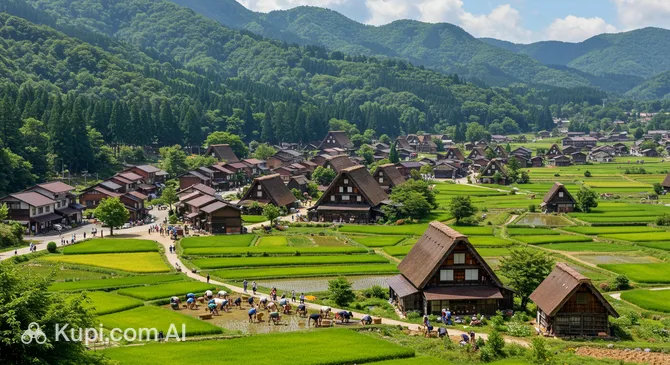
Nanto. Illustration.
Source: Kupi.com AI

With a population of about 47,000 people, Nanto maintains the warm atmosphere of a small town where every corner breathes history and tranquility. Despite its status as an important administrative center, there is no hustle and bustle of a metropolis here—life flows at a steady pace, and the hospitality of the locals is felt everywhere. The city is rightfully proud of its traditional crafts and unique architectural ensembles, some of which are recognized as UNESCO World Heritage sites, attracting connoisseurs of authentic culture.

For travelers, Nanto is a true discovery. Here you can immerse yourself in the atmosphere of ancient villages such as Ainokura and Suganuma in the Gokayama district, famous for their gassho-zukuri style houses with steep thatched roofs. Visitors can learn about the art of woodcarving masters for which the Inami district is famous or attend colorful local festivals reflecting a rich cultural heritage. Furthermore, Nanto offers breathtaking views of mountain valleys and the chance to taste unique local cuisine rarely found in large cities.

Nanto is a wonderful opportunity to see a different Japan: not glossy and noisy, but sincere, restrained, and incredibly beautiful. This city is perfect for those who appreciate pristine nature, deep traditions, and seek authentic experiences far from the beaten tourist paths. A trip to Nanto promises to be an unforgettable immersion into the heart of Japanese culture and hospitality.

You can find more interesting facts on the history of the city of Nanto page.

Weather Overview

When planning a trip to Nanto, it is useful to know about the features of the local climate. You can expect a warm and quite humid summer: the average temperature in July and August is a comfortable 25-26°C (maximum values can reach 28-29.5°C), however, you should be prepared for frequent rains, as the number of rainy days in the summer months can reach 17-23. Winters in Nanto are cool, with an average January temperature of about 1.1°C (minimums can drop to -2.1°C), and are also characterized by frequent precipitation, which at this time of year often falls as snow, especially in December and January (up to 24-25 days with precipitation).

For more detailed planning of your trip, we recommend studying the climate of Nanto.

Average monthly temperature

Average monthly precipitation

Interesting Facts

In addition to its world-famous attractions like the Gokayama villages, Nanto holds many less obvious but equally fascinating stories and traditions. This city in Toyama Prefecture is a real treasure trove for the curious traveler ready to look behind the facade of postcard views.

  • The unique gassho-zukuri houses in Gokayama village, a UNESCO World Heritage site, are more than just picturesque. Their steep thatched roofs, resembling palms joined in prayer (gassho), are designed to withstand the heavy snowfalls characteristic of this region of Japan, and some of these structures are several hundred years old.

  • Nanto is not only a place to see ancient crafts but also to experience them. For example, you can attend a workshop on making traditional Japanese washi paper or try your hand at woodcarving under the guidance of experienced masters whose families have been doing this for generations.

  • The city is famous for its vibrant festivals, but one of the most magical is the festival of glowing paper lanterns. Imagine entire villages being transformed as thousands of lanterns light up ancient houses and streets, creating an atmosphere of a real fairy tale and transporting guests into a world of ancient legends.

  • Ancient legends are still alive in Nanto. Locals believe in the spirits of the mountains and forests, who, according to belief, protect their lands. In some of the ancient houses of Gokayama, mysterious stories from past centuries are passed down by word of mouth, adding a special mystical aura to this place.

How to Get There

When planning a trip to this picturesque corner of Toyama Prefecture, it is important to think through your route in advance. You can find more details on how to get to Nanto to choose the most convenient option for you. The main gateways to the region are the nearest airports and railway hubs of neighboring large cities, from where you can continue your journey by bus or local train.

There is no airport in the city of Nanto itself, so travelers usually fly into Toyama Airport (TOY), located in Toyama City. This is the nearest air hub, situated only 30 km from the center of Nanto. A trip from here by taxi or rental car will take approximately 60–70 minutes. Despite being a regional airport, it is convenient for those flying on domestic flights from Tokyo or Sapporo.

Another convenient option is Komatsu Airport (KMQ), located in Komatsu City, about 46 km from Nanto. This is an important transport hub for the region with a medium level of passenger traffic, accepting both domestic and some international flights. The drive from here will take about an hour and a half. For international travelers, the main point of arrival is often Chubu Centrair International Airport (NGO) in Nagoya. Although it is much further away—184 km (about a 5-hour drive), it offers the widest selection of international flights. From there, tourists usually reach the region by high-speed trains.

For clarity, here is a summary of the main airports:

AirportPassenger trafficDistance
Toyama Airport736 74030 km
Komatsu Airport1.8 mln46 km
Noto Airport207 42787 km
Matsumoto Airport112 61899 km
Nagoya Airport735 000139 km

Regarding railway connections, Nanto is served by the JR Johana Line, which connects the city to the major transport hub of Takaoka. Travelers often use the Shinkansen high-speed train (Hokuriku Shinkansen line) to Shin-Takaoka station and then transfer to a local train or bus going directly to Nanto (Johana or Fukuno stations). Such a trip allows you to enjoy the views of the Japanese countryside and is one of the most reliable ways to get to the city.

Main Attractions

Nanto's attractions are a unique mosaic of living history, traditional crafts, and magnificent nature. A journey here allows you to see the very Japan that is often depicted in old prints: calm, majestic, and deeply respecting its roots. Each district of the city has its own unique face and atmosphere.

The main hallmark of the region is undoubtedly the historic villages of Gokayama—Ainokura and Suganuma. Listed as UNESCO World Heritage sites, they are famous for their houses in the gassho-zukuri architectural style. These massive structures with steep thatched roofs, resembling hands folded in prayer, were created hundreds of years ago to withstand the weight of heavy winter snowfalls. A walk here is not just an inspection of buildings, but an immersion into a lifestyle that has remained practically unchanged for the last few centuries.

Art and architecture enthusiasts should head to the Inami district, known throughout the country for its woodcarving masters. The heart of this district is the majestic Zuisen-ji Temple. Its gates and main halls are decorated with incredibly complex and skillful carvings made by local craftsmen. Walking along Yokamachi Street leading to the temple, you can hear the tapping of wooden hammers coming from numerous workshops—this sound is even included in the "100 Soundscapes of Japan" list.

The Johana district is often called the "Little Kyoto of Etchu" for its refined atmosphere and preserved historic appearance. This place flourished thanks to silk production, and today you can see old warehouses and traditional merchant houses. Johana is also famous for its vibrant festivals with richly decorated hikiyama floats, which are true works of art. A visit to the local weaving center will allow you to learn more about the silk-weaving traditions the city is proud of.

For lovers of active recreation and panoramic views, the IOX-AROSA resort is worth a visit. In winter, it is a popular spot for skiing, and in spring and summer, the slopes are covered with a carpet of flowers, and kibana cosmos festivals are held here. From here, a breathtaking view of the Tonami Plain opens up, allowing you to appreciate the scale and beauty of the Toyama Prefecture landscape.

Local Cuisine

The gastronomy of Nanto is a true immersion into Japan's culinary traditions, closely linked to the region's rich natural gifts. Local cuisine is famous for the freshness of its ingredients and authentic recipes passed down through generations. Travelers can look forward to discovering unique flavors that are hard to find anywhere else.

Be sure to try dishes made from fresh river fish caught in the crystal-clear waters of local rivers. A gem is ayu (sweet Japanese trout), which is masterfully grilled or served with aromatic sauces. Another gastronomic pride is Gokayama-tofu, a dense homemade tofu prepared according to ancient recipes in the villages of Gokayama. It is also worth paying attention to the variety of dishes made from wild mountain herbs and vegetables, which give the local cuisine a special character, and, of course, hearty miso soups with seasonal additions.

For lovers of sweets and street food, Nanto has much to offer. In local markets, you can find traditional Japanese rice and bean sweets, as well as original treats made from chestnuts and sweet potatoes. Don't pass by fresh onigiri (rice balls with filling) and appetizing fried pies with local products—they are a great way to have a quick and tasty snack.

Among drinks, local sake is noteworthy, being especially fragrant and tasty during autumn harvest festivals. It perfectly complements a meal and allows for a deeper appreciation of Japanese culture. Among non-alcoholic drinks, traditional Japanese tea is popular and served everywhere.

The food culture in Nanto is diverse. Locals and tourists can enjoy authentic dishes in small restaurants, explore gastronomic finds in lively markets, or immerse themselves in a festive atmosphere at one of the gastronomic festivals. The autumn harvest festivals leave particularly vivid impressions, where you can not only taste seasonal delicacies but also participate in culinary workshops. The gastronomic scene of Nanto attracts with its sincerity, emphasis on the freshest local products, and faithfulness to centuries-old traditions.

Travel Tips

Welcome to Nanto! To make your trip to this charming corner of Toyama Prefecture as comfortable and memorable as possible, we have prepared some practical tips.

  1. Clothing and Essentials: The climate in Nanto, as in all of Japan, is clearly defined by seasons. In summer (June–August), choose light, breathable clothing; in spring (March–May) and autumn (September–November), layering will be useful—warm clothes for the evening and light ones for the day. In winter (December–February), a warm jacket, hat, gloves, and scarf are essential, as snowfalls are possible. Be sure to bring comfortable shoes for walking, as exploring local beauties is most pleasant on foot. Don't forget a universal adapter (types A and B sockets are used in Japan) and a portable power bank. When visiting temples and shrines, try to dress modestly, covering shoulders and knees, out of respect for local traditions.
  2. Transport around the city and surroundings: Within Nanto itself and for trips to nearby attractions, you can use local buses—we recommend checking their schedule in advance, especially if you plan trips to more remote areas. Railway communication is provided by the Johana Line. Taxis are available but can be expensive. For maximum freedom of movement and exploring the picturesque surroundings, including the famous gassho-zukuri style villages, consider renting a car. Remember that an international driving permit is required for this, and traffic in Japan is on the left.
  3. Finance: The official currency is the Japanese yen (JPY, ¥). It is best to exchange currency at the airport upon arrival or at banks in large cities. In Nanto, this can be more difficult. Credit and debit cards are accepted in many hotels, shops, and restaurants; however, cash is still very important, especially in small establishments, markets, and for transport. International cards are most often accepted by ATMs at Japan Post Bank branches (look for the JP Bank sign) and at 7-Eleven stores. Tipping in Japan is not customary—good service is considered the norm.
  4. Health and Safety: Pharmacies (薬局 - kusuriya) can be found in the city, but not all are open 24/7, and staff may not always speak English. It is recommended to have a basic set of medications with you. Japan is one of the safest countries in the world, and Nanto is no exception. The crime rate is very low. Nevertheless, always follow basic precautions. Be sure to get medical insurance before your trip. Remember that Japan is in a seismically active zone; familiarize yourself with the rules of conduct during an earthquake (information is usually available in hotels).
  5. Communication: The official language is Japanese. The level of English proficiency among the local population in small towns like Nanto may be low. Learn a few basic phrases: "konnichiwa" (hello), "arigato gozaimasu" (thank you), "sumimasen" (excuse me/sorry). For ease of navigation and translation, we recommend purchasing a tourist SIM card or renting a pocket Wi-Fi router at the airport. Google Maps and Google Translate apps will be useful.
  6. Local Etiquette: Japanese people value politeness and respect. When greeting, it is customary to bow slightly. In public places, especially on transport, try to speak quietly and not disturb others. Remove your shoes before entering private homes, some temples, and traditional restaurants (where there are tatami mats). Remember the rules for using chopsticks: do not stick them vertically into rice and do not pass food from chopsticks to chopsticks.
  7. What to Avoid: Try not to talk loudly on the phone in public places, especially on transport. Also, avoid pointing at people or objects with one finger—it is considered impolite; it is better to use an open palm. Do not litter—cleanliness is taken very seriously in Japan.
  8. Special Tip for Nanto: The city of Nanto is the gateway to unique historic villages such as Shirakawa-go and Gokayama (the latter includes the villages of Ainokura and Suganuma, which are UNESCO World Heritage sites). Be sure to set aside time to visit them to see traditional gassho-zukuri houses and immerse yourself in the atmosphere of old Japan. This is truly an unforgettable experience!

We hope these tips help you better prepare for your trip and enjoy every moment of your stay in Nanto, discovering its unique culture and natural beauty. We wish you an unforgettable journey!

Entertainment & Nightlife

Evening in Nanto offers travelers a chance to immerse themselves in the authentic atmosphere of the Japanese countryside, far from the noise and bustle of major metropolises. Nightlife here has its own calmer and more measured character, ideal for relaxation and getting to know local culture and cuisine in a cozy setting, rather than noisy club parties.

The foundation of evening entertainment in Nanto consists of traditional Japanese pubs—izakaya, small local bars, and restaurants where you can enjoy regional dishes and drinks, including local sake. These establishments usually have a very friendly and hospitable atmosphere, often frequented by locals, which provides a great chance to socialize and better understand the daily life of the city. One should not expect loud nightclubs or extensive districts with neon signs typical of large cities; the emphasis is shifted towards quality, soulfulness, and local flavor.

Since Nanto is a city that values tradition and tranquility, specialized nightclubs are not common here. Evening entertainment is mainly concentrated around restaurants and izakayas. If we had data on specific bars or night spots from a verified list for Nanto, we would be happy to share them. However, such places are best found in the central part of the city by looking for local signs or asking residents for recommendations. They usually stay open until late evening, but not until early morning. The dress code is generally casual and relaxed.

When planning your evening leisure, keep in mind that public transport in Nanto may stop running relatively early. The most convenient way to get around at night is by taxi. You can call a car by asking the staff of an establishment or find a taxi stand near the stations. As for safety, Nanto, like most cities in Japan, is characterized by a high level of security. Evening walks along illuminated central streets are usually comfortable, but one should always follow standard precautions.

During the day, Nanto offers many other exciting activities. Guests of the city can explore the world-famous historic gassho-zukuri villages in the Gokayama district, which are a UNESCO World Heritage site. It is also worth visiting local museums dedicated to traditional crafts, such as Washi papermaking, or simply enjoying the picturesque natural landscapes of Toyama Prefecture while walking through numerous parks and trails.

Parks & Museums

The city of Nanto, located in Toyama Prefecture, invites travelers to enjoy a harmonious combination of picturesque natural landscapes and rich cultural heritage. Here you can find both peaceful green corners and unique museums that tell the history and traditions of this amazing region of Japan.

Among Nanto's green zones, Sukunamiyama Park stands out. It is a wonderful place for leisurely walks, picnics, and admiring the seasonal changes of nature: from cherry blossoms in spring to the vibrant colors of autumn. The park offers well-maintained paths and observation decks with beautiful views. For those who prefer more active outdoor recreation, the surroundings of Nanto are rich in mountain hiking routes that allow you to enjoy magnificent scenery.

Nanto's cultural heritage is most vividly presented in its museums dedicated to the unique history and traditions of the Gokayama region. We recommend visiting the Gokayama Folk Museum (Gokayama Minzoku-kan), which houses household items and tools telling of the lives of local farmers. Equally interesting is the Gokayama Saltpeter and Paper Museum (Gokayama Ensho no Yakata), whose exhibition is dedicated to the production of traditional "washi" paper and the extraction of saltpeter, important historical industries of these places. Visiting these museums will help you gain a deeper understanding of how harsh natural conditions formed the unique way of life in Gokayama.

The main architectural and historical attractions of Nanto are undoubtedly the world-famous villages of Ainokura and Suganuma. These settlements, included in the UNESCO World Heritage list, have preserved unique "gassho-zukuri" style houses—with high, steep thatched roofs resembling hands folded in prayer. A walk through these authentic villages is a real journey through time, allowing you to touch centuries-old history and traditional Japanese architecture. Many houses are still inhabited, and some have been turned into small museums or guest houses.

For a more complete immersion into the culture of the region, stop by the Gokayama Traditional Craft Village (Gokayama Gassho no Sato). Here you can not only see the work of local masters but also participate in workshops, for example, on making washi paper or straw weaving. This is a great opportunity to create a souvenir with your own hands and learn more about local crafts.

Traveler's tip: to get a truly authentic experience, consider staying overnight in one of the traditional minshuku houses in the villages of Ainokura or Suganuma. This will allow you to not only feel the atmosphere of ancient Japanese life but also enjoy the silence of a mountain village after sunset. Also, don't miss the chance to try local cuisine, which is often prepared from fresh seasonal ingredients.

Getting Around

Getting around the city of Nanto and its surroundings is possible through the public transport system, which, in cities of this size, is mostly represented by buses. Bus routes connect key areas of the city and can also provide connections to nearby towns and attractions.

The payment system for public transport in Nanto is likely cash-based directly upon boarding the bus. It is recommended to have small change with you, as the driver may not have change for large bills. Sometimes in cities of this type, day passes for tourists or the ability to use regional transport cards may be available—it is best to clarify this upon arrival at a local tourist information center. Fares usually depend on the distance.

For the convenience of tourists, bus tickets are most often purchased directly from the driver upon entry. Validation usually occurs at the time of payment. Bus schedules should be checked in advance, as they may change depending on the day of the week and time of day. Information on routes and schedules can be found at bus stops or in tourist offices. Keep in mind that in the evening and on weekends, the number of trips may be reduced.

As an alternative to public transport in Nanto, you can always use taxi services. This option will be more expensive but will provide comfort and speed, especially if you are traveling with luggage or in a group. For more flexible exploration of the region, including Toyama Prefecture, renting a car can be a good option. In some areas of the city, bicycle rentals may be available, which is perfect for leisurely rides and exploring the immediate vicinity.

Specific types of transport, such as a metro or an extensive tram network, are usually not found in a city the size of Nanto. The transport system here is generally functional and geared toward the basic needs of residents and guests, providing a link between major points.

Accommodation

In the city of Nanto, travelers can find a variety of accommodation options to suit different preferences and budgets. Choices range from traditional Japanese inns (ryokans) and guest houses (minshuku), offering a unique cultural experience, to more familiar hotels and apartments for short-term rent. This allows you to select housing whether you are looking for complete immersion in the local atmosphere or prefer modern amenities.

When choosing a place to stay in Nanto, it is worth paying attention to areas close to the main attractions, such as the historic villages of Ainokura and Suganuma, which are UNESCO World Heritage sites, or picturesque natural spots. Some hotels may offer convenient access to transport hubs, making it easier to move around the region. Tourists often prefer to stay in areas from which it is easy to reach their points of interest on foot or by public transport.

The price range for housing in Nanto can vary from budget options to more luxurious offerings in high-end ryokans. It is recommended to book accommodation in advance, especially if your trip coincides with the peak tourist season (for example, in spring during the cherry blossom season or in autumn during the period of admiring red maples) or local festivals. The most common booking methods are popular online platforms, as well as direct booking through hotel or ryokan websites.

Nearby Cities

For those who want to explore the surrounding area, Nanto serves as an excellent starting point for day trips to several interesting nearby locations:

CityPopulationDistance
Inami30 1489 km
Tonami47 63816 km
Oyabe28 63418 km
Kanazawa462 47923 km
Tsubata36 72823 km

These nearby destinations provide insight into the diverse culture and landscapes of the region.

Shopping & Souvenirs

Shopping in Nanto is more of an opportunity to get acquainted with local traditions and purchase authentic goods than a race for famous brands. The city and its surroundings are famous for handicrafts and locally produced products, which makes shopping an exciting immersion into the culture of the region.

Main shopping opportunities in Nanto are usually concentrated in the central part of the city or near key tourist sites. These might be small streets with private shops, souvenir stalls, and workshops where you can find unique handmade items. Do not expect huge shopping boulevards here; rather, cozy shops with local flavor.

Large modern shopping centers probably do not exist in Nanto, which is typical for cities of this size in Japan. However, you may find small local department stores or shopping arcades offering essentials, clothing, as well as souvenir products. The main focus here is on quality and local production.

If you're lucky, you can visit local markets in Nanto or its surroundings. These could be morning markets (asaichi), where farmers sell fresh seasonal produce, pickles, and other local delicacies. Such markets are a great place not only for shopping but also for getting to know the daily life of citizens and the opportunity to try something authentic.

As souvenirs from Nanto and the Toyama region, consider the works of local artisans. These could be traditional wooden products, ceramics, textiles, or the famous "washi" paper. Local sweets, sake, tea, and other gastronomic specialties are also popular. Look for products labeled "Made in Toyama" or "Made in Nanto" for guaranteed authenticity.

Most shops in Nanto are typically open from 10:00–11:00 to 18:00–19:00. Small private shops may have their own individual schedule and one day off per week (often Wednesday or Thursday). Regarding payment, while credit cards are accepted in many places, especially those geared toward tourists, it is always useful to have enough cash with you, especially for purchases at markets or in small family shops.

Foreign tourists in Japan can take advantage of the tax refund system (Tax Free Shopping). Look for shops with the corresponding "Japan Tax-Free Shop" logo. Usually, to process a tax refund, you must make a purchase over 5,000 yen (excluding tax) in one shop on one day and present your passport. Purchased goods are packed in special bags, which generally must not be opened until you leave the country.

Reached the end of the page?

That means the route is fully explored