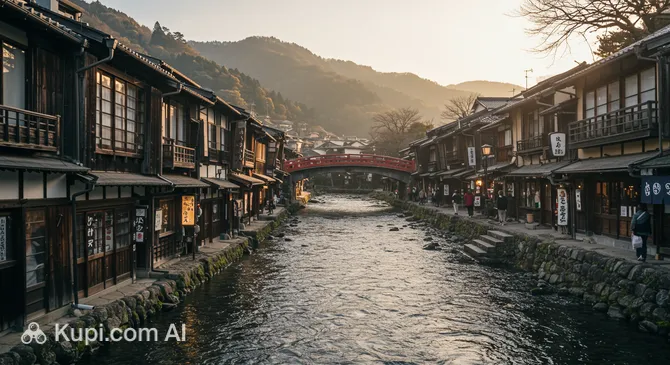
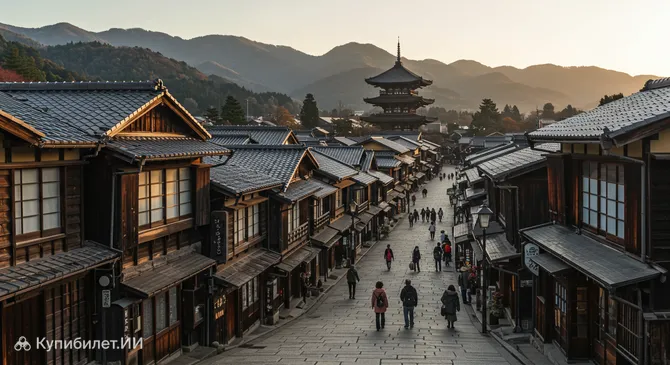
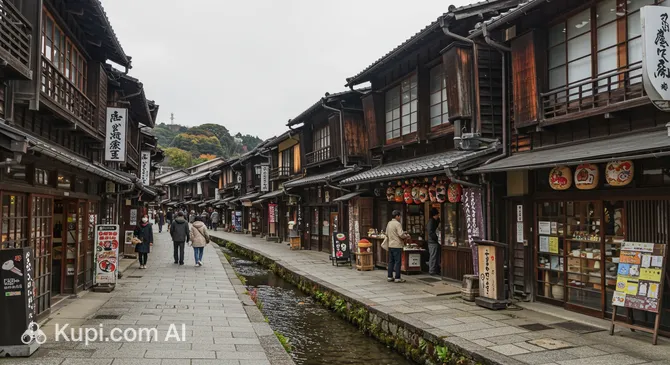
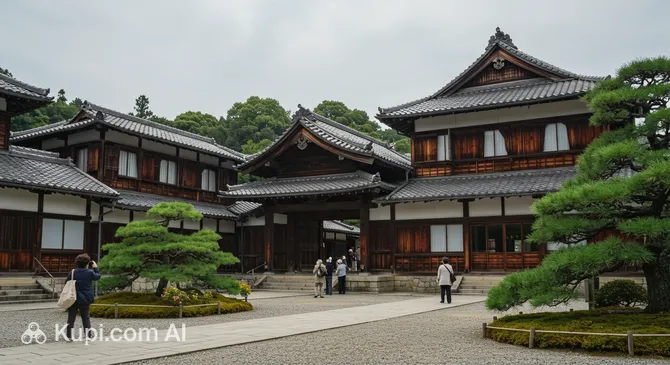
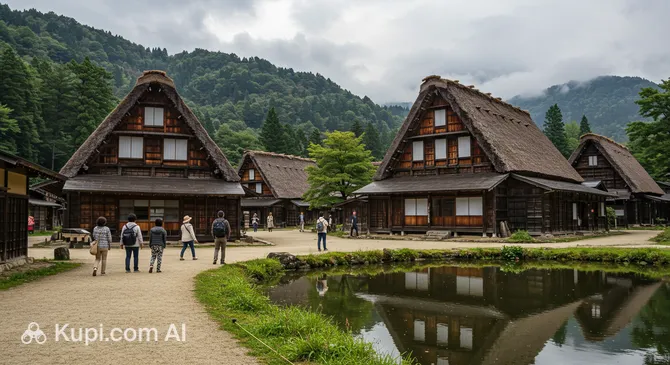
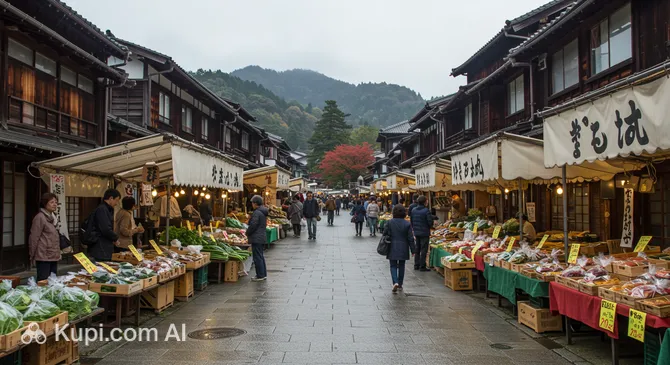
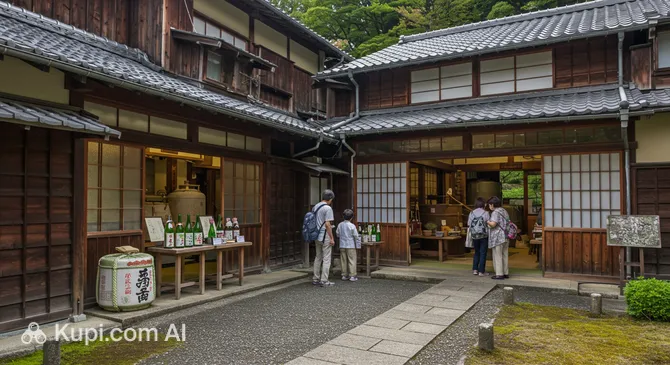
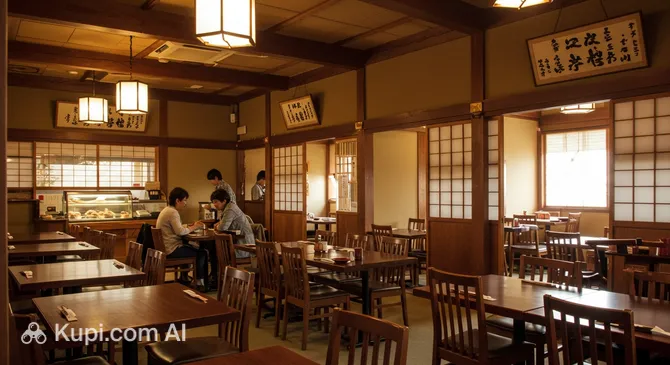
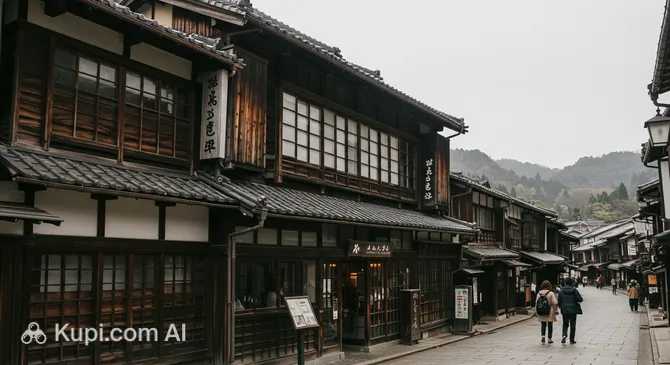
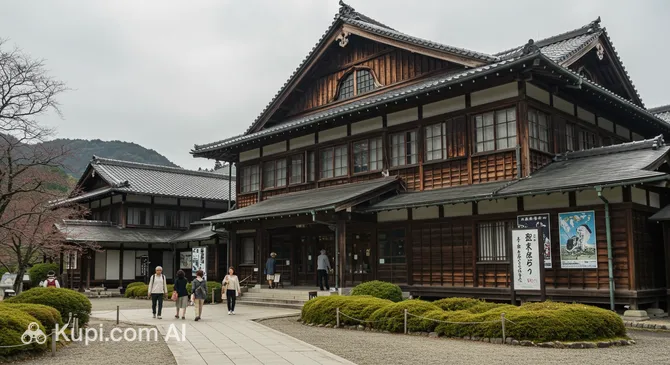
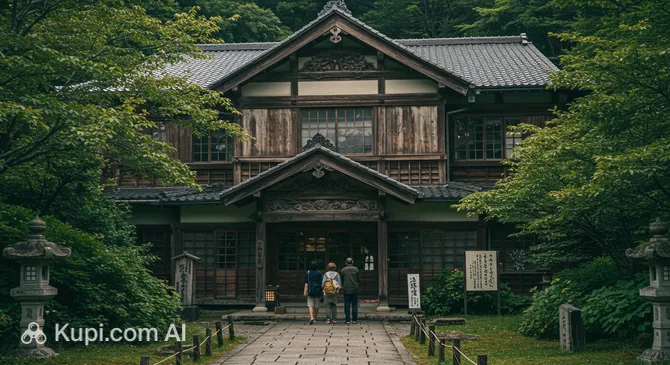
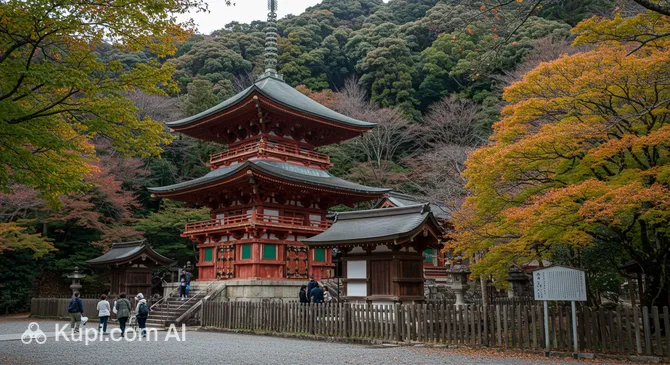
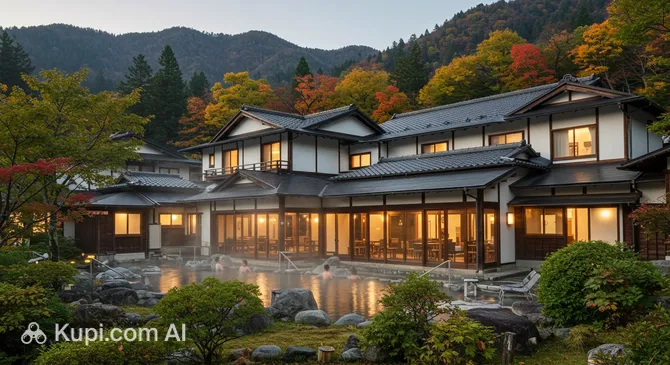
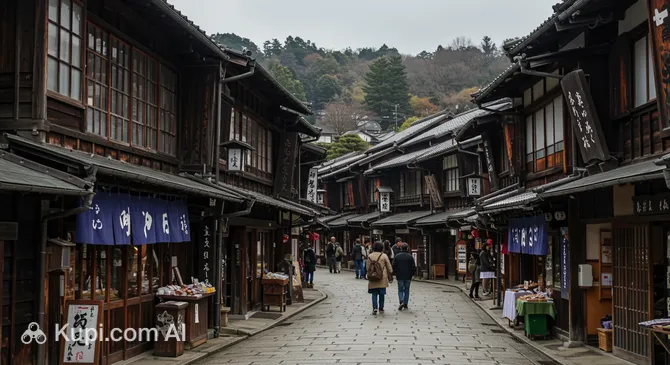
Takayama, often called "Little Kyoto," is a charming city nestled in the heart of the Japanese Alps in Gifu Prefecture. This city, with a population of about 85,000 people, attracts travelers with its beautifully preserved atmosphere of old Japan and picturesque mountain landscapes. The climate here is continental, with four distinct seasons, each decorating the city in its own way—from the lush greenery of summer to the snow-covered rooftops in winter.
Takayama. Illustration.
Source: Kupi.com AI
The main jewel of Takayama is the Sanmachi Suji district—the historical center of the city with narrow streets lined with traditional wooden houses from the Edo period. Here you can find many shops with local crafts, cozy teahouses, and, of course, the famous sake breweries where excellent local sake is produced. Another hallmark of the city is the magnificent Takayama Festival (Takayama Matsuri), held in spring and autumn. It is considered one of the three most beautiful festivals in Japan, capturing the imagination with its lavishly decorated yatai floats.
Visiting Takayama is an opportunity to immerse yourself in authentic Japanese culture, enjoy the tranquility and beauty of nature, and taste exquisite local dishes such as the famous Hida beef. This city will undoubtedly leave you with warm memories and a desire to return again.
In Takayama, a distinct four-season climate awaits you. Summer, especially in July and August, is warm with average temperatures around 21-22°C, but it is also quite humid—July can have up to 25 rainy days with a total precipitation of about 12 mm. Winters are cold and snowy: the average January temperature stays at -3.2°C (minimums can drop to -6.5°C), and the number of days with precipitation (mostly snow) can exceed 20 per month, for example, 22 days in January. Spring and autumn offer pleasant transitional weather with moderate temperatures. Overall, expect warm summers with occasional rain and cold, snowy winters. For detailed planning of your trip, we recommend checking out the information about Takayama's climate.
Average monthly temperature
Average monthly precipitation
Interesting Facts
Beyond its famous historical quarters and festivals, Takayama hides many surprising details and traditions that not every traveler knows about.
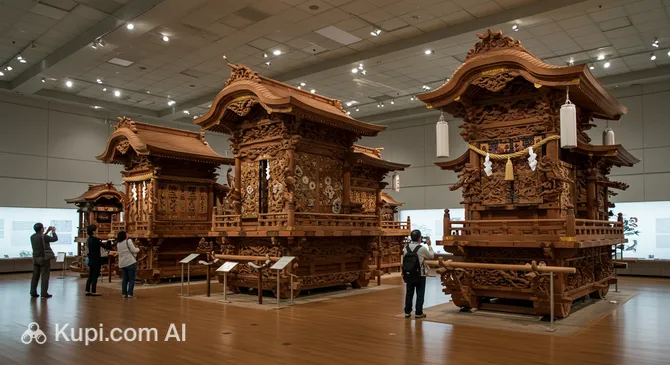
Takayama Festival Floats Exhibition Hall. Illustration.
Source: Kupi.com AI
Traveler photos:
One of the most recognizable symbols of Takayama and the entire Hida region is the red faceless "sarubobo" dolls. Originally made by grandmothers for their grandchildren as charms for good luck and a happy marriage, today they are a popular souvenir symbolizing well-being.
The majestic "yatai" floats used during the famous Takayama Festival are so complex and valuable that some of them are several centuries old. Outside of festival days, they can be seen at the Takayama Festival Floats Exhibition Hall, where they are stored in special pavilions.
Takayama hosts two morning markets simultaneously—the Miyagawa Market along the river of the same name and the Jinya-mae Market in front of Takayama Jinya. This tradition dates back several centuries, and you can buy fresh local products, flowers, and handicrafts here.
Historically, the Hida region, centered in Takayama, was famous for its skilled carpenters. Their craftsmanship was so highly valued that in the 8th century, they were sent to the capitals of Nara and Kyoto to build temples and palaces. Traces of this heritage are visible in the beautifully preserved wooden architecture of the old town, for example, in the Sanmachi Historic District.
How to Get There
Getting to this picturesque corner of the Japanese Alps can be done in several ways, although there is no airport or Shinkansen station in the city itself. Travelers usually combine a train or bus trip with a flight to one of the nearby major cities. You can find more details on how to get to Takayama on a dedicated page, and below we look at the main options.
Takayama city does not have its own airport, so tourists use air harbors in neighboring prefectures. One of the most popular options for international travelers is Chubu Centrair International Airport (NGO), located in Nagoya. It is approximately 148.5 km from Takayama. This is a major transport hub receiving flights from all over the world. The journey from there by car or bus takes about 3–3.5 hours; it is also convenient to take a train with a transfer at Nagoya Station.
Geographically, the closest is Toyama Airport (TOY), located in Toyama city, just 56 km from central Takayama. This is an excellent option for domestic flights. The trip by taxi or bus takes about 1.5 hours. You can also consider Komatsu Airport (KMQ) in Komatsu city (about 81 km), which serves both domestic and some international destinations. The trip from there will take about 2–2.5 hours.
For clarity, here is a summary of the main airports:
Rail service is one of the most comfortable ways to reach the city. The city's main gateway is Takayama Station, located in the very center. The famous "Wide View Hida" limited express from Nagoya arrives here, known for its panoramic windows that allow you to admire the mountain landscapes of the Hida River gorge. The journey from Nagoya takes about 2 hours and 20 minutes. If you are coming from Tokyo, it is most convenient to take the Shinkansen to Nagoya or Toyama and then transfer to this express.
Additionally, Takayama is connected by a network of highway buses to Japan's major cities, including Tokyo (Shinjuku Station), Osaka, Kyoto, and Nagoya. The bus terminal is conveniently located next to the railway station. This is often a more economical option compared to the train, although it takes a bit more time.
Main Attractions
Takayama carefully preserves its rich past, and getting to know the city is unthinkable without visiting its key attractions. Each of them reveals the unique character of this corner of Japan in its own way.
The heart of the old town is undoubtedly the Sanmachi Historic District (Sanmachi Suji). A stroll through its narrow streets, lined with perfectly preserved wooden houses from the Edo period, transports you back several centuries. Here you will find traditional shops selling local handicrafts, cozy teahouses, and, of course, the famous sake breweries where you can taste and purchase local sake. It is the perfect place to experience the authentic atmosphere of old Japan and pick up unique souvenirs.
Sanmachi Historic District. Illustration.
Source: Kupi.com AI
Traveler photos:
A mandatory stop on your itinerary is a visit to Takayama Jinya—a former government residence from the Edo period. This is the only surviving complex of its kind in all of Japan, making it truly unique. Visitors can explore the administrative and living quarters, rice storehouses, and learn about the management system of the Hida region during the Tokugawa shogunate. A tour here is an immersion into the history and culture of feudal Japan.
Takayama Jinya. Illustration.
Source: Kupi.com AI
Traveler photos:
For a deeper look into the traditional life of the Hida region, head to Hida Village (Hida-no-Sato). This open-air museum features a picturesque collection of over 30 traditional houses in the gassho-zukuri style and other rural structures relocated here from across Gifu Prefecture. Here, you can not only see how Japanese farmers and craftsmen lived but also participate in various workshops, such as making traditional toys or ceramics.
Hida Folk Village. Illustration.
Source: Kupi.com AI
Traveler photos:
Takayama is famous for its grand festivals, and to experience this splendor outside of the festival dates, visit the Takayama Festival Floats Exhibition Hall (Takayama Matsuri Yatai Kaikan). Several of the dozens of lavishly decorated "yatai" floats, which are the main attraction of the spring and autumn festivals, are on display here year-round. The detailed carving, gilding, and complex mechanisms of these structures are breathtaking and testify to the supreme skill of local craftsmen.
Takayama Festival Floats Exhibition Hall. Illustration.
Source: Kupi.com AI
Traveler photos:
To feel the daily life of the city and try local delicacies, stop by one of the morning markets. The Miyagawa Morning Market, stretched along the river of the same name, is especially popular. From early morning, vendors briskly sell fresh vegetables and fruits, local pickles, flowers, sweets, and souvenirs. It is a great place not only for shopping but also for interacting with locals and observing their way of life.
Miyagawa Morning Market. Illustration.
Source: Kupi.com AI
Traveler photos:
Local Cuisine
The culinary scene in Takayama is a true treasure for foodies, offering a unique combination of traditional mountain flavors from the Hida region and exquisite Japanese delicacies. The star of the local cuisine is undoubtedly Hida beef (Hida-gyu)—premium marbled meat known for its tenderness and rich flavor. You can try it in many forms: from steaks and shabu-shabu to beef sushi and street food skewers.
In addition to the famous beef, you should definitely try other local specialties. Takayama ramen is a light soy sauce-based noodle soup that differs from its counterparts in other regions of Japan with its simplicity and rich broth. Another iconic dish is hoba miso: miso paste mixed with vegetables, mushrooms, and sometimes meat, grilled on a large magnolia leaf (hoba) over a small brazier right at your table. The aroma of this dish is simply unforgettable!
When it comes to drinks, Takayama is famous for its sake. Thanks to the purest mountain water and high-quality rice, local breweries produce a drink of excellent quality. Many of them, located in the old town, offer tastings. For example, you can stop by the Funasaka Sake Brewery to learn about the production process and try different varieties. Among non-alcoholic drinks, various types of Japanese tea are popular, as well as fresh juices and lemonades found at markets and cafes.
Funasaka Sake Brewery. Illustration.
Source: Kupi.com AI
Traveler photos:
Food culture in Takayama is diverse. Locals and tourists enjoy meals both in traditional restaurants such as Suzuya or Kyoya, where set lunches and dinners are served, and by trying street food in the Sanmachi Historic District. You should definitely visit the Miyagawa Morning Market, where you can not only buy fresh products and local delicacies but also grab freshly prepared snacks. It is a great place to soak up the local atmosphere and discover new tastes.
Travel Tips
Planning a trip to Takayama? Wonderful! This charming city in the Japanese Alps, preserving the spirit of old Japan, will give you an unforgettable experience. To make your journey as comfortable and rewarding as possible, we have prepared some practical tips.
Clothing and Essentials:
The climate in Takayama is continental, with distinct seasons. In summer (June-August), it is warm and humid, so bring light, breathable clothing and a raincoat. Winters (December-February) are cold and snowy—you'll need a warm jacket, hat, gloves, and waterproof shoes. In spring and autumn, the weather is changeable, so dress in layers. A key wardrobe item is comfortable shoes for walking on the cobblestones of the old town and visiting temples. Don't forget an adapter for electrical appliances (Japan uses type A and B sockets). When visiting temples and some traditional houses, it is customary to remove your shoes; choose ones that are easy to take off and put on. There is no strictly enforced dress code, but modest clothing is appropriate when visiting religious sites.
Transport in the City:
Takayama is quite a compact city, especially its historic center, which is pleasant to explore on foot. For longer trips, such as to Hida Village, you can use local buses like the "Sarubobo Bus" or "Machinami Bus." Taxis are available but can be expensive for long trips. Ride-hailing apps are not as common as in major metropolises. Car rental is not necessary for seeing the city itself, but might be useful if you plan to explore the Gifu Prefecture countryside. Remember that an international driving permit is required to rent a car in Japan.
Finances:
The local currency is the Japanese Yen (JPY, ¥). You can exchange currency at banks, the post office, or some large hotels. It is recommended to carry some cash, as not all small shops, markets, or traditional restaurants accept bank cards. Large hotels, department stores, and many restaurants accept international credit cards (Visa, Mastercard). ATMs that accept foreign cards can be found at post offices (Japan Post Bank) and 7-Eleven stores (Seven Bank). Tipping is not practiced in Japan—quality service is included in the price. An approximate daily budget (excluding accommodation) might be 7,000-15,000 yen per person.
Health and Safety:
Takayama is a very safe city, as is Japan in general. Standard precautions, such as keeping an eye on your belongings, won't hurt. Pharmacies (look for the "薬" - kusuri sign) exist, but pharmacists don't always speak English. It's better to carry a basic first-aid kit. If medical assistance is needed, contact your hotel for help or go to a local hospital (e.g., Takayama Red Cross Hospital). Having travel medical insurance is highly recommended.
Communication:
The official language is Japanese. In tourist spots, hotels, and some restaurants, staff may speak English, but the level of proficiency varies. Learn a few basic phrases: "Konnichiwa" (Hello), "Arigato gozaimasu" (Thank you), "Sumimasen" (Excuse me/Sorry). For ease of navigation and staying connected, it is recommended to buy a local SIM card or rent a pocket Wi-Fi router upon arrival in Japan. Free Wi-Fi is available in many hotels and some tourist spots. Apps like Google Maps and Japan Travel by Navitime will be useful.
Local Etiquette:
Japanese people are very polite and value respect for traditions. A greeting is usually accompanied by a slight bow. Avoid loud talking in public places, especially on transport and in temples. When entering a Japanese home, some temples, and traditional restaurants (ryokans), you must remove your shoes. Chopsticks (hashi) should not be used to point at people, stuck vertically into rice, or used to pass food from chopsticks to chopsticks.
What to Avoid:
Don't leave trash on the streets—Japan is very clean; use bins or carry your trash with you to your hotel. You should also not photograph people without their permission, especially in private settings or in temples where photography might be restricted. Do not enter private homes or restricted areas in the old town, even if doors or gates seem open.
Special Tip for Takayama:
Be sure to visit the morning markets—Miyagawa or Jinya-mae. They start early, and it's a great opportunity to see local life, try fresh products, regional delicacies, and buy unique souvenirs. If your trip coincides with the famous Takayama Festival (spring or autumn), book your accommodation and transport very far in advance, as the city is crowded with tourists at this time.
We hope these tips help you better prepare for your trip and fully enjoy every moment of your stay in amazing Takayama. We wish you an unforgettable journey through this picturesque corner of Japan!
Entertainment & Nightlife
When the sun sets behind the Japanese Alps, Takayama doesn't go to sleep; it transforms, offering guests a cozy and original atmosphere for evening entertainment. While you won't find loud nightclubs like those in megacities, Takayama's nightlife charms with its traditional flair, offering a relaxing environment for a glass of local sake or a delicious dinner.
The main hub for evening strolls and gatherings is the famous Sanmachi Historic District and its surrounding streets. As dusk falls, the ancient wooden houses are illuminated by lanterns, creating a magical atmosphere. This area is home to many izakayas (Japanese pubs), small bars serving local sake and beer, and restaurants where you can enjoy regional Hida cuisine. The crowd here is a mix of tourists and locals, and the style of establishments ranges from simple and soulful to more refined. Most places are open until 10:00 PM - 11:00 PM, and the dress code is usually casual and relaxed.
For a traditional-style dinner, you can consider establishments like Suzuya, known for its Hida beef dishes, or Kyoya, which offers authentic local cuisine. These restaurants allow you to dive deeper into the region's gastronomic traditions and spend a pleasant evening. Many establishments in the old town specialize in Hida beef, served as steaks, sashimi, or even as sushi.
Suzuya. Illustration.
Source: Kupi.com AI
Traveler photos:
Sake is an integral part of Takayama's evening culture. The city is famous for its sake breweries, and although many of them close their tasting rooms by evening, some bars and restaurants offer a wide selection of this drink. For instance, you can continue exploring local sake in one of the cozy bars or try different varieties at the Funasaka Sake Brewery, checking its evening hours. This is a great opportunity to appreciate the taste of the drink the Hida region is so proud of.
When planning your evening, keep in mind that the best time to visit bars and restaurants is after 6:00 PM - 7:00 PM. The average dinner bill can vary, but generally, prices are moderate, though premium Hida beef dishes may be more expensive. Getting around the central part of the city in the evening is convenient on foot. If your accommodation is further away or you stay out late, you can use a taxi. They can be found at stands or requested through a restaurant or hotel.
Takayama is a very safe city, and evening walks along well-lit central streets like Sanmachi Suji generally do not cause any concern. As everywhere, you should follow basic precautions and keep an eye on your belongings.
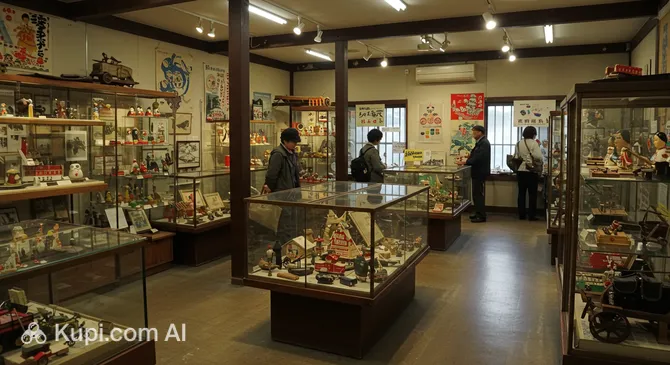
In addition to evening entertainment, Takayama offers many interesting places to visit during the day. You can immerse yourself in the nostalgic atmosphere of the past at the Hida Takayama Retro Museum or the Takayama Showa-kan Museum. For nature lovers and those who enjoy quiet walks, Shiroyama Park is perfect, offering beautiful views of the city. These and other attractions will make your stay in Takayama rich and memorable.
Hida Takayama Retro Museum. Illustration.
Source: Kupi.com AI
Traveler photos:
Parks & Museums
Takayama is not just about well-preserved historic quarters; it is also a city that offers its guests excellent opportunities for outdoor recreation and immersion in the rich culture of the Hida region through its fascinating museums and galleries. Here, everyone will find something for their soul: from quiet parks to unique exhibitions.
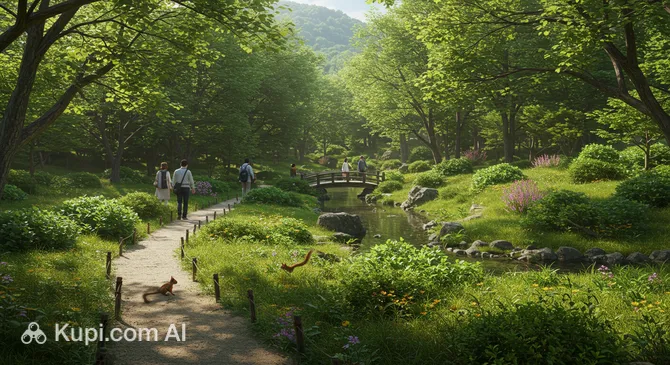
Among the city's green oases, Shiroyama Park stands out, spread over a hill where Takayama Castle once stood. Today, it is a popular spot for walks, offering panoramic views of the city and surrounding mountains. For closer contact with nature, especially for families with children, the Hidayama Squirrel Forest and Wild Herb Garden will be of interest. Here, you can not only watch charming squirrels but also admire a collection of alpine plants. Another iconic natural site is Garyu Sakura, a famous centuries-old weeping cherry tree that is particularly impressive during its spring blossom, attracting many photographers and beauty lovers.
Hidayama Squirrel Forest and Wild Grass Nature Garden. Illustration.
Source: Kupi.com AI
Traveler photos:
Waryu Sakura. Illustration.
Source: Kupi.com AI
Traveler photos:
The cultural program in Takayama is equally rich. Although iconic places like Hida Village (open-air museum), where you can get acquainted with traditional architecture and life in the region, and the Takayama Festival Floats Exhibition Hall, which houses magnificent festival floats, have already been mentioned as key attractions, their importance for understanding the city's culture cannot be overstated. Beyond them, it's worth noting the Takayama Showa-kan Museum. This amazing place offers a nostalgic journey into mid-20th century Japan (1926-1989), showcasing household items, toys, and posters, and recreating the atmosphere of that time. Another interesting site is the Hikaru Museum, which impresses not only with its modern architecture but also with its art collection, including Japanese paintings, ceramics, and sculptures.
Takayama Showa Museum. Illustration.
Source: Kupi.com AI
Traveler photos:
Hikaru Museum. Illustration.
Source: Kupi.com AI
Traveler photos:
The city is also rich in historical and architectural monuments. One of the oldest and most significant is the Hida Kokubun-ji Temple. Its main attractions are an impressive three-story pagoda and a massive ginkgo tree over 1,200 years old. The temple is an important center of Buddhist culture in the region. Equally interesting is the Sakurayama Hachimangu Shrine, which plays a central role in the famous autumn Takayama Festival. Its picturesque complex, located on a hillside, offers a peaceful atmosphere and beautiful views.
Hida Kokubun-ji Temple. Illustration.
Source: Kupi.com AI
Traveler photos:
For those seeking authentic experiences, we recommend a walk along the Higashiyama Walking Course. This scenic 3.5 km route passes many small temples, shrines, and old cemeteries nestled in the greenery on the hillside east of the city center. This is a wonderful opportunity to enjoy peace and quiet away from the tourist crowds and see another side of Takayama.
Getting Around
Getting around Takayama is quite convenient, especially if you plan to explore the city's historic center. Most key attractions, such as the ancient streets of the Sanmachi Suji district and the morning markets, are within walking distance of each other and the JR Takayama Station.
The main form of public transport in Takayama is the bus. Several routes serve the city and its surroundings. For tourists, tourist-friendly buses like the "Sarubobo Bus" and the "Machinami Bus" are particularly useful. These buses run on circular routes covering major sights, including Hida Village (Hida-no-Sato). Buses usually run at intervals of 30-60 minutes. Schedules can be found at bus stops or at the tourist information center next to JR Takayama Station.
Regarding fare payment, Takayama buses accept cash. Additionally, on many routes, including tourist ones, you can pay using common Japanese IC cards like Suica or Pasmo, which is very convenient. When boarding the bus (usually through the back door), you need to take a ticket with a stop number (if it's a distance-based fare system); when paying with an IC card, tap it on the reader when boarding and again when exiting. Cash payment is made when exiting through the front door, next to the driver. The amount depends on the distance or is a fixed fee for tourist routes. For convenience when paying in cash, it's recommended to have small coins. For tourist buses, one-day passes are generally offered, which is a cost-effective solution if you plan to move around a lot. They can be purchased at the bus center near JR Takayama Station or directly from the driver. The cost of a single trip on city buses is usually around 100-210 yen, and a one-day pass for the "Sarubobo Bus" can cost around 630 yen (prices are approximate and subject to change).
Practical tips for tourists: single-trip tickets when paying in cash are paid for when exiting the bus, while passes should be bought in advance. Buses generally run strictly according to the schedule. Public transport operating hours are usually from early morning until evening, but after 8:00-9:00 PM, the number of trips can decrease significantly.
As an alternative to public transport in Takayama, you can use taxis. They are available at JR Takayama Station and other busy spots, but this is a more expensive way to travel. For active travelers, bicycle rentals are popular. Renting a bike is a great way to explore the city at your own pace, especially its more remote corners. Rental points can be found near the station and in some hotels. Car sharing is less common in Takayama.
There are no unique forms of transport, such as a historic subway or an extensive tram network, in Takayama, which is typical for a city of this size. The main focus is on bus services and the convenience of walking.
Accommodation
In Takayama, travelers will find a wide range of accommodation options to suit every taste and budget. You can find everything here: from economical guesthouses and hostels for those who prefer budget travel to comfortable mid-range hotels and, of course, authentic Japanese ryokans, many of which have their own hot springs (onsens). Apartments and rental houses are also available for families or those planning a longer stay.
The most convenient and popular areas for tourists are the surroundings of JR Takayama Station and the famous Sanmachi Suji historic district. Staying in these locations provides easy walking access to most of the city's main attractions, numerous restaurants, souvenir shops, and major transport hubs, making them an excellent starting point for exploring Takayama.
Special attention should be given to ryokans, a traditional form of Japanese hospitality. Staying in a ryokan is not just an overnight stay but an immersion into Japanese culture: sleeping on tatami mats, enjoying exquisite kaiseki multi-course dinners, and, in many cases, relaxing in the healing waters of an onsen. This is truly a unique experience worth considering when planning your trip to Takayama.
Among the specific accommodation options, you might note the Takayama Ouan resort hotel, which is popular for its own onsen and a successful blend of modern comfort with Japanese style. Another well-known option is the Takayama Resort, which also offers guests quality rest and relaxation.
Takayama Ouan. Illustration.
Source: Kupi.com AI
Traveler photos:
It is strongly recommended to book accommodation well in advance, especially if your trip to Takayama coincides with peak tourist seasons—spring (cherry blossom season) and autumn (during the famous Takayama festivals), as well as national holidays and weekends. During these times, demand for accommodation is very high, and the best options can sell out quickly.
The price range for accommodation in Takayama is quite wide—from budget options to luxury offerings, allowing you to find the best fit for almost any budget. Booking is convenient through major international online platforms (e.g., Booking.com, Agoda) or directly via official hotel websites. Some small family-run guesthouses and ryokans may also take bookings by phone or email.
Nearby Cities
For those who want to explore the surrounding area, Takayama serves as an excellent starting point for day trips to several interesting nearby locations:
For example, just an hour or an hour and a half away are gems like Matsumoto, home to one of Japan's oldest and most beautiful original castles—the "Crow Castle." Nature and art lovers will appreciate a trip to Azumino, nestled at the foot of the Northern Alps and known for its idyllic landscapes, wasabi farms, and numerous art galleries. The city of Toyama, located on the coast of the Sea of Japan, attracts visitors with its modern Glass Art Museum and serves as the starting point for the famous Tateyama Kurobe Alpine Route. Below is a table with information on some nearby cities that can be a great addition to your trip through the region.
These nearby destinations provide an even deeper and more diverse insight into the rich culture, history, and breathtaking landscapes of the Chubu region, complementing the impressions of Takayama itself.
Shopping & Souvenirs
Shopping in Takayama is a fascinating immersion into the world of traditional crafts and local delicacies. The city is famous not so much for modern shopping centers as for its charming streets with old merchant houses that host numerous shops. Here you can find unique handmade products, try local sake, and buy authentic souvenirs that will be a wonderful reminder of your trip to this colorful corner of Japan.
The main place for shopping is undoubtedly the Sanmachi Suji historic district, especially its street Sanmachi Suji. These perfectly preserved Edo-period streets are filled with shops selling everything from local food and sake to ceramics, textiles, and woodwork. A stroll through this district is a pleasure in itself, and the chance to peek into every shop makes it even more exciting. Many famous sake breweries are also located here, where you can not only buy but also taste the drink.
Sanmachi Suji. Illustration.
Source: Kupi.com AI
Traveler photos:
In Takayama, you won't find the large modern shopping malls familiar to residents of megacities. The charm of the city lies precisely in its traditional commerce. Instead of big malls, there are individual department stores or larger shops, especially around the railway station, but the main emphasis is on small specialized shops and family businesses passing their craft from generation to generation.
A must-visit for lovers of authentic shopping and fresh produce are the Takayama morning markets. The most famous is the Miyagawa Morning Market, which stretches along the river of the same name. Here, from early morning, you can buy fresh vegetables, fruits, local pickles, flowers, sweets, and, of course, handicrafts. Another popular market is Jinya-mae, located in front of the Takayama Jinya historical complex. Both markets operate from approximately 7-8 AM until noon and offer a unique opportunity to dive into the local atmosphere and pick up the freshest products and souvenirs.
From Takayama, it's worth bringing home something special that reflects the spirit of the Hida region. Sarubobo—red faceless amulet dolls—are perhaps the most recognizable symbol. Also popular are wooden products made using the Ichii Ittobori (yew carving) technique and exquisite Hida Shunkei lacquerware. Don't forget the local sake—many breweries, such as Funasaka Sake Brewery, offer it in beautiful bottles. Gastronomy lovers will appreciate dried mushrooms, local honey, soy sauce, and various snacks made from Hida beef.
Most shops in Takayama, especially in tourist areas, open around 9:00-10:00 AM and stay open until 5:00-6:00 PM. Morning markets, as the name suggests, start early, around 7:00-8:00 AM, and close by noon. Regarding payment, many small shops and markets prefer cash (Japanese yen). However, larger stores, souvenir shops, and sake breweries usually accept international credit cards.
For foreign tourists in Japan, a consumption tax refund system (Tax-Free) is available. Many shops in Takayama, especially those geared towards tourists, participate in this program. Look for "Tax Free Shop" signs. Usually, to claim a tax refund, you need to spend a certain amount (most often over 5,000 yen) in one shop in one day and present your passport. Terms may vary slightly, so check details directly in the store.