Support

Ogimachi

About

Shirakawa-go (Ogimachi) is a picturesque village that looks like it has come straight from the pages of an old fairytale. It is tucked away among the majestic mountains in the north of Gifu Prefecture, in the Sho River valley. For many travelers, Japan is associated with technology and neon, but it is here, far from the hustle and bustle of megacities, that you can see a completely different, traditional side of this amazing country and enjoy untouched nature.
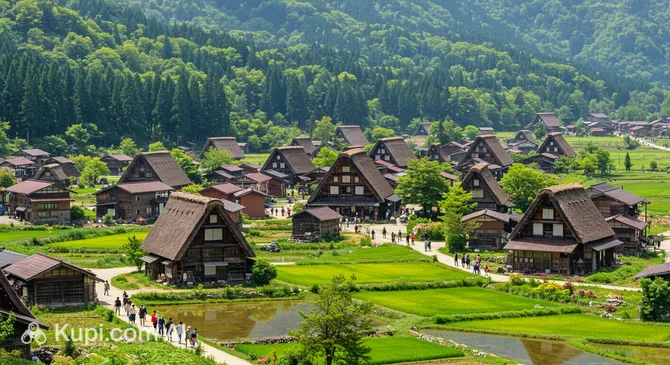
Shirakawa-go (Ogimachi). Illustration.
Source: Kupi.com AI

Ogimachi is the largest and most famous settlement of the historic complex included in the UNESCO World Heritage list. Despite its modest size and a permanent population of about 1,500 people, the village plays an important role as a center for preserving the cultural identity of the region. The rich history of Shirakawa-go (Ogimachi) can be traced in every corner, allowing guests to touch centuries-old traditions and feel the breath of the past.

The main attraction of the place is the unique houses in the gassho-zukuri architectural style. Their massive, steep thatched roofs resemble the palms of Buddhist monks pressed together in prayer. This construction is not accidental: it protects the buildings from the weight of the snow, which falls in abundance here. The village looks especially magical in winter during the evening illumination, when the snow-covered houses turn into cozy glowing islands amidst the white silence.

Visiting Ogimachi is an opportunity to slow down time and immerse yourself in the atmosphere of the real Japanese countryside. You can not only stroll through the winding streets, admiring the alpine landscapes, but also stay overnight in one of the ancient farmhouses to experience firsthand how life was organized in these parts centuries ago.

Weather Overview

The climate in this mountainous region is characterized by pronounced seasonality, which gives the village a unique look at any time of year. Winters here are truly cold, with average temperatures in January around -1.0°C (the minimum can drop to -4.2°C). It is during this time that heavy snowfalls occur, turning the valley into a fairytale snow kingdom.

The summer season brings noticeable warming and high humidity. In August, the average temperature is about 23.8°C, and on the hottest days, the thermometer rises to 27°C. Expect a warm summer with occasional rain and cold winters with a high probability of precipitation. July is often particularly rainy, when the number of wet days can reach 24 per month.

Spring and autumn are considered comfortable times for a visit, when nature delights with mild coolness and the colors of the foliage. For example, in May the air warms up to an average of 14.8°C, and in October it cools to 13.7°C. To choose the perfect time for your trip and pack your suitcase correctly, check out the detailed weather in Shirakawa-go (Ogimachi) with forecasts and monthly statistics.

Average monthly temperature

Average monthly precipitation

Interesting Facts

In addition to its world-famous landscapes, Shirakawa-go (Ogimachi) hides fascinating details of daily life and history that make this place truly unique.
  • Shirakawa-go and neighboring Gokayama are the only places in Japan where a large-scale ensemble of about 100 gassho-zukuri style houses has been preserved. Some buildings are over 250 years old, and their main secret lies in the unique engineering of the roof, specifically designed to withstand the weight of the massive snowfalls characteristic of this region.

  • The most recognizable and unusual souvenir of these parts is the sarubobo doll. This faceless amulet figure, resembling a small monkey, can be found in the shops on the main street, Shirakawa Kaido. Locals believe that such a talisman brings good luck, family happiness, and easy childbirth.

  • On the outskirts of the settlement lie the ruins of Ogimachi Castle, which today serve as the best natural viewpoint. It is from here that the famous panoramic view of the village opens up, which is especially impressive in winter when the snow-covered roofs are illuminated during light festivals.

  • The village remains a living organism, not just a museum set. Descendants of families who for centuries engaged in sericulture and rice cultivation still live in the historic houses. They carefully preserve their cultural heritage, regularly holding festivals with traditional dances and ancient rituals.

How to Get There

Getting to this secluded mountain village is a small journey in itself, allowing you to enjoy the scenery of the Japanese Alps. Since the settlement is deep inland, there are few direct paths, and the route often requires transfers. To plan your trip as efficiently as possible, we recommend studying all ways to get to Shirakawa-go (Ogimachi), including combinations of trains and buses.

There is no airport in Shirakawa-go (Ogimachi) itself, so travelers fly into the gateways of neighboring prefectures. One of the closest options is Komatsu Airport (IATA: KMQ), located in Komatsu city, about 49 km from the village. The journey from there by car or bus will take about 1 hour and 35 minutes. Toyama Airport (TOY) in Toyama city is also conveniently located at a similar distance—about 49 km (approximately 1 hour 35 minutes away).

If you are planning an international flight, it makes sense to consider Chubu Centrair International Airport (NGO) in Nagoya. This is a major transport hub with a high passenger volume, but it is much further away—156 km from Shirakawa-go (Ogimachi). The transfer from Nagoya will take significantly longer—about 4 hours 15 minutes—but many direct bus services depart from here.

For convenience, here is a summary of the main airports:

AirportPassenger trafficDistance
Toyama Airport736 74049 km
Komatsu Airport1.8 mln49 km
Matsumoto Airport112 61890 km
Nagoya Airport735 000112 km
Noto Airport207 427114 km

There is no direct rail connection to the village, as Shirakawa-go (Ogimachi) does not have its own train station. The classic route for tourists is as follows: take a high-speed train (Shinkansen) or express train to major stations in nearby cities—Takayama, Kanazawa, or Toyama—and then transfer to a comfortable bus that will take you directly to the center of the village. The bus service here is regular and very reliable.

Main Attractions

Shirakawa-go is a real open-air museum where every object breathes history. Despite the compact size of Ogimachi village, there are several iconic places that are definitely worth including in your walking route to deeply understand the culture and lifestyle of this unique region.

Wada-ke House. This is the largest and perhaps most famous traditional gassho-zukuri style house in the village. The building, recognized as an Important Cultural Property of the country, belonged to an influential family that for centuries traded in gunpowder and silk. Tourists can go inside to appreciate the scale of the massive wooden beams, blackened by the smoke from the hearth, see family heirlooms, and climb to the spacious attic where silkworms were historically raised.

Shiroyama Viewpoint. It is from here that the most famous panoramic view of the village opens up, the one that adorns most guidebooks. The platform is located on a hill to the north of the settlement center, where a medieval castle once stood. It is worth climbing up here for the breathtaking landscapes: dozens of houses with thatched roofs look like toys against the backdrop of majestic mountains and rice fields, creating a perfect composition for photos at any time of year.

Myozenji Temple. This Buddhist complex is unique even for Japan. Its main feature is that not only the main hall but also the gatehouse with the bell tower have gassho-zukuri style thatched roofs. This is a very rare example of using peasant architecture in religious buildings. There is a museum at the temple where you can see the everyday objects used by monks and locals of past eras.

Shirakawa Hachiman Shrine. This ancient Shinto shrine, hidden in the shade of tall cedars, serves as the spiritual center of the community. It is famous for its annual Doburoku Festival, during which a special unfiltered sake, prepared right on the temple grounds, is offered to the gods and guests. This quiet and atmospheric place allows you to take a break from the tourist bustle and feel the sacred side of life in the Japanese heartland.

Local Cuisine

Local gastronomy in Shirakawa-go is a reflection of the harsh yet beautiful nature of the Japanese Alps. Because of the long snowy winters, the region's inhabitants learned to create hearty and warming dishes using simple but high-quality ingredients. The hallmark of the local cuisine is hoba miso. This is a fragrant paste made from fermented beans, which is baked on a dry magnolia leaf along with mushrooms, green onions, and wild vegetables. Often this dish is prepared right in front of the guests on small tabletop grills, filling the air with appetizing smoke.

For connoisseurs of meat delicacies, a trip here will be a real discovery thanks to the famous Hida beef. This meat, raised in the region of the same name, is famous for its marbling and melting texture, not inferior to the more well-known wagyu varieties. It is served as juicy steaks, added to soups, or grilled in small pieces. It is also worth trying the river trout caught in the purest mountain streams; the fish is usually grilled whole over charcoal, simply sprinkled with salt to preserve its natural flavor.

Strolling along the main street of the village, it's impossible to pass by the inviting smell of gohei mochi. This popular street snack consists of pounded rice cakes on wooden sticks. They are grilled until crispy and generously glazed with a sweet and savory sauce based on miso, nuts, or sesame. During the season, there are also gastronomic fairs where farmers offer fresh vegetables and wild herbs gathered in the surrounding forests.

The food culture in Ogimachi is inextricably linked with traditional architecture. Many restaurants and cafes are located inside historic gassho-zukuri houses. Dining at a traditional "irori" open hearth in the center of the room is a special experience that allows you to immerse yourself in the authentic life of old Japan. As an accompaniment to the meal, local sake is perfect. In winter, this rice drink is served warm, which helps to warm up after a walk through the snow-covered streets.

Travel Tips

A trip to the fairytale village of Shirakawa-go promises to be one of the highlights of your trip to Japan. To ensure that nothing distracts you from contemplating the ancient roofs and mountain landscapes, and that your visit is smooth and comfortable, we have prepared a list of important practical recommendations.

  1. Clothing and Footwear. The weather in the mountains is changeable. In winter (from December to March), a warm windproof jacket, a hat, and non-slip waterproof shoes are mandatory—a lot of snow falls here. In summer, light clothing will be comfortable, but bring a raincoat or umbrella. An important nuance: choose shoes that are easy to take off and put on, as you will have to remove your shoes at the entrance to every museum, temple, or guesthouse.
  2. Transport within the village. Ogimachi is a compact settlement, and the best way to explore it is on foot. Car access for tourists is limited to preserve the historic atmosphere; you will have to leave your car in a paid parking lot on the outskirts. The famous viewpoint can be reached on foot (about 15–20 minutes uphill) or by using a special shuttle bus that runs from the village center.
  3. Money and Payment. Despite widespread digitalization, cash yen are still necessary in rural areas. Many small souvenir shops, street food stalls, and even some ticket offices do not accept cards. There are few ATMs in the village, and they may have limited hours, so we strongly recommend withdrawing the necessary amount in advance in major cities.
  4. Safety and First Aid. Shirakawa-go is a very safe place, but there are no 24-hour pharmacies or hospitals here. Be sure to bring a personal first-aid kit with band-aids, pain relievers, and cold medicine. In winter, be careful walking past houses: snow can fall from the steep roofs suddenly, so do not stand under the eaves and pay attention to warning signs.
  5. Connectivity and Navigation. Free Wi-Fi is available at the tourist information center and some cafes, but the signal may be unstable on the streets. It is best to take care of connectivity in advance by buying a SIM card or renting a pocket router at your arrival airport. Install a translator app on your phone: staff in tourist areas speak English, but for communicating with elderly locals, technology will be indispensable.
  6. Respect for Privacy. Remember that Shirakawa-go is not just an open-air museum, but a living village where people lead their daily lives. It is categorically forbidden to enter private territories, fenced yards, open the doors of residential houses, or peek through windows. Photograph buildings only from public paths, respecting the residents' right to privacy.
  7. Cleanliness and Fire Safety. There are almost no trash bins in the village—this is part of the local culture. You must take all your trash (packaging, bottles) with you and dispose of it at your hotel or at major stations. Additionally, due to the wooden buildings, smoking while walking is strictly prohibited—you can only smoke in designated areas.
  8. Luggage and Logistics. Moving along gravel paths or snow with wheeled suitcases is extremely inconvenient and noisy. We strongly advise leaving large items in coin lockers at the bus terminal. If you are staying overnight in a traditional house (minshuku), check in advance: many hosts offer luggage transfer from the stop.

By following these simple tips, you can avoid minor inconveniences and show respect for the unique culture of this place. May your journey to the heart of the Japanese Alps be filled with only pleasant discoveries and warm hospitality!

Entertainment & Nightlife

Nightlife in Shirakawa-go (Ogimachi) is fundamentally different from what travelers are used to seeing in megacities like Tokyo or Osaka. Here you won't find neon signs, noisy nightclubs, discos, or 24-hour bars. After 17:00, when the last tourist buses leave and the souvenir shops close their doors, the village plunges into a deep, almost ringing silence. "Nightlife" here is primarily about stargazing, the sounds of cicadas, and cozy gatherings by the fire.

The center of evening leisure is the minshuku—traditional guesthouses where most tourists stay. This is where the main social activity of the evening takes place. Dinner is usually served early, around 18:00–19:00. Guests gather around the irori (a traditional open hearth) in the common room to enjoy local cuisine and conversation. The atmosphere in such places is very homey and warm: there is no dress code (guests are given comfortable cotton robes called yukata), and the hosts often treat guests to homemade sake or tea while telling stories about life in the mountains.

The only public place that stays open a bit longer than the rest and can be considered a center of evening attraction is the hot spring Shirakawa-go no Yu. This is a natural onsen located near the bus terminal. Many tourists come here after sunset to relax in the hot water under the open sky, admiring the view of the river and mountains. The complex is usually open until 21:00 (last entry at 20:30), which is considered late night by local standards. There is also a small relaxation area where you can have cold milk or beer after bathing.

If you feel like taking a walk before bed, remember some important safety nuances. Street lighting in the village is minimal to preserve the historic appearance, so the streets are very dark. Deep irrigation channels with water run along the roads and between houses, which are easy to miss in the dark. For night walks, be sure to take a flashlight with you (they are often provided in guesthouses). It is absolutely safe to walk anywhere—the crime rate is zero—but the risk of tripping in the dark is quite real.

Practical tips for the evening:

  • Transport: Public transport does not run at night, and it is impossible to catch a taxi in the village. If you are staying outside the center of Ogimachi, in neighboring settlements, getting there after 17:00 without a rental car will be problematic.
  • Food and Drinks: Restaurants close early (many only open for lunch). If dinner is not included in your stay, be sure to buy food and drinks in advance during the day. Finding an open store or cafe after 18:00 will be extremely difficult.
  • Alcohol: There are no bars in the traditional sense. The only way to have a glass of wine or sake is to do so during dinner at your hotel or buy drinks from vending machines (they are on the streets, but there are not many).

As for daytime entertainment, it is of a cultural and contemplative nature. Tourists spend most of their time visiting the Gassho-zukuri Minkaen Open Air Museum, which features ancient houses moved from other areas, or climbing up to the viewpoint. Evening in Shirakawa-go is a time for digital detox, tranquility, and recharging before a new day of exploration.

Parks & Museums

Shirakawa-go (Ogimachi) is a unique place where the boundaries between the natural landscape and museum exhibits are practically blurred, as the entire village is a living monument to history. Nevertheless, there are separate green zones and specialized cultural institutions that allow tourists to dive deeper into the atmosphere of the Japanese heartland and learn the secrets of survival in harsh mountain conditions.

Gassho-zukuri Minkaen Open Air Museum. This is perhaps the most significant park area around Ogimachi, located on the opposite bank of the Sho River. The complex is a picturesque landscape park where 26 historic buildings were moved to save them from destruction. Walking here is a real pleasure: you walk along well-kept paths among ponds, watermills, and shrines, enjoying the silence that is sometimes missing on the village's main streets. This is an ideal place for those who want to take beautiful photos of the houses without crowds of tourists in the background.

Hakusan Shirakawa-go White Road. If you are traveling by car and want to enjoy the majesty of nature, be sure to pay attention to this scenic mountain route starting near the village. The road passes through a national park, providing access to stunning waterfalls, dense forests, and viewpoints. This is not just a highway, but a full-fledged natural attraction where you can stop for a short hike and breathe in the purest mountain air.

The cultural program in Ogimachi is not limited to an external inspection of the architecture; local museums house amazing artifacts of daily life.

Doburoku Matsuri Festival Hall. This museum is located on the grounds of the Hachiman Shinto Shrine and is dedicated to one of the most important events in the life of the village—the autumn harvest festival. The exhibition includes colorful dolls, models of festive processions, and video materials conveying the atmosphere of the celebration. The main feature of the place: visitors who have bought a ticket are offered a taste of doburoku—a special unfiltered sacred sake traditionally prepared right in the temple.

Nagase House. Among the many houses open to the public, this one stands out for its history. The Nagase family served as village doctors for generations. Inside the five-story building, in addition to traditional household and agricultural items, an impressive collection of medical instruments from the Edo period is on display. The interiors of the house are also famous for exquisite lacquerware and altars, which speaks to the high status of its owners.

Tajima House Museum of Silk Culture. Sericulture was the foundation of the region's economy for centuries, and this museum tells in detail about the complex process of raising silkworms. Tourists can see ancient looms and tools and learn how the attics of gassho-zukuri houses were used to produce valuable threads.

For those looking for special impressions, we advise paying attention to the Deai-bashi Suspension Bridge. Although it is an engineering structure, it serves as the main gateway to the open-air museum and is a magnificent viewpoint. Crossing the bridge, especially surrounded by autumn foliage or cherry blossoms, gives the feeling of soaring over the river and opens an unusual perspective of the mountains and valley that hurrying tourists often miss.

Getting Around

The public transport system within the village of Shirakawa-go (Ogimachi) itself is extremely simple and concise, perfectly matching its status as a historical monument and a small settlement. You won't find subways, trams, or an extensive network of city routes here. Since the entire tourist area is compact, walking remains the main way for guests to get around. This allows you to slowly enjoy the views and peek into souvenir shops without missing a single detail.

The only form of public transport running directly through Ogimachi is a special shuttle bus. It connects the village center (the stop is usually located near the tourist center or the main parking lot) with the Shiroyama Viewpoint. This is a lifesaver for those who don't want to or cannot climb the hill on foot, as the climb is quite steep and takes about 20–30 minutes. The buses are small and run about every 20 minutes during daylight hours.

Regarding fare payment, in Japan, especially in rural areas, cash is still king. For the shuttle bus to the viewpoint, you will need coins. The one-way fare is a symbolic amount (around 200 yen), and payment is made to the driver upon entry. Important to know: the transport IC cards (Suica, Pasmo) popular in megacities are most often not accepted on this local route, so be sure to break your bills in advance.

Alternative ways to get around the village are limited. Taxis in Ogimachi are rare. Cars do not cruise the streets looking for passengers; they can only be found at a special stand near the bus terminal or called through the tourist information center, but the wait can be long. There are no car-sharing or electric scooter rental services within the historic zone.

If you arrived in a rental car, be prepared for strict rules. Driving into the residential area of the village is prohibited for tourists to preserve the authentic atmosphere and safety of pedestrians. You will have to leave your vehicle at the paid Seseragi Park public parking lot on the opposite bank of the river and walk into the village across the suspension bridge.

A practical tip for travelers: keep a close eye on the time. Transport life in Shirakawa-go shuts down very early. The last shuttle from the viewpoint leaves around 16:00–16:20 (times may vary depending on the season). If you are late, you will have to walk down. Also, keep in mind that in winter, the schedule may change due to heavy snowfalls, and walking paths may be closed, so always check for current information at the information center upon arrival.

Accommodation

Staying in Shirakawa-go (Ogimachi) is not just a place to sleep, but a key part of the cultural experience. Unlike the standard tourist destinations usually offered by Japan, you won't find high-rise chain hotels or luxury resorts of international brands here. The basis of local hospitality is traditional family-run guesthouses called minshuku. Many of them are located directly in historical gassho-zukuri houses, which gives a unique chance to spend the night in a building included in the UNESCO World Heritage list.

A typical minshuku offers authentic Japanese living: sleeping on futons (mattresses on tatami), shared bathrooms, and dinners by the "irori" open hearth. This is an immersion into history that requires guests to follow certain rules but, in return, offers an unforgettable atmosphere. For those who prefer more familiar comfort with private facilities, there are several hotels and ryokans (Japanese-style inns) on the outskirts of the village and in its surroundings.

Among the accommodation options offering a combination of tradition and modern comfort, Shirakawa-go no Yu is worth highlighting. This is the only establishment in the village itself that combines the functions of a hotel and a full-fledged hot spring (onsen). By staying here, guests get unlimited access to the healing baths, which is especially pleasant after long walks along the snow-covered streets.

If you are looking for seclusion and proximity to nature, the Toyota Shirakawa-Go Eco-Institute is an excellent choice. This eco-hotel is located in the forest, a few minutes' drive from the center of Ogimachi. It focuses on ecological tourism and offers comfortable Western-style rooms, as well as educational programs about the nature of the region, making it an ideal option for families with children.

When choosing an area to stay, it's important to consider your priorities:

  • Ogimachi Center: Ideal for total immersion. You'll be living inside a postcard view, but you'll have to put up with early lights-out and the thin walls of historic houses.
  • Outskirts and neighboring villages (e.g., Hirase Onsen): More spacious hotels are located here. This is a good choice if you are traveling by car, as parking in the village center is limited.

Important booking tip: Accommodation in Shirakawa-go is in colossal demand, and the number of places is extremely limited. It is necessary to book your stay at least 3–5 months in advance, and if you plan a visit during the winter illumination (January–February), then six months ahead. Many traditional minshuku are still not listed on major international booking sites; they are often booked through the Shirakawa-go Tourist Association website or specialized Japanese hospitality services.

The price range varies from medium to high. There are practically no European-style budget hostels here. The cost of staying in a minshuku usually includes two meals (dinner and breakfast), as restaurants in the village close early in the evening. Expect prices from 10,000 to 20,000 yen per person per night. Remember that many guesthouses only accept cash, so prepare the necessary amount in advance.

Nearby Cities

For those looking to explore the surrounding area, Shirakawa-go (Ogimachi) serves as an excellent starting point for day trips to several interesting nearby locations:

Kanazawa is perhaps the most popular destination for a short visit. The city is often called "Little Kyoto" thanks to its well-preserved historic districts. Here you can stroll through one of the country's three most beautiful landscape gardens, Kenroku-en, visit the ancient Nagamachi samurai district, and drink tea in the atmospheric tea houses of the Higashi Chaya geisha district. Kanazawa is also famous for its crafts, especially gold leaf products.

Toyama offers a unique blend of modern art and gastronomy. The city is known for its impressive Glass Art Museum and the scenic park by the Kansui Canal. Foodies come here to try the "jewel of Toyama Bay"—white shrimp—as well as sushi made from the freshest fish. On a clear day, the city offers a spectacular view of the Tateyama mountain range, creating a majestic backdrop for the urban landscape.

Takaoka will be of interest to lovers of history and quiet walks. The city's main pride is the Great Buddha of Takaoka, one of the three largest bronze Buddha statues in the country. It is also worth visiting Zuiryuji Temple, which is a national treasure, and strolling through the park on the site of ancient castle ruins surrounded by a water-filled moat. The city is known as a center for metal casting, so you can find unique copper and tin products here.

CityPopulationDistance
Shirakawa-go59 0443 km
Nanto47 39028 km
Takayama85 19932 km
Shirayama110 13532 km
Inami30 14833 km

These nearby destinations provide insight into the diverse culture and landscapes of the region, harmoniously complementing the experience of visiting a traditional mountain village.

Shopping & Souvenirs

Shopping in Shirakawa-go (Ogimachi) is not about visiting trendy boutiques or huge malls, but a cozy and unhurried introduction to the folk crafts and gastronomic traditions of Japan. Commerce here is organized to maintain the atmosphere of an old village: most shops are small family-run stores, often located right on the first floors of historic houses. The main goal of shopping here is to find an authentic souvenir that will remind you of snow-capped peaks and thatched roofs.

The main commercial life is concentrated along the main street, Shirakawa Kaido. Walking along it, you will find the highest concentration of souvenir shops, street food stalls, and craft workshops. This is the central artery of the village, where you can buy practically everything: from magnets and postcards to expensive ceramics and textiles. Another area with a good selection of goods is located near the bus terminal and Seseragi Park parking lot, where it is convenient to purchase gifts before departure.

There are no large shopping centers, department stores, or chain supermarkets in the usual sense in Ogimachi. This is a protected historic zone where the construction of modern commercial complexes is prohibited. For large-scale shopping, designer clothes, or electronics, tourists will have to go to nearby major cities such as Kanazawa or Takayama. In Shirakawa-go, the spirit of local production and exclusivity reigns.

Although there are no large organized markets here, many outlets display their goods directly on the street, creating a lively fair atmosphere, especially on weekends and holidays. Small impromptu markets often appear during seasonal festivals, where local farmers sell fresh vegetables, mountain herbs, and homemade preserves.

The choice of souvenirs in the village is rich and colorful. Here's what's worth bringing back:

  • Sarubobo—the most popular talisman of the Hida region. These are red faceless amulet dolls that, according to belief, bring happiness and easy childbirth. In local shops, you can find sarubobo of all colors and sizes.
  • Local Sweets—be sure to try and buy chestnut cookies (tochimochi) or crackers with local miso paste.
  • Sake and Doburoku—the region is famous for its clean water and quality rice. Special attention should be paid to the unfiltered sake doburoku, which has the status of a sacred drink.
  • Wood and Silk Products—traditional crafts are still alive here, so you can find quality tableware, chopsticks, or handmade textiles.

When planning your purchases, remember the operating hours. Life in the village winds down early: most souvenir shops open around 9:00 and close by 16:00–17:00. There are no 24-hour convenience stores (konbini) in the historic part, so it's best to buy everything you need during the day.

Regarding payment, Shirakawa-go still remains a place where cash (yen) is the main means of payment. Although larger souvenir centers and the tourist bureau may accept credit cards, they are useless in small family shops and food stalls. There are few ATMs in the village, so stock up on cash in advance.

The Tax Free system is available only in a limited number of large souvenir shops aimed at foreigners. Usually, such points are marked with special stickers at the entrance. However, given the low cost of most local souvenirs, many tourists do not reach the minimum receipt amount for a tax refund.

Reached the end of the page?

That means the route is fully explored