Support

Eiheiji

About

Eiheiji is more than just a town; it is a true gem tucked away among the picturesque hills and dense cedar forests of Japan. Located approximately 20 kilometers from Fukui, the capital of the prefecture of the same name, it is nestled on a mountainside where nature and ancient architecture create a unique harmony. With a population of about 19,000, Eiheiji maintains a wonderfully intimate atmosphere and a sense of peaceful seclusion, which especially attracts travelers seeking tranquility and spiritual inspiration.
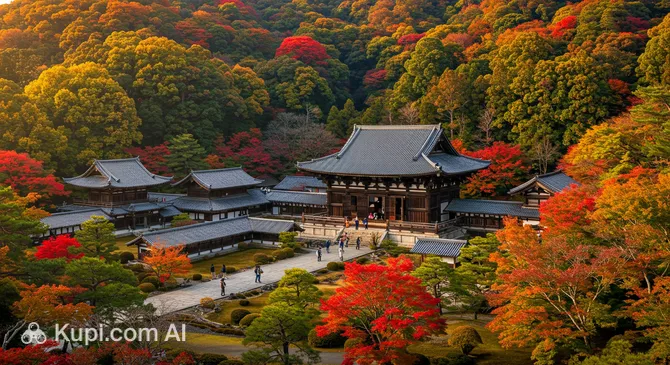
Eiheiji. Illustration.
Source: Kupi.com AI

The main pride and heart of Eiheiji is the world-famous Eiheiji Temple, whose name translates as the "Temple of Eternal Peace." This active Buddhist monastery was founded in 1244 by the prominent master Dogen and remains one of the key centers of the Soto school of Zen Buddhism to this day. The majestic temple complex, comprising more than 70 buildings connected by covered wooden galleries, seems to dissolve into the lush greenery of centuries-old trees, creating a truly mystical sight.

The atmosphere of the town of Eiheiji fascinates with its serenity and calm. Here, it’s easy to lose track of time while observing the measured lives of the monks, strolling through the shaded alleys of the temple complex, or immersing yourself in meditation in one of its ancient halls. Eiheiji is an ideal place for those who seek to understand Japanese spiritual culture more deeply, enjoy pristine nature, and take home an invaluable sense of inner balance and renewal. A visit to this unique corner will leave you with unforgettable impressions.

You can find more interesting facts on the Eiheiji city history page.

Weather Overview

The weather in Eiheiji is characteristically seasonal. Summers here are warm, with average temperatures comfortably rising above 20°C, especially in July and August. These summer months are also characterized by a significant amount of rainfall, with July often being the wettest. Winters in Eiheiji are cold, with average temperatures in January and February staying around 3-4°C, and this period is also marked by frequent precipitation, often in the form of snow, especially in December and January. Overall, in Eiheiji, you can expect warm and humid summers and cold winters with frequent precipitation. Spring and autumn offer transitional, more moderate weather conditions. For more detailed information about the climate and current forecasts, please visit the Eiheiji Climate page.

Average monthly temperature

Average monthly precipitation

Interesting Facts

The town of Eiheiji, famous for its majestic temple complex, hides other curious details that few people know. Here are just a few of them:

  • Although Eiheiji Temple was founded back in 1244, it remains an active monastery to this day. Visitors can observe the daily life of young monks with shaved heads, creating a unique sense of immersion in living history.

  • The Eiheiji temple complex features seven main buildings that are skillfully interconnected by covered walkways. The oldest surviving structure on the grounds—the Sammon gate—was rebuilt in 1749 and still impresses with its authenticity and beauty.

  • Eiheiji is considered one of the two head temples of the Soto Zen school in Japan, alongside Soji-ji Temple in Yokohama. People from all over the world come here not only for religious ceremonies but also to participate in training retreats to delve deeper into the Zen atmosphere.

  • According to legend, it was in Eiheiji that Master Dogen introduced the strict rules of monastic life and meditation that formed the basis of Zen Buddhism in Japan. It is believed that the founder's spirit still protects these places, and the very atmosphere of the town is filled with a sense of eternity and peace.

How to Get There

A journey to Eiheiji is an immersion into the atmosphere of ancient Japan, which, however, requires a little logistical preparation, as the town is located in a secluded area. You can find out more about how to get to Eiheiji, including schedules and routes, on our dedicated page. The main flow of tourists arrives here via neighboring large transport hubs, combining a flight or high-speed train ride with a bus trip.

There is no airport in the town of Eiheiji itself, so travelers usually use the air gateways of neighboring cities. The closest and most convenient option is Komatsu Airport (KMQ) in Komatsu, located about 35 km from Eiheiji. It is a regional hub accepting both domestic flights (e.g., from Tokyo) and some international ones (from Seoul, Shanghai, Taipei). The trip from the airport to Eiheiji by taxi or rental car takes about 45–50 minutes. You can also take a limousine bus to Fukui Station (about 1 hour) and then transfer to a direct bus to Eiheiji Temple.

For those flying from further away, the best choice is Chubu Centrair International Airport (NGO) in Nagoya. This is a major international hub located 144 km from Eiheiji. From the airport, you can take a train to Nagoya Station and then transfer to an express train or Shinkansen (with a transfer in Tsuruga) to Fukui. The total travel time will be about 3–3.5 hours.

For clarity, here is a summary of the main airports used to reach the region:

AirportPassenger trafficDistance
Komatsu Airport1.8 mln35 km
Toyama Airport736 740101 km
Nagoya Airport735 000109 km
Chubu Centrair International Airport12.3 mln144 km
Noto Airport207 427146 km

Railway communication also plays a key role in the route to Eiheiji. Since there is no JR high-speed train station in the town itself, the main transfer point is Fukui Station in the neighboring city of the same name. Trains from Osaka, Kyoto, Nagoya, and Tokyo (often with a transfer in Tsuruga or Kanazawa) arrive here. From Fukui Station, tourists can take the local Echizen Railway line to Eiheijiguchi Station (about 25 minutes), where a short bus route runs to the temple complex, or take the "Eiheiji Liner" direct bus, which delivers you to the temple gates in half an hour.

Main Attractions

Eiheiji, a charming small town in Fukui Prefecture, is famous for more than just its majestic temple complex. Within the town and its picturesque surroundings, many interesting sites await travelers—from ancient shrines and natural wonders to unique museums. A trip to Eiheiji promises a diverse and memorable experience.

The main attraction and spiritual heart of the town is undoubtedly Eiheiji Temple. Founded in the 13th century, it is one of the two head temples of the Soto school of Zen Buddhism. Spreading across a forested hillside among ancient cedars, this vast complex impresses with its austere elegance and atmosphere of deep peace. Visitors can explore its numerous pavilions connected by covered galleries, observe the daily life of the monks, and even join in the practice of Zen meditation. This place offers a unique immersion into Japanese spiritual traditions.

Nature lovers and outdoor enthusiasts should turn their attention to the Kuzuryu Valley. This incredibly scenic valley, through which the river of the same name flows, provides excellent opportunities for hiking and enjoying breathtaking landscapes. The valley is particularly transformed in autumn, when the mountain slopes burst into the vivid colors of the changing leaves. The silence, fresh air, and natural beauty make the Kuzuryu Valley an ideal place to escape the city bustle and recharge.

Not far from Eiheiji, in the neighboring city of Katsuyama, lies a world-class attraction—the Fukui Prefectural Dinosaur Museum. Recognized as one of the largest and most authoritative paleontological museums on the planet, it attracts visitors of all ages. Its collection features more than 40 complete dinosaur skeletons, many of which were discovered right here in Fukui Prefecture. Interactive exhibits and realistic dioramas make a visit to the museum a truly exciting journey into Earth's prehistoric era.

Local Cuisine

The gastronomy of Eiheiji is closely intertwined with its spiritual heritage and the culinary traditions of Fukui Prefecture. This is a place where you can touch authentic Japanese cuisine that pays special attention to seasonality and the quality of ingredients. You won't find bustling food streets here, but you can enjoy a quiet meal reflecting the peaceful character of the town.

One of the main culinary highlights of Eiheiji is shojin ryori—traditional Buddhist vegetarian cuisine. This is not just food, but an entire philosophy based on the principles of simplicity, balance, and respect for nature. Shojin ryori dishes are prepared from fresh seasonal vegetables, tofu, mushrooms, and wild plants, revealing their natural flavor. You can try these dishes in some local restaurants or, if you're lucky, in temple dining halls, which will be an unforgettable experience.

Another iconic dish of the region is soba buckwheat noodles, particularly famous in Fukui Prefecture as "Echizen soba." It is often served cold with grated daikon (Echizen oroshi soba) or in a hot broth. These noodles, made from local buckwheat, have a special texture and aroma, and are especially good during the cooler seasons. Also, thanks to the proximity to the Sea of Japan, restaurants in Eiheiji and its surroundings offer dishes made from fresh fish and seafood typical of Fukui Prefecture.

As for drinks, meals are often accompanied by traditional Japanese green tea, which perfectly complements both the refined flavors of shojin ryori and hearty noodle dishes. Locals and tourists usually eat in small, cozy restaurants and cafes, many of which specialize in local cuisine. Visiting farmers' markets, if any are nearby, will allow you to get to know the seasonal vegetables and fruits of the region.

Travel Tips

Planning a trip to Eiheiji, a place with a deep spiritual atmosphere? To ensure your journey goes smoothly and leaves only pleasant impressions, check out these practical tips to help you navigate this unique corner of Japan.

  1. Clothing and Essentials:

    The climate in Fukui Prefecture, where Eiheiji is located, is temperate, with four distinct seasons. Summers here can be hot and humid, winters are cool with frequent snowfall, and spring and autumn offer comfortable weather. Be sure to bring comfortable shoes, as you will be doing a lot of walking, especially across the vast grounds of the Eiheiji temple complex. When visiting the temple and other religious sites, follow the dress code: clothing should be modest, covering shoulders and knees. In some parts of the temple, you will be asked to remove your shoes, so clean socks will be quite useful. Don't forget an adapter for your electrical appliances (Japan uses 100V, plug types A and B).

  2. Transport: How to Get Around:

    Eiheiji is a small town, and its main attraction is the famous temple complex of the same name. It is most convenient to reach Eiheiji by bus from the nearest major transport hubs, such as Fukui railway station. Within the town and on the temple grounds, it is best to move on foot. Taxis are available but can be quite expensive for short trips. Renting a car might be sensible if you plan to explore the scenic surroundings of Fukui Prefecture, but it is generally not required for visiting Eiheiji itself.

  3. Finances: Currency, Cards, Tipping:

    The local currency is the Japanese yen (JPY). Credit cards are accepted in hotels and some large shops, but in small souvenir stalls and traditional restaurants in Eiheiji, cash is preferred. Always have some cash on you. ATMs that accept international cards can be found at post offices (Japan Post Bank) or at 7-Eleven convenience stores. It is important to remember that tipping is not customary in Japan and may even be perceived as impolite, as excellent service is considered part of the price. An approximate daily budget (excluding accommodation and travel costs to Eiheiji) can range from 5,000 to 10,000 yen, depending on your spending on food and souvenirs.

  4. Health and Safety:

    Japan in general is a very safe country with low crime rates, and Eiheiji is no exception. Nevertheless, it is always worth taking basic precautions: keep an eye on your belongings, especially in crowded places. Pharmacies (薬局 - kusuri-ya) exist in Japan, but the range of medications may differ from what you are used to, and pharmacists do not always speak English. It is recommended to bring a necessary set of medications from home. Medical assistance for tourists is available but can be expensive. It is highly recommended to obtain travel health insurance before your trip.

  5. Communication: Language, Internet:

    The official language is Japanese. In tourist spots like Eiheiji Temple, staff may speak some English, but overall English proficiency among the population is not very high. It will be helpful to learn a few basic phrases in Japanese: "Konnichiwa" (hello), "Arigato" (thank you), "Sumimasen" (excuse me/sorry). Wi-Fi is usually available in hotels and some tourist information centers. For constant internet access, consider buying a local SIM card or renting a pocket Wi-Fi router upon arrival in Japan (e.g., at the airport).

  6. Local Etiquette and Traditions:

    Japanese people are very polite and value respect. Greetings are often accompanied by bows; the depth of the bow depends on social status and the situation. In public places, and especially on temple grounds, try to behave quietly and with restraint. Loud conversations, especially on the phone, are discouraged. When entering temples, as well as some traditional restaurants and homes, it is customary to remove your shoes. Pay attention to signs regarding photography: in some halls of Eiheiji Temple, photography may be prohibited or restricted.

  7. What to Avoid:

    Do not eat or drink on the go in the street, especially near temples or in public places. This is considered poor etiquette. It is better to find a designated area or sit on a bench. Also, try not to point your finger at people or objects; if you need to show something, use an open palm.

  8. Special Tip for Eiheiji:

    Remember that Eiheiji Temple is not just a tourist attraction, but an active Zen Buddhist monastery where monks live and practice. Show maximum respect for their lifestyle and spiritual practice. If possible and if it is allowed for visitors at the time, try to attend a morning service—it will allow you to feel the unique atmosphere of this holy place more deeply. Respect any restrictions on access to certain areas of the temple.

We hope these tips help you better prepare for your trip to Eiheiji and fully enjoy its unique atmosphere of peace, spirituality, and deep history. We wish you an unforgettable and enlightening journey to the heart of Japan's Zen Buddhism!

Entertainment & Nightlife

Eiheiji, known primarily for its majestic Zen Buddhist monastery Daihonzan Eiheiji, offers its guests an atmosphere of peace and tranquility, which is reflected in the nature of local entertainment, especially in the evening. If you are looking for loud nightclubs and districts filled with bars until dawn, Eiheiji offers a more quiet and measured rest instead.

Nightlife in Eiheiji is far from the hustle and bustle of megacities. Here you won't find large dance clubs or numerous bars with loud music. Evening entertainment is usually focused around traditional Japanese restaurants and izakayas (Japanese pubs), where you can enjoy local cuisine and sake in a calm setting. Some of these establishments may stay open until late evening, offering visitors a cozy place to end the day. The atmosphere in such places is usually friendly and conducive to conversation, with a clientele consisting of both locals and tourists seeking an authentic experience. The dress code is generally casual.

There are no specific streets or quarters dedicated exclusively to nightlife in Eiheiji. Entertainment is rather scattered and more intimate in character. If you plan to spend the evening outside of your hotel, it is better to check the opening hours of the establishments you are interested in beforehand, as many may close relatively early, especially on weekdays. Prices in local restaurants and izakayas are usually moderate.

Regarding transport at night, public transportation in small towns like Eiheiji can have limited schedules in the evening hours. Taxis can be found, but their numbers may be small, especially late at night. If you plan to stay out late, it's worth thinking about how to return to your hotel or ryokan in advance. In terms of safety, Eiheiji, like most places in Japan, is a very safe town. Walking in the evening is generally not a cause for concern, though basic precautions should always be observed.

During the day, Eiheiji offers completely different experiences. The main point of attraction is certainly the Eiheiji monastery, where you can spend many hours learning about the monks' lifestyle and admiring the architecture. The town's surroundings are also rich in natural beauty, perfect for hiking. There are few museums and large entertainment parks here, as the town's focus is shifted toward spiritual practices and contemplative relaxation.

Thus, evening in Eiheiji is more an opportunity for a quiet dinner, a leisurely stroll, and immersion in an atmosphere of tranquility than for active night adventures. For those looking for a more vibrant nightlife, it might be worth considering trips to larger cities in Fukui Prefecture.

Parks & Museums

Eiheiji, located in Fukui Prefecture, offers a unique combination of peaceful nature and deep spiritual heritage, inviting visitors to explore its serene surroundings and cultural treasures.

The main green gem of the town is the grounds of the famous Eiheiji Temple. This is not just a religious site, but an entire complex nestled in the greenery of ancient cedars, with mossy stones and meticulously maintained gardens that create an atmosphere of peace and meditation. Walking through its extensive grounds is an immersion in nature in itself. Additionally, the picturesque hills surrounding Eiheiji and the Kuzuryu River valley provide opportunities for calm walks and enjoyment of untouched Japanese nature, making them wonderful places for relaxation and contemplation.

The main cultural and historical center of Eiheiji is certainly Eiheiji Temple (大本山永平寺) itself. Founded in the 13th century by Master Dogen, it is one of the two head temples of the Soto Zen school of Buddhism. Its majestic wooden structures, connected by covered walkways, house priceless relics, ancient scrolls, and works of art. A visit to the temple is an opportunity to touch centuries-old history and architectural traditions. Inside the complex is the Kichijokaku (吉祥閣), a visitor reception pavilion where exhibitions on the temple's history, the art of calligraphy, or aspects of Zen Buddhism are sometimes held, making it a kind of museum space interesting for those who want to understand the culture of this place more deeply.

For a deeper immersion in the atmosphere of Eiheiji, stroll through the streets of the eponymous town adjacent to the temple. Here you can find small shops selling local souvenirs, incense, and food, as well as try traditional shojin ryori Buddhist vegetarian cuisine. Pay attention to the details of local life, which is closely linked to the rhythm of the monastery—this will add a special flavor to your visit and allow you to take home authentic impressions.

Getting Around

Public transportation in Eiheiji, a small town known for its majestic temple, is primarily represented by bus services. The transport system is oriented toward the needs of both local residents and the many pilgrims and tourists who arrive to visit the famous Eiheiji Zen Buddhist monastery. Taxi services are also available for more personalized trips.

The main form of public transport in Eiheiji is the bus. Routes usually connect the town with the nearest transport hubs, such as Fukui railway station, from where you can reach Eiheiji by bus, and also run directly to the temple complex. The cost of a bus trip from Fukui Station to Eiheiji is usually around 700-800 yen, while shorter trips around town can cost 200-300 yen. Bus fares are most often paid in cash to the driver upon exiting. Some regional buses may accept transport IC cards, but it is recommended to always have cash on hand, especially small bills and coins, as not all routes may support cashless payments.

Tourists planning to use buses in Eiheiji should take note of several practical points. Upon entering the bus (usually through the middle or rear door), you are sometimes required to take a numbered ticket (整理券 - seiriken) if the payment system requires it. The amount to be paid, corresponding to your ticket number, will be displayed on an electronic board at the front of the bus. Payment is made when exiting through the front door. Bus schedules can be found at bus stops, on the official websites of transport companies (information is often provided in Japanese), or requested at local tourist information centers. It is important to remember that buses may not run very frequently, especially in the evening or outside the main tourist season, so it is recommended to plan your trips in advance.

As an alternative to buses in Eiheiji, you can use taxi services. This is a more expensive but comfortable way to travel, especially convenient for trips directly to your destination, for small groups, or when carrying luggage. The minimum taxi fare usually starts from 600-700 yen for the first couple of kilometers, after which the cost is calculated by the meter based on distance and travel time. A short trip around town by taxi can cost around 1000-1500 yen. Taxi stands are usually located at Eiheiji Temple and at key points in the town; a car can also be ordered by phone. For exploring the temple complex itself and the immediate surroundings, walking is an excellent option. Opportunities for bicycle rentals in Eiheiji may be limited, but if you prefer this mode of travel, it is worth checking the information on-site upon arrival.

Accommodation

In Eiheiji, tourists will find various accommodation options, although the selection may not be as wide as in major metropolises. The main focus here is on traditional Japanese hospitality. You can stay in classic Japanese ryokans, which offer a unique cultural experience including tatami mats, futons, and local cuisine. More modest guest houses (minshuku) and small hotels catering to pilgrims and tourists visiting the famous temple are also available.

The most convenient area for staying is undoubtedly the territory adjacent to the famous Daihonzan Eiheiji temple complex. Staying here allows you to easily reach the main attraction and immerse yourself in the atmosphere of this peaceful place. Some housing options may be within walking distance of the temple, which is especially valued by those who wish to attend morning services. It is also worth considering options along the main transport routes if you plan to explore the surroundings.

While Eiheiji might not boast a large number of international chain hotels, local hotels and ryokans offer authentic stays and a high level of service. It is in such places that you can get a deeper look into Japanese culture and traditions. Ryokans often offer local cuisine prepared from seasonal products, which will be an additional pleasant impression of your trip.

It is recommended to book accommodation in advance, especially if your trip falls during peak seasons such as the cherry blossom season in spring, the autumn foliage (momiji) period, or major Buddhist holidays. During these times, the flow of pilgrims and tourists to Eiheiji increases significantly, and finding suitable accommodation on the spot can be difficult.

The price range varies from relatively budget options in guest houses and simple hotels to more expensive offers in prestigious ryokans with full board and onsens (hot springs). You can book accommodation through popular online platforms or directly on the websites of hotels or ryokans, if available. For some traditional ryokans, booking by phone or email may be preferable or even the only option.

Nearby Cities

For those who want to explore the surrounding area, Eiheiji serves as an excellent starting point for day trips to several interesting nearby locations:

Fukui: Located just 8 kilometers from Eiheiji, the city of Fukui is the administrative center of the prefecture of the same name. This is the nearest large city, offering a wider choice of shops, restaurants, and cultural sites. Here you can visit the ruins of Fukui Castle, stroll through the picturesque Yokokan Garden, and also stop by the Fukui Prefectural Dinosaur Museum (although it is located slightly outside the city limits, it is one of the region's main attractions, especially if you are traveling with children).

Kanazawa: Although Kanazawa is a bit further away (about 61 km), it is definitely worth a day trip. This historic city is famous for one of Japan's three most beautiful landscape gardens—Kenroku-en. Additionally, in Kanazawa, it is worth seeing the impressive Kanazawa Castle, the well-preserved Nagamachi samurai district, and the charming tea houses of the Higashi Chaya district, where you can feel the atmosphere of old Japan.

Komatsu: Approximately 37 km from Eiheiji lies the city of Komatsu. One of its main attractions is the magnificent Natadera Temple, known for its rock formations and ancient caves, and which is particularly beautiful during the autumn colors. In Komatsu, you can also visit the Yunokuni no Mori traditional crafts village, where various types of Japanese applied arts are presented, and even participate in workshops.

Below is information about some cities located near Eiheiji that may be of interest for a visit:

CityPopulationDistance
Fukui261 4748 km
Awara27 10715 km
Sabae68 66618 km
Kaga62 99723 km
Echizen80 26424 km

These nearby destinations allow for a deeper acquaintance with the diverse culture, history, and natural landscapes of the region, complementing the experience of visiting Eiheiji.

Shopping & Souvenirs

Shopping in Eiheiji offers a unique experience, centered mainly around the famous Eiheiji Temple and its surroundings. The town is not a major shopping destination with many modern malls; however, you can find authentic souvenirs, items related to Buddhist culture, and local delicacies that reflect the spirit of this special place in Japan.

The main shopping activity in Eiheiji is concentrated on Monzen-machi street, which leads directly to the main entrance of Eiheiji Temple, as well as on the adjacent side streets. Here you will find rows of small shops and stalls offering a wide range of goods: from incense and Buddhist paraphernalia to local sweets, handicrafts, and Fukui Prefecture products. The atmosphere here is conducive to leisurely strolls and choosing memorable gifts.

There are no large modern shopping centers in Eiheiji itself. The town preserves its traditional way of life, and shopping here is more intimate and authentic. If your goal is large malls with international brands, you should consider a trip to larger cities in Fukui Prefecture, such as Fukui city.

There are not many permanent large markets, whether food or flea markets, in Eiheiji. However, during temple festivals or special holidays, temporary fairs may be organized where local residents and artisans offer their products. At ordinary times, fresh local produce can be found in small specialized shops.

As souvenirs from Eiheiji, tourists most often choose items related to Zen Buddhism and local traditions. Particularly popular are: incense with various aromas, Buddhist prayer beads (juzu), small figurines, and calligraphy scrolls with wise sayings. It is also worth paying attention to the local delicacy—goma-dofu (sesame tofu), which is often sold in vacuum packaging as a souvenir. In the shops, you can also find other traditional goods from Fukui Prefecture, such as washi paper products, Echizen-yaki ceramics, or wagashi local sweets.

Shops in Eiheiji, especially those located along Monzen-machi street and oriented toward tourists, are usually open from 9:00 or 10:00 AM and work until 5:00 or 6:00 PM. Some small stalls may close earlier, especially during the off-peak season. Regarding payment methods, cash Japanese yen is the most common and preferred means of payment, especially in small shops. Credit cards may be accepted in some larger souvenir shops and hotels, but it is always better to have an adequate supply of cash with you.

For foreign tourists, Tax Free Shopping (VAT refund) may be available in some shops in Eiheiji. This is usually possible when purchasing goods for an amount exceeding 5,000 yen in a single receipt at stores with the appropriate license (look for the "Tax-Free Shop" sign or similar). To process the tax refund, you will need to present your passport. It is recommended to clarify the details and procedure directly in the store before making a purchase.

Reached the end of the page?

That means the route is fully explored