Support

Shirakawa

About

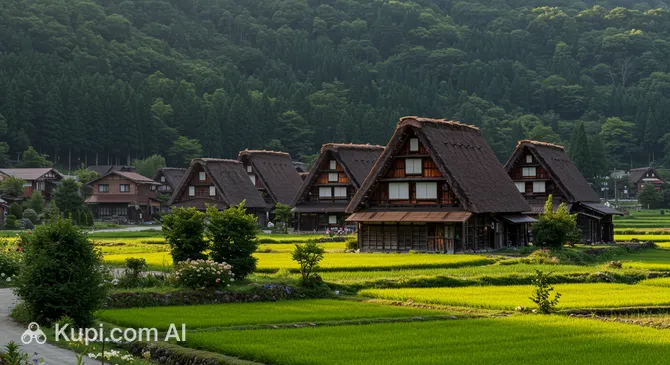
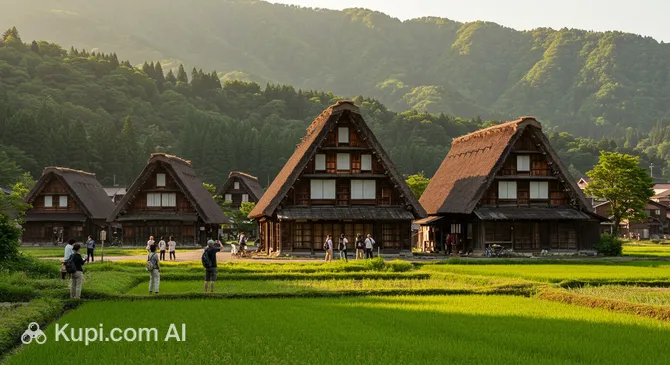
Shirakawa-go is not just a village, but a true fairy tale hidden among the dense forests of the Japanese Alps on Honshu Island, in Japan. This is a place where mountains seem to embrace cozy traditional houses, and the crystal-clear Shogawa River picturesquely divides the settlement, giving it a special charm and a peaceful atmosphere.

Despite its seeming remoteness, Shirakawa-go is relatively easy to reach from major cities: for example, a trip from Nagoya takes just over two hours by car, and from Kanazawa about an hour. The population of this unique area is approximately 59,044 people (according to data for the entire municipality, including the village), which helps preserve the spirit of seclusion and the measured pace of life here.
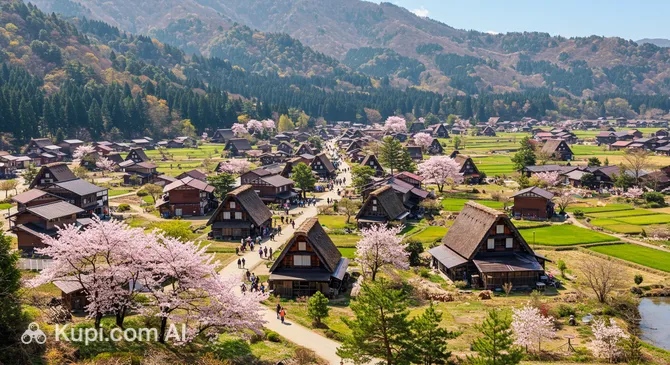
Shirakawa-go. Illustration.
Source: Kupi.com AI

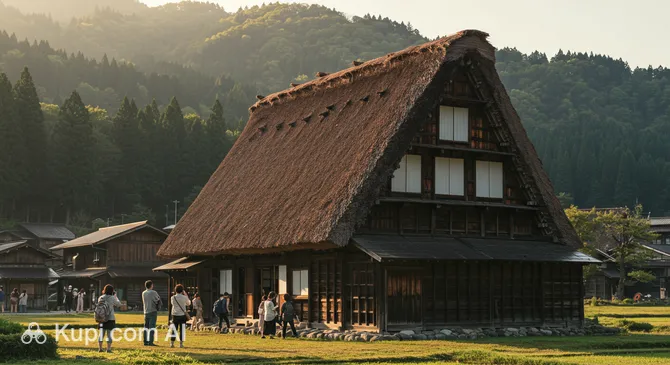
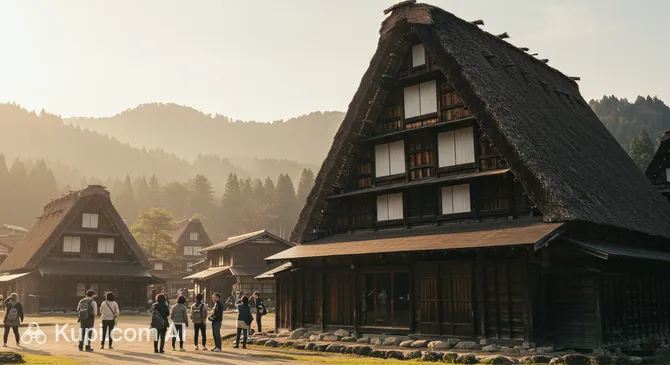
One of the main gems of Shirakawa-go is the historical village of Ogimachi, where you can still observe the traditional lifestyle of local farmers. However, the place gained true worldwide fame thanks to its unique architecture in the "gassho-zukuri" style. These are traditional houses with high, steep thatched roofs resembling hands folded in prayer ("gassho"). This construction is not only impressive in appearance but is also perfectly adapted to the heavy snowfalls of harsh local winters, keeping the interior warm and cozy.

The atmosphere in Shirakawa-go is truly magical, especially in winter when fluffy snow covers the roofs of the houses, and soft lights are lit in the evenings, creating fairy-tale landscapes. Visiting this village is a unique opportunity to touch Japan's past, immerse yourself in its authentic culture, feel the slow rhythm of life, and enjoy the genuine harmony of nature and human heritage. It is a journey that will undoubtedly leave you with the warmest and brightest memories.

You can find more interesting facts on the Shirakawa-go history page
Weather Overview

The weather in Shirakawa-go is characterized by distinct seasons. Winters here are cold, with an average January temperature of about -2.1°C and frequent precipitation, mostly in the form of snow (up to 24 days with precipitation in January). Spring brings gradual warming, and by May, the average temperature reaches 14.3°C. Summer is warm and humid, especially in July and August, when average temperatures rise to 22-23°C, and the number of rainy days can reach 25 per month, with peak precipitation in July (13 mm). In autumn, the temperature gradually decreases from a comfortable 19.8°C in September to a cool 7.2°C in November, while precipitation remains moderate. Overall, expect a warm, humid summer with frequent rain and cold, snowy winters.

For a more detailed forecast and information about weather by month, you can check the Shirakawa-go climate page.

Average monthly temperature

Average monthly precipitation

Interesting Facts

Beyond its world-famous landscapes and traditional houses, Shirakawa-go hides many surprising details and stories that make this place truly unique. Here are just a few of them:

Wada House. Illustration.
Source: Kupi.com AI

Traveler photos:

  • World Heritage Site: In 1995, Shirakawa-go, along with the neighboring village of Gokayama, was included in the UNESCO World Heritage list. This recognition highlights not only the uniqueness of the "gassho-zukuri" architecture but also the preservation of the traditional way of life, which is carefully passed down from generation to generation.

  • Engineering Marvel of Gassho-zukuri: The famous thatched roofs of the houses are not just picturesque—they are a genuine engineering solution. Their steep pitch allows them to withstand the massive amounts of snow characteristic of this region of Japan. Furthermore, the multi-story structure of houses such as the Wada House was historically used for raising silkworms on the upper floors, and some of these buildings are over 250 years old!

  • Legend of the Roofs: There is a belief that the characteristic shape of the "gassho-zukuri" roofs, resembling hands folded in prayer, was devised not only for practical reasons. Legend has it that this shape allows the spirits of ancestors descending from the mountains to "look after" their descendants, especially during winter holidays.

  • Magic of Winter Illuminations: Shirakawa-go is famous for its traditional festivals. One of the most breathtaking is the winter illumination of the houses. On certain days, the snow-covered gassho-zukuri roofs are lit with a warm glow, turning the entire village into a magical, almost surreal sight that attracts tourists from all over the world.

How to Get There

A trip to this secluded corner of the Japanese Alps is an adventure in itself. Since the village is located in a mountainous area, there is no direct rail connection or its own airport. Travelers usually have to combine a train or plane with a bus trip. You can find out all the ways to get to the city and choose the most convenient route based on your starting point.

If you plan to fly, the nearest major international hub is Chubu Centrair International Airport (IATA: NGO). There is no airport in Shirakawa-go itself, but you can fly into this airport in Nagoya, which is about 157 km from Shirakawa-go. It is one of central Japan's most important transport hubs with huge passenger traffic. The journey from here to the village by rental car or a combination of train and bus takes about 3–4 hours.

A closer option is Komatsu Airport (IATA: KMQ). It is also not located in Shirakawa-go, but in the city of Komatsu, about 46 km from the destination. This is a regional airport handling both domestic and some international flights. The journey from here by taxi or bus (with a transfer in Kanazawa) will take about 1.5–2 hours. You can also consider Toyama Airport (IATA: TOY) in the city of Toyama (about 49 km away), which is also convenient for onward travel by ground transport.

For convenience, here is summary information on the main airports:

AirportPassenger trafficDistance
Komatsu Airport1.8 mln46 km
Toyama Airport736 74049 km
Matsumoto Airport112 61893 km
Nagoya Airport735 000113 km
Noto Airport207 427114 km

Regarding rail transport, it is important to remember that there is no train station in Shirakawa-go village itself. The nearest major hubs where Shinkansen bullet trains arrive are stations in the cities of Kanazawa and Toyama, as well as the station in Takayama (JR Takayama Line). From any of these cities, comfortable express buses (such as Nohi Bus) run regularly to Shirakawa-go. The bus trip from these stations usually takes between 50 minutes and 1 hour 15 minutes, and it is recommended to book tickets in advance, especially during the tourist season.

Main Attractions

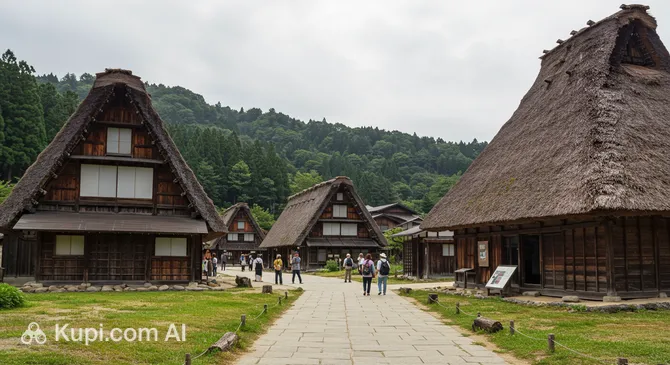
Shirakawa-go, a UNESCO World Heritage site, is a true gem of Japan, famous for its unique villages featuring traditional gassho-zukuri style houses. These houses, with steep thatched roofs resembling hands folded in prayer, create a unique landscape. Visiting Shirakawa-go is an opportunity to immerse yourself in the atmosphere of an old Japanese village and get acquainted with its rich culture and history.

One of the main attractions is the Shirakawa-go Open-air Museum Gassho-zukuri Minkaen. Several historical houses moved from different parts of the village are collected and carefully preserved here. Visitors can go inside, see traditional daily life, and learn more about gassho-zukuri architecture. This is an excellent place for a first introduction to the region's unique heritage.

Shirakawa-go Gassho-zukuri Open-Air Museum. Illustration.
Source: Kupi.com AI

Traveler photos:

The Wada House is definitely worth a visit—it is the largest and one of the best-preserved gassho-zukuri style houses in Ogimachi village. Once belonging to one of the region's most influential families, this house is open to the public and offers a glimpse into the past, showing how people lived several centuries ago. Inside, you can see household items and learn about the history of the Wada family.

Wada House. Illustration.
Source: Kupi.com AI

Traveler photos:

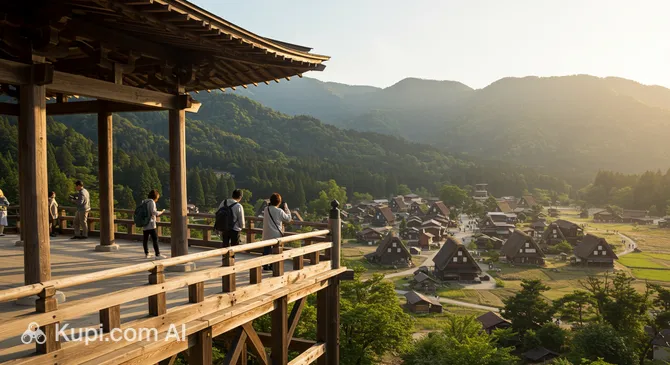
To enjoy a panoramic view of the entire Ogimachi village with its picturesque roofs, head up to the Ogimachi Castle Observation Deck. It offers the classic view often seen on Shirakawa-go postcards and photographs. It is especially beautiful here at sunrise, sunset, or in winter when the village is covered in snow.

Ogimachi Castle Observation Deck. Illustration.
Source: Kupi.com AI

Traveler photos:

Another noteworthy house is the Kanda House. It is also open to visitors and showcases traditional architecture and lifestyle. The Kanda family was involved in sake production, and some artifacts related to this craft can be seen in the house. By climbing to the upper floors, you can appreciate the complex roof structure from the inside.

Kanda House. Illustration.
Source: Kupi.com AI

Traveler photos:

Local Cuisine

The gastronomy of Shirakawa-go is closely intertwined with the gifts of surrounding nature and traditional agriculture. The star of the local menu is undoubtedly Hida beef—incredibly juicy, tender, and with a characteristic marbled texture, it is rightfully considered one of the best in Japan. You can try it in various ways: perfectly grilled, as delicate sashimi, or in rich, aromatic soups.

In addition to beef, the cuisine of Shirakawa-go will delight you with other traditional dishes. Be sure to try "Gohei-mochi"—appetizing rice cakes that are grilled over charcoal and served with a sweet soy sauce glaze. No less authentic is the local miso soup, made with homemade fermented soybean paste. Dishes are often complemented by the freshest seasonal vegetables grown on nearby terraces.

Regarding drinks, pay attention to the sake made according to ancient local recipes, as well as original homemade herbal liqueurs. You can get to know the gastronomic diversity of Shirakawa-go both in cozy local restaurants and at lively street markets. It is at the markets where you will find freshly caught trout, various local pickles, and unusual sweets made from rice and beans. Sometimes the village hosts gastronomic festivals, offering an even deeper dive into the world of Japanese cuisine.

For tourists, the cuisine of Shirakawa-go is a unique opportunity to experience the real Japanese countryside, where natural products and centuries-old traditions are valued. Tasting marbled Hida beef and fragrant Gohei-mochi will be an unforgettable gastronomic experience, and a walk through the local markets will allow you to discover new tastes and aromas.

Travel Tips

Welcome to Shirakawa-go! To ensure your journey to this unique Japanese village, famous for its traditional gassho-zukuri houses, is as comfortable as possible and leaves only pleasant impressions, we have prepared some practical tips for you.

  1. Seasonal Clothing and Gear:

    The climate in Shirakawa-go has distinct seasons. In winter, there is a lot of snow, so warm layered clothing, waterproof outerwear, and shoes with non-slip soles are necessary. In spring and autumn, the weather is changeable—bring items that can be layered and comfortable shoes for long walks. Summer can be hot and humid; light clothing, a hat, and a raincoat for sudden downpours will be useful. Comfortable shoes are your best companion year-round, as the village is best explored on foot. Don't forget an adapter for electrical appliances (types A and B sockets are used in Japan). When visiting local temples or shrines, while there is no strict dress code, show respect by choosing modest clothing.

  2. Transport Nuances:

    Shirakawa-go is a small village, and the best way to get around is on foot. There is no public transport within the village itself, such as subways or trams. People usually reach Shirakawa-go by bus from major cities like Takayama or Kanazawa. Taxis are hard to find in the village itself. Renting a car can be useful if you plan to explore the surroundings and the Hida region, but it is not necessary for the village itself; moreover, parking spaces may be limited.

  3. Financial Matters:

    The official currency is the Japanese Yen (JPY). It is recommended to carry enough cash, as not all local shops—especially small souvenir stalls and family restaurants—accept credit cards. International cards may be accepted at some hotels and major tourist sites. ATMs accepting foreign cards may be few in the village itself; if needed, look for them at Japan Post Bank offices or 7-Eleven stores in larger cities along the way. Leaving tips in Japan is not customary and may be seen as a misunderstanding.

  4. Health and Safety:

    Shirakawa-go is a very safe place for tourists. The main precautions are related to weather conditions (especially icy roads in winter) and being careful when walking around historic buildings. Pharmacies with a wide range of medicines may be absent in the village itself, so it's best to bring a basic first-aid kit. The nearest major medical facilities are in neighboring cities. Be sure to take out travel medical insurance before your trip. Be careful on narrow paths and inside old houses.

  5. Communication and Connectivity:

    The main language is Japanese. Staff at tourist information centers, some hotels, and shops may speak English, but you shouldn't count on it everywhere. Learn a few simple phrases: "Konnichiwa" (Hello), "Arigato gozaimasu" (Thank you very much), "Sumimasen" (Excuse me/Sorry). Wi-Fi access is available at some hotels, cafes, and the tourist center, but it's not always stable. For constant connection, consider buying a travel SIM card or renting a pocket Wi-Fi router in advance.

  6. Local Etiquette:

    Show respect for local traditions. The most important rule is to remove your shoes when entering private homes, traditional inns (minshuku), and some temples or museums (usually there is a specific place for this). In public places and especially inside house museums, try to speak quietly. If you want to take a photo of local residents, politely ask for permission. In Japan, cleanliness is highly valued, so do not litter; if you can't find a bin, take your trash with you.

  7. What to Avoid:

    Do not enter private property or local residents' homes without a specific invitation, even if the door seems open—many houses in Shirakawa-go are still residential. Also, refrain from touching ancient structures, exhibits in house museums, or household items without permission to preserve them for future generations.

  8. Special Tip for Shirakawa-go:

    If you want to fully immerse yourself in the atmosphere of this unique village, book an overnight stay in one of the traditional gassho-zukuri houses (minshuku). This is an unforgettable experience, but the number of spots is limited, so you must book well in advance, especially during peak season. Also, keep in mind that in winter, access to some viewpoints may be difficult or closed due to heavy snowfall—check for updated information.

We hope these tips help you plan an unforgettable trip to Shirakawa-go and enjoy its unique beauty and tranquility. Have a pleasant journey!

Entertainment & Nightlife

Shirakawa-go offers a very special evening leisure experience, far from the noisy nightclubs and bars of big cities. Instead of neon lights and loud music, an atmosphere of peace and tranquility reigns here, allowing you to enjoy the unique charm of this historic village under the starry sky. If you are looking for vibrant nightlife, Shirakawa-go is likely to offer you a completely different but no less memorable pastime.

Evenings in Shirakawa-go are perfect for leisurely strolls through quiet streets lit by the soft glow of traditional lanterns. Regarding specific venues for dinner or evening gatherings, the choice differs from urban standards. The main dining options are provided by ryokans and minshuku (traditional Japanese inns), where guests can enjoy authentic local cuisine in a fitting setting. A few small family restaurants and izakayas (Japanese pubs) may also operate during evening hours, but their number is quite limited, and they usually close fairly early. It is important to understand that in Shirakawa-go, you will not find busy bars or nightclubs open until late at night; evening life here focuses on quiet relaxation and immersion in the atmosphere of old times. During certain seasons, the village may be beautifully illuminated, creating a truly magical scene, but this is not a permanent occurrence, and it is best to check information about such events in advance.

When planning an evening in Shirakawa-go, keep in mind that most establishments, including shops and many restaurants, close quite early, often around 5:00 PM - 6:00 PM. Public transport is practically non-existent at night, so for traveling long distances if needed, it is better to arrange for a taxi in advance, though the village itself is very compact. Walking along the illuminated streets is absolutely safe; Shirakawa-go is famous for its safety and calm environment, allowing you to enjoy the evening atmosphere without worry.

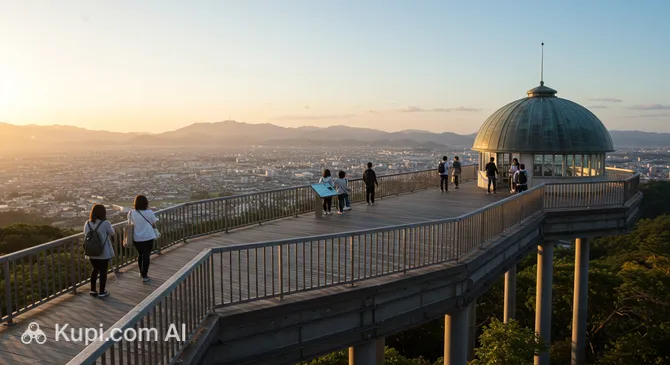
During the day, Shirakawa-go offers a rich cultural program. You can immerse yourself in the region's history by visiting the Shirakawa-go Open-air Museum Gassho-zukuri Minkaen, which showcases traditional houses and the lifestyle of local residents. It is also worth seeing the famous Wada House, one of the largest and best-preserved gassho-zukuri houses, or the Kanda House. For panoramic views of the village and surrounding landscapes, head up to the Ogimachi Castle Observation Deck or the Shiroyama Viewpoint.

Shiroyama Observatory Deck. Illustration.
Source: Kupi.com AI

Traveler photos:

Thus, while Shirakawa-go is not a center of nightlife in the conventional sense, its evening charm lies in the silence, the beauty of traditional architecture, the opportunity to gaze at the starry sky away from city lights, and to find peace for the soul. This is a place for those who appreciate tranquility, authenticity, and a unique cultural experience.

Parks & Museums

Shirakawa-go charms not only with its unique architecture but also with its harmonious merger with the surrounding nature, offering travelers both cultural enrichment and peaceful landscapes. This is a place where history comes alive among picturesque mountains.

Although there are no traditional city parks in Shirakawa-go in the usual sense, the entire village and its surroundings represent one large natural area ideal for walking and contemplation. To fully appreciate the beauty of this place, be sure to climb to the Ogimachi Castle Observation Deck. From here, you get that iconic view of the village with its famous gassho-zukuri thatched roofs often seen on postcards. Another popular point for admiring the panorama is the Shiroyama Viewpoint, offering equally breathtaking views, especially at sunrise or sunset when soft light envelops the valley.

Shirakawa-go. Illustration.
Source: Kupi.com AI

Traveler photos:

For a deep dive into the region's history and lifestyle, visit the Shirakawa-go Open-air Museum Gassho-zukuri Minkaen. Several traditional houses moved from different parts of the village are collected and carefully preserved here. Visitors can go inside, study their unique construction in detail, see household items, and learn about the daily life of people who lived in these harsh but beautiful places for centuries. This is a great opportunity to understand how the architecture was adapted to snowy winters and the community's way of life.

In addition to the open-air museum, many historical houses in Shirakawa-go village itself function as small private museums. For example, the Wada House, which is the largest gassho-zukuri house in the village, is open to the public and demonstrates the life of a wealthy family that played an important role in the settlement's life. The Kanda House is also interesting to visit, where you can get a closer look at the interiors and craft traditions.

The entire village of Shirakawa-go is a UNESCO World Heritage site, and every corner of it, every house like the Three Gassho-zukuri Houses, breathes history. The unique architecture, adapted to heavy snowfalls, represents an outstanding example of traditional Japanese building and human harmony with nature.

Shirakawa-go Gassho-zukuri Three Houses. Illustration.
Source: Kupi.com AI

Traveler photos:

For a more authentic experience and to avoid the crowds, try walking through the less busy streets on the edge of the village or visit it early in the morning. At this time, you can enjoy a special silence and peace, feeling the spirit of old Japan.

Getting Around

When planning a trip to Shirakawa-go, it is important to understand that this is a charming historical village, and the best way to get to know it is through leisurely walks. Public transport here plays the role of a link to major cities rather than a means of transport within the village itself.

The main form of public transport bringing tourists to Shirakawa-go is buses. Regular bus routes connect the village with cities such as Takayama, Kanazawa, and Nagoya. Large operators like Nohi Bus and Kaetsuno Bus serve these directions. The central bus stop, known as the Shirakawa-go Bus Terminal, is conveniently located near the information center and Deai-bashi Bridge, from where it is easy to begin exploring the village.

The bus fare system is quite simple. Tickets for intercity routes are recommended and sometimes mandatory to book in advance, especially during the peak tourist season. You can purchase them at bus terminals in the departure cities or online on the bus companies' websites. Payment is usually made in cash or by card at the time of purchase. For some short local routes or when boarding without a reservation (if there are seats), cash payment to the driver might be required. Universal Japanese IC transport cards (like Suica or Pasmo) may be accepted on some routes, but it is better to check this in advance and have cash with you.

Tourists should pay attention to the bus schedules, as the frequency of trips can be limited, especially in the evening or off-season. Inside Ogimachi village itself (the main tourist zone of Shirakawa-go), public transport is practically non-existent, except for a possible shuttle bus that may run to the Shiroyama Tenshukaku viewpoint. The entire village can easily be covered on foot in a few hours.

Alternative ways to get around include renting a car. This is a good option if you want to explore the Hida region more freely; however, parking within Shirakawa-go village itself is strictly regulated and permitted only in designated parking lots outside the historical zone. Taxis here are a rarity and quite an expensive pleasure; you are unlikely to need one to move around the compact village. Bicycle rental is not a common option for seeing the village itself, as its beauty is best revealed during walks.

Overall, transport logistics around Shirakawa-go are organized to minimize the impact on the unique atmosphere of the historical settlement, encouraging visitors to immerse themselves in its identity by moving on foot and enjoying every corner of this amazing place.

Accommodation

When planning a trip to Shirakawa-go, it is important to consider the unique nature of local accommodation. Instead of conventional hotels, traditional Japanese guest houses known as minshuku (family-run guesthouses) and ryokans (traditional inns) predominate here, many of which are located in historical gassho-zukuri style houses. This gives tourists the chance to immerse themselves in the authentic atmosphere of a Japanese village. Options range from simple, cozy rooms to more comfortable ones, but they always maintain a traditional spirit.

Most accommodation options are concentrated in the main village of Ogimachi, which is a UNESCO World Heritage site. Staying in one of the gassho-zukuri houses is an unforgettable experience in itself. This usually means sleeping on futons on tatami mats, shared bathrooms, and the opportunity to try home-cooked Japanese cuisine, as many minshuku offer dinner and breakfast. While there are practically no modern hotels in the usual sense within the historical part of the village itself, some guesthouses may offer more modern amenities. Houses like the famous Wada House or Kanda House are historical landmarks, while lodging is offered in similar buildings adapted for guests.

Wada House. Illustration.
Source: Kupi.com AI

Traveler photos:

Booking Tip: Accommodation in Shirakawa-go, especially in traditional gassho-zukuri houses, is in huge demand. It is strongly recommended to book your stay several months in advance, especially if your trip coincides with peak seasons such as winter (the illumination period) or autumn (the fall foliage season). The number of places is very limited.

The price range for staying in Shirakawa-go can be described as mid-range to high-end, especially if meals are included. You can book accommodation through the official website of the Shirakawa-go Tourist Association, specialized Japanese booking systems for ryokans and minshuku, and sometimes through major international online platforms. Direct booking is also possible but may require knowledge of the Japanese language.

Nearby Cities

For those who want to explore the surrounding area, Shirakawa-go serves as an excellent starting point for day trips to several interesting nearby locations:

Each of these cities possesses its own unique charm. Kanazawa, for example, is known for its magnificent Kenrokuen Garden, one of Japan's three great gardens, as well as its well-preserved samurai and geisha districts. Toyama, the gateway to the Japanese Alps, will charm you with the scenic Kansui Park and the possibility of embarking on the Tateyama Kurobe Alpine Route. In Takaoka, you can see one of the country's three great Buddha statues and visit the impressive Zuiryu-ji Temple. Shirayama, located at the foot of the sacred Mount Hakusan, beckons nature lovers with its landscapes and the ancient Shirayama Hime Shrine. And Komatsu offers an introduction to the unique Natadera Temple, the Awazu hot springs, and an interesting Motor Museum.

CityPopulationDistance
Shirakawa-go (Ogimachi)43 7873 km
Nanto47 39027 km
Shirayama110 13530 km
Inami30 14832 km
Ishikawa14 22234 km

These nearby destinations offer a unique opportunity to get deeper acquainted with the rich culture, history, and picturesque landscapes of this region of Japan, perfectly complementing the experience of visiting Shirakawa-go itself. Each trip promises new discoveries and unforgettable moments.

Shopping & Souvenirs

Shopping in Shirakawa-go is, first and foremost, an opportunity to purchase unique souvenirs and products by local craftsmen that reflect the culture and traditions of this famous Japanese village. You won't find huge shopping centers or fashion boutiques here like in megacities. Instead, small shops and stalls await you, cozily situated along the main streets of the village, especially near the historical gassho-zukuri houses. This is where the main commercial life is concentrated.

The main place for shopping in Shirakawa-go is the main street of Ogimachi village, where most of the souvenir shops and stalls with local products are clustered. Strolling between the traditional houses, you will find many places offering authentic goods. There are no specialized shopping streets or large commercial districts in the usual sense; shopping is organically woven into the atmosphere of the historic settlement.

Large shopping centers are not typical for Shirakawa-go. The charm of this place lies in its authenticity and the preservation of the traditional way of life. Searching for goods here is more like an immersion into the local culture through small family shops rather than a marathon through modern malls.

There are also no organized large markets, whether food or flea markets, in Shirakawa-go. However, in some stalls, you can find local agricultural products, seasonal delicacies, or handmade items that are essentially similar to market goods. These might be homemade pickles, jams, or fresh vegetables from local farmers.

Worth bringing back from Shirakawa-go are souvenirs that convey the spirit of this unique place. Popular items include:

  • Products featuring gassho-zukuri houses: miniature models of the houses, magnets, postcards, and textiles with the characteristic roofs.
  • Local craft items: ceramics, woodwork, traditional toys.
  • Locally produced food: sake, miso, traditional sweets, dried mushrooms, and herbs.
  • Sarubobo dolls – traditional Japanese amulets in the form of monkeys, especially popular in the Hida region, which includes Shirakawa-go.

Most shops in Shirakawa-go are open from approximately 9:00 AM - 10:00 AM to 5:00 PM - 6:00 PM, especially those catering to tourists. In small shops, it is preferable to have cash (Japanese Yen) with you, although credit cards may be accepted in some places, particularly in larger souvenir shops or hotels.

In Japan, a Tax-Free system is available for foreign tourists on many goods when purchasing a certain amount in participating shops. Look for the "Japan Tax-free Shop" sign. It is recommended to check the possibility of Tax-Free processing directly at the store before making a purchase and to have your passport with you.

Reached the end of the page?

That means the route is fully explored