Support

Kōtoku-in

About

Kotoku-in (高徳院) is a famous Buddhist temple located in the ancient city of Kamakura, near Yokohama. Belonging to the Jodo sect, this temple has become world-renowned for its primary attraction—a monumental bronze statue of Amitabha Buddha. Known as the "Daibutsu" or "Great Buddha," this sculpture is one of Japan's most recognizable and revered symbols.

The majestic Great Buddha, cast in bronze presumably in 1252, is striking in its size. Standing 13.35 meters tall including the base and weighing 121 tons, it is the second-largest bronze Buddha statue in the country. What makes the Daibutsu unique is that it stands in the open air. Originally, the statue was housed in a massive wooden building, but this was destroyed by a tsunami in the late 15th century, and since then, the Buddha has serenely gazed upon the world, surrounded by nature.
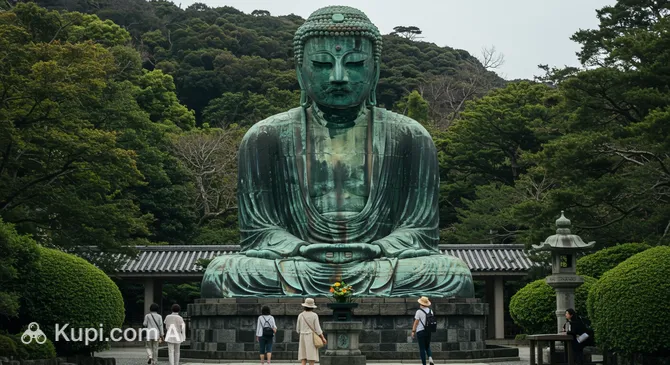
Kōtoku-in. Illustration.
Source: Kupi.com AI

Traveler photos:

Its outdoor location gives the site a special atmosphere. Regardless of the season—be it surrounded by cherry blossoms in spring, lush greenery in summer, or vibrant autumn colors—the statue leaves a lasting impression, creating a sense of harmony and eternal peace. Visitors can not only admire this work of art from the outside but also enter the hollow statue for a small fee to appreciate the craftsmanship of ancient casters.

Contacts

To plan your visit to Kotoku-in and get the most up-to-date information on opening hours, ticket prices, and special events, it is recommended to consult official sources. Below are the main contact details for the temple.

How to contactContact
Address4-chōme-2-28 Hase, Kamakura, Kanagawa 248-0016, Japan
Phone number+81 467-22-0703
Websitewww.kotoku-in.jp

What to Do

The main reason to visit Kotoku-in is, of course, to see the majestic Great Buddha statue. Visitors can leisurely walk around the monument to fully appreciate its scale and detail. Pay close attention to the faint traces of gold leaf still visible near the statue's ears—a reminder that it was once entirely covered in shimmering gold.

However, Kotoku-in offers a truly unique opportunity—peeking inside the Buddha itself. For a small additional fee, you can enter the hollow bronze sculpture and see its construction from the inside. This is a rare chance to touch the secrets of 13th-century craftsmanship and understand how such grand works of art were created.

Besides seeing the main shrine, there are other activities on the temple grounds. You'll find stalls selling traditional Japanese souvenirs and charms for luck and protection. If you are lucky, you may also witness Buddhist ceremonies occasionally held at the temple, adding a special atmosphere of spirituality and authenticity to your visit.

Getting There

Although Kotoku-in Temple is often associated with Yokohama, it is actually located in the neighboring city of Kamakura, which is very easy to reach. A direct train ride from Yokohama to Kamakura takes only 30–40 minutes, making the temple an excellent destination for a day trip. It is also convenient to get here from Tokyo: simply take the JR Yokosuka line to Kamakura Station.

Upon arriving at Kamakura Station, you have several options. The most scenic is to transfer to the local Enoden railway line and ride to Hase Station. From there, Kotoku-in Temple is a leisurely 5–10 minute walk away. This route is a highlight in itself, allowing you to soak in the atmosphere of this ancient coastal town.

If you want to save time or avoid walking, you can take one of the many local buses from Kamakura Station that stop very close to the temple. For those who value maximum comfort, a taxi is always available from the station—it is the fastest, though more expensive, way to reach the gates of the Great Buddha.

Nearest city: Yokohama

History & Facts

The history of Kotoku-in Temple, located near Yokohama, and its famous Great Buddha statue dates back to the mid-13th century during the Kamakura period. According to temple records, the current bronze statue was cast in 1252. Interestingly, it was preceded by another giant statue—a wooden one, completed in 1243 after ten years of continuous work. Funds for its creation in this iconic part of Japan were raised through the efforts of Lady Inada-no-Tsubone and the Buddhist monk Joko.

The fate of the first wooden statue was tragic: just a few years after completion, in 1248, it was completely destroyed by a powerful storm. Refusing to accept the loss of the shrine, the monk Joko proposed creating a new statue, this time from a more durable material—bronze. This complex work was likely carried out by the master casters of the time, Ono Goroemon or Tanji Hisatomo. This is how the Great Buddha came to be, and today it continues to attract pilgrims and tourists from all over the world.

Originally, the bronze Buddha, like its wooden predecessor, was housed inside a spacious temple hall. However, the temple's history was marked by a series of natural disasters. The building was repeatedly destroyed by typhoons in 1334 and 1369, but it was rebuilt each time. A massive tsunami (or typhoon, according to another version) in 1498 proved fatal, finally destroying the structure. After this, it was decided not to rebuild the hall, and since then, the Buddha statue has sat majestically under the open sky, which has become its unique and most recognizable feature.

Time Needed

For a complete visit to Kotoku-in Temple and its main shrine—the Great Buddha statue—most visitors find 1 to 2 hours sufficient. This allows enough time to leisurely walk around the monument, appreciate its grandeur, and explore the rest of the temple grounds. You will also have time to go inside the statue itself, which is a unique feature of the site, and visit the souvenir shop to pick up some mementos.

If you plan a deeper dive into the temple's history, wish to study the details closely, or hope to catch a Buddhist ceremony, you should plan for a longer visit. Overall, Kotoku-in is a place for quiet contemplation, so we recommend not rushing and enjoying the peaceful atmosphere for as long as you feel comfortable.

Working Hours

Kotoku-in Temple welcomes visitors year-round, but opening hours vary by season. During the warmer months, from April to September, the temple grounds are open from 8:00 AM to 5:30 PM. In the autumn-winter season, from October to March, hours are slightly shorter—from 8:00 AM to 5:00 PM. Please note that entry to the grounds closes 15 minutes before the official closing time. If you plan to not only see the statue from the outside but also go inside the Great Buddha, keep in mind that access follows a shorter schedule—from 8:00 AM to 4:30 PM.

For a standard visit to Kotoku-in, advance booking or purchasing tickets ahead of time is generally not required—they can be bought directly on-site. However, it is always a good idea to check the temple's official website (www.kotoku-in.jp) before your trip for the latest information. This will help you avoid any surprises related to potential schedule changes for national holidays or special temple events.

8:00 – 16:45

Nearby

Visiting Kotoku-in Temple and beholding the majestic Great Buddha is undoubtedly a highlight for any visitor to Kamakura. However, to make your trip truly unforgettable, it is worth taking some time to explore the surroundings. Located near Yokohama, this historic district is full of other unique temples, scenic natural spots, and cultural sites that will perfectly complement your experience.

Strolling through the nearby attractions will allow you to dive deeper into the atmosphere of Japan's ancient capital and see just how diverse this coastal city is. Historic shrines, beautiful beaches, and modern recreational areas are all within walking distance or a short ride from Kotoku-in.

NameDistance
Kamakura Park Hotel1.3 km
Cape Inamuragasaki1.9 km
Shichirigahama Beach2.4 km
Zushi Marina2.9 km
Enoshima Aquarium5.2 km
Morito Beach5.6 km
Enoshima Iwaya Caves5.8 km

Have you reached the end of the page?

So the route has been studied inside and out