Support

Adolphe Bridge

About

The Adolphe Bridge (Pont Adolphe) is not just an engineering feat, but one of the main symbols of Luxembourg City and the entire country of Luxembourg. This majestic arched bridge, spanning the picturesque Pétrusse River valley, connects the historic Upper Town (Ville Haute) with the Gare district. It serves not only as an important traffic artery but also as a favorite spot for tourists.
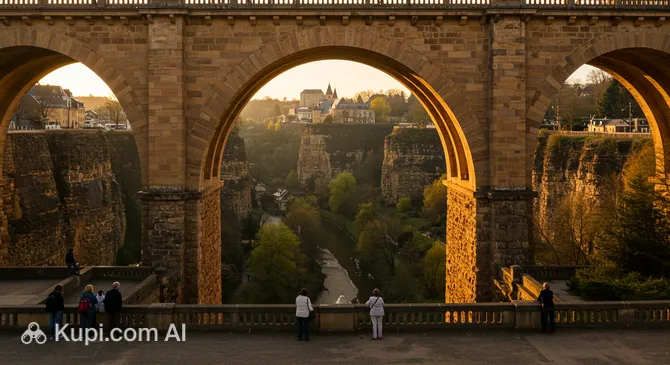
Adolphe Bridge. Illustration.
Source: Kupi.com AI

Traveler photos:

Built between 1900 and 1903 during the reign of Grand Duke Adolphe, the bridge boasted the largest stone arch in the world at the time of its opening. Its elegant double arch and total length of about 153 meters impress with their grace and scale. The Adolphe Bridge is a striking example of early 20th-century engineering.

A recent renovation added a modern element to the bridge: a suspended bicycle and pedestrian bridge was built beneath the main roadway. This innovation has made walking across the Adolphe Bridge even more appealing. The bridge offers breathtaking panoramic views of the Pétrusse Valley and the old quarters of Luxembourg City, providing magnificent photo opportunities.

A visit to the Adolphe Bridge is often an essential part of exploring the Luxembourg capital. It is a place where history and modernity harmoniously combine, offering visitors not only a convenient crossing over the valley but also aesthetic enjoyment of its architecture and surrounding landscapes.

Contacts

Adolphe Bridge is a public structure and a major traffic artery of Luxembourg City, connecting the Ville Haute to the Gare district. It can be reached on foot from the city center, by public transport, or by car, as it is a well-known landmark. To check public transport routes or possible temporary restrictions due to events, it is recommended to contact the tourist information centers of Luxembourg City or official city resources.

How to contactContact
AddressUewerstad, 1116 Ville-Haute Luxembourg
Phone number+352 22 28 09
Websitewww.luxembourg-city.com

What to Do

The main attraction of the Adolphe Bridge for tourists is, of course, the opportunity to take a walk or bike ride across it. From its height, some of the most breathtaking panoramic views of Luxembourg City open up, particularly the picturesque Pétrusse River valley, ancient fortifications, and lush green neighborhoods. It's the perfect place to feel the city's atmosphere and take stunning souvenir photos.

The lower, suspended bridge, designed specifically for pedestrians and cyclists, deserves special attention. A walk along it offers completely different sensations and perspectives. You can stroll leisurely, admiring both the structure of the Adolphe Bridge itself from below and the opening views of the valley, without being distracted by the traffic above.

Besides simply crossing, the Adolphe Bridge often serves as a starting or ending point for walks through the Pétrusse Valley. After descending from the bridge, you can explore park areas, walk along the river, or climb to other viewpoints. Watching the sunset from the bridge or its surroundings is also a popular activity when the city lights begin to twinkle, creating a magical atmosphere.

For history and architecture buffs, the bridge itself is an object of study. You can examine its stonework, arched spans, and engineering solutions that were innovative for their time in detail. Adolphe Bridge is more than just a crossing; it's a full-fledged attraction offering diverse experiences for every visitor to Luxembourg City.

Getting There

Getting to the Adolphe Bridge in Luxembourg City is quite simple, as it is one of the key attractions and an important link between the Upper Town (Ville Haute) and the station district (Gare). Due to its central location, many tourists prefer to walk to the bridge, especially if they are in the historic center of Luxembourg City. Such a walk allows you to enjoy views of the city and better experience its atmosphere.

If you prefer public transport, Luxembourg City offers an extensive network of buses and trams. Several routes pass in the immediate vicinity of the Adolphe Bridge or have stops nearby. It is recommended to check the current route numbers and schedules on the official public transport website of Luxembourg City or at tourist information centers. This will help you plan your trip most efficiently.

For those who value comfort and speed, a taxi ride is always an option. Taxi drivers in Luxembourg City know the location of the Adolphe Bridge perfectly, so there will be no problems finding it. If you are traveling by private or rental car, the bridge is easy to find as it is part of the city's main road network. However, it is worth noting that parking can be difficult in the central part of Luxembourg City, so it is better to plan ahead or use public parking garages.

Nearest city: Luxembourg City

History & Facts

The history of the Adolphe Bridge is closely linked to the development of Luxembourg City at the turn of the 19th and 20th centuries. The growing city needed a more modern and spacious connection between the historic center and the new district around the railway station. The bridge project was developed by French engineer Paul Séjourné together with Luxembourgish engineer Albert Rodange. Construction took place from 1900 to 1903, and the bridge was officially opened on July 24, 1903. It was named after Grand Duke Adolphe, who ruled Luxembourg from 1890 to 1905, highlighting the structure's significance for the country.

At the time of its creation, the Adolphe Bridge was a true triumph of engineering. Its main double arch, spanning the Pétrusse Valley at a height of over 40 meters, had a span of 85 meters and was considered the largest stone arch in the world. This achievement was made possible by innovative construction methods for that time and the use of local sandstone, which gave the bridge its characteristic warm hue. Luxembourgers affectionately call it "Nei Bréck", which means "New Bridge" in Luxembourgish, and this name is still widely used despite the structure's century-long history.

Throughout its long history, the Adolphe Bridge has repeatedly proven its durability and importance. It survived the turbulent events of the 20th century, remaining a key transport artery for the city. In the early 21st century, from 2014 to 2017, the bridge underwent a major renovation. This was necessary not only to strengthen its structure but also to adapt it to modern needs. It was then that a lightweight suspension bridge for pedestrians and cyclists was skillfully added beneath the main roadway, making it even more attractive and functional while carefully preserving its historic appearance.

Beyond its engineering and functional merits, the Adolphe Bridge is an integral part of Luxembourg's cultural landscape. It is often depicted on postcards, paintings, and photographs, symbolizing the harmony between nature and human genius. An interesting fact: during the renovation, some original structural elements were discovered and preserved, emphasizing the careful attitude towards historical heritage. Today, the bridge doesn't just connect two parts of the city; it connects the past and the present, serving as a point of pride for residents and a must-see for all visitors to Luxembourg City.

Time Needed

Typically, just to cross the Adolphe Bridge, enjoy the panoramic views of the Pétrusse Valley and Luxembourg City, and take a few memorable photos, visitors need from 30 minutes to 1 hour. This is enough time for a leisurely stroll across the main, upper part of the bridge and an initial introduction to this iconic structure.

If you want to explore the Adolphe Bridge in more detail—for example, by walking along the specially equipped lower pedestrian and bicycle bridge, which offers different perspectives, or by paying more attention to the architectural features of the structure—you should plan for 1–2 hours. Photography enthusiasts might spend more time here waiting for the right light, such as at sunset. Additionally, the bridge can serve as a starting point for longer walks through the picturesque Pétrusse Valley, which will also increase the total visiting time.

Working Hours

The Adolphe Bridge in Luxembourg City is a public structure and an important transport link, so it does not have strict "opening hours" in the traditional sense, like a museum or gallery. You are free to visit the bridge and walk across it at any time of the day and any day of the year to enjoy the magnificent views of the Pétrusse River valley and the city landscapes. No special ticket booking or advance registration is required to visit the Adolphe Bridge, as access is open to everyone.

Since it is an open public space, the Adolphe Bridge is available 24/7 all year round. Nevertheless, to get the most up-to-date information on possible temporary closures related to major city events or scheduled maintenance work (though this is rare for such a landmark), it is recommended to check the official tourist portals of Luxembourg City or local information centers before your visit. In general, you can safely plan your walk across the bridge at any time that is convenient for you.

Open 24 hours

Nearby

After visiting the Adolphe Bridge, don't rush to leave this area of Luxembourg City. Exploring nearby attractions will allow you to dive deeper into the city's atmosphere and see more interesting places that are just a few steps away. Such a walk will enrich your experience and help you get a more complete picture of the capital of Luxembourg.

There are many iconic sites concentrated around the Adolphe Bridge, each interesting in its own way. By spending a little time exploring them, you can discover new facets of this amazing city, from historical monuments to atmospheric spots. Below is a list of some of them, indicating the approximate distance from the bridge:

NameDistance
Pétrusse Casemates0.2 km
Constitution Square0.2 km
Monument of Remembrance0.2 km
Place Guillaume II0.4 km
Notre-Dame Cathedral of Luxembourg0.4 km
Grand Ducal Palace0.5 km
De Gudde Wëllen0.5 km

Have you reached the end of the page?

So the route has been studied inside and out