Support

National Museum of History and Art

About

The National Museum of History and Art (MNHA) is the primary historical, archaeological, and art museum located in the capital of LuxembourgLuxembourg City. This museum is dedicated to a comprehensive display of artworks and valuable artifacts reflecting all eras of Luxembourg's rich history.
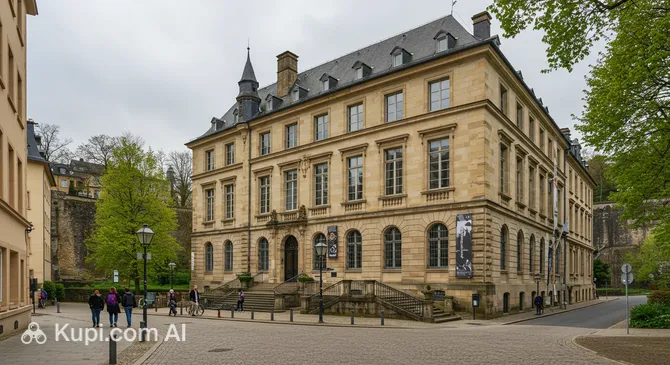
National Museum of History and Art. Illustration.
Source: Kupi.com AI

Traveler photos:

The museum occupies an impressive modern building, purpose-built and completed in 2002. It is located on Fishmarket Street (Marché-aux-Poissons), in the heart of the historic city center known as the "Upper City."

The history of the museum complex includes a gradual expansion that began back in the 1960s with the acquisition of adjacent historic mansions. Today, the National Museum of History and Art offers visitors a unique journey through time, introducing the country's cultural heritage through its extensive and diverse collections.

Contacts

To find the current contact details for the National Museum of History and Art, including the phone number and email address, we recommend visiting the museum's official website. You can also contact the tourist information centers in Luxembourg City for additional information.

How to contactContact
AddressMarché-aux-Poissons, 2345 Ville-Haute Luxembourg
Phone number+352 47 93 30 1
Websitewww.nationalmusee.lu

What to Do

Immerse yourself in the rich history and culture of Luxembourg by visiting the National Museum of History and Art. Here, you'll find fascinating exhibitions covering all eras of this remarkable state's existence. The museum offers its guests extensive collections dedicated to archaeology, history, and various forms of art, making it a must-see on any curious traveler's itinerary.

Particular attention should be paid to the archaeological and historical collections. These exhibits, originally gathered by the historical section of the Grand Ducal Institute, were transferred to the museum in 1927 and have been its pride ever since. They allow you to trace the region's development from ancient times to the present day, see unique artifacts, and learn about key events that shaped modern Luxembourg.

Art lovers will also find much of interest here. The museum features a significant collection of modern art, which began in 1958 thanks to the work of a special commission for the acquisition of contemporary works. In addition to the permanent exhibitions, which are well worth a close look, the museum regularly hosts temporary exhibitions, introducing visitors to new names and trends in art.

Getting There

The National Museum of History and Art is conveniently located in the very heart of Luxembourg City, at Marché-aux-Poissons. This is a historic district known as the "Upper City," making the museum easily accessible for tourists exploring the central part of the capital. Thanks to its central location, the museum is within a pleasant walking distance of other iconic sights in Luxembourg City.

There are several ways to reach the National Museum of History and Art. If you prefer public transport, Luxembourg City has a well-developed bus network. The nearest bus stops are within walking distance of the museum. You can check the routes and bus numbers that serve the Marché-aux-Poissons area on the city's transport company website or at the information stands at the stops.

For those who value comfort and speed, a taxi is always an option. Taxis can be hailed by phone, through a mobile app, or found at designated stands throughout the city. The trip from most hotels in central Luxembourg City to the museum is short and won't take much time. Given the museum's central location, even if you are staying in a more distant part of the city, a taxi will take you right to the entrance.

Nearest city: Luxembourg City

History & Facts

The history of the National Museum of History and Art in Luxembourg City dates back to the end of the 18th century, when the idea of creating a public museum first emerged. However, 1869 is considered the official founding year. It was then that a royal decree established the Grand Ducal Institute (l'Institut Grand-Ducal), whose historical section took on the important mission of preserving the country's valuable archaeological and historical collections.

The journey to creating the museum as we know it today was gradual and filled with significant events. In 1874, a special commission was formed to oversee the construction of a building to house the growing collections. A major step was the 1922 acquisition of the Collart-de-Scherff mansion, picturesquely located on the Fish Market (Marché-aux-Poissons), which became the museum's first home. By 1927, the historical section of the Grand Ducal Institute officially transferred all its holdings to the new institution. The first halls, dedicated to archaeology and natural sciences, were ceremoniously opened to the public shortly before the start of the Second World War.

Since its opening, the museum's collection has continuously grown and been enriched through new acquisitions, generous donations, bequests, and gifts from art and history enthusiasts. This naturally led to the need to expand the museum's facilities. In the 1960s, the museum significantly increased its space by acquiring neighboring buildings. The culmination of years of development was the completion in 2002 of a new, ultra-modern museum wing. This contemporary building not only allowed for the presentation of extensive exhibitions at a high level but also became a notable architectural landmark in the historic center of Luxembourg City.

Time Needed

When planning a visit to the National Museum of History and Art in Luxembourg City, you should expect to spend 2 to 4 hours for a full exploration of its exhibitions. This timeframe allows you to view the main collections, covering archaeology, applied arts, numismatics, as well as Luxembourgish painting and sculpture, without rushing.

If your interest is focused on a specific period or type of art, such as archaeological finds or the painting collection, your visit might be somewhat shorter, perhaps around 1.5 to 2 hours. However, to get a comprehensive understanding of the rich history and cultural heritage of Luxembourg presented in the museum, it is recommended to set aside at least half a day, especially if you plan to study the exhibits and read the accompanying information in detail.

For those who only want a quick look at the most iconic exhibits, 1 to 1.5 hours may be enough. However, given the diversity and richness of the National Museum of History and Art's collections, such a short visit will likely leave you with a sense of incompleteness. The museum offers a deep dive into the country's past and present, so the more time you can devote to it, the more complete and memorable your experience will be.

Working Hours

The National Museum of History and Art in Luxembourg City is a major cultural site. Please note that the exact opening hours of the museum may vary depending on the season and day of the week. To get the most up-to-date visiting information, it is recommended to check the official museum website or verify details with local tourist information centers immediately before your visit.

As a rule, popular museums like this one may have different schedules for weekdays and weekends, as well as special hours during holidays. For certain exhibitions or during peak tourist seasons, advance ticket booking may be required. Therefore, when planning your visit to the National Museum of History and Art, it is always best to check all the details in advance to ensure your visit is as comfortable as possible.

DayOpening hours
MondayClosed
Tuesday10:00 – 18:00
Wednesday10:00 – 18:00
Thursday10:00 – 20:00
Friday10:00 – 18:00
Saturday10:00 – 18:00
Sunday10:00 – 18:00

Nearby

A visit to the National Museum of History and Art in Luxembourg City is, without a doubt, a highlight of any trip. However, to make your journey even more fulfilling and memorable, it is worth exploring its surroundings. Often, it is the nearby attractions, cozy corners, and unexpected discoveries that allow you to dive deeper into the city's atmosphere and get a more complete picture of it.

A stroll through the area around the museum can reveal new facets of Luxembourg City, showing it from a different side and providing plenty of pleasant impressions. Don't limit yourself to just one iconic spot, as something equally interesting might be hidden right nearby, ready to complement your cultural experience. Below is a list of some attractions located nearby.

NameDistance
Grand Ducal Palace0.1 km
Konrad Café & Bar0.1 km
Bock Casemates0.2 km
Place Guillaume II0.2 km
Neumünster Abbey0.2 km
Luxembourg City History Museum0.2 km
De Gudde Wëllen0.3 km

Have you reached the end of the page?

So the route has been studied inside and out