Support

The Passerelle

About

The Passerelle, also known by locals as the Old Viaduct, is a historic bridge and one of the iconic landmarks of Luxembourg City, the capital of Luxembourg. This impressive viaduct is not just a beautiful structure but also a vital part of the urban infrastructure, playing a significant role in the life of the city.
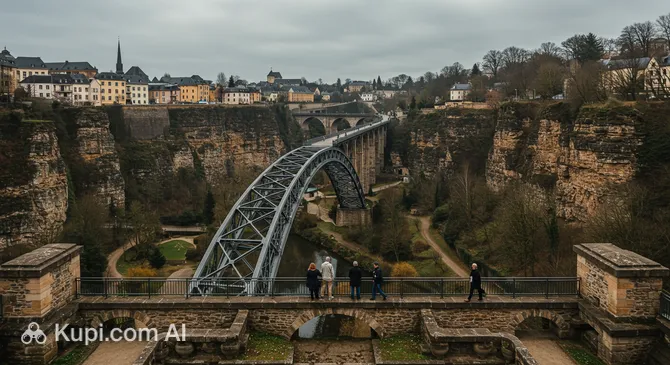
The Passerelle. Illustration.
Source: Kupi.com AI

Traveler photos:

Located in the heart of the city, the Passerelle performs a key function by connecting different districts of the capital. A walk across this bridge offers picturesque views of the surrounding urban landscapes, making it a popular spot for both tourists and locals. Its design and historical significance draw the attention of architecture and history enthusiasts.

The Passerelle is one of many bridges built across the Pétrusse and Alzette rivers, which flow through the city. These rivers necessitated the construction of various bridges that have today become an integral part of the unique architectural character of the capital of the Grand Duchy. The Passerelle, with its elegance and history, fits perfectly into this ensemble, highlighting the city's charm.

Contacts

The Passerelle bridge is an impressive architectural structure and part of Luxembourg City's urban infrastructure, making it accessible for viewing at any time. As it is a public facility, there are no specific contact details for the bridge itself.

For more information about the Passerelle or other attractions in Luxembourg City, you can contact local tourist information centers or visit their official websites.

How to contactContact
Address5 Av. de la Gare, 1611 Ville-Haute Luxembourg

What to Do

The Passerelle, also known as the Old Viaduct, serves as a magnificent observation point in Luxembourg City. Its main draw for visitors is undoubtedly the breathtaking panoramic views from its height. A walk across the viaduct offers the chance to admire the picturesque landscapes of the Pétrusse Valley, the city's historic center, and its surroundings. It is the perfect place to take impressive photos to remember your trip to Luxembourg.

The Passerelle viaduct provides a wonderful view of many of the capital's landmarks. In particular, you can see the famous Bock Casemates—an impressive system of underground tunnels and fortifications that is a key part of the city's historical heritage. Additionally, you can take in the old quarters with their unique architecture and the green valleys surrounding the city, creating a striking contrast between the urban landscape and nature.

Many tourists include a visit to the Passerelle in their walking routes through Luxembourg City. A leisurely stroll along this arched viaduct allows you not only to enjoy the views but also to feel the special atmosphere of this ancient city. It is a wonderful opportunity to take a break, admire the beauty around you, and simply enjoy the moment, watching the life of the city from above.

Getting There

Getting to the Passerelle bridge in Luxembourg City is quite simple, as it is located in the heart of the city. If you are already exploring the historic center of Luxembourg City, the most pleasant way to reach it is on foot. By following the signs or using a city map, you will easily find this famous viaduct.

Luxembourg City has an excellent public transport system. You can take city buses, many of which pass through the city center and have stops in the immediate vicinity of the Passerelle bridge. Check the routes and bus numbers that stop near your starting point or the attraction closest to the bridge.

Additionally, taxis are always available to quickly take you to the bridge from anywhere in the city. If you prefer to drive a rental car, keep in mind that the central part of Luxembourg City may have traffic restrictions and challenges finding parking, especially during peak hours. Therefore, it might be more convenient to leave your car in one of the city's parking lots and continue on foot or by public transport.

Nearest city: Luxembourg City

History & Facts

The Passerelle bridge, also known by locals as the Old Viaduct, is an integral part of the cityscape and transport system of Luxembourg City. The name itself hints at the venerable age of the structure and its long history, which is closely intertwined with the development of the capital. While detailed historical chronicles of its construction may not be widely known, its significance as a link in the city's infrastructure is undeniable.

Luxembourg City is famous for its many historic bridges, which, like the Passerelle, were built during different eras. These engineering feats were vital for connecting various parts of the city, which are picturesquely spread across plateaus and separated by the deep valleys of the Pétrusse and Alzette rivers. Each bridge tells its own story and solved the important transport challenges of its time.

The bridges of Luxembourg, including the Passerelle, are not just functional crossings but also valuable cultural heritage sites. They showcase a variety of architectural styles and engineering solutions, reflecting technical progress and the aesthetic preferences of different periods. The Old Viaduct, as Luxembourgers call it, holds a worthy place among these historical structures, continuing to serve the city and its residents as a testament to the engineering of the past.

Time Needed

To simply cross the Passerelle and enjoy the views of the Pétrusse Valley and the lower city, you will need very little time—about 15–30 minutes. This is enough to appreciate the scale of the structure and take a few panoramic photos.

If you plan a leisurely walk, want to take high-quality photos from different angles, perhaps wait for the perfect lighting, or simply take in the architectural details and the surrounding landscape, it is worth setting aside about one hour. The bridge is a popular spot for photographers and tourists, so it can be quite busy during peak times.

The Passerelle is also easy to include in a longer walking tour of Luxembourg City's historical center, as it connects important parts of the city and is one of its landmarks. In this case, your total walking time will naturally increase, but the time spent on the bridge itself is unlikely to exceed an hour.

Working Hours

The Passerelle in Luxembourg City is a key piece of public infrastructure, making it accessible 24/7 all year round. As it is an active bridge used by both pedestrians and traffic, it is open 24 hours a day, 7 days a week. You do not need to book tickets or make an appointment to visit.

While you can walk across the Passerelle at any time, for the best experience and to take great photos, it is recommended to plan your visit during daylight hours or at sunset. It is at these times that the bridge offers particularly picturesque views of Luxembourg City, making your walk truly unforgettable.

Open 24 hours

Nearby

Visiting the Passerelle is undoubtedly a highlight, but exploring its surroundings can make your trip to Luxembourg City even more rewarding and memorable. Often, the most interesting discoveries are found in the details and nearby sites that complement the overall picture and allow for a deeper immersion into the local atmosphere.

By expanding your route, you can discover other gems of the city, compare architectural styles, find cozy cafes, or stumble upon unexpected photo spots. Each new location will add its own touch to your impressions of Luxembourg City, turning a simple excursion into a real exploration. Below is a list of some interesting places located near the Passerelle.

NameDistance
Le Grand Ducal0.3 km
De Gudde Wëllen0.4 km
Oscar's Bar0.4 km
Pétrusse Casemates0.5 km
National Museum of Natural History0.5 km
Luxembourg City History Museum0.5 km
Notre-Dame Cathedral of Luxembourg0.5 km

Have you reached the end of the page?

So the route has been studied inside and out