Support

Medina of Marrakesh

About

The Medina of Marrakesh is not just an old city; it is the beating heart of Marrakesh, its ancient part where time seems to have stood still centuries ago. Imagine a tangled labyrinth of narrow streets enclosed within a ring of high fortress walls. It is one of the oldest medinas in Morocco, second in size only to the Medina of Fez, and since 1985, it has been rightfully included in the UNESCO World Heritage list, highlighting its immense historical and cultural value.
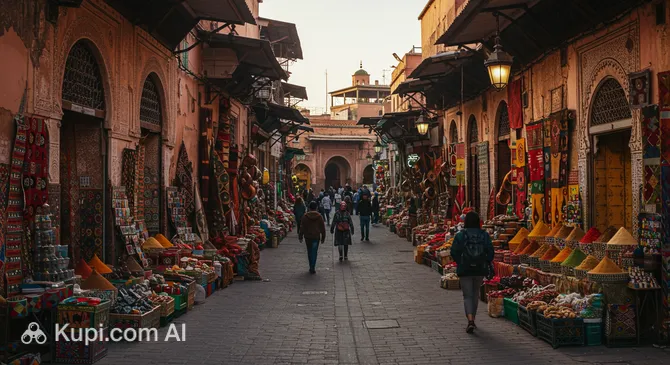
Medina of Marrakesh. Illustration.
Source: Kupi.com AI

Traveller photos:

The hallmark of the medina is its mighty red walls, which are nearly a thousand years old. Erected by Ali ibn Yusuf in 1126, they are built from traditional materials—clay, straw, and lime. These impressive fortifications stretch for a full 10 kilometers, featuring numerous watchtowers and 14 gates through which the life of the ancient city once teemed.

If you look at the medina from above, its structure resembles a whimsical spiderweb woven from countless intersecting streets and passages. There are 20 gates within the fortress walls, but Bab Agnaou attracts special attention—it is the only stone gate and is considered the most beautiful. A walk through the medina of Marrakesh is a true immersion into the atmosphere of the past, an opportunity to touch history and experience the unique flavor of the East.

Contacts

The Medina of Marrakesh is the heart of the old city, a vast historical district easily accessible from anywhere in Marrakesh. As it is an entire neighborhood with many streets, markets, and sights, there is no single contact center for the Medina.

Information about specific sites within the Medina, such as museums, individual riads, or market opening hours, is best found directly on-site, on their official websites (if available), or at tourist information points in Marrakesh.

How to contactContact
AddressMarrakesh 40000, Morocco

What to Do

The Medina of Marrakesh is the heart of the ancient city, where its main treasures are concentrated and authentic Moroccan life is in full swing. A walk through this historical center, surrounded by impressive walls, is best started at the legendary Jemaa el-Fnaa square. This is not just a square, but a huge open-air theater where, from morning until late evening, amazing performances unfold with snake charmers, street musicians, storytellers, and vendors of all kinds of delicacies. You can spend hours watching the action here, soaking up the atmosphere of the true Orient.

Inside the medina, the famous attractions of Marrakesh await you. Be sure to visit the luxurious Bahia Palace to admire its exquisite architecture and mosaics, and the Saadian Tombs, a hidden gem with a rich history. No less interesting is the Ali Ben Youssef Mosque, one of the oldest and most important religious centers in the city. Numerous museums located within the medina will help you gain a deeper understanding of Morocco's culture and history. For unforgettable impressions and a panoramic view of the Old City, climb the 9-meter battlements—from there, a breathtaking view of the labyrinth of narrow streets and traditional houses opens up.

The markets, or souks, hold a special place in the life of the medina. They are a real kaleidoscope of colors, smells, and sounds. In countless shops, artisans offer their wares: sparkling jewelry, bright silks, high-quality leather goods, painted ceramics, and hammered brass items. Here you can find traditional Moroccan souvenirs such as babouches—pointed leather slippers, djellabas—loose hooded robes, or intricately embroidered kaftans. Remember that bargaining in an Eastern market is not just a way to lower the price, but an integral part of the local ritual and an engaging way to interact with the sellers.

Getting There

Getting to the Medina of Marrakesh, the heart of the ancient city, is quite simple as it is its central and most famous part. If you are staying in one of the modern districts of Marrakesh, such as Gueliz or Hivernage, the most convenient way to reach the Medina is by taxi. The trip usually takes a short time, depending on traffic, and is relatively inexpensive. Agree on the price in advance or make sure the driver turns on the meter.

Public transport in Marrakesh can also take you to the borders of the Medina. Many city bus routes pass near Jemaa el-Fnaa square, the main entrance to the Medina. This is a more economical option, although it may take some time to figure out the routes. Stops are usually announced, but it doesn't hurt to double-check with the driver or passengers.

If your accommodation is within walking distance of the Medina, then walking is the best way to immerse yourself in the city's atmosphere. Many riads (traditional Moroccan houses with an internal courtyard) are located right inside the Medina, making access to its labyrinth of streets and markets as easy as possible. Inside the Medina itself, walking is the primary way to get around, as many alleys are too narrow for cars.

Nearest city: Marrakech

History & Facts

The Medina of Marrakesh, the heart of the ancient city of Marrakesh, was founded by the Almoravid dynasty between 1070 and 1072. For centuries, Marrakesh played a key role as the political, economic, and cultural center of the western Muslim world, exerting significant influence over vast territories from North Africa to Andalusia. This historical district still preserves the spirit of the past and is a living testament to the rich history of Morocco.

Inside the medina, many impressive monuments reflecting various eras of its development have been preserved. Among them are the famous Koutoubia Mosque, the majestic Kasbah, monumental gates, and well-kept gardens. Of particular note are the fortress walls surrounding the medina. Built by Ali ibn Yusuf in 1126, this wall stretches for about 10 kilometers with 14 gates and numerous watchtowers; it served as the city's reliable defense for centuries and has survived to this day, becoming one of the symbols of Marrakesh.

Later but no less significant architectural treasures include the magnificent Bahia Palace, the elegant Ben Youssef Madrasa, the Saadian Tombs, and the famous Jemaa el-Fnaa square, which remains the center of public life today. Moroccans hold their heritage in high regard, carefully preserving their culture and traditions, making the medina the authentic historical face of the country. Due to its exceptional historical and cultural value, the Medina of Marrakesh was designated a UNESCO World Heritage site in 1985.

Time Needed

You should set aside plenty of time to explore the Medina of Marrakesh, the pulsing heart of the ancient city. For a general, surface-level introduction—simply walking through the main streets, feeling the unique atmosphere, and taking a few photos—2-3 hours might be enough. However, to truly immerse yourself in this labyrinth of history and culture, that won't be nearly enough.

If your plans include visiting the famous Jemaa el-Fnaa square at different times of the day, exploring the colorful souks with their countless stalls, hunting for authentic souvenirs, visiting a traditional riad or madrasa, and enjoying a leisurely lunch or dinner at one of the local cafes, then you should plan for half a day (about 4-6 hours) or even more. The Medina is not just an attraction; it's an entire world where every turn reveals something new and unexpected.

Many travelers find that one visit to the Medina is not enough and return again and again to explore its different quarters, discover hidden courtyards, or simply soak up its unique energy. Therefore, if your schedule allows, don't rush—give yourself the chance to get lost in its narrow streets; it's the best way to feel the real Marrakesh.

Working Hours

The Medina of Marrakesh is not just a single attraction with a fixed schedule, but an entire historical quarter of Marrakesh. As such, the Medina has no uniform opening hours, as it is a residential and commercial district accessible for walks at any time of day and year-round. You can freely wander through its narrow streets, explore the squares, and enjoy the atmosphere.

However, it is important to remember that individual sites within the Medina—such as the markets (souks), shops, museums, palaces (like the Bahia Palace), or madrasas (like the Ben Youssef Madrasa)—will have their own operating hours. Most shops and market stalls are usually open from the morning (around 9:00-10:00) until late in the evening (until 20:00-22:00), but hours may vary, especially on Fridays (the holy day) or during Ramadan. To visit specific attractions within the Medina, it is recommended to check their current opening hours and the potential need for advance ticket booking on their official websites or at tourist information centers in Marrakesh.

Nearby

Exploring the Medina of Marrakesh is undoubtedly a vibrant and memorable experience. However, to dive deeper into the atmosphere of this amazing city and get the most out of your trip, it is worth paying attention to the attractions located nearby. Exploring the surrounding areas will allow you to see Marrakesh from different angles and add new colors to your journey.

Short walks from the Medina of Marrakesh can lead you to equally interesting places, each with its own history and charm. This is a great opportunity to expand your itinerary and discover the city's hidden gems. Below is a list of some of them, along with approximate distances.

NameDistance
Le Jardin Secret0.1 km
Ben Youssef Madrasa0.3 km
Dar El Bacha Museum0.3 km
Marrakech Museum0.3 km
Le Slimana Restaurant & Rooftop0.4 km
Souk Semmarine0.4 km
MK Rooftop0.5 km

Reached the bottom of the page?

Looks like you know this route inside out