Support

National Museum of Bucovina

About

Housed in a magnificent early 20th-century building, the Bukovina National Museum invites guests on a captivating journey through time. This leading museum complex in the city of Suceava is the primary guardian of the region's cultural code, covering the territory currently occupied by Romania and neighboring lands.
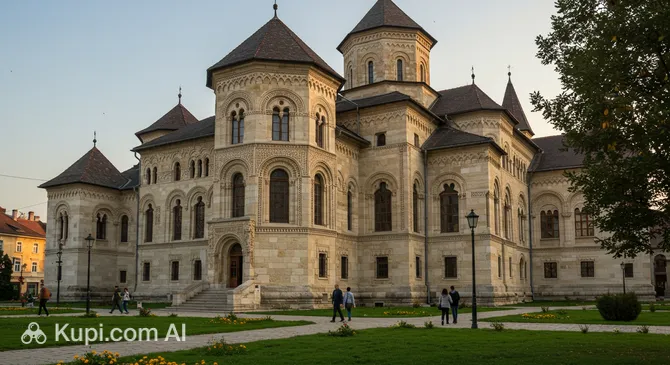
National Museum of Bucovina
National Museum of Bucovina. Иллюстрация. Источник: Kupi.com AI

The museum building itself, built in the Baroque style, is recognized as a significant architectural monument. Inside, extensive collections illustrate the lives of Moldavian and Bukovinian communities: from ancient artifacts and medieval documents to traditional household items and crafts for which local masters have been famous for centuries.

Visitors highly praise the quality of the exhibitions, noting their informativeness and careful approach to heritage. The museum focuses not only on the region's political history but also on human stories, telling of the times of Austrian rule and the region's return to its national roots, making it a must-see for every tourist.

Contacts

For those planning a visit to this iconic site and wishing to clarify details or book a tour, the basic contact information is provided below.

How to contactContact
AddressStrada Ștefan cel Mare 33, Suceava 720063, Romania
Phone+40 230 216 439
Websitemuzeulbucovinei.ro

What to Do

Inside the museum halls, you will encounter the living history of the Principality of Moldavia. One of the highlights of the exhibition is the impressive "Royal Council Hall", where the atmosphere of the reigns of legendary rulers has been recreated using reconstructions and authentic objects.

Visitors can examine in detail a collection of antique tools, traditional costumes, and everyday items that reveal the secrets of Bukovinian crafts. Thanks to audio guides and information panels in several languages, immersing yourself in the context is easy and engaging even for international guests.

In addition to permanent exhibitions, the museum regularly hosts temporary contemporary art displays and themed events. After exploring the halls, it's worth taking a stroll through the inner courtyard, enjoying the architectural details of the Baroque facade, and perhaps continuing your journey to the nearby Seat Fortress to complete your impressions of Suceava's historical grandeur.

Getting There

The museum is conveniently located in the heart of the city at Strada Ștefan cel Mare 33. If you are already in the center, a walk from the central square will take no more than 10–15 minutes, allowing you to admire the historic architecture of the surrounding blocks along the way.

For those who prefer public transport, city buses and trolleybuses running along the main street stop in the immediate vicinity. If your journey begins at Salcea Airport, the most comfortable option is a taxi, which will take you to the museum doors in about 30–40 minutes, depending on traffic.

Travelers with their own or rented cars will appreciate the convenient parking next to the museum complex, making the visit as simple and accessible as possible for tourists with any travel preference.

Ближайший город: Suceava

History & Facts

The building that houses the exhibition today is a historical gem in itself—it was built in the early 20th century in an exquisite Baroque style and served as the administrative center of the region for a long time.

Suceava was the main residence of the Moldavian rulers for a century and a half, starting from the 14th century. The museum carefully preserves the memory of the reigns of Peter I Mușat, who laid the foundations of local architecture, and Stephen the Great, who transformed the region into a powerful stronghold of Christian culture in the 15th century.

Special attention is given to the complex period of Austrian administration and the subsequent process of Bukovina's integration into a unified state. Here, you can see rare artifacts discovered during excavations of the Princely Court and nearby fortresses, which reveal the city's role as a key political and cultural hub of medieval Moldavia.

Time Needed

When planning your route through the historical center, it is worth setting aside 1.5 to 2.5 hours for a detailed exploration of the Bukovina National Museum's collections. This is plenty of time to walk through the main halls and study the most significant exhibits without rushing.

If you intend to combine your visit with a trip to the nearby Bukovina Village Museum (an open-air ethnographic museum), we recommend allocating at least 3–4 hours for your cultural program. The museum's exhibition is quite extensive, and the abundance of information panels and multimedia materials encourages a thoughtful immersion into the region's history.

Working Hours

Please note the opening hours to ensure your visit goes as smoothly as possible. The Bukovina National Museum is open to visitors from Tuesday to Sunday, while Monday is traditionally a closing day.

  • Tuesday – Sunday: 9:00 – 17:00
  • Monday: Closed
DayWorking hours
ПонедельникЗакрыто
Вторник9:00 – 17:00
Среда9:00 – 17:00
Четверг9:00 – 17:00
Пятница9:00 – 17:00
Суббота9:00 – 17:00
Воскресенье9:00 – 17:00

Nearby

A visit to the museum is an excellent starting point for a deeper exploration of the city. Exploring the surroundings will help you fully immerse yourself in the atmosphere of historic Suceava and see how different eras intertwine in its appearance.

Many interesting sites are within walking distance, allowing you to create a rich walking route for the entire day.

NameDistance
Old Town Bar0.1 km
Museum of Natural Sciences0.3 km
Eker0.3 km
Muse0.4 km
Monastery of Saint John the New of Suceava0.4 km
Suceava Fortress0.5 km
Belea Burger0.7 km

Reached the end of the page?

That means the route is fully explored