Support

Bucovina Village Museum

About

The Bucovina Village Museum is a fascinating open-air ethnographic park that invites you to take a journey back in time. Located in the historic city of Suceava, this complex is a carefully recreated traditional village where every object tells its own story of life in the Bucovina region, for which Romania is famous.
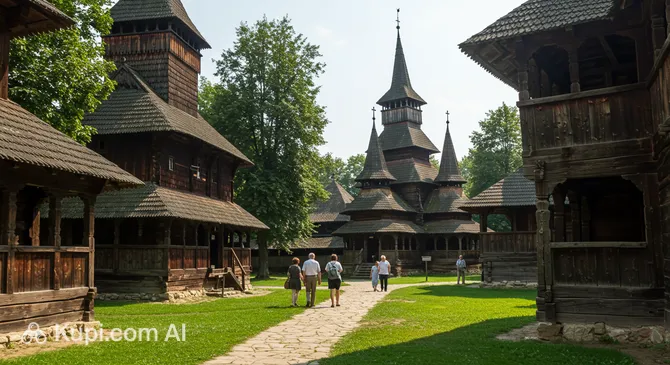
Bucovina Village Museum
Bucovina Village Museum. Иллюстрация. Источник: Kupi.com AI

On a picturesque hill next to the famous Seat Fortress, authentic architectural masterpieces are gathered: residential houses, farm buildings, water mills, and an ancient wooden church. All exhibits were brought from different parts of the region to preserve the unique folk architecture for future generations.

The museum is very popular among tourists and has a high rating thanks to its authentic atmosphere. It is not just an exhibition of buildings, but a full-fledged cultural space where you can feel the spirit of the past while walking along cozy alleys among blooming gardens and centuries-old wooden walls.

Contacts

To clarify information about visiting the museum or organizing tours, you can use the following contact details:

How to contactContact
AddressAleea Cetății, Suceava 720028, Romania
Phone+40 230 216 439
Websitewww.muzeulbucovinei.ro

What to Do

The main pleasure of visiting the museum is a leisurely stroll through its shady alleys. You can step inside many of the houses to see the traditional decor: embroidered towels, ceramics, antique furniture, and weaving looms. This is a rare opportunity to see with your own eyes how the daily life of Bucovina peasants was organized several centuries ago.

Special attention should be paid to the wooden church, which is the architectural centerpiece of the complex. It is also interesting to explore the technical structures, such as mills and blacksmith shops, which illustrate the skill of local craftsmen. For photography enthusiasts, perfect conditions are created here: the combination of old wood, thatched roofs, and the natural landscape allows for stunning shots.

Visiting the museum is especially recommended during the warm season when the territory is lush with greenery, making the walk even more pleasant. Thanks to its proximity to the fortress, you can combine the study of ethnography with an immersion into the medieval history of the region, creating a rich and educational half-day itinerary for yourself.

Getting There

Getting to the ethnographic complex is quite simple, as it is located on the eastern outskirts of Suceava, on a high hill on the right bank of the river. If you prefer walking, the path from the city center from St. Demetrius Church or the ruins of the Princely Court will take about 20–30 minutes. The road goes uphill, offering pleasant views of the surroundings.

For those who value comfort, a taxi is always available — a trip from the central districts is inexpensive and takes no more than 10 minutes. You can also use city buses going towards the Cetății district. If you are traveling by car, there is parking at the entrance to the museum, and the drive from the city's international airport is about 12 kilometers.

Ближайший город: Suceava

History & Facts

The history of the Bucovina Village Museum began in the 1970s when there was an urgent need to preserve the disappearing folk architecture of the region. It officially opened as a full-scale complex in 1984. Today, this site is recognized as an important cultural landmark and has been included in the list of historical monuments that Suceava is proud of since 2004.

All the museum's exhibits are authentic buildings from the 19th and early 20th centuries, which were carefully dismantled in the villages of Bucovina and reassembled here. They clearly demonstrate how the mountain conditions and the region's forest wealth influenced architectural traditions: wood and straw predominate in construction, and the layout of the houses reflects the family lifestyle of the peasants of that time.

The museum is located in the immediate vicinity of the Seat Fortress (Cetatea de Scaun), built at the end of the 14th century by Prince Peter II Mușat. This proximity creates a striking contrast: the powerful defensive walls of the medieval citadel rise next to the fragile and cozy peasant huts, combining the military and everyday history of the region into a single route.

Time Needed

To leisurely stroll through the grounds, peek into every house, and take beautiful photos against the backdrop of authentic interiors, you usually need from 1.5 to 2 hours. The museum territory is quite extensive, and every object deserves attention.

If you plan to visit the neighboring Seat Fortress on the same day, we recommend setting aside at least 3–4 hours for a walk in this area. This will allow you to fully immerse yourself in the atmosphere of the past, taking your time to explore both peasant life and the majestic ruins of the princely residence.

Working Hours

The Bucovina Village Museum is open to visitors from Tuesday to Sunday. Please note that the complex is closed on Mondays.

Opening Hours:
• Tuesday — Sunday: 10:00 – 18:00
• Monday: Closed

DayWorking hours
ПонедельникЗакрыто
Вторник10:00 – 18:00
Среда10:00 – 18:00
Четверг10:00 – 18:00
Пятница10:00 – 18:00
Суббота10:00 – 18:00
Воскресенье10:00 – 18:00

Nearby

A visit to the ethnographic museum can be conveniently combined with a tour of other historical and cultural monuments located within walking distance or a few minutes' drive.

NameDistance
Suceava Fortress0.2 km
Monastery of Saint John the New of Suceava0.7 km
Suceava Fortress0.7 km
Muse0.9 km
Museum of Natural Sciences0.9 km
Eker0.9 km
Old Town Bar1 km

Reached the end of the page?

That means the route is fully explored