Support

Museum of Natural Sciences

About

Imagine an old building surrounded by a lush park, where secrets of ancient nature are hidden behind austere facades. The Museum of Natural Sciences, located in the city of Suceava, is a unique place that introduces guests to the rich flora and fauna that Romania is famous for. The museum occupies a magnificent historic building from the early 19th century in the cozy Professor Ioan Nemeș Park.
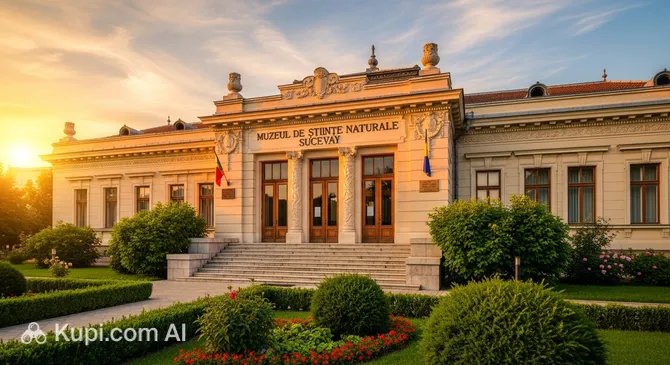
Museum of Natural Sciences
Museum of Natural Sciences. Иллюстрация. Источник: Kupi.com AI

It features impressive collections: from shimmering minerals and rare fossils to entomological rarities and displays dedicated to the large mammals of the Bukovina forests. One of the main highlights of the museum is the famous Sala Cristalelor (Hall of Crystals), which showcases beautiful "mine flowers" and evidence of life's evolution on Earth through geological eras.

A special atmosphere is created not only by its architecture but also by a living natural monument at the entrance — a majestic copper beech about 25 meters tall. The museum will interest both professional researchers and casual tourists wishing to touch the natural heritage of the region in the heart of the city.

Contacts

To plan your visit, it's useful to have current contact information at hand. The museum is located in the heart of the city's cultural life and is easily accessible from any central point.

How to contactContact
AddressStrada Ștefan cel Mare 33, 720003 Suceava, Румыния
Phone+40 230 216 439
Websitemuzeulbucovinei.ro

What to Do

Immersion into the world of nature begins with viewing realistic dioramas that masterfully recreate scenes from the lives of local forest inhabitants. You can see the "Herd of Wild Boars," come face-to-face with a brown bear, or observe the "Bellowing Deer." Thanks to modern monitors and audio devices, the halls are filled with the sounds of wildlife, making the visit interactive and exciting.

Be sure to visit Sala Cristalelor to see unique minerals and imprints of ancient plants. Entomology enthusiasts will appreciate the collection of rare insects, where the shimmering cuckoo wasps are particularly noteworthy. If you're looking for something more peaceful, there is a fish aquarium in the museum hall, which sets a contemplative mood before the main tour begins.

You can end your visit at the souvenir stand, which features ceramic products and original jewelry made from semi-precious stones. Before leaving, don't forget to take a commemorative photo in front of the giant copper beech, which is the unofficial symbol of the museum park.

Getting There

The museum is located at Strada Ștefan cel Mare 33, directly in Professor Ioan Nemeș Park, in the heart of the city. Thanks to its central location, the attraction is very easy to reach on foot from any part of the historical center. The city's main pedestrian street, which borders the park, serves as an excellent landmark.

For those who prefer public transport, city buses and trolleybuses that pass through the central districts stop nearby. If you arrive at the Suceava train station, a taxi ride will take about 5–10 minutes, while a walk will take no more than 20 minutes. From Salcea International Airport, located about 12 kilometers away, it is most convenient to take a taxi or a local bus; the journey typically takes around 30-40 minutes.

Ближайший город: Suceava

History & Facts

The building housing the exhibition today is an architectural treasure in itself. It was constructed between 1811 and 1814 and was originally intended for a boys' school (Hauptschule). It is the second-oldest preserved civil building in the city, surpassed only by Hanul Domnesc. The austere facade with rectangular ground-floor windows and elegant second-floor arches emphasizes the building's classical appearance.

The museum's history at this site began in the 1970s, when the building was restored and repurposed for natural science collections. Prior to that, it had served various educational institutions for decades. Despite its venerable age of over two centuries, the building is remarkably well-preserved, although it is not officially listed as a historical monument of the region.

The museum itself is an important branch of the Bucovina Museum, whose roots date back to 1900. At that time, a group of local intellectuals founded the "Museum" society to preserve artifacts found during excavations of the ancient Suceava Citadel. Today, the collections of the Museum of Natural Sciences reflect not only the historical past but also the rich biological diversity of northern Moldavia.

Time Needed

A walk through the museum's halls won't take much of your time, but it will provide plenty of impressions. To leisurely explore all the main collections, study the dioramas, and visit the Hall of Crystals, you will typically need about 1 to 2 hours.

This is quite enough time to listen to recordings of animal voices, admire the minerals, and take a few photos in the cozy park in front of the building. If you are traveling with children, you might want to stay longer at the interactive stands and the aquarium.

Working Hours

The museum doors are open to visitors every day except Monday. The operating hours for the main exhibition are Tuesday to Sunday from 09:00 to 17:00.

Monday is the official day off. However, it is recommended to check the current schedule on the museum's official website before your trip, as opening hours may change on public holidays.

DayWorking hours
понедельникЗакрыто
вторник09:00–17:00
среда09:00–17:00
четверг09:00–17:00
пятница09:00–17:00
суббота09:00–17:00
воскресенье09:00–17:00

Nearby

The museum's location in the historic center makes it an ideal starting point for further exploration of the city. A stroll through the surrounding area will allow you to see both ancient churches and the majestic fortifications for which this region is famous.

NameDistance
Muse0.1 km
Eker0.1 km
Old Town Bar0.2 km
Suceava Fortress0.2 km
National Museum of Bucovina0.3 km
Monastery of Saint John the New of Suceava0.3 km
Belea Burger0.5 km

Reached the end of the page?

That means the route is fully explored