Support

Cartuja de Miraflores

About

Perched on a scenic hill just a few kilometers from the center of Burgos stands the majestic Cartuja de Miraflores. This ancient monastery, belonging to the Carthusian Order, is considered one of the most brilliant examples of Late Gothic architecture in Spain.
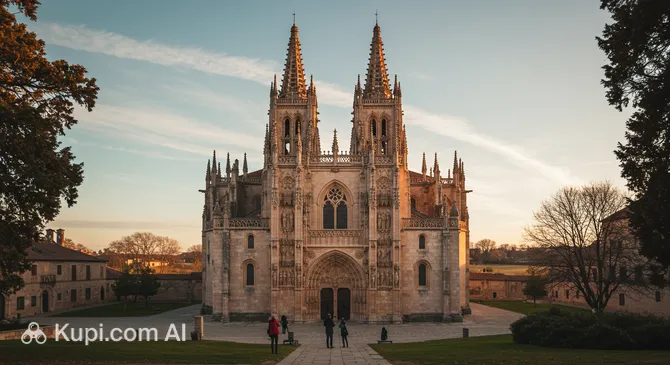
Charterhouse of Miraflores
Charterhouse of Miraflores. Иллюстрация. Источник: Kupi.com AI

The monastery was founded in the 15th century and remains active today: it is home to monks who observe a vow of silence and solitude. For travelers, this site is primarily valued for its unique interior decoration and a quiet, spiritual atmosphere that feels worlds away from the hustle and bustle of popular tourist routes.

The monastery's main treasures are the masterpieces of the great artist Gil de Siloé. Here you will find magnificent royal tombs and a monumental golden altarpiece, breathtaking in the intricacy of its carving. Cartuja de Miraflores is not just a historical monument, but a place where time seems to stand still, allowing every visitor to touch eternity.

Contacts

To clarify information regarding visiting or organizing group tours, you can use the monastery's official communication channels.

How to contactContact
AddressPje. Fuentes Blancas, Km 3.5, 09002 Burgos, Spain
Phone+34 636 99 87 89
Websitewww.cartuja.org

What to Do

Once inside the monastery complex, the first place to visit is the Gothic church. Its high vaults and elegant stained glass create a wonderful play of light, but the main attraction is the central altarpiece. This incredible work of art by Gil de Siloé is covered in gold which, according to legend, was brought back from Christopher Columbus's very first expeditions to the Americas.

Be sure to take the time to examine the royal tombs of John II and Isabella of Portugal in detail. They are crafted from snow-white alabaster with such incredible precision that the stone lace appears almost weightless. These are recognized masterpieces with no equal in world sculpture from that period.

Beyond admiring the art, it is important to simply be in the silence at Cartuja de Miraflores. Stroll through the courtyard, listen to the tranquility of the place, and absorb the spirit of the Carthusian Order. Many visitors note that it is here they find a rare sense of peace and harmony in the modern world.

Getting There

The monastery is located approximately 3-4 kilometers from the historical city center. The most pleasant way to reach it is a walk along the banks of the Arlanzón River. The path winds through the picturesque Fuentes Blancas Park and takes about an hour, allowing you to fully enjoy the region's natural beauty.

If you are short on time, it is best to take a taxi from the main square or the nearest public transport stop; the trip will take only about 10 minutes. City buses also run toward the monastery, though it is advisable to check the current schedule in advance, as intervals can vary.

For those traveling by private or rental car, there is convenient free parking available next to the complex. The road to the monastery is well-marked with signs, making it easy to find even without a navigator.

Ближайший город: Burgos

History & Facts

The history of this secluded site began in 1441, when King John II of Castile decided to found a monastery on the grounds of his former hunting lodge. However, the monastery acquired its current appearance slightly later: the main construction took place between 1454 and 1484 under the direction of the renowned masters Juan and Simón de Colonia.

Cartuja de Miraflores was intended as a majestic pantheon for the royal family. It is here that John II and his wife, Isabella of Portugal, found their final resting place. Their tombs, which represent the pinnacle of Spanish Gothic sculpture, were created by the outstanding master Gil de Siloé, commissioned by their daughter—the famous Queen Isabella the Catholic.

Notably, over the past centuries, the monastery has remained almost unchanged in its purpose. Since the 15th century and up to the present day, monks of the Carthusian Order have lived here continuously. They lead a strictly ascetic lifestyle dedicated to prayer and contemplation, which gives the site a special, almost palpable atmosphere of spirituality.

Inside the monastery, one can trace a unique moment in art history—the smooth transition from the ornate "Flamboyant" Gothic style to the first elements of the Renaissance. Every stone and every detail of the decor bears witness to the former power of the Castilian crown and the mastery of the great artists of the past.

Time Needed

To leisurely explore the main church, admire the fine craftsmanship, and walk through the accessible parts of the grounds, most travelers need between 1 and 2 hours. This is ample time to soak in the atmosphere of peace and study Gil de Siloé's masterpieces in detail.

If you plan to walk to the monastery from the city center, allow about 3-4 hours for the entire trip. This allows you to combine your cultural program with a pleasant stroll in the fresh air through the parkland surrounding the abbey.

Working Hours

The monastery doors are open to visitors daily, though there is a break during the day. The opening hours are as follows:

  • Monday – Saturday: 10:15 AM to 3:00 PM and 4:00 PM to 6:00 PM.
  • Sunday: 11:00 AM to 3:00 PM and 4:00 PM to 6:00 PM.

Please note that access to the church may be restricted during religious services.

DayWorking hours
Понедельник10:15 – 15:00, 4:00 – 18:00
Вторник10:15 – 15:00, 4:00 – 18:00
Среда10:15 – 15:00, 4:00 – 18:00
Четверг10:15 – 15:00, 4:00 – 18:00
Пятница10:15 – 15:00, 4:00 – 18:00
Суббота10:15 – 15:00, 4:00 – 18:00
Воскресенье11:00 – 15:00, 4:00 – 18:00

Nearby

A visit to the monastery is just the beginning of discovering the rich cultural heritage of this region. There are many iconic sites nearby that will help you better understand the history of Castile and the grandeur of its architecture.

NameDistance
Coliseum Burgos1.9 km
Church of Santa María la Real y Antigua de Gamonal1.9 km
Camino de la Plata Shopping Center2.4 km
Asador San Lorenzo2.7 km
La Rúa3.1 km
Monastery of San Juan3.2 km
Museum of Human Evolution3.3 km

Reached the end of the page?

That means the route is fully explored