Support

Museum of Human Evolution

About

Imagine a place where the pages of the deep past come to life: the Museum of Human Evolution is an impressive scientific and educational complex that has become a proud landmark of modern Burgos. It is not just a repository of antiquities, but an architectural masterpiece by Juan Navarro Baldeweg, filled with light and innovation.
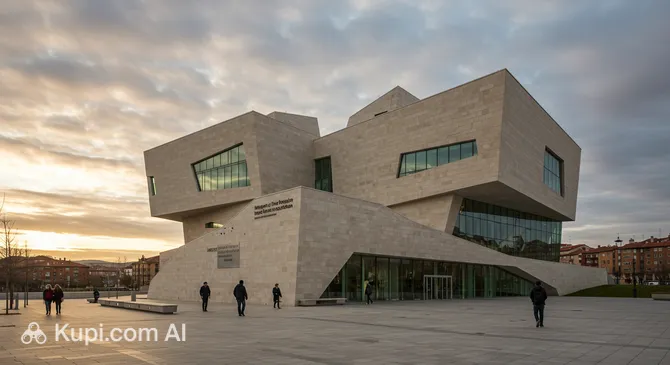
Museum of Human Evolution
Museum of Human Evolution. Иллюстрация. Источник: Kupi.com AI

Located in the amazing country of Spain, this museum serves as the main bridge to the unique archaeological finds in the Atapuerca Mountains. Here, the path of human development is demonstrated in a vivid and engaging way, from our ancestors' first steps to the formation of complex modern culture.

Visitors appreciate this site for its ability to translate the dry language of science into a gripping narrative. Thanks to the combination of authentic finds and modern technology, the museum is deservedly considered one of Europe’s most important cultural and research centers in the field of anthropology.

Contacts

To inquire about special events or book group tours at the Museum of Human Evolution, you can use the official communication channels. It is recommended to check the website before your visit to learn about current temporary exhibitions.

How to contactContact
AddressP.º Sierra de Atapuerca, S/N, 09002 Burgos, Spain
Phone+34 947 42 10 00
Websitewww.museoevolucionhumana.com

What to Do

A journey through the museum is organized across four levels, each revealing a new facet of our origins. On the lower floor, you literally immerse yourself in the atmosphere of an excavation site: unique finds from Atapuerca are presented here, including the famous remains of Europe’s oldest inhabitants. This is a rare opportunity to see artifacts that changed the global understanding of evolution.

Moving higher, you will come face to face with our ancestors. Interactive exhibits and hyper-realistic reconstructions allow you to compare the body structures and lifestyles of various hominid species. Visitors especially enjoy the section dedicated to biological evolution, where complex scientific theories become clear thanks to multimedia projections and dioramas.

On the upper levels, the focus shifts towards the culture, art, and social behavior of early humans. Here you can learn how the brain and language developed, and how our ancestors began creating the first tools and works of art. The museum also regularly hosts workshops and thematic conferences that will interest both young researchers and adult history buffs.

Getting There

Finding the Museum of Human Evolution is easy, as it is located in the heart of the city at Paseo Sierra de Atapuerca. Thanks to its central location, it is an easy walk from most iconic landmarks, following the banks of the Arlanzón River.

If you prefer public transport, several city bus routes stop near the museum complex, connecting the center with the outskirts and the train station. For those arriving in the city by train or long-distance bus, a taxi is a convenient option that will take you to the main entrance in just a few minutes.

Travelers by car can use the underground parking lots located in the immediate vicinity of the museum. This is especially convenient if Burgos is one of the stops on your grand tour of northern Spain.

Ближайший город: Burgos

History & Facts

The history of this cultural space is inextricably linked with the sensational archaeological discoveries in the Atapuerca Mountains. Since 1964, evidence of the life of the oldest hominids has been found here, allowing scientists to literally rewrite chapters of human history. Due to their exceptional importance, these sites were included in the UNESCO World Heritage list.

The Museum of Human Evolution itself opened its doors to the public in 2010. The building, designed by the famous architect Juan Navarro Baldeweg, was conceived as a bright and open space, symbolizing the connection between the past, present, and future of our civilization.

Over the years, the museum has become more than just an exhibition space; it is a fully-fledged scientific hub. It is part of an extensive system that includes field research centers. Interestingly, the exhibition is constantly updated with new finds brought annually from expeditions in the Atapuerca area.

Time Needed

To explore all four floors and delve into the details of the artifacts without rushing, most visitors need between 1.5 and 2 hours. This is enough time to walk through the main exhibition and get acquainted with the primary scientific discoveries of Atapuerca.

If you plan to study the interactive stands in detail, watch the multimedia projections, or visit a temporary exhibition on the top floor, you should allow about 3 hours for your visit. For families with children, time flies by thanks to the abundance of visual reconstructions and educational modules.

Working Hours

For convenience in planning your trip, please note the museum's operating schedule. Keep in mind that there is a mid-day break on weekdays, and the complex is traditionally closed to visitors on Mondays.

Opening hours:

  • Tuesday – Friday: 10:00 to 14:30 and 16:30 to 20:00;
  • Saturday: 10:00 to 20:00 (no break);
  • Sunday: 10:00 to 15:00;
  • Monday: Closed.
It is recommended to arrive at least an hour before closing or the start of the siesta to ensure you have time to see the main halls.

DayWorking hours
ПонедельникЗакрыто
Вторник10:00 – 14:30, 4:30 – 20:00
Среда10:00 – 14:30, 4:30 – 20:00
Четверг10:00 – 14:30, 4:30 – 20:00
Пятница10:00 – 14:30, 4:30 – 20:00
Суббота10:00 – 20:00
Воскресенье10:00 – 15:00

Nearby

After diving into the mysteries of anthropology, it is worth taking a stroll through the surrounding area. The district around the museum is steeped in the atmosphere of the Middle Ages and the Renaissance, offering tourists many interesting architectural monuments and cozy squares.

Exploring the central quarters will enrich your experience, as historical heritage here harmoniously coexists with a modern urban environment. Most iconic locations are within walking distance of the museum complex.

NameDistance
Museum of Burgos0.3 km
Monastery of San Juan0.4 km
Church of San Lesmes Abad0.4 km
Santa María Bridge0.5 km
Vermutería Victoria0.5 km
Burgos Military Museum0.5 km
La Espadería0.5 km

Reached the end of the page?

That means the route is fully explored