Support

Museo de Burgos

About

Located in the ancient and majestic city of Burgos, the Museum of Burgos is considered one of the most significant provincial museums that Spain takes pride in. It is a place where the history of the Castile and León province comes to life within the walls of two magnificent 16th-century palaces once owned by local aristocracy. The main part of the collection is housed in the Casa de Miranda, whose exquisite Renaissance courtyard and monumental staircase impress visitors from the very first moment.
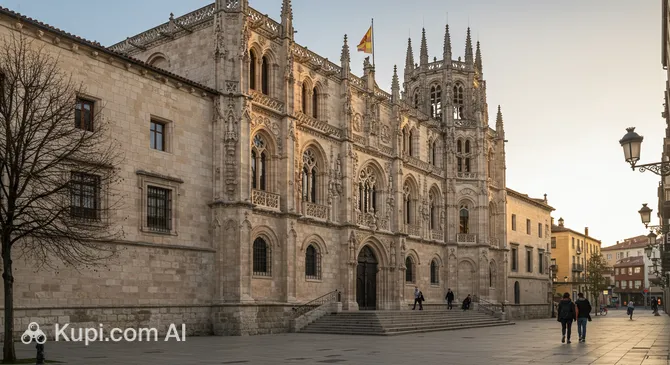
Museum of Burgos
Museum of Burgos. Иллюстрация. Источник: Kupi.com AI

The museum's exhibition is masterfully arranged so that guests can trace the cultural evolution of the region from prehistoric times to the present day. The museum is divided into thematic sections: in the Casa de Miranda wing, you will find rich archaeological discoveries, while the neighboring Casa de Angulo building presents an extensive collection of fine arts. This is not just a collection of objects, but a cohesive narrative of the development of human civilization in these lands.

The museum's significance is underscored by unique artifacts in its collection found during excavations near the city. Thanks to the combination of the magnificent architecture of the buildings themselves and the value of the exhibits, the Museum of Burgos is a must-visit for anyone who wants to truly understand the soul of Castile.

Contacts

For information regarding special exhibitions or group tours, you can use the museum's official contact channels.

How to contactContact
AddressC. Miranda, 13, 09002 Burgos, Spain
Phone+34 947 26 58 75
Websitemuseodeburgos.net

What to Do

Within the halls of the Museum of Burgos, visitors can expect a fascinating journey through the centuries. Be sure to dedicate time to the archaeological section, which features Europe's oldest human fossils from the famous Atapuerca site. Additionally, you can see artifacts from the Roman city of Clunia and Iron Age necropolises, which clearly demonstrate the daily life and culture of the region's ancient civilizations.

Art lovers should visit the Fine Arts section. Here, you will see a stunning Romanesque facade from Santo Domingo de Silos, Gothic tombs, and a magnificent work by sculptor Gil de Siloé—the tomb of Juan de Padilla. The collection also includes intricately carved Moorish caskets, polychrome sculptures, and Baroque-period paintings, allowing you to appreciate the full diversity of Spanish artistic heritage.

Of particular interest to many is the legendary sword of El Cid—Spain's national hero, whose history is inextricably linked to Burgos. A walk through the museum is an opportunity not only to see rare coins and ancient altarpieces but also to feel the spirit of the era while leisurely exploring the exhibits in the quiet of the palace halls.

Getting There

The Museum of Burgos is located at Calle Miranda, 13. Although it is situated slightly away from the heart of the historic center, the walk there is short and allows you to enjoy the city's architecture. If you are near the Cathedral, the walk will take about 10–15 minutes.

For those who prefer public transport, several city bus routes pass near the museum. You can also take a taxi, which will quickly bring you from anywhere in the city or from the main train station. To plan your route in real-time, it is convenient to use navigation apps by entering the address C. Miranda, 13.

Ближайший город: Burgos

History & Facts

The history of the Museum of Burgos is rooted in the desire to preserve the region's incredibly rich cultural heritage. Established as the central repository for the province's antiquities, the museum is housed in two magnificent 16th-century aristocratic residences. The main building is the Casa de Miranda—a classic Renaissance palace that is an outstanding architectural monument in its own right.

The museum's collection spans a colossal timeframe. It houses unique evidence of the lives of the first Europeans, discovered at Atapuerca. These paleontological finds are recognized as some of the most significant in the world, as it was here that the oldest human fossils on the continent were unearthed. Thus, the museum becomes a portal leading from the deep prehistoric era to the present day.

In addition to prehistoric artifacts, the museum's holdings include Roman treasures from the city of Clunia, as well as Visigothic and medieval relics. The diversity of the collection highlights Burgos's status as one of the key cultural and political centers of ancient Castile, where the paths of kings, knights, and great artists crossed for centuries.

Time Needed

For a quick overview of the main masterpieces in the Museum of Burgos collection, you will need about one hour. This is enough time to walk through the main halls and appreciate the general atmosphere of the Renaissance palace.

However, if you want to carefully study the archaeological finds from Atapuerca or examine the Fine Arts collection in detail, we recommend planning for 1.5–2 hours. A slower pace will allow you to fully enjoy the beauty of the courtyards and the complexity of the ancient retablos.

Working Hours

The Museum of Burgos operates on a split schedule from Tuesday to Saturday, closing for siesta, which is typical for this region. Monday is the traditional closing day.

  • Tuesday – Saturday: 10:00 AM – 2:00 PM and 4:00 PM – 7:00 PM
  • Sunday: 10:00 AM – 2:00 PM
  • Monday: Closed

Pro tip: On certain afternoons, admission to the museum may be free; however, schedules and rules can change depending on the season, so it is worth checking the official website for the latest information before your visit.

DayWorking hours
ПонедельникЗакрыто
Вторник10:00 – 14:00, 4:00 – 19:00
Среда10:00 – 14:00, 4:00 – 19:00
Четверг10:00 – 14:00, 4:00 – 19:00
Пятница10:00 – 14:00, 4:00 – 19:00
Суббота10:00 – 14:00, 4:00 – 19:00
Воскресенье10:00 – 14:00

Nearby

Burgos is a city with a high concentration of historical monuments, so a visit to the museum can easily be combined with exploring other iconic sites. A stroll through the surrounding area will allow you to dive deeper into the atmosphere of medieval Spain and see architectural masterpieces from different eras.

NameDistance
Santa María Bridge0.3 km
Vermutería Victoria0.3 km
Museum of Human Evolution0.3 km
Santa María Arch0.3 km
La Espadería0.4 km
La Fábrica Restaurante0.5 km
Burgos Cathedral0.5 km

Reached the end of the page?

That means the route is fully explored