Support

San Martiño Pinario Monastery

About

The Monastery of San Martiño Pinario, also known as San Martín Pinario, is an outstanding historical site located in the heart of Santiago de Compostela, Spain. This former Benedictine monastery is one of the city's most significant architectural complexes and the second-largest monastery in all of Spain, following the famous San Lorenzo de El Escorial.
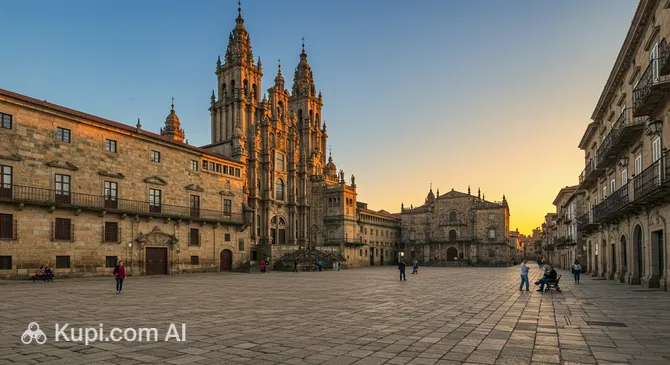
San Martiño Pinario Monastery. Illustration.
Source: Kupi.com AI

Traveler photos:

The monastery is an impressive structure with a history reaching back centuries, although it has been rebuilt several times since the 16th century. As a result of these reconstructions, very little of the original medieval structure remains. The current church building seen by visitors today dates back to the 17th century and is particularly famous for its magnificent Plateresque facade, which features strikingly complex and intricate carving and detailing.

Visiting the Monastery of San Martiño Pinario is an opportunity to touch the rich history and culture of Santiago de Compostela. Currently, the monastery buildings house a seminary, which adds a special atmosphere to the site. This monastery is an integral part of the city's historical heritage and attracts both pilgrims and tourists interested in architecture and history.

Contacts

Since the Monastery of San Martiño Pinario is a significant historical site, there may not be specific contact details for general tourist inquiries. It is best to check for up-to-date information regarding opening hours and visiting conditions on the official tourism websites of Santiago de Compostela or at local information centers.

The monastery is located in the very heart of the city, in close proximity to the Cathedral of Santiago de Compostela, making it easily accessible on foot from most central locations.

How to contactContact
AddressPraza da Inmaculada, 3, 15704 Santiago de Compostela, A Coruña, Spain
Phone number+34 981 56 02 82
Websitesanmartinpinario.es

What to Do

When visiting the Monastery of San Martiño Pinario, you can fully appreciate its magnificent architecture. Of particular note is the monastery church's impressive Plateresque facade, crafted by three different masters. Stepping inside, you will see a rich interior and can examine ancient religious artifacts, each of which holds a piece of this sacred site's history.

The monastery is located in close proximity to the famous Cathedral of Santiago de Compostela, making it convenient to combine a visit to these two major city landmarks. Next to the monastery is Plaza de la Inmaculada, which is also of interest. Notably, it stands on the site where the Azabachería Portal (Portal de Azabachería) once stood; it was demolished in 1758 due to its dilapidated state and replaced by a new facade designed by Ferro Caaveiro.

Getting There

The Monastery of San Martiño Pinario is conveniently located in the heart of the historic center of Santiago de Compostela, making it easily accessible to visitors. Thanks to its central position, the monastery is in close proximity to the famous Cathedral and other key landmarks of the city.

There are several ways to reach Santiago de Compostela. The city has an international airport (SCQ) that receives flights from various cities in Spain and Europe. A regular bus service runs from the airport to the city center, which is a convenient and economical option. Additionally, Santiago de Compostela has good rail and bus connections with other major cities in Spain, such as Madrid, Barcelona, and others.

Once in the center of Santiago de Compostela, the easiest way to reach the Monastery of San Martiño Pinario is on foot. It is within walking distance of most hotels and other tourist sites in the historic district. The monastery is located next to Plaza de la Inmaculada, one of the four squares surrounding the Cathedral. Using the Cathedral as a landmark, you will easily find the monastery.

Nearest city: Santiago de Compostela

History & Facts

The Monastery of San Martiño Pinario in Santiago de Compostela has a rich, centuries-old history dating back to the Middle Ages. Originally a Benedictine monastery, it played a key role in the religious and cultural life of the region. However, very little remains of the original medieval structures, as the complex underwent massive reconstruction starting in the 16th century, which radically changed its appearance. These renovations were aimed at expanding and updating the monastery, reflecting changing architectural styles and the needs of the community.

A significant turning point in the monastery's history occurred in the 19th century. As a result of the Ecclesiastical Confiscation of Mendizábal—a large-scale secularization of church lands in Spain—the Monastery of San Martiño Pinario was closed. This event ended centuries of monastic life within its walls. However, the buildings did not remain abandoned; they were subsequently repurposed for use as a seminary. Remarkably, this seminary still functions in the former monastery today, continuing educational and spiritual traditions, albeit in a different capacity.

The Monastery of San Martiño Pinario holds an important place on both the religious and cultural maps of Santiago de Compostela. It is located in the heart of the city's historic center, which is rightfully included in the UNESCO World Heritage list, highlighting its exceptional value. An interesting fact is linked to the square adjacent to the monastery: it was previously called Azabachería (from the Spanish "azabache" – jet). This name recalls ancient times when artisan workshops flourished here, skillfully working with this black semi-precious stone to create jewelry and souvenirs for pilgrims.

Time Needed

To fully enjoy the splendor of the Monastery of San Martiño Pinario and carefully examine its key features, most visitors are recommended to set aside approximately 1-2 hours. This time is generally sufficient to appreciate the building's impressive architecture, examine the famous Plateresque facade in detail, and get to know the monastery's rich interior, including its altars and works of art.

Of course, the duration of your visit may vary depending on the depth of your interest in history, architecture, and religious art. If you prefer a more leisurely exploration, reading the information plaques and studying each element in detail, you may want to spend a bit more time here. It is also worth considering that the Monastery of San Martiño Pinario is located in the historic center of Santiago de Compostela, which is rich in other significant landmarks. If you plan to visit those on the same day, it would be wise to factor in extra time in your itinerary to ensure your trip is comfortable and fulfilling.

Working Hours

When planning a visit to the Monastery of San Martiño Pinario, it is important to check its current operating hours in advance. Since schedules may change depending on the season, day of the week, or special events, the most reliable information can be found on the monastery's official website (if available) or at the tourist information centers in Santiago de Compostela. We recommend verifying this information right before your trip.

It is also worth finding out if advance ticket booking is required, especially if your trip coincides with the peak tourist season. This will help avoid queues and guarantee your visit. Information on whether the Monastery of San Martiño Pinario is open to visitors year-round or if there are seasonal restrictions is also best obtained from official sources or local tourism services.

Nearby

A visit to the Monastery of San Martiño Pinario will undoubtedly be a highlight of your trip to Santiago de Compostela. However, to make your experience even more complete and multifaceted, it is worth taking the time to explore its surroundings. The historic center of this amazing city is full of hidden gems and iconic landmarks located literally just steps away from the monastery.

A stroll through the nearby streets will allow you to immerse yourself deeper in the atmosphere of Santiago de Compostela, discover other interesting sights, and better understand the cultural and historical context of this unique place in Spain. Below is a list of some of them, along with their distance from the Monastery of San Martiño Pinario.

NameDistance
Monastery of San Martiño Pinario0 km
Praza do Obradoiro0.1 km
Portico of Glory0.1 km
Kiko Pastur Magic Museum0.1 km
Atlántico Pub0.1 km
Cervantes Square0.2 km
Fonseca Palace0.2 km

Have you reached the end of the page?

So the route has been studied inside and out