Support

Hudiksvall

About

Hudiksvall is a charming town nestled on the scenic coast of the Gulf of Bothnia, in the heart of the Hälsingland province. It is a place where Sweden reveals its most cozy side: crystal-clear water, dense forests, and genuine Scandinavian hospitality create a unique atmosphere of harmony with nature.

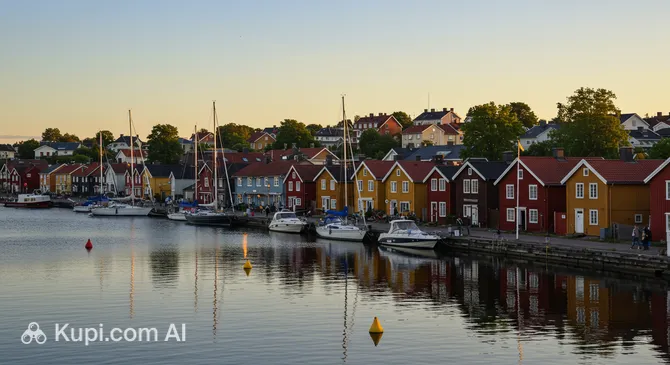
Hudiksvall. Illustration.
Source: Kupi.com AI

The town is located approximately 250 kilometers north of Stockholm and serves as an important hub for the Gävleborg region. Despite its modest population of around 15,000 people, Hudiksvall offers everything needed for a comfortable stay while maintaining a relaxed pace of life. The town's compact area, covering just under 10 km², makes it ideal for walking or cycling.

The rich history of Hudiksvall, reflected in its architectural appearance, adds a special character to the place. The town's signature landmarks are the famous red wooden warehouses and boathouses along the waterfront, creating a recognizable and incredibly photogenic landscape. Ancient traditions and modern life blend harmoniously here, while the proximity to the archipelago offers excellent opportunities for boat trips and fishing.

Hudiksvall is a wonderful choice for those who want to take a break from the hustle and bustle of major cities and immerse themselves in authentic Swedish life. Come here for the silence, the fresh sea air, and inspiring views that will stay in your memory for a long time.

Weather Overview

The climate in Hudiksvall is typical for this region of Sweden: there is a distinct change of seasons, which gives the town a special charm at any time of year. Summer is usually mild and comfortable, ideal for walks along the coast. The warmest month is July, when the average temperature is around 16.3°C, and during the day the air often warms up to 19.5°C. However, travelers should remember that summer here can be damp: the highest number of rainy days is recorded in July and August (up to 13–14 days per month).

Winter brings a true Scandinavian atmosphere. In January and February, average figures stay at -3...-5°C, creating conditions for winter recreation. The transitional seasons are quite cool: spring only gains strength by May (average temperature +9.1°C), and in autumn, it already feels fresh by October (+6.4°C). To choose the best time for your visit and pack correctly, check the detailed weather in Hudiksvall for your desired dates.

In general, expect a moderately warm summer with occasional rain and cold winters with sub-zero temperatures.

Average monthly temperature

Average monthly precipitation

Interesting Facts

Beyond its main attractions, Hudiksvall holds many fascinating secrets that reveal themselves only to the most curious travelers. Here are a few facts that offer a new perspective on this Swedish town:
  • Rich Historical Heritage. The town was founded back in 1582, making it one of the oldest in the region. Over the centuries, Hudiksvall suffered repeatedly from fires, which shaped its unique architectural look: today, ancient wooden buildings and modern structures stand side-by-side in a surprising harmony.

  • A Hockey Capital in Miniature. Despite its small population, the town lives for hockey. The local arena seats five thousand spectators—an impressive figure for a town of 15,000 residents. In summer, a famous youth camp operates here, where renowned Swedish hockey players hold masterclasses for young athletes.

  • Industrial Prowess. Hudiksvall is not just about nature and history, but also modern technology. The town is home to a plant producing mobile phone components, as well as the SunFab company, which specializes in hydraulic pumps, keeping the local economy at a high level.

  • The Magic of Midsommar. Midsummer celebrations here are held with great enthusiasm. Residents decorate the streets with flowers, sing songs, and organize picnics on the coast. There is a local legend that a wish made in Hudiksvall on this day has special power and is sure to come true.

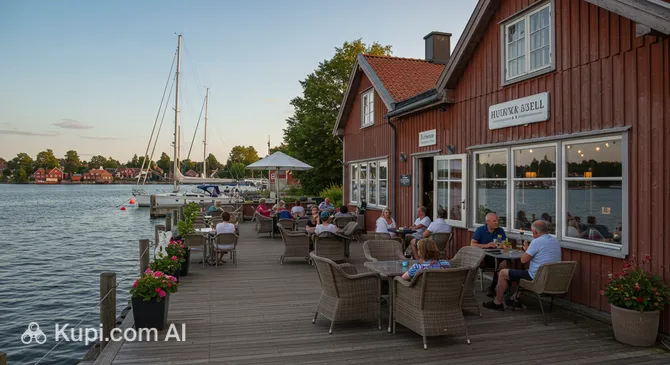
Strandpiren. Illustration.
Source: Kupi.com AI

Traveler photos:

How to Get There

When planning a trip to this picturesque corner of Sweden, it's worth thinking through the logistics in advance. The town is located on the coast of the Gulf of Bothnia, and thanks to the region's well-developed transport infrastructure, getting here is comfortable. You can find out more about how to get to Hudiksvall or read a brief overview of the main options below.

Most tourists choose to fly into one of the major airports followed by a train transfer or car rental. The most popular option is Stockholm Arlanda Airport (ARN). This is the country's main international hub, receiving flights from all over the world. It is located about 235 km from Hudiksvall. The journey from the airport to your destination by high-speed train or car usually takes about 2.5–3 hours, passing through scenic Swedish landscapes.

If you are looking for a closer option, consider Sundsvall-Timrå Airport (SDL). It is located just 91 km from Hudiksvall. This is a regional airport, but the journey from there by taxi or transfer will take only about 1 hour and 20 minutes. You can also consider Åre Östersund Airport (OSD) in Östersund (about 211 km), which may be convenient if you plan to visit the mountainous regions of Sweden.

For convenience, here is a summary of the nearest airports:

AirportPassenger trafficDistance
Sundsvall-Timra Airport273 52791 km
Dala Airport26 421169 km
Ornskoldsvik Airport85 541211 km
Åre Östersund Airport239 000211 km
Mariehamn Airport61 568234 km

Rail travel is one of the most convenient and eco-friendly ways to travel around Sweden. Hudiksvall is located on the main East Coast Line, so it is easy to reach by direct trains from many cities. However, if you are building a complex route or traveling from remote regions, it is useful to know about major transport hubs nearby where transfers are convenient.

A key hub in the north is Sundsvall Central Station, located about 74 km from the town. From the south, Gävle Central Station in the city of Gävle (about 117 km) plays an important role. An intensive flow of trains linking the north and south of the country passes through these stations, giving travelers flexibility in choosing travel times and routes.

Below is a list of major railway stations in the region that may be useful when planning your trip:

StationPassenger trafficDistance
Sundsvall Central Station74 km
Härnösand Railway Station110 km
Gävle Central Station117 km
Falun Central Station148 km
Leksand Railway Station158 km

Main Attractions

Hudiksvall is a town best explored slowly, enjoying its cozy atmosphere and proximity to the water. While there aren't many noisy tourist attractions, there are places that form the unique character of this corner of Sweden and certainly deserve the attention of travelers.

The ultimate symbol of the town is the Möljen district. This is a waterfront lined with historical fishing warehouses painted in the traditional Falu red. These wooden buildings, reflecting in the canal waters, create the picture-perfect view that draws many visitors to Hudiksvall. A stroll here is an opportunity to touch the town's past when it was an important trading and fishing port. In summer, the waterfront buzzes with life as summer cafes open, and locals and tourists alike enjoy ice cream with a view of the boats.

For those who want to dive deeper into the cultural context of the region, the Hälsingland Museum opens its doors. It is one of the country's oldest provincial museums, housing rich collections that tell the story of the history, art, and daily life of the local people. Here, you can see unique church sculptures, textiles, and interior items characteristic of the famous Hälsingland decorated farmhouses, which are part of the UNESCO World Heritage list. The museum often hosts temporary exhibitions of contemporary art, bridging traditions and current trends.

An excellent place for seaside relaxation is the Strandpiren complex. Located on a pier, it combines a restaurant and a meeting place with stunning views of the bay. This is a location where you can not only sample dishes made from fresh local ingredients but also simply enjoy the sea breeze and the sunset. Tourists appreciate this spot for its relaxed atmosphere and the chance to experience a true taste of the Swedish coast while being at the heart of the action.

Nature lovers should take a walk around Lake Lillfjärden, located right in the town center. This picturesque body of water is surrounded by a park area and a walking path approximately two kilometers long. It is very peaceful and green, and the lake itself is known for its rich bird fauna. The promenade around Lillfjärden is a favorite spot for locals for morning runs and evening walks, allowing one to feel harmony with nature without leaving the town limits.

Local Cuisine

The gastronomic map of Hudiksvall is inextricably linked to the sea and the dense forests of the north. The base of the local menu consists of the freshest fish from the Gulf of Bothnia: salmon, herring, and pike-perch. A true delicacy that every tourist must try is gravlax—tender salmon marinated with dill and spices. It is traditionally served on crispbread with a piquant mustard sauce, creating a perfect balance of flavors.

For those who love hearty food, meat dishes reflecting the region's hunting traditions are worth noting. Game often appears on restaurant menus, such as stewed moose or venison, which has a rich flavor. Also popular here are classic Swedish meatballs and palt—hearty dumplings often prepared with mushrooms and cheese, paying homage to the forest riches of Hälsingland.

Those with a sweet tooth and lovers of cozy gatherings will appreciate the local "fika" culture—the coffee break. In Hudiksvall, it is customary to order a kanelbulle—the famous Swedish cinnamon bun—with a cup of aromatic coffee. In summer, the gastronomic experience is complemented by farmers' markets where you can buy the freshest strawberries, raspberries, and blueberries grown under the long northern sun.

To fully immerse yourself in the town's atmosphere, it's worth choosing venues by the water. A perfect example of a combination of excellent cuisine and views is the Strandpiren restaurant, located right on the pier. Here you can enjoy a leisurely seafood dinner while taking in the sea breeze. Additionally, during the warmer months, the town hosts fish soup festivals and fairs where locals share their secrets for preparing traditional dishes.

Travel Tips

Preparing for a trip to Hudiksvall doesn't require complex maneuvers, but knowing local peculiarities will make your vacation much more comfortable and peaceful. We've gathered a list of practical recommendations to help you easily blend into the rhythm of this cozy Swedish town and avoid typical tourist mistakes.

  1. Clothing and Weather. Given its location on the coast of the Gulf of Bothnia, the weather can be changeable even in summer. The main principle is layering. In summer, be sure to bring a windproof jacket or a fleece for evening walks by the water. In winter, you'll need quality thermal underwear, warm waterproof shoes, and accessories (hat, scarf, gloves). For walks along old cobbled streets and nature trails, choose the most comfortable flat-soled shoes.

  2. Transport Accessibility. Hudiksvall is a compact town, and its historical center is best explored on foot or by bicycle, which can be rented during the warmer months. Public transport is provided by X-trafik buses, which connect the town with the surrounding area. Tickets are cheaper when bought via the mobile app, as they may cost more or only be sold by card if purchased from the driver. Taxis here are not a cheap pleasure, and it's better to book a car in advance by phone or app.

  3. Finances and Payment. Sweden is one of the most "cashless" countries in the world. The local currency is the Swedish krona (SEK), but you might not need cash at all. Visa and Mastercard are accepted everywhere: from hotels to tiny ice cream kiosks and public toilets. Moreover, many establishments operate on a "Cash free" basis and do not accept paper money at all. Tipping is not mandatory, but rounding up the bill is appreciated.

  4. Health and Water. Tap water in Hudiksvall, as in the rest of the country, is of the highest quality—it can and should be drunk straight from the tap; it's safe and delicious. Pharmacies can be found by the Apotek sign, but keep in mind that there may not be 24-hour pharmacies in a small town, so it's better to have essential medications with you. The town is very safe, the crime rate is low, but standard vigilance won't hurt.

  5. Language and Communication. The official language is Swedish, but almost all locals, from schoolchildren to retirees, speak fluent English. Learn a few polite words: "Hej" (Hello) and "Tack" (Thank you)—it will bring a smile to the locals. Wi-Fi is available in most cafes, hotels, and on public transport. For constant connectivity, it's convenient to buy a prepaid SIM card (e.g., Comviq or Telenor) at Pressbyrån shops or supermarkets.

  6. Local Etiquette. Swedes value personal space and restraint. It is customary to say hello when entering shops or cafes. An important point: respect the queue everywhere, even at the bus stop. In shops and banks, there are often machines that issue tickets with a queue number—always look for them when you enter.

  7. What to Avoid. Never try to cut in line—it is considered the height of rudeness. Also, avoid talking loudly in public places and transport; it's customary here to behave quietly and respect the peace of others. Don't compare Sweden with neighboring countries in conversation with locals if you don't want to offend their patriotic feelings.

  8. Nature Tip. Sweden has a unique "Right of Public Access" (Allemansrätten). This means you can walk through forests and pick mushrooms and berries even on private land (as long as you don't go close to the owner's house), with one condition: "Do not disturb and do not destroy." Be sure to take advantage of this right to enjoy the nature around Hudiksvall, but always take your trash with you.

Hudiksvall is an incredibly hospitable town where peace and coziness are valued. By following these simple tips, you can feel like a welcome guest and take home only warm memories of the real Swedish countryside. Enjoy your trip!

Entertainment & Nightlife

Nightlife in Hudiksvall, as in most small Swedish towns, is more characterized by coziness and tranquility than by loud raves until dawn. There are no massive world-class nightclubs here, but there are atmospheric spots where you can spend a great evening, enjoy live music, and chat with the locals. The epicenter of evening activity is the harbor area and the waterfront, where historic architecture meets modern service.

The main attraction for those seeking quality relaxation by the water is Strandpiren. This venue, located on the pier of the same name, functions as a restaurant, bar, and lounge area. In the evening, an animated atmosphere prevails: visitors come to watch the sunset with a glass of wine or craft beer, admiring the view of the bay and the boats. On weekends, DJs often play or cover bands perform, turning dinner into a small party.

Strandpiren. Illustration.
Source: Kupi.com AI

Traveler photos:

Beyond the coastal zone, evening life hums on central streets like Storgatan and Hamngatan. Classic pubs and sports bars, which are immensely popular among Swedes, are located here. It is customary to gather in large groups in these places to watch hockey matches (which is sacred in Sweden) and enjoy "After Work" (the traditional Friday gathering with colleagues). If you're looking for dancing, it's worth checking out the bars in the larger town hotels—this is often where dance floors are organized on weekends in smaller towns.

Practical tips for tourists:

  • Opening hours: Most bars are open until 01:00 or 02:00 on Fridays and Saturdays. On weekdays, life quiets down much earlier, around 22:00–23:00.
  • Dress code and face control: The style here is casual—smart casual is appropriate everywhere. However, remember that entry to bars is strictly for those 18 and older, and some nightclubs require you to be 20 or even 23. Always carry your passport or ID card.
  • Prices: Alcohol is expensive in Sweden. A glass of beer or wine in a bar will cost an average of 70–90 SEK, with cocktails starting from 120 SEK.

Safety is hardly an issue in Hudiksvall—it is a very peaceful town. Evening walks along the waterfront or through the center are perfectly safe. If you stay out late, you can reach your hotel on foot (the town is compact) or by taxi. It's better to order a taxi via an app or by phone, as "hailing" a car on the street is not common here.

If you are interested in daytime and cultural entertainment, the town offers a visit to the Hudiksvall Theatre (Hudiksvalls Teater). This is a beautiful historical wooden building that hosts not only plays but also concerts and lectures. For movie lovers, there is a cozy cinema in the center that often shows films in their original language with subtitles, which is convenient for international tourists.

Parks & Museums

Hudiksvall harmoniously combines marine landscapes with well-kept green areas and a rich cultural heritage, offering tourists not only outdoor relaxation but also an immersion into the region's history. The town and its surroundings are famous for their careful preservation of traditions, so even a simple walk here can turn into a fascinating excursion.

For those seeking seclusion with nature without leaving the town limits, the park around Lake Lillfjärden is the ideal spot. This green oasis in the very heart of Hudiksvall is surrounded by walking paths and cozy benches. Here you can watch numerous birds or simply enjoy the silence in the shade of the trees. If you are ready to drive a bit further, be sure to visit Malnbaden—a picturesque natural area with sand dunes and pine forest, which locals often call the "Hälsingland Riviera."

The cultural heart of the town is rightfully considered the Hälsingland Museum. Within its walls are unique collections of textiles, folk art, and household items that tell of life in this region over the centuries. Special attention is paid here to the history of the famous decorated farmhouses, which are part of the UNESCO World Heritage list. The museum also regularly hosts exhibitions by contemporary artists, creating an interesting dialogue between the past and the present.

Another important cultural landmark is the Möljen district, which can be described as an open-air museum. The historical fishing warehouses and storages preserved here vividly demonstrate Hudiksvall's maritime past. Walking along these wooden buildings, you are transported back to the era when the town was a thriving trading port.

Among the architectural monuments, the majestic St. Jakob's Church (Hudiksvalls kyrka), built in the 17th century, stands out. Its Baroque interior and ancient organ attract lovers of spiritual music and history. The town center itself, with its wooden buildings, is also a kind of monument: after devastating fires in the past, the town was rebuilt while preserving a unique style that is now protected by the state.

For lovers of unusual experiences, here is an insider tip: head to the Hornlandet peninsula to the fishing village of Hölick. There, besides an ancient chapel, you will find a nature reserve with one of the longest cave systems in Europe—Urbergsgrottorna, a visit to which will be a real adventure.

Getting Around

Hudiksvall's transport system is compact and intuitive, much like the town itself. Given its small size, there is no metro or tram system. The backbone of public transport is buses, which connect the center with residential areas, the railway station, and neighboring settlements. For most tourists staying in the center, the main attractions are within walking distance; however, a bus is useful for trips to the coast or major shopping areas.

Passenger transport in the town and the entire Gävleborg region is managed by the company X-trafik. City routes (stadsbussar) run regularly throughout the day, but intervals increase in the evenings and on weekends. The central transport hub is the Resecentrum—a station that combines the railway and bus terminals. This is the most convenient starting point for any trips beyond the historical center.

A crucial rule for tourists: public transport here is entirely cashless. You cannot buy a ticket from the driver with paper money or coins. The most convenient and cost-effective way to pay is through the X-trafik mobile app. In it, you can plan your route, check current schedules, and buy single tickets or 24-hour passes, which is particularly beneficial for active travelers. The ticket in the app is activated before boarding and shown to the driver or inspector on your smartphone screen.

If you don't want to install the app, you can pay for the fare with a contactless bank card (Visa, Mastercard) directly on board the bus. Simply tap your card on the validator when entering. Note that the price when paying by card may be slightly higher than in the app, and this method usually does not allow for group or youth discounts.

As an alternative to buses, bicycles are very popular. Hudiksvall is equipped with an excellent network of cycle paths, and in the warmer months, two-wheeled transport becomes the primary means of movement for locals. You can rent a bicycle at tourist centers or some hotels. It's an ideal way to reach scenic spots like the Hornlandet peninsula while enjoying the views along the way.

Taxi services are available, but they are quite expensive compared to other modes of transport. It is customary to order a car in advance by phone or through specialized apps (e.g., Sverigetaxi), as "hailing" a taxi by waving your hand on the street is almost impossible here. If you plan to explore remote natural corners or the archipelago coast, it makes sense to consider renting a car for the duration of your trip.

Accommodation

Where to stay:

Accommodation in Hudiksvall perfectly matches the spirit of this cozy Swedish town: you won't find massive hotel complexes or noisy all-inclusive resorts here. Instead, tourists are offered stays in small, atmospheric hotels, family-run Bed & Breakfasts, or cottages in the heart of nature. The main focus is on comfort, Scandinavian minimalism, and proximity to the environment.

The choice of area to stay depends on the purpose of your visit. Most travelers prefer the Town Center. This is the most convenient option in terms of logistics: the railway station, shops, and restaurants are within walking distance. By staying here, you will be close to the picturesque waterfront and historic quarters. For those traveling by car or seeking harmony with nature, options on the outskirts or the coast are excellent, such as the Malnbaden beach area, where campsites and summer house rentals are popular.

Since Hudiksvall is a small town, the number of hotel rooms is limited. During the peak tourist season, which falls in July and early August, as well as during major local holidays, the demand for housing rises sharply. Top booking tip: plan your trip in advance. It's best to book a room several months before your visit to guarantee a good option at a reasonable price.

The price range in the town can be described as average by Swedish standards. It's difficult to find extremely cheap accommodation here, but there are also practically no "ultra-luxury" options.

  • Budget segment: Hostels and camping spots (tents or simple cabins). This is an excellent choice for budget-conscious tourists and young people.
  • Mid-range: Classic 3-4 star town hotels. The cost of a standard double room usually varies within reasonable limits, offering breakfast and good service.
Booking is available through popular international online platforms, but many small guest houses also take reservations directly through their websites or by email.

Nearby Cities

For those who want to explore the surrounding area, Hudiksvall serves as an excellent starting point for day trips to several interesting nearby locations:

Just an hour's drive north is Sundsvall. This city is famous for its unique center, known as the "Stone City" (Stenstan). After a devastating fire in the 19th century, it was completely rebuilt in stone, and today its grand architecture, wide boulevards, and cozy squares attract history buffs and photographers. You can also find great restaurants and shops here.

To the south lies Gävle—one of the oldest cities in northern Sweden. It is known worldwide for the giant straw goat built (and often attempted to be burned) every Christmas. In summer, tourists are drawn to the beautiful Boulognerskogen city park and the Swedish Railway Museum, which houses an impressive collection of historical trains.

A bit further inland lies the historic Falun, the heart of the Swedish province of Dalarna. This place is a must-visit for the Great Copper Mountain—an ancient mine listed as a UNESCO World Heritage site. This is where the famous red paint used on many Swedish houses, including those in Hudiksvall itself, originated.

CityPopulationDistance
Söderhamn11 76147 km
Bollnas13 39857 km
Sundsvall99 82575 km
Timra10 44385 km
Härnösand18 508110 km

These nearby destinations provide insight into the region's diverse culture and landscapes.

Shopping & Souvenirs

General Overview. Shopping in Hudiksvall is a calm and pleasant activity, devoid of the bustle of metropolises. While you won't find endless rows of luxury boutiques here, the town charms with its cozy atmosphere and unique local shops. The town's shopping scene combines popular Swedish chain brands with small craft shops where you can find high-quality goods with local character. It is an ideal place for those who appreciate thoughtful purchases and Scandinavian design.

Main Shopping Streets. The heart of shopping in Hudiksvall is the pedestrian street Storgatan and its adjacent alleys in the town center. Strolling along this cobbled street, surrounded by beautiful wooden buildings, tourists will find clothing stores, interior design shops, opticians, and bookstores. The compactness of the center allows you to visit all key points on foot, stopping occasionally for a "fika" (coffee break) at one of the many bakeries along the way.

Shopping Centers. A small shopping passage is located right in the town center, bringing several clothing and cosmetic stores together under one roof, which is very convenient in cool weather. If you need large supermarkets, sporting goods, or electronics stores, head to the Medskog shopping area located at the entrance to the town. It is easily accessible by bus or car, and that is where the main major retailers are concentrated.

Markets. Trading on the main square is an important part of town life. In summer, a colorful market unfolds here where local farmers sell fresh strawberries, vegetables, and flowers. Special attention should be given to "loppis" (flea markets), which are incredibly popular in Sweden. During the summer season, many such spots can be found around Hudiksvall, selling everything from vintage porcelain to antique interior items, often at very attractive prices.

Souvenirs. From Hudiksvall, it is worth bringing back items that reflect the traditions of the Hälsingland province. The main souvenir is linen products, as the region is historically famous for its flax cultivation. Look for tablecloths, towels, and clothing from local brands (e.g., Växbo Lin). Also popular are wooden figurines, but instead of the classic Swedish horse, you will often find the Hälsingland Goat (Hälsingebocken) here. And, of course, gastronomic souvenirs: cloudberry jam (hjortronsylt), crispbreads, and local honey.

Opening Hours and Payment. Most shops in the center are open from 10:00 to 18:00 on weekdays and from 10:00 to 15:00 or 16:00 on Saturdays. Many small shops in the center are closed on Sundays, although major chain stores and supermarkets may be open. Sweden is a country that has practically abandoned cash. In Hudiksvall, Visa and Mastercard are accepted everywhere, even at market stalls. Be prepared that many shops have "Cash Free" status and do not accept paper notes at all.

Tax Free. Tourists residing outside the European Union are entitled to a VAT refund (Tax Free) on purchases made in stores that are part of the Global Blue system. Usually, this requires a purchase of at least 200 Swedish kronor on a single receipt. Look for the "Tax Free Shopping" logo in shop windows and don't forget to ask for a special receipt at the checkout to process your refund when leaving the country.
Reached the end of the page?

That means the route is fully explored