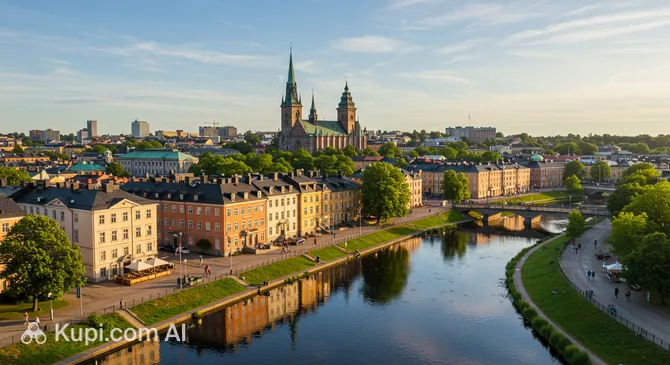
Uppsala is one of the most dynamic and historically significant cities in Sweden. Known for its youthful energy and academic prestige, it serves as the ecclesiastical center of the country and home to the oldest university in Scandinavia. The city offers a unique blend of small-town charm and big-city cultural life, making it a fascinating destination for travelers seeking both relaxation and intellectual enrichment.
Uppsala. Illustration.
Source: Kupi.com AI
Located in Uppsala County, approximately 70 kilometers north of Stockholm, the city is situated on the fertile flatlands with the gentle Fyris River running through its center. With a population of around 166,000 residents, it is the fourth-largest city in the country. The climate is typical of the region, featuring warm, bright summers that encourage outdoor dining and snowy winters that transform the old streets into a picturesque landscape.
The rich history of Uppsala is visible at every turn, particularly in its impressive architecture. The skyline is dominated by the twin spires of Uppsala Cathedral, which is the largest church in the Nordic countries and the coronation place of many Swedish monarchs. Another major draw is the legacy of Carl Linnaeus, the father of modern taxonomy; visitors can explore the beautiful Linnaeus Garden, which has been restored to its 18th-century glory.
Whether you are exploring the treasures of the Gustavianum museum or enjoying a traditional "fika" in one of the cozy cafes along the riverbank, Uppsala provides a welcoming atmosphere. It is an ideal destination for those looking to experience authentic Swedish culture and heritage within easy reach of the capital.
Weather Overview
The climate in Uppsala is characterized by four distinct seasons, offering a varied experience depending on when you choose to visit. To help you pack the right clothing for your journey, it is helpful to review the detailed information on the weather in Uppsala before you travel.
Summer is the warmest and most popular time for visitors. During June, July, and August, the city comes alive with average temperatures hovering around 16°C to 17°C. July is typically the peak of warmth, with maximum temperatures reaching approximately 21.8°C. While the weather is generally comfortable, these months also see about 11 to 14 wet days, so it is wise to be prepared for occasional showers.
Winter brings a distinct chill to the region from December through February. January is often the coldest month, with average temperatures dropping to -1.8°C and minimums reaching -3.9°C. Although the total precipitation volume is low, with around 1mm to 2mm recorded, there are still frequent wet days, often resulting in snow that covers the historic streets.
Spring and autumn serve as transitional periods with moderate conditions. May sees temperatures rising to an average of 11.0°C, while September retains some summer warmth with averages around 12.6°C. Overall, travelers can expect warm summers with frequent but light rain and cold winters with freezing temperatures.
Average monthly temperature
Average monthly precipitation
Interesting Facts
Beyond the main attractions, Uppsala holds many fascinating secrets and quirky traditions that might surprise even seasoned travelers. From inverted scientific scales to ancient burial sites, the city's history is full of unexpected details waiting to be discovered.
The famous Celsius temperature scale was invented here by Anders Celsius, a professor at Uppsala University, but with a twist. Originally, he designed the scale upside down, setting 0°C as the boiling point of water and 100°C as the freezing point; it was only reversed to the modern standard by Carl Linnaeus after Celsius's death.
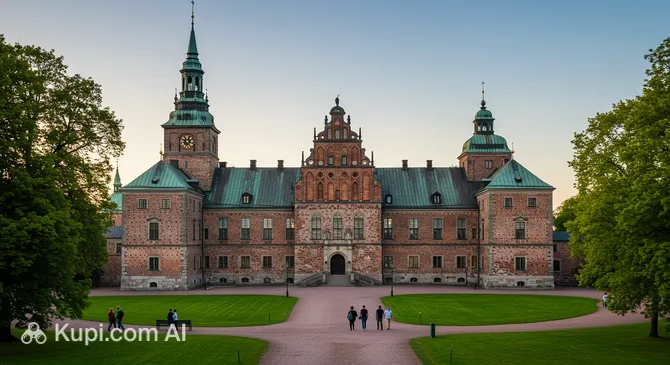
A massive bell named Gunilla, located at Uppsala Castle, is a central part of local timekeeping. It rings daily at 6:00 AM and 9:00 PM, a tradition that historically signaled the opening and closing of the city gates and the start and end of the workday.
The city is the setting for the beloved Swedish children's book series about Pelle Svanslös, a cat with no tail. Visitors can find a dedicated pedestrian crossing for cats and see the basement window near the university where the fictional character is said to have lived.
Just west of the city lies the Håga Mound, a grand burial site from the Bronze Age. Although it is locally known as King Björn's Mound after a legendary Viking king, the site actually predates the Viking era by nearly 2,000 years.
The region surrounding the city boasts one of the highest densities of runestones in the world. Some of these ancient stones have even been embedded into the walls of major buildings, including Uppsala Cathedral, preserving history in the masonry itself.
Uppsala Castle. Illustration.
Source: Kupi.com AI
Traveler photos:
How to Get There
Reaching this historic university city is straightforward thanks to its proximity to Sweden's main transport hubs. Whether you are arriving by air or rail, the connections are efficient and frequent. For a detailed overview of all routes and transportation modes, you can read more about how to get to Uppsala on our dedicated page.
The city does not have its own international airport, but it is exceptionally well-served by Stockholm Arlanda Airport (ARN). Located in the municipality of Sigtuna within Stockholm County, it is situated just 28.3 km south of Uppsala. As the country's largest airport, it offers excellent connectivity. A journey by taxi from Arlanda typically takes approximately 30 to 35 minutes, while the bus ride generally lasts between 40 and 45 minutes. Alternatively, travelers can fly into Bromma Airport (BMA), which is located closer to Stockholm city center, approximately 58.7 km away.
For clarity, here is a summary of the main airports:
Traveling by train is often the most convenient method for visitors. You can arrive directly at Uppsala Central Station (QYX), which is perfectly situated just 0.4 km from the city center. This station is a major hub with high passenger traffic, linking the city to the capital and northern Sweden with frequent departures. For those exploring the wider region, Eskilstuna Central Station (XFJ) in Eskilstuna is another notable node, located about 84.0 km away.
Uppsala is a city where history comes alive, offering a wealth of sites that span from the Viking Age to the scientific breakthroughs of the 18th century. The city center is compact and walkable, allowing visitors to easily navigate between its majestic religious sites, royal fortifications, and lush green spaces.
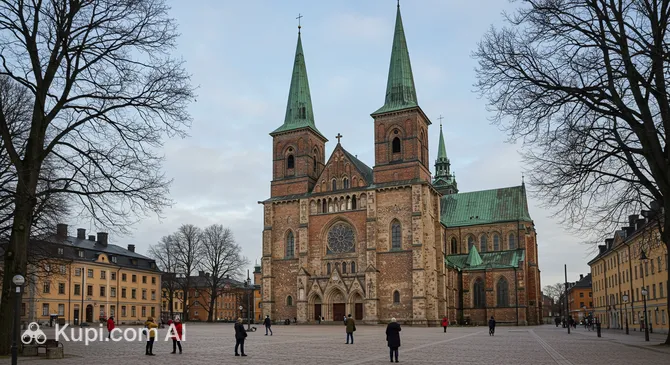
Dominating the skyline, the Uppsala Cathedral is a masterpiece of Gothic architecture and the largest church in the Nordic region. Its twin spires reach 118 meters into the sky, acting as a compass for anyone exploring the city. Inside, the cathedral serves as the final resting place for Swedish monarchs, including King Gustav Vasa, and houses the relics of Saint Eric. It is a site of profound silence and grandeur that anchors the city's cultural identity.
Uppsala Cathedral. Illustration.
Source: Kupi.com AI
Traveler photos:
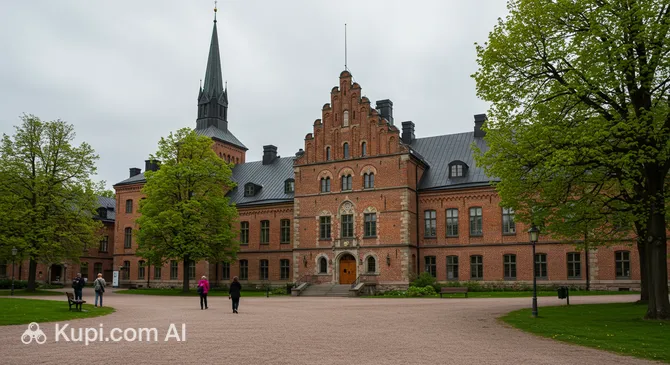
Perched on a hill with a commanding view of the surroundings stands the striking pink façade of Uppsala Castle. Built in the 16th century, this fortress has witnessed significant historical events and now houses the Uppsala Art Museum. Visitors can explore the state hall, visit the dungeons, or take a guided roof walk for panoramic views of the city. The castle grounds are also perfect for a scenic stroll, offering a unique perspective of the cathedral below.
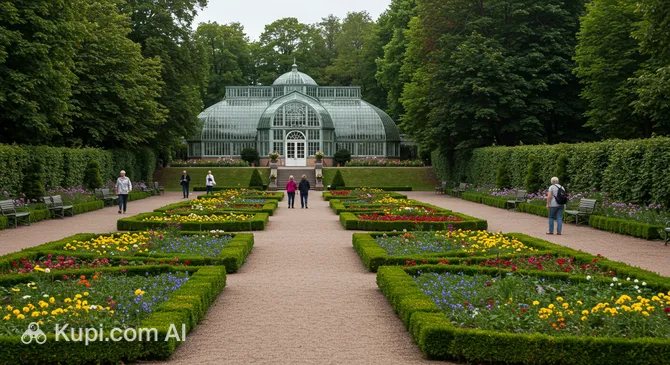
For nature lovers and botany enthusiasts, the Uppsala Botanical Garden is a must-visit oasis situated right next to the castle. This grand baroque garden features an expansive orangery and a tropical greenhouse that dates back to the 18th century. Maintained by the university, it is a living museum of plant diversity where you can wander among thousands of species from around the globe in a meticulously landscaped setting.
Uppsala Botanical Garden. Illustration.
Source: Kupi.com AI
Traveler photos:
A short walk away lies the Linnaeus Garden, the oldest botanical garden in Sweden. Restored to its original 18th-century design, it was the home and workplace of the world-famous botanist Carl Linnaeus. Walking through the symmetrical beds, visitors can see plants arranged according to his sexual system of classification, providing a fascinating insight into the history of science and the mind of the man who organized nature.
Located on a small island in the Fyris River, the Uppland Museum is housed in a charming old watermill from the 1760s. This cultural history museum offers engaging exhibits on the region's past, ranging from Viking artifacts to medieval crafts and local folklore. It is an excellent stop for families and anyone interested in understanding the deep heritage of Uppsala County through interactive displays.
Uppland Museum. Illustration.
Source: Kupi.com AI
Traveler photos:
Local Cuisine
The culinary landscape of Uppsala is a delightful mix of traditional Swedish heritage and the vibrant energy of a university city. Locals take great pride in high-quality, locally sourced ingredients, often hailing from the fertile farmlands of the surrounding Uppland region. Whether you are looking for a hearty classic meal or modern international fusion, the city offers a welcoming atmosphere where food is often enjoyed at a leisurely pace.
No visit to this part of Sweden is complete without experiencing the beloved tradition of fika. This social coffee break, usually accompanied by a sweet treat like a cinnamon bun (kanelbulle) or a cardamom bun, is ingrained in the daily life of the city. You will find countless cozy cafes, particularly along the cobbled streets near the Fyris River, where students and professors alike gather to chat over steaming cups of strong Swedish coffee.
For a taste of authentic local fare, look for dishes featuring game meat, such as elk or reindeer, often served with rich sauces and wild mushrooms. A staple comfort food is raggmunk, a savory potato pancake served with fried salted pork and the ubiquitous lingonberry jam. Of course, the classic Swedish meatballs (köttbullar) are widely available, served traditionally with creamy mashed potatoes, pickled cucumbers, and lingonberries.
When it comes to beverages, the locals enjoy a variety of options. Beyond the essential coffee, craft beer has seen a surge in popularity, with several local microbreweries offering unique brews. During festive seasons, you might encounter akvavit (snaps), a spiced spirit traditionally consumed during celebrations. For a non-alcoholic option, elderflower cordial is a refreshing choice in the summer, while julmust is a popular spiced soda during the winter holidays.
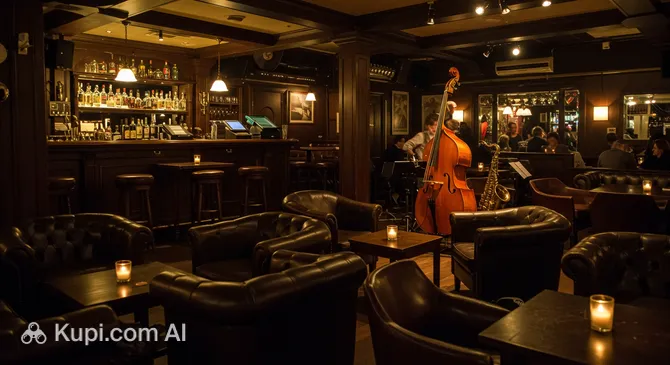
The dining scene is diverse, ranging from the historic charm of the local Market Hall (Saluhall) to lively spots near the train station. For a memorable evening combining food with entertainment, you might visit Katalin And All That Jazz. Located in an old goods warehouse, it is a legendary spot for both music lovers and diners, offering a bistro menu in a rustic setting.
Katalin And All That Jazz. Illustration.
Source: Kupi.com AI
Traveler photos:
If you crave something different, the city's international options are plentiful. You can enjoy modern Asian cuisine at places like Negai Restaurant or Mirai Sushi & Ramen. For those who enjoy a relaxed evening with a drink in hand, The Earth Is Blue Like an Orange offers a quirky and inviting atmosphere to unwind after a day of sightseeing.
Travel Tips
Welcome to Uppsala! To help you make the most of your visit to this vibrant university city, we have compiled a list of essential practical tips that cover everything from local customs to logistics. These recommendations are designed to ensure your trip is smooth, comfortable, and full of memorable experiences.
Clothing and Gear: The weather in Scandinavia can be changeable, so dressing in layers is the golden rule, regardless of the season. In winter, bring a heavy coat, thermal wear, and waterproof boots for the snow. Summers are pleasant but can be breezy, so a light jacket is wise. Since Uppsala is best explored on foot, especially around the cobblestoned cathedral area, pack comfortable walking shoes. No special dress code is required for religious sites like the cathedral, but modest attire is respectful.
Transportation: Uppsala is incredibly walkable, and the city center is compact. For longer distances, the local public transport system, UL (Upplands Lokaltrafik), operates an efficient network of yellow buses and commuter trains. You cannot pay with cash on board; instead, use a contactless card or download the UL app to buy tickets. Taxis are available but can be expensive; stick to reputable companies like Uppsala Taxi or use major ride-hailing apps.
Finances: The local currency is the Swedish Krona (SEK). However, Sweden is one of the most cashless societies in the world. Many shops, cafes, and even public toilets in Uppsala do not accept cash at all. Ensure you have a credit or debit card with a chip and PIN (Visa and Mastercard are widely accepted). You likely won't need to visit an ATM or exchange money, as electronic payment is the norm everywhere.
Health and Safety: Uppsala is generally a very safe city for tourists, even at night. For minor health issues, look for a pharmacy marked Apotek; they are plentiful in the city center and shopping malls. In case of a serious emergency, dial 112 for police, ambulance, or fire services. The main hospital, Akademiska sjukhuset, is centrally located if urgent medical care is needed.
Communication: Swedish is the official language, but English is spoken fluently by the vast majority of the population. You will have no trouble communicating in hotels, restaurants, or shops. Free Wi-Fi is widely available in cafes, on buses, and in public spaces. If you need mobile data, you can easily purchase a prepaid SIM card at convenience stores like Pressbyrån.
Local Etiquette: Swedes value personal space and order. Queuing is taken very seriously; whether you are waiting for a bus or ordering coffee, always take a number ticket if a machine is present, or wait your turn in line without pushing. When entering a private home, it is customary to remove your shoes at the door. A simple "Hej" is a friendly and standard greeting for everyone.
What to Avoid: Never walk in the designated bicycle lanes. Uppsala is a major cycling city, and locals commute fast on two wheels. Stepping into the bike lane without looking is not only frowned upon but can be dangerous. Also, avoid loud conversations on public transport, as this is considered impolite.
Shopping Hours: Be aware that many shops close earlier on weekends, often around 4:00 PM or 5:00 PM on Saturdays and may be closed or have very limited hours on Sundays. Plan your shopping for weekdays or Saturday mornings to avoid disappointment.
With these practical tips in mind, you are all set to navigate Uppsala with the ease of a local. Whether you are here for the history, the gardens, or the lively cafe culture, a little preparation will let you focus entirely on enjoying the unique charm of this Swedish gem.
Entertainment & Nightlife
Entertainment and Nightlife:
As a prominent university city, Uppsala pulses with a youthful energy that defines its entertainment scene. While much of the student nightlife revolves around the historic "student nations"—private clubs that are generally exclusive to university members—the city offers a vibrant and welcoming array of public venues for visitors. The nightlife here is characterized by a relaxed yet sophisticated atmosphere, where cozy pubs, stylish cocktail bars, and cultural venues coexist within a compact and walkable city center.
The heart of the action is concentrated around the Fyris River and the streets radiating from Stora Torget (The Main Square). In particular, Dragarbrunnsgatan serves as a bustling artery lined with restaurants, cinemas, and bars that stay lively well into the night. During the warmer months, outdoor terraces along the riverbanks fill up quickly, creating a picturesque setting for evening drinks.
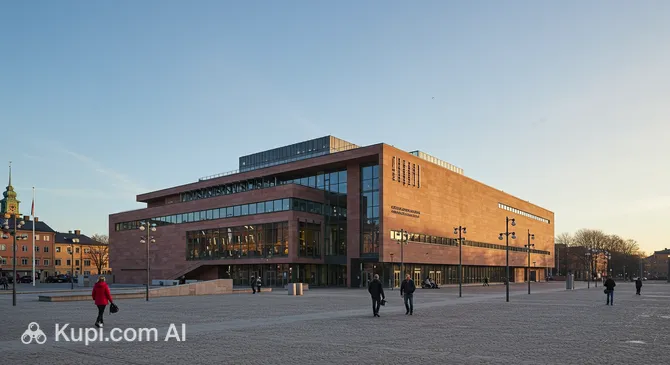
For those seeking a cultural evening or a world-class performance, the Uppsala Concert and Congress Hall (Uppsala Konsert & Kongress) is the city's premier venue. Known locally as "UKK," this architectural landmark hosts everything from symphony orchestras and jazz concerts to stand-up comedy and large-scale events. Its striking modern design and panoramic views from the upper levels make it a destination in itself, even just for a pre-show glass of champagne.
Uppsala Concert and Congress Hall. Illustration.
Source: Kupi.com AI
Traveler photos:
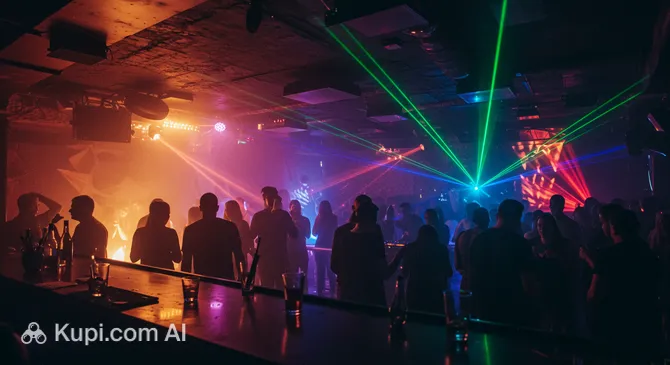
If you are looking for a place that seamlessly transitions from dinner to drinks, Plock is a popular choice among locals. Located centrally near the train station, it offers a concept based on sharing small dishes ("tapas" style) in a lively environment. As the evening progresses, the lights dim, the music volume rises, and the venue shifts into a vibrant bar atmosphere perfect for socializing.
Plock. Illustration.
Source: Kupi.com AI
Traveler photos:
Another unique spot in the city's nightlife landscape is Hodja Restaurant. With its distinct ambiance, it provides a welcoming setting for those who want to enjoy good food and drinks in a place with character. It is an excellent example of Uppsala's diverse offerings, providing a comfortable escape from the more generic commercial bars.
Practical Advice for Night Owls:
The nightlife in Uppsala peaks on Fridays and Saturdays. Most bars and clubs are open until 2:00 AM or 3:00 AM on weekends. The dress code is generally "smart casual"—Swedes tend to dress neatly but comfortably, so there is rarely a need for formal attire unless attending a gala. Be prepared for Swedish price levels; alcohol can be expensive compared to many other countries. A standard beer might cost between 70-90 SEK, and cocktails often range from 130 SEK upwards.
Safety and Getting Around:
Uppsala is a very safe city for night walks, with well-lit streets and a non-threatening atmosphere. The city center is small enough to walk almost anywhere, but if you need a ride, reputable taxi companies are readily available. You can hail a taxi at designated stands near the Central Station or Stora Torget, or use a major app. Avoid unlicensed taxis and stick to established firms like Uppsala Taxi.
Daytime Entertainment:
Before the sun goes down, the city offers plenty of leisure activities. Beyond the historic sites, you can enjoy modern shopping and entertainment at Gränbystaden, one of the largest shopping malls in the region. It features a wide range of stores, restaurants, and a cinema complex, making it a perfect spot for a rainy afternoon or a break from sightseeing.
Parks & Museums
Beyond its famous cathedral and castle, the city offers a wonderful array of green spaces and specialized museums that celebrate its scientific heritage and natural beauty. For visitors, these spots provide a perfect balance of relaxation and learning, allowing you to explore everything from prehistoric fossils to serene riverside promenades.
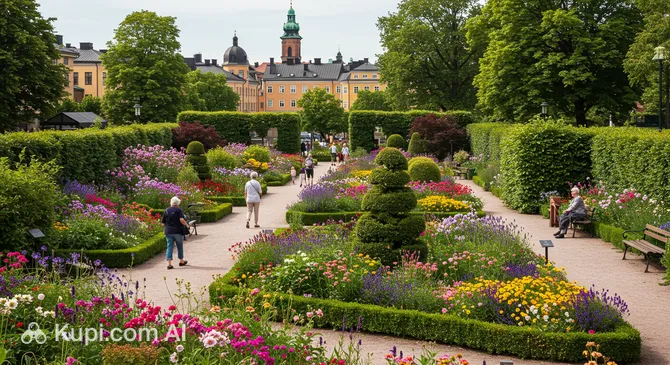
One of the most beloved recreational areas is the City Garden (Stadsträdgården). Located centrally along the Fyris River, this park is a favorite among locals for picnics, jogging, and leisurely strolls. It features beautifully maintained flower beds, a large playground for children, and the charming "Island of Bliss" (Lycksalighetens ö). In the summer, the park comes alive with open-air theater performances and concerts, making it a vibrant hub of community life.
City Garden. Illustration.
Source: Kupi.com AI
Traveler photos:
For a more historic atmosphere, The English Park (Engelska parken) offers a tranquil retreat behind the university library, Carolina Rediviva. Established in the early 19th century, this park is designed in the romantic landscape style, with winding paths and mature trees that provide cool shade on sunny days. It is a quiet sanctuary perfect for reading a book or enjoying a peaceful moment away from the city buzz, surrounded by busts of famous Swedish writers and thinkers.
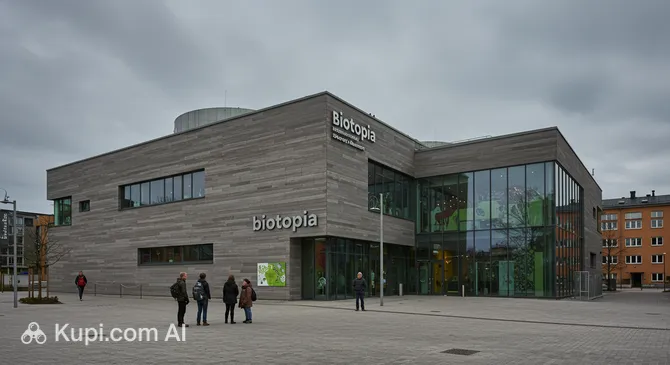
Uppsala's reputation as a center of science is well reflected in its museums. Biotopia is a fantastic biological museum housed in a beautiful Art Nouveau building from 1910. It focuses on the nature and wildlife of the Uppland region, featuring classic dioramas filled with Swedish animals in their natural habitats. The museum is highly interactive and family-friendly, offering exhibitions that engage visitors of all ages in the wonders of the natural world.
Biotopia. Illustration.
Source: Kupi.com AI
Traveler photos:
Science enthusiasts should not miss the Uppsala University Museum of Evolution. This institution holds the university's extensive natural history collections, including botany, zoology, and paleontology. The highlight for many is the impressive collection of dinosaur skeletons and fossils, which is the largest in Scandinavia. It serves as a fascinating journey through the history of life on Earth, showcasing minerals and specimens collected over centuries of academic expeditions.
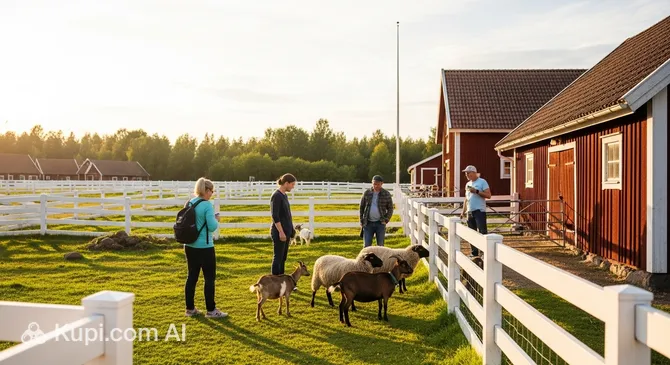
For families seeking a hands-on rural experience within the city limits, the Årsta 4H Farm is a delightful destination. This city farm allows visitors to meet and interact with traditional farm animals such as horses, sheep, goats, and rabbits. It provides a genuine glimpse into Swedish country life and is an excellent spot for children to learn about animal care while enjoying the outdoors.
Årsta 4H Farm. Illustration.
Source: Kupi.com AI
Traveler photos:
Insider Tip: If you visit the City Garden, take a moment to walk south along the river towards the wooden piers. It is a particularly scenic spot at sunset, where the reflection of the trees on the water creates a magical atmosphere, perfect for photography or a romantic evening walk.
Getting Around
Public transport in Uppsala is efficient, reliable, and easy for visitors to navigate. The system is managed by UL (Upplands Lokaltrafik) and primarily relies on a comprehensive network of buses that cover the entire city and the surrounding county. Within the city limits, you will recognize the city buses by their bright green color, while the regional buses that connect to outlying areas are yellow. There is no metro or tram system in the city center, but the bus network is dense enough to get you within walking distance of almost any destination.
The payment system is completely cashless, designed for convenience and speed. The most popular way to pay for travel is through the UL App, which is available for download on smartphones. Through the app, you can purchase single tickets, 24-hour passes, or 72-hour passes, which are ideal for tourists. Alternatively, you can buy a rechargeable green UL Card at sales agents like Pressbyrån kiosks, supermarkets, or at the UL Center located at the Central Station. You cannot pay with cash on board the buses.
For a single journey within the city (Zone 1), a ticket is typically valid for 75 minutes, allowing for unlimited transfers during that time. To validate your ticket, simply scan the QR code from your app or tap your UL Card against the green readers located near the driver when you board. Prices are generally lower if you use prepaid travel funds on a card or the app compared to buying a single ticket via credit card on board, though tapping a contactless Visa or Mastercard directly on the bus reader is also a valid and easy option for single fares.
Transport services operate extensively from early morning until late at night. On weekdays, buses run frequently, often every 10 to 15 minutes on main routes. On Friday and Saturday nights, the city offers night bus services to ensure safe travel for those enjoying the nightlife. Schedules can be slightly reduced on Sundays and public holidays, so it is always a good idea to check the travel planner in the UL app or on the website for real-time updates.
Given the flat terrain and compact size of the city, cycling is a massive part of the local culture and serves as a major alternative to motorized transport. Uppsala is often cited as one of the best cycling cities in the region. Visitors can easily rent bikes from various shops near the Central Station or use app-based bike-sharing schemes. Dedicated bike lanes are everywhere, making it often the fastest way to get around.
Taxis are readily available but can be quite expensive compared to public transit. You can find taxi stands at the Central Station (Resecentrum) and Stora Torget. It is recommended to use established companies like Uppsala Taxi or major ride-hailing apps to ensure a fixed price or a reliable meter rate. Avoid hailing unlicensed cars on the street.
A unique feature for transport enthusiasts is the historic Lennakatten railway. While not part of the modern commuter network, this heritage steam train offers a nostalgic journey through the countryside during the summer months. It departs from its own station near the main Central Station and provides a charming way to experience travel as it was in the early 20th century, complete with vintage carriages and personnel in period uniforms.
Accommodation
Accommodation in Uppsala caters to a diverse mix of academic visitors, business travelers, and tourists. The city offers a solid selection of lodging options, ranging from modern chain hotels and charming boutique establishments to budget-friendly hostels and guest houses. Whether you are looking for luxury near the historic sights or a functional room near the transport hubs, the city provides comfortable standards of hospitality.
For most visitors, the best area to stay is the city center (Centrum). Staying here places you within easy walking distance of Uppsala Central Station, making it incredibly convenient for those arriving by train from Stockholm or Arlanda Airport. The central district is also just a stone's throw away from the main attractions, such as the cathedral and the castle, as well as the vibrant shopping streets and riverside cafes along the Fyris River.
Booking Tip: As a major university city, accommodation can fill up surprisingly fast during academic events, large conferences, and specific festivities. The most critical time to book in advance is late April for the Walpurgis Eve (Valborg) celebrations, which is the biggest event of the year in Uppsala. Graduation periods in late spring can also see high demand.
Prices and Booking: The cost of accommodation generally aligns with Scandinavian standards, meaning it can be higher than the European average. You will find a spectrum from mid-range business hotels to more expensive options, though budget hostels are available for backpackers. Booking is almost exclusively done online, and it is advisable to secure your reservation early to get the best rates.
Nearby Cities
For those looking to explore the surroundings, Uppsala serves as an excellent base for day trips to several interesting nearby locations:
The Swedish capital, Stockholm, is the most prominent destination and is easily accessible by a short train ride. Built on 14 islands connected by bridges, the city offers a stunning array of attractions, from the medieval cobblestone streets of Gamla Stan to the world-renowned Vasa Museum and the Royal Palace.
Another historically rich option is Västerås, located on the shores of Lake Mälaren. As one of Sweden's oldest cities, it invites visitors to explore the charming Kyrkbacken district with its traditional wooden houses and the impressive Västerås Cathedral, which holds three stars in the Michelin Green Guide.
For families and science enthusiasts, Södertälje offers a unique experience. It is home to Tom Tits Experiment, a large interactive science center that provides fun and educational activities for all ages, making it a lively alternative to the more traditional historical sites.
City
Population
Distance
Marsta
27 034
29 km
Balsta
13 138
33 km
Enkoping
21 121
40 km
Upplands Väsby
48 907
41 km
Kungsängen
9 382
43 km
These nearby destinations offer a glimpse into the diverse culture and landscapes of the region.
Shopping & Souvenirs
Shopping in Uppsala offers a delightful mix of modern retail experiences and charming local boutiques, all set within a compact and walkable city center. The city caters to a wide range of tastes, from those seeking the latest international fashion trends to visitors looking for unique Swedish design and handicrafts. Whether you prefer strolling through pedestrianized streets or exploring large shopping complexes, Uppsala provides a relaxed and accessible shopping environment.
The heart of the city's shopping scene is the pedestrian zone centered around Stora Torget (The Main Square). The two principal shopping streets, Svartbäcksgatan and Kungsängsgatan, run through this area and are lined with a variety of stores. Here, you will find major high-street fashion chains, sporting goods stores, and cozy cafes perfect for a break. Branching off these main arteries are smaller cobblestone lanes like Drottninggatan and Västra Ågatan, where you can discover independent boutiques, interior design shops, and bookstores nestled in historic buildings.
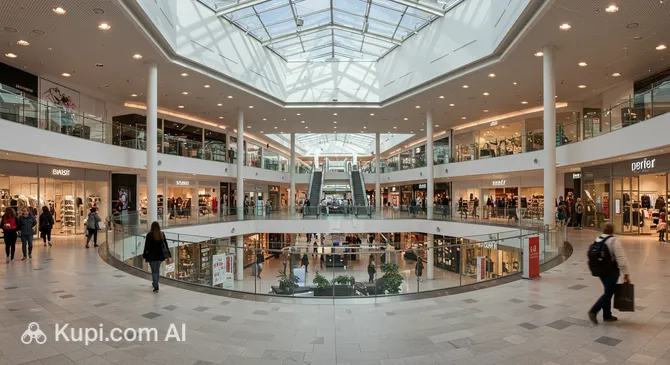
For those who prefer a comprehensive shopping experience under one roof, the city offers several excellent options. In the city center, modern galleries like S:t Per Gallerian and Forumgallerian provide a curated selection of fashion and lifestyle brands. However, for the most extensive retail therapy, visitors should head to Gränbystaden. Located just a short bus ride from the center, this is one of Sweden's largest shopping destinations, featuring over 140 shops, restaurants, and service points, ranging from large department stores to electronics and grocery hypermarkets.
Gränbystaden. Illustration.
Source: Kupi.com AI
Traveler photos:
If you are interested in local culture and finding a bargain, the market at Vaksala Torg is a must-visit. Located near the Uppsala Concert and Congress Hall, this square hosts a lively market, particularly on Saturdays. It is famous for its flea market section, where you can browse through vintage items, antiques, and second-hand treasures. Additionally, you will often find vendors selling fresh produce, flowers, and locally produced goods, offering a glimpse into the everyday life of the residents.
When looking for souvenirs to take home, Uppsala has several unique themes. Items related to Pelle Svanslös (Peter No-Tail), the famous fictional cat from Uppsala, are popular gifts for children. For design lovers, classic Swedish glassware, minimalist home decor, and Dala horses are widely available. Given the city's academic heritage, you can also find high-quality stationery and books, or botanical-themed gifts inspired by Carl Linnaeus at the museum shops.
Standard shopping hours in the city are generally from 10:00 AM to 7:00 PM on weekdays. On Saturdays, shops typically close earlier, around 5:00 PM, and Sunday hours are usually from 12:00 PM to 4:00 PM. It is important to remember that Sweden is rapidly becoming a cashless society. Almost all shops, regardless of size, prefer or exclusively accept card payments (Visa and Mastercard are standard), and some may not accept cash at all.
For visitors residing outside the European Union, tax-free shopping is often available. Look for the "Global Blue" Tax Free signage in store windows. If you spend a certain amount in a single store, you can request a tax refund form, which can be redeemed at the airport or other departure points when leaving the EU, allowing you to save on the Value Added Tax (VAT) for your purchases.