Support

Royal Swedish Opera

About

The Royal Swedish Opera (Kungliga Operan) is a majestic opera house located in the heart of Stockholm, the capital of Sweden. Founded in 1782, it is rightfully considered one of Scandinavia's most famous and prestigious opera stages, attracting art lovers from all over the world.
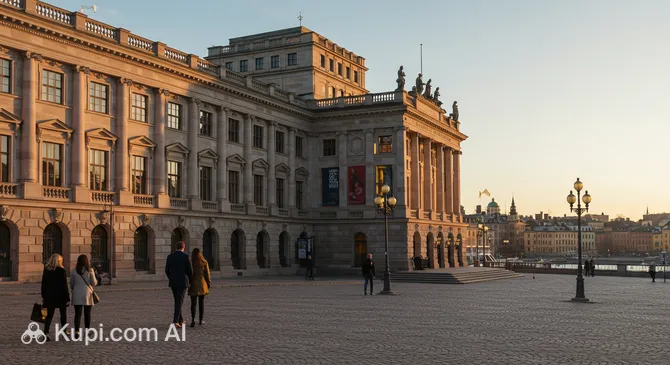
Royal Swedish Opera. Illustration.
Source: Kupi.com AI

Traveller photos:

The modern opera building, often referred to as the "Oscarian Opera" or simply "Operan," was built in 1892 at the initiative of King Oscar II. It impresses with its luxury and neoclassical architecture, serving as a true ornament of the city. A visit to the opera is not just an opportunity to enjoy magnificent productions, but also a chance to touch the country's rich cultural history.

The theater's location is exceptionally advantageous: it sits in the central part of Stockholm, in close proximity to the Royal Palace, the Riksdag (Swedish Parliament) building, and the picturesque Kungsträdgården (Royal Garden). The famous Drottninggatan pedestrian street is just a few minutes' walk away, making the Royal Opera easily accessible and an essential part of any itinerary through the Swedish capital.

Contacts

For the most up-to-date information regarding the Royal Swedish Opera repertoire, ticket prices, box office hours, and contact methods, we recommend visiting the theater's official website. All necessary contact details, including phone numbers and email addresses, are typically published there.

You can also find current information at tourist information centers in Stockholm or directly at the venue before your visit.

How to contactContact
AddressGustav Adolfs torg 2, 111 52 Stockholm, Sweden
Phone+46 8 791 44 00
Websitewww.operan.se

What to Do

The main reason to visit the Royal Swedish Opera is, of course, its magnificent productions. Here, you can enjoy opera and ballet performances of the highest world-class standard. The theater's repertoire features both immortal classics and bold contemporary works, performed by talented Swedish and guest international artists. Immersing yourself in the world of music and dance within the walls of this famous theater promises to be an unforgettable cultural experience.

In addition to attending performances, visitors should take note of the theater building itself. Admire its architecture and lavish interiors, which are said to rival the splendor of the Swedish monarchs' palaces. Of particular note is the oval-shaped auditorium with four tiers, which boasts superb acoustics, ensuring every performance sounds perfect and the stage action is clearly visible from almost any seat. The interior decoration was the work of the famous French master Louis-Jean Desprez. Don't forget to examine the theater entrance, adorned with a Corinthian portico and four statues of the Muses.

Getting There

The Royal Swedish Opera is conveniently located in the heart of Stockholm, making it easily accessible for all visitors. Thanks to its central position, reaching the theater is simple, regardless of your preferred mode of transport.

One of the most convenient ways to reach the opera is by public transport. The nearest metro stations—T-Centralen (the city's main transport hub) and Kungsträdgården—are within walking distance. From T-Centralen, as well as from Stockholm Central Station, the walk to the opera takes about 10–15 minutes at a leisurely pace. Additionally, numerous city buses and trams stop near the opera building, with routes covering various districts of Stockholm.

If you prefer the comfort of a taxi or are traveling by private car, reaching the Royal Opera is also straightforward. However, it is worth noting that parking in central Stockholm can be limited and quite expensive. Despite the availability of parking spaces near the theater, it is recommended to arrive well in advance to find a suitable spot and avoid being late for the performance.

Nearest city: Stockholm

History & Facts

The history of the Royal Swedish Opera is inextricably linked with King Gustav III, a great patron of the arts who sought to reform theatrical life in Sweden. The court theater was created on his initiative and with the active participation of his favorite, Gustaf Mauritz Armfelt. Initially, the theater did not have its own home, and the first productions—including operas, ballets, and dramatic plays—took place at various venues in Stockholm. The official opening took place in 1773 at the Bollhuset with a landmark production of Francesco Uttini's opera "Thetis and Pelée."

The desire for a permanent stage led to the construction of a dedicated theater building in 1775. The project was entrusted to the talented architect Carl Fredrik Adelcrantz. The grand opening of the new opera house, which went down in history as the Gustavian Opera, took place on January 18, 1782. The first performance held within its walls was the opera "Cora och Alonzo" by the German composer Johann Gottlieb Naumann. This magnificent building served as Stockholm's main opera stage for over a hundred years, until 1892.

However, the theater's history has seen both tragic and difficult times. One of the most dramatic events was the assassination of King Gustav III right inside the opera building in 1792, which undoubtedly left its mark on the theater's fate. Later, in 1806, his son King Gustav IV Adolf even temporarily closed the opera for three years. Over time, the old Gustavian Opera building no longer met modern requirements; it was not restored and was periodically closed. Eventually, at the initiative of King Oscar II, it was demolished, and the building we see today was erected in its place, continuing the glorious traditions of the Royal Swedish Opera.

Despite all the ups and downs, the Royal Swedish Opera continued to develop and gain international recognition. For example, the theater company successfully toured the USSR in 1975, and the Royal Swedish Ballet, which is part of the opera house, toured the Soviet Union in 1981. These events testify to the high level of artistry and the international significance that the theater maintains to this day.

Time Needed

When planning a visit to the Royal Swedish Opera for an opera or ballet performance, it is worth allocating approximately 3–4 hours. This includes not only the performance itself but also time to reach the theater, take your seats, and the intermission, which is an integral part of the theatrical evening.

If your goal is simply an exterior viewing of this magnificent building and taking some memorable photos, then 30 minutes to one hour should be sufficient. During this time, you can appreciate the theater's architecture and its location in the heart of Stockholm. For a more in-depth look at the theater's history and interiors, if available (e.g., guided tours), additional time will be required, which should be checked in advance.

Working Hours

The opening hours of the Royal Swedish Opera directly depend on the performance schedule. The box office is usually open during specific hours for ticket sales, but performance start times vary. As the repertoire and event times can change, it is highly recommended to visit the official website of the Royal Swedish Opera for the most accurate and up-to-date information regarding box office hours and performance schedules. You can also find information there regarding any guided tours of the theater building, if available.

Generally, the Royal Swedish Opera operates during the theatrical season, which typically runs from autumn to spring, with occasional special summer performances or festivals. It is recommended to book tickets for popular productions in advance, as they often sell out long before the performance date. Information on ticket sales and availability is also best checked on the official website or at the theater box office.

Nearby

Visiting the Royal Swedish Opera is undoubtedly a highlight, but your exploration of Stockholm should not be limited to this magnificent theater. Exploring the surrounding area will allow you to dive deeper into the atmosphere of the Swedish capital, discover new interesting spots, and get a fuller impression of the city's cultural and historical wealth. Many iconic landmarks are within walking distance, making a stroll through central Stockholm particularly pleasant and fulfilling.

By combining your opera visit with a tour of nearby sites, you can optimize your time and enrich your journey with new discoveries. Below is a list of some attractions located near the Royal Swedish Opera, along with their approximate distances.

NameDistance
The Royal Palace0.3 km
Bank Hotel0.3 km
Stortorget0.5 km
Nationalmuseum0.5 km
Nordic Light Bar0.8 km
Moderna Museet0.9 km
Fasching0.9 km

Reached the bottom of the page?

Looks like you know this route inside out