Support

Zitouna Mosque

About

The Al-Zaytuna Mosque, also known as the Ez-Zitouna Mosque, is one of the oldest and most significant mosques on the African continent. Located in the heart of the Medina in Tunis, the capital of Tunisia, it serves not only as an active religious center but also as an outstanding historical and architectural monument. Its history dates back to 698, making it a witness to many eras and cultural influences.
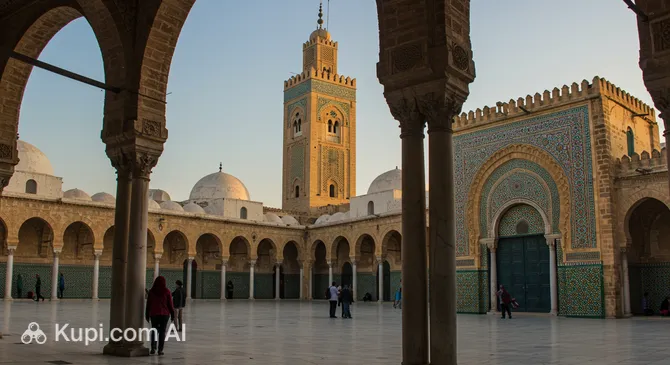
Zitouna Mosque. Illustration.
Source: Kupi.com AI

Traveler photos:

The architecture of the Al-Zaytuna Mosque reflects rich Islamic traditions and is a fine example of North African religious architecture. Its architectural style is believed to follow the traditions of the famous Mosque of Uqba in Kairouan and, in turn, served as a prototype for other great mosques, including the Great Mosque of Córdoba. The majestic inner courtyard, surrounded by an elegant gallery supported by columns of marble, granite, and porphyry, creates an atmosphere of peace and serenity.

One of the unique features of the mosque is the use of materials salvaged from the ruins of ancient Carthage in its construction. This fact not only adds historical depth to the structure but also symbolizes the continuity of cultures on Tunisian soil. Visiting the Al-Zaytuna Mosque allows you to touch centuries of history and appreciate the craftsmanship of the ancient builders who left behind this magnificent legacy.

Contacts

To find the latest information regarding opening hours, visiting rules, and contact details for the Al-Zaytuna Mosque, we recommend consulting Tunis's official tourism portals or visiting the city's tourist information centers directly. Often, the most up-to-date information can be found on-site or through accredited guides.

How to contactContact
AddressQ5XC+454, 30 Rue Jamaa Ezzitouna, Tunis, Tunisia
Phone number+216 56 480 544
Websitewww.zitounatunisia.com

What to Do

When visiting the Al-Zaytuna Mosque in Tunis, you will immerse yourself in the atmosphere of one of North Africa's oldest and most significant religious buildings. The primary focus should be its unique architecture. Visitors can walk through the spacious inner courtyard, surrounded by an elegant gallery. The columns supporting this gallery are made from various materials, giving the courtyard a distinct character and testifying to the site's rich history. In the northwestern corner of the courtyard stands the characteristic square minaret, which is an integral part of the architectural ensemble.

The minaret itself, built in 1894 and reaching a height of 43 meters, deserves special attention. Its simple yet majestic forms are a beautiful example of Islamic architecture. Inside the mosque, visitors can admire the richly decorated walls, which showcase the high craftsmanship of Islamic architects and artists. These decorative elements make a visit to the mosque particularly interesting for those fond of history, architecture, and art.

Tourists can visit the Al-Zaytuna Mosque outside of prayer times, allowing for a quiet exploration of all its highlights. During your tour, you can also learn about the history of the religious university that was once housed within the mosque's walls and played a vital role in the educational and cultural life of the region. This place breathes history, and every corner tells a story of the age-old traditions and spiritual heritage of Tunisia.

Getting There

The Al-Zaytuna Mosque, one of Tunis's most significant shrines, is located in the heart of the old Medina. It can be reached in several ways, depending on your location and preferences. Since the mosque is situated in the historic center, it is easily accessible for tourists exploring the capital of Tunisia.

One of the most common ways to reach the Al-Zaytuna Mosque is by taxi. You can ask the driver to take you to one of the entrances to the Medina closest to the mosque. Public transportation in Tunis, including buses and the light rail system (métro léger), can also take you to the outskirts of the Medina. From there, it is a fascinating walk through the ancient streets to reach the mosque.

If you are staying in a hotel within or very close to the Medina, walking is the best option. It is not only the most direct route but also a great opportunity to immerse yourself in the atmosphere of the old city, admire the architectural details, and observe local life. Keep in mind that vehicle traffic inside the Medina is highly restricted, so the final part of your journey to the Al-Zaytuna Mosque will almost certainly be on foot, allowing you to soak in the charm of this historic site.

Nearest city: Tunis

History & Facts

Al-Zaytuna Mosque, also known as the Mosque of the Olive Tree, is one of the oldest and most significant landmarks in Tunis and across the African continent. Its foundation dates back to 698, reflecting its deep historical roots. While the original structure was established in the late 7th century, the mosque acquired its current majestic appearance primarily in the 9th century. Final construction and decorative work were completed much later, after the 17th century, during the reign of the Husainid dynasty, who contributed significantly to the architectural ensemble.

Throughout its centuries-old history, the Al-Zaytuna Mosque played more than just a religious role. During periods of foreign invasions, its strategically located minaret served as an observation post, aiding the city's defenders. Later, beyond its primary functions, the mosque became home to a prestigious religious university that attracted scholars and students from across the Islamic world, establishing Al-Zaytuna as a vital center of knowledge and education. A notable feature is the square minaret located in the northwest corner of the courtyard; in 1894, another minaret was erected, reaching a height of 43 meters and becoming a prominent feature of the city skyline.

In the 20th century, recognizing the immense historical and cultural value of the Al-Zaytuna Mosque, significant preservation efforts were undertaken. Major restoration work was carried out in the 1960s under President Habib Bourguiba, and again in the 1990s under President Ben Ali. These large-scale projects helped restore and preserve the unique architectural elements, ensuring the longevity of this outstanding monument for future generations and allowing visitors to continue admiring its beauty and spiritual significance today.

Time Needed

For a general visit to the Al-Zaytuna Mosque in Tunis, 1 to 2 hours is usually sufficient for the average visitor. This time is enough to explore the parts of the mosque open to tourists, appreciate its architectural features, and soak in the atmosphere of this significant religious and historical site.

Most of your time will be spent strolling through the inner courtyard, which is often the primary area open to non-Muslims. Here, you can admire the arcades, columns, minaret, and overall decor. If entry to certain parts of the prayer halls is permitted (which is not always the case and depends on the time of visit and current rules), this may add a bit more time to your visit. Keep in mind that as with any active religious site, it is important to follow rules of conduct and the dress code, which may also influence how you organize your visit.

If you have a deeper interest in history and architecture, you might want to spend a little more time here, examining the details more closely and learning more about the significance of this site for Tunisia. However, for a general impression and photos, the suggested time will be quite adequate.

Working Hours

The Al-Zaytuna Mosque in Tunis is generally accessible to tourists; however, it is important to remember that entry for non-Muslims is permitted outside of prayer times. The exact hours when visitors may enter can vary and are not always widely publicized. To visit, you must follow certain rules of conduct and a dress code: clothing should be modest, covering the shoulders and knees, and women may be required to cover their heads.

Since specific tourist opening hours are often not listed in available sources, it is highly recommended to clarify the latest information on-site upon arrival in Tunis, from local guides, or, if possible, on the mosque's official website or information boards. Usually, advance booking for individual visits is not required. The mosque is expected to be open for visitors year-round, but it is always worth double-checking this information, especially during religious holidays.

DayOpening hours
Monday2:00 – 17:25
Tuesday2:00 – 17:25
Wednesday2:00 – 17:25
Thursday2:00 – 17:25
Friday2:00 – 17:25
Saturday2:00 – 17:25
Sunday2:00 – 19:25

Nearby

A visit to the Al-Zaytuna Mosque is undoubtedly a highlight for any traveler in Tunis. However, to fully immerse yourself in the city's atmosphere, it is worth exploring the areas immediately surrounding this iconic landmark. Discovering the neighborhood will allow you to uncover other interesting sites, gain a deeper understanding of the history and culture of Tunisia's capital, and enjoy its multifaceted charm.

Several notable sites are located near the Al-Zaytuna Mosque, which can complement your walk through the old city. Each of these places has its own unique atmosphere and history, offering new experiences and perspectives for getting to know Tunis.

NameDistance
Dar El Jeld0.3 km
Bab el Bhar0.4 km
Kasbah Square0.4 km
Central Market of Tunis0.5 km
Municipal Theatre of Tunis0.9 km
Tunis Clock Tower1.4 km
City of Culture2 km

Have you reached the end of the page?

So the route has been studied inside and out