Support

Hasan Harakani Tomb

About

In the heart of the historic Kaleiçi district lies the Hasan Harakani Mausoleum — one of the most significant religious and cultural shrines carefully preserved by the city of Kars. This historical complex is dedicated to the memory of an 11th-century Sufi saint who became a key figure in the spiritual development of the region that is now part of modern Turkey.
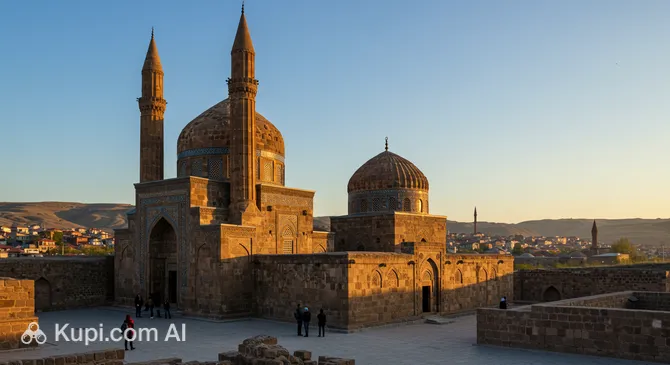
Hasan Harakani Tomb
Hasan Harakani Tomb. Иллюстрация. Источник: Kupi.com AI

The tomb is an elegant domed structure, skillfully integrated into the architectural ensemble of the Evliya Mosque. The mausoleum is a point of attraction not only for pilgrims seeking spiritual peace but also for history buffs wishing to touch the heritage of the early Islamic period in Anatolia. The peaceful atmosphere and ancient walls, decorated with calligraphic inscriptions, create a unique sense of timelessness here.

The place is famous for its special energy. As a center for religious tourism, the complex allows visitors to better understand Sufi traditions and see how cultures and eras intertwine in this border city.

Contacts

For your convenience, below are the current contact details and the exact location of the site. Finding the complex is easy, as it is one of the key landmarks in the historic center.

How to contactContact
AddressKaleiçi, Saray Yolu Sk. No:11, 36000 Kars Merkez/Kars, Türkiye

What to Do

A visit to the complex is primarily an opportunity to find inner peace. It is customary to maintain silence inside the mausoleum; here you can pray or simply sit in silence, reflecting on the eternal. According to local lore, wishes made in this sacred place with a pure heart often come true, which is why many come here for a blessing.

Be sure to notice the architectural details of the Evliya Mosque, adjacent to the mausoleum. Here you can see the characteristic features of Ottoman architecture and appreciate the craftsmanship of ancient builders. While walking through the inner courtyard, look at the preserved black basalt fortress tower dating back to the 12th century — it serves as a reminder of the region's storied past.

For photography enthusiasts, the complex offers excellent angles: the combination of austere stone, domes, and decorative elements against the backdrop of the Kars Fortress looming over the city creates impressive shots. It is an ideal place to get acquainted with the traditions of Anatolia and enjoy the aesthetics of Islamic art away from noisy tourist thoroughfares.

Getting There

Reaching this spiritual shrine is quite simple, as it is located in the historic Kaleiçi district, right at the foot of the fortress. If you are staying in the center of Kars, a leisurely walk from the main square or the railway station will take no more than 10–15 minutes.

For those who prefer public transport, municipal buses and shuttle taxis — dolmuş — run regularly toward the Kaleiçi district. Get off at the stops near the fortress walls and follow the signs to the Evliya Mosque. If you are planning a trip by car, you can leave it in one of the parking lots in the central part of the city, followed by a short walk through the colorful pedestrian streets.

Taxis are also an excellent and inexpensive option. A trip from any part of the city center to the entrance of the complex will cost a nominal amount and save time for visiting other attractions.

Ближайший город: Kars

History & Facts

The history of this site is inextricably linked to the figure of Abu al-Hasan al-Kharaqani (Ebul Hasan Harakani), an outstanding Sufi preacher born in 963 in Khorasan. He arrived in Anatolia in the 11th century as one of the first alp-erenler — warrior-saints who brought Islamic ideas to new lands. Al-Kharaqani is revered as the spiritual mentor of Rumi Mevlana himself, exerting a great influence on all Sufi thought in the region.

The saint died in 1033 during a battle on the outskirts of the modern city. Forty years later, when these lands came under Seljuk rule, the first tomb was erected over his burial site by decree of Sultan Alp Arslan. This structure became a symbol of the establishment of Islamic culture in Anatolia.

Over the centuries, the mausoleum was rebuilt several times. In 1579, under the Ottoman commander Lala Mustafa Pasha, the Evliya Mosque was built nearby, and a commemorative inscription appeared at the entrance to the tomb. The structure acquired its current appearance, featuring a characteristic dome of dark tuff, after a large-scale restoration in the late 1990s, carefully preserving its ancient spirit.

Time Needed

To leisurely explore the Hasan Harakani Mausoleum and the surrounding grounds of the Evliya Mosque, 30–45 minutes is usually sufficient. This is enough time to study the architectural details, read the historical plaques, and soak in the silence of the inner courtyard.

If you also plan to visit the nearby fortress or look into one of the old baths close by, we recommend setting aside about 2–3 hours for the entire historical quarter. This will allow you to enjoy the old city atmosphere without any rush.

Working Hours

The exact opening hours of the mausoleum may vary depending on the season and prayer times at the adjacent mosque. Generally, the grounds are open during daylight hours, but it is recommended to check for current information via official resources or local guides before your visit.

As the site is an active religious center, the best time to visit is between the mandatory prayer times, when the complex is at its most peaceful.

Nearby

Visiting the Hasan Harakani Mausoleum is just the beginning of discovering the rich heritage of this region. The Kaleiçi district is literally steeped in history, and within a few minutes' walk, you will find many other unique architectural monuments.

NameDistance
Evliya Mosque0 km
Kale Cafe & Restaurant0.2 km
Kars Castle0.3 km
1855 Gazi Restaurant0.3 km
Kars Cheese Museum1 km
Fethiye Mosque1.2 km
Kars Museum1.6 km

Reached the end of the page?

That means the route is fully explored