Support

Kars Castle

About

Perched atop a rugged cliff, proudly overlooking the city blocks, stands the majestic Kars Fortress (Kars Kalesi). This iconic defensive structure is the heart of the ancient city of Kars. As one of the most recognizable landmarks hidden within the eastern regions of Turkey, the fortress draws travelers with its powerful energy and rich past.
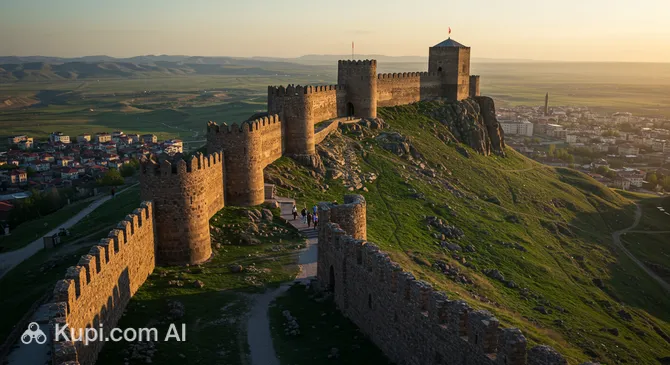
Kars Castle
Kars Castle. Иллюстрация. Источник: Kupi.com AI

Built primarily from dark basalt, the fortress is a complex of 12th-century outer defensive walls and inner fortifications. From its heights, breathtaking panoramic views of the entire region unfold, making it an ideal spot to get acquainted with the local geography. Travelers highly praise the site for its authenticity and preservation, noting a high rating of 4.5 stars based on thousands of reviews.

Kars Fortress is not just an open-air museum but a living testament to the changing eras. Here, traces of the Armenian Bagratid dynasty, Seljuk rulers, and Ottoman architects intertwine. Today, it is a popular spot for walks, where every guest can touch the ancient masonry and feel the spirit of history at the crossroads of civilizations.

Contacts

For visit information or hosting special events, you can use the official contact details. The site is managed by local municipal authorities.

How to contactContact
AddressKaleiçi, 36100 Kars Merkez/Kars, Türkiye
Phone+90 474 223 21 52
Websitewww.kars.bel.tr

What to Do

The main reason to ascend these ancient walls is the panoramic view. From a bird's-eye perspective, all of Kars unfolds before you, along with the winding river and majestic mountains on the horizon. The citadel looks especially impressive in the rays of the setting sun, when the massive stones are bathed in warm golden tones, creating an ideal backdrop for artistic photography.

History buffs can spend hours exploring the courtyards, massive gates, and towers. Here, you can literally feel the scale of the defensive genius of the past while studying the thickness of the walls and the design of the embrasures. Walking along the battlements allows you to imagine how sentries kept watch hundreds of years ago. During the summer, cultural events are sometimes held here, filling the ancient walls with modern life.

Because the fortress rarely sees massive tourist crowds, visitors have a unique opportunity to enjoy the silence and the atmosphere of medieval tranquility. After exploring the fortifications, it is pleasant to descend into the old city district to continue your cultural immersion in the cozy cafes and shops located at the foot of the hill.

Getting There

Finding your way to this historical landmark is easy, as it is located in the historic Kaleiçi district, just north of the city center. If you are already downtown, the walk takes about 10–15 minutes. Simply follow the signs leading toward the high hill, which is visible from almost anywhere in the old city.

For those who prefer comfort or are arriving with heavy luggage, a taxi is an excellent option. The ride from central hotels or the train station (located about 1 km away) will be short and inexpensive. If you are coming from the airport, which is 15–20 km from the city, you can use shuttle buses or taxis, taking about 20–30 minutes.

For travelers with a personal or rental car, access is available almost to the very foot of the rock, where a parking area is provided. Although the climb to the walls is moderate, it is recommended to wear comfortable shoes with non-slip soles for navigating the stone slopes and ancient steps.

Ближайший город: Kars

History & Facts

The first fortifications on this strategically vital hill appeared in ancient times, during the reign of the Armenian Bagratid dynasty. However, the appearance that has partially survived to this day began to take shape in 1153. It was then, by order of Sultan Izzid-din Saltuk of the Saltukid dynasty, that master Firuz Akay rebuilt the fortress, turning it into a powerful regional defensive hub.

The history of this site is full of dramatic events and large-scale reconstructions. In 1386, the walls were breached by the forces of Tamerlane, leaving the fortress almost completely destroyed. It wasn't until two centuries later, in 1579, that the Ottoman Sultan Murad III ordered the citadel's restoration. For this monumental task, an incredible number of people were employed—around 100,000 soldiers and workers under the leadership of Lala Mustafa Pasha.

In the 17th century, the structure faced further challenges: it was first damaged by the Persian Shah Abbas I, but was subsequently restored multiple times in 1616 and 1636. Another major reconstruction took place in 1770, allowing the fortress to maintain its significance into the modern era. Today, it stands as a magnificent example of Ottoman military architecture, having absorbed the heritage of various civilizations.

Time Needed

To leisurely explore every corner of this majestic structure, an average tourist needs about 1 to 2 hours. This is enough time to climb the walls, explore the courtyards, and take a series of memorable photos against the city panorama.

If you plan to combine your visit to the fortress with a walk through the "old city" (the Kaleiçi district), exploring the ancient bridge and the architecture of the surroundings, it is better to set aside half a day (about 3 hours). The fortress is especially beautiful in the pre-sunset hours, when the light hits the stones at a soft angle, creating perfect conditions for photography.

Working Hours

The fortress welcomes visitors daily, making it easy to plan a trip for any day of the week. The official opening hours are: 9:00 AM to 5:00 PM.

The schedule remains consistent from Monday to Sunday. However, keep in mind that access hours may vary slightly depending on the season and weather conditions, so it is recommended to arrive an hour before closing to explore the grounds before dusk.

9:00 – 17:00

Nearby

The area around the citadel is a true treasure trove for history lovers. Descending the hill, you will find yourself in the heart of the old town, where every stone breathes history, and ancient baths and bridges create a unique architectural ensemble.

Exploring the surroundings will allow you to see the influence of various cultures: from Ottoman traditions in the design of hammams to the austerity of buildings constructed during the Russian imperial period. The table below lists sites located within walking distance of the fortress entrance.

NameDistance
Hasan Harakani Tomb0.3 km
Evliya Mosque0.3 km
Kale Cafe & Restaurant0.4 km
1855 Gazi Restaurant0.6 km
Kars Cheese Museum1.3 km
Fethiye Mosque1.5 km
Kars Museum1.7 km

Reached the end of the page?

That means the route is fully explored