Support

State Museum of Nature of V. N. Karazin Kharkiv National University

About

In the heart of Kharkiv lies one of the oldest and most impressive scientific treasures—the Museum of Nature of V. N. Karazin Kharkiv National University. It is not just an exhibition space, but a major scientific and educational center, rightfully considered one of the leading natural history museums that Ukraine is proud of.
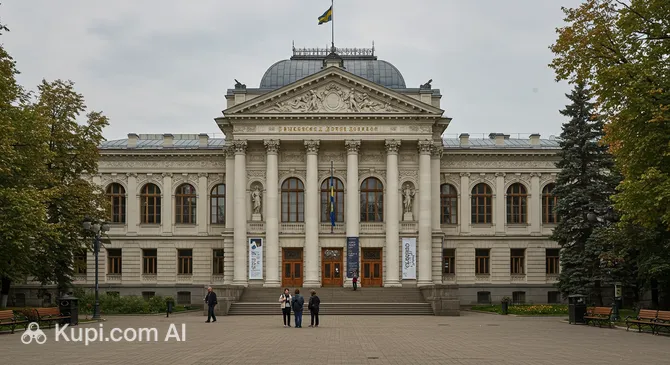
Museum of Nature of V. N. Karazin Kharkiv National University
Museum of Nature of V. N. Karazin Kharkiv National University. Иллюстрация. Источник: Kupi.com AI

The museum invites visitors to embark on a fascinating journey across centuries and continents. Unique zoological, geological, mineralogical, and paleontological collections are gathered here under one roof. The scale of the exposition is breathtaking: from tiny gemstones to skeletons of giant sea creatures and rare representatives of fauna, many of which are significant historical artifacts.

The museum owes its modern appearance to the merger of several fundamental university collections, completed in the 1960s. Today, a visit here is an opportunity to touch a scientific legacy and see the natural world in all its diversity and majesty.

Contacts

For more information about group tours or special events, you can use the following contact details for the museum:

How to contactContact
AddressTrinklera St, 8, Kharkiv, Харківська, Ukraine, 61000
Phone+380 97 111 2471
Websitemuzei-prirody.blogspot.com

What to Do

Within the museum walls, visitors can encounter an incredible variety of life forms. Be sure to stop by the displays of the entomological collection: hundreds of species of vibrant butterflies and curious beetles demonstrate nature's rich palette of colors. Equally impressive is the collection of mollusk shells and marine inhabitants, including peculiar starfish and sea urchins.

Fans of paleontology and geology will find it interesting to explore halls filled with ancient fossils and rare minerals. Massive skeletons and taxidermy displays of birds allow you to appreciate the grandeur of the animal world in its natural size. Every display case is the result of the painstaking work of scientists who gathered these exhibits from all over the globe.

A special atmosphere is given to the museum by its historical collections, some of which are over two hundred years old. Examining "natural objects" that once belonged to Count Potocki, you can feel the connection between eras and appreciate how natural science was born in this region. This place is ideal for both curious travelers and families with children looking to broaden their horizons.

Getting There

The Museum of Nature is located at 8 Trinklera Street. It is situated in the central part of the city, in close proximity to one of the largest squares in Europe—Freedom Square—making it easily accessible for tourists.

The most convenient way to get there is by using the metro. The nearest stations are "Universytet" (Saltivska Line) and "Derzhprom" (Oleksiivska Line). From the metro exit, the museum building is just a 5–7 minute walk, heading toward Nauky Avenue and Trinklera Street.

If you prefer more comfort, you can take a taxi from anywhere in the city; a ride from the center will take no more than 10 minutes. There are also minibuses and trolleybuses that stop near the main building of Karazin University.

Ближайший город: Kharkiv

History & Facts

The history of this amazing place is inextricably linked with the founding of Kharkiv University in 1805. The foundation of the collection was laid by Count Potocki, who purchased a unique collection of "natural objects" from the Italian naturalist Cetti. Imagine the scale: in 1807, hundreds of stuffed birds, thousands of mollusk shells, and rare minerals were delivered to Kharkiv after a journey of over two months across 1,700 kilometers.

The second major acquisition was the collection of Professor André in 1806. These valuable exhibits formed the basis of the Natural Cabinet, which over time split into independent mineralogical and zoological departments. For many years, scientists and patrons expanded the holdings, turning the university rooms into one of the country's largest scientific centers.

The museum took on its modern appearance in the 20th century. A significant role was played by Vitaliy Nikolaevich Grubant, who took charge of the Darwinism Museum in 1946. It was under his leadership in the 1960s that a large-scale merger of scattered geological, paleontological, and zoological collections took place under one roof on Trinklera Street.

The official formation of the State Museum of Nature in its current form was completed in January 1964. Since then, it has served not only as a teaching base for students but also as a priceless repository of natural relics that have survived centuries and maintained their scientific significance.

Time Needed

To leisurely explore the main halls, a typical visitor will need about 2–3 hours. The museum's exposition is very extensive, and every section—from mineralogy to zoology—is worth your attention, so time will fly by unnoticed.

If you plan to study the rare shell collections in detail or examine the dioramas, it is better to set aside half a day for your visit. This will allow you to immerse yourself in the world of nature without rushing and observe the smallest details of exhibits collected by scientists over two centuries.

Working Hours

When planning your visit to the Museum of Nature, please take note of its operating schedule. The museum is open to visitors from Tuesday to Saturday, while Monday and Sunday are closing days.

  • Tuesday – Saturday: 10:00 AM – 3:00 PM
  • Monday, Sunday: Closed
DayWorking hours
ПонедельникЗакрыто
Вторник10:00 – 15:00
Среда10:00 – 15:00
Четверг10:00 – 15:00
Пятница10:00 – 15:00
Суббота10:00 – 15:00
ВоскресеньеЗакрыто

Nearby

After immersing yourself in the world of natural history, it is worth taking a stroll around the neighborhood, as the museum is located in an area with a high concentration of interesting spots. Its proximity to large parks and recreational areas allows you to create a full-day itinerary.

Exploring nearby attractions will help you better feel the city's atmosphere and switch from educational tours to active recreation or peaceful walks in the fresh air.

NameDistance
AVEK Gallery and Feldman Museum0.3 km
Puri Chveni0.3 km
Aurora Restaurant0.7 km
Taras Shevchenko Monument0.8 km
Vitalnya0.8 km
Kharkiv Fine Arts Museum1 km
Software and Computer Museum1 km

Reached the end of the page?

That means the route is fully explored