Support

London Bridge

About

London Bridge is one of the most iconic and historically significant crossings over the Thames in London. It connects the central districts of the City of London and Southwark. Although many tourists confuse it with the more photogenic Tower Bridge, London Bridge holds a special place in the history of the capital of the United Kingdom, being the descendant of a long line of bridges that have existed on this spot since Roman times.
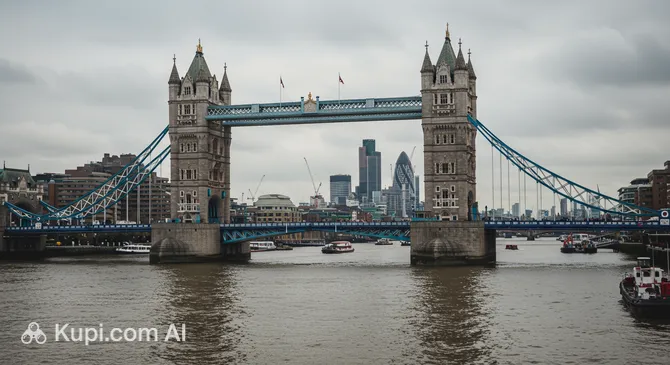
London Bridge. Illustration.
Source: Kupi.com AI

Traveler photos:

For many centuries, until 1729, London Bridge was the only way to cross the Thames within the city limits, making it a crucial transport artery. Historical versions of the bridge were drastically different from the modern one: for instance, the medieval stone bridge, which stood for over 600 years, was lined with houses, shops, and even a chapel. Its predecessors were numerous wooden structures, the first of which was built by the Romans.

The current London Bridge, opened in 1973 by Queen Elizabeth II, is a sleek structure made of concrete and steel. While its appearance may seem modest, it remains an important symbol of the city and an integral part of its daily life. Walking across this bridge is an opportunity to touch centuries of history and feel the rhythm of a modern metropolis while enjoying views of the river and the surrounding architecture.

Contacts

London Bridge is a public landmark and part of the city's infrastructure, so it does not have a dedicated office or contact telephone number. It is open to the public 24 hours a day and is completely free to visit. For general tourist information about London, it is recommended to visit the city's official tourism portal — Visit London.

The most convenient way to reach the bridge is by Underground. The nearest stations are London Bridge (served by the Jubilee and Northern lines) and Monument (Circle and District lines), both of which are just a few minutes' walk from the landmark. You can also reach London Bridge station via various city bus routes.

How to contactContact
AddressLondon EC4R 3TN, UK
Websitewww.cityoflondon.gov.uk

What to Do

The primary activity on London Bridge is a leisurely stroll, during which you can enjoy magnificent views of the Thames and the city's iconic skyline. From here, you can see the modern Shard skyscraper, as well as the famous Tower Bridge and the HMS Belfast museum ship moored nearby. The walk allows for impressive photographs, especially in the evening when the city and the bridge are illuminated, creating a unique atmosphere.

London Bridge serves as an excellent starting point for exploring the surrounding area. Right at its southern base is The London Bridge Experience, an interactive attraction that tells the macabre and fascinating history of the site, including encounters with characters like Jack the Ripper. Other key attractions are within walking distance: the majestic Tower of London, St Paul's Cathedral, and the reconstruction of Shakespeare's Globe Theatre.

Next to the bridge lies one of London's oldest and most famous food markets — Borough Market. By visiting it, you can immerse yourself in the city's gastronomic life, trying farm products, cheeses, pastries, and street food from all over the world. Furthermore, the walk across the bridge itself carries cultural significance: you might recall the famous nursery rhyme "London Bridge is Falling Down" and realize you are standing in a place that has inspired writers and artists for centuries.

Getting There

Thanks to its central location, London Bridge is exceptionally well-connected to all parts of the city, making it easy to reach. The most convenient and fastest method is the London Underground. Right at the southern end of the bridge is London Bridge station, which serves two lines: the modern Jubilee (grey) and one of the oldest, the Northern (black). This station also houses a major railway terminal for suburban and intercity trains, making the bridge easily accessible for those traveling from other parts of the country.

In addition to the Tube, numerous bus routes lead to London Bridge. Buses 17, 21, 35, 43, 47, 141, 149, 344, and others pass across or near it, allowing you to reach the landmark from almost anywhere in the city. For a more scenic journey, you can opt for river transport: Thames Clippers piers are located near the bridge, offering beautiful views of the embankments. This is a great way to combine your commute with a short boat trip along the Thames.

For those who enjoy walking, London Bridge is a perfect addition to a sightseeing route. It is within walking distance of many iconic sites. You can include it in a stroll along the South Bank, visiting Shakespeare's Globe and the Borough Market along the way, or walk north from the bridge to see the famous Tower of London, Tower Bridge, and the majestic St Paul's Cathedral.

Nearest city: London

History & Facts

The history of London Bridge is essentially the history of London itself, spanning nearly two millennia. The first crossing at this site was built by the Romans around 50 AD and was a simple wooden structure. Over the following centuries, wooden bridges were repeatedly destroyed and rebuilt, falling victim to fires and the passage of time. These early structures laid the foundation for what would become the city's most vital transport artery.

The first stone London Bridge became a true icon, with construction lasting from 1176 to 1209. It was a monumental feat for its time and stood for over 600 years. What made the bridge unique was that it was entirely built up: it housed residential buildings, numerous shops, workshops, and even a chapel. This bustling, built-up street over the Thames was not just a crossing but a full-fledged neighborhood and a center of social life in the capital of the United Kingdom.

In the 19th century, the medieval bridge was replaced by a new stone arch structure designed by engineer John Rennie. However, it too had a surprising fate. By the 1960s, the bridge began to sink under the weight of modern traffic, and the decision was made to replace it. In 1968, the old bridge was sold to American businessman Robert McCulloch. It was carefully dismantled, each stone was numbered, and it was transported to the USA, where it was reassembled in Lake Havasu City, Arizona, becoming a unique tourist attraction.

The modern London Bridge, opened by Queen Elizabeth II in 1973, is a functional structure made of concrete and steel. While its appearance is more modest than its predecessors, it remains an integral part of history, continuing a tradition of crossing in the heart of London that has remained unbroken since the Roman Empire.

Time Needed

When planning a visit to London Bridge, you should consider your interests and the amount of free time available. For a quick walk and a few photos against the London skyline, 30 to 60 minutes will be quite sufficient. During this time, you can leisurely cross the Thames, enjoy classic views of the neighboring Tower Bridge and the modern Shard skyscraper, and feel the rhythm of this historical city center.

If you wish to dive deeper into the atmosphere of the area and explore its iconic spots, it is better to set aside half a day, or about 3–4 hours. This is enough time not only to walk across the bridge but also to visit the exciting The London Bridge Experience attraction, which uses interactive methods to tell the turbulent history of this site. Additionally, you will have time to stop by the famous Borough Market, located at the southern foot of the bridge.

Working Hours

London Bridge is not just a landmark but a vital part of the city's active transport system, so it is open to pedestrians and vehicles 24 hours a day, 7 days a week. No tickets or pre-booking are required for a visit, as access to the bridge is completely free at any time.

While you can walk across the bridge even at night, the best time for a visit and for photography is during daylight hours, when the city panorama is clearly visible, or in the evening. As darkness falls, the bridge and surrounding buildings are illuminated, creating an especially picturesque and memorable atmosphere.

Open 24 hours

Nearby

Visiting London Bridge is a wonderful opportunity to explore one of London's most historically and culturally rich districts. Limiting yourself to just a walk across the bridge would be a missed opportunity, as dozens of iconic sites are within walking distance, helping to form a complete picture of the British capital's multifaceted nature. This area serves as an excellent starting point for your journey.

The bridge's surroundings offer a fascinating blend of ancient monuments and ultra-modern architecture. From here, it is convenient to begin walking routes along both the south and north banks of the Thames, discovering new perspectives and impressions at every turn. Below is a list of some interesting sites located nearby.

NameDistance
Sky Garden0.5 km
Tower of London0.8 km
Coco Grill & Lounge1.2 km
Mercato Metropolitano1.3 km
Bermondsey Beach1.9 km
Salsa Temple1.9 km
Imperial War Museum2 km

Have you reached the end of the page?

So the route has been studied inside and out