Support

St. Paul's Cathedral

About

St. Paul's Cathedral is a majestic Anglican cathedral and one of the most iconic landmarks in London, the capital of Great Britain. Situated atop Ludgate Hill, the highest point in the city's historic center, it serves as the mother church of the Diocese of London and a vital architectural symbol for the entire country.

The current building, recognized as the masterpiece of architect Sir Christopher Wren, was constructed in the English Baroque style after the Great Fire of London in 1666, becoming an embodiment of hope and the city's rebirth. Its most recognizable feature is the massive dome, which for a long time remained the tallest structure in London and still ranks among the largest domes in the world today.
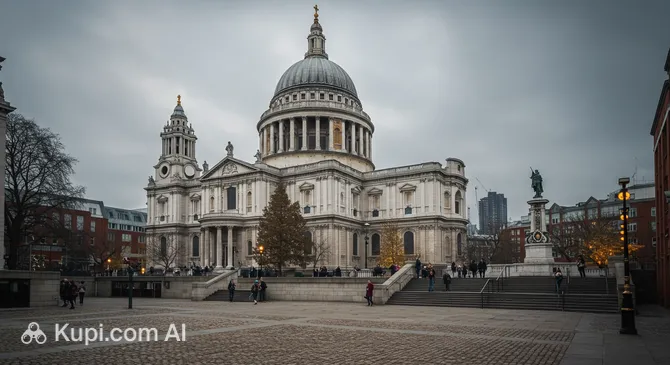
St. Paul's Cathedral. Illustration.
Source: Kupi.com AI

Traveler photos:

For tourists, the cathedral is not only an active religious center but also a unique historical and architectural monument. A visit to St. Paul's Cathedral offers the opportunity to admire its interior decor, climb to the famous \"Whispering Gallery\" under the dome, and enjoy panoramic views of the modern metropolis from its observation decks.

Contacts

For the most up-to-date information regarding opening hours, ticket prices, and special events, it is recommended to consult official sources. You can reach out to the cathedral's visitor support team using the contact details provided below.

How to contactContact
AddressSt. Paul's Churchyard, City of London, London EC4M 8AD, UK
Phone number+44 20 7246 8350
Websitewww.stpauls.co.uk

What to Do

A visit to St. Paul's Cathedral offers a wealth of experiences. Once inside, you can examine its majestic interior in detail, adorned with luxurious plasterwork, mosaics, and stained glass. Organ concerts and special events are often organized for visitors, and interactive exhibits detailing the cathedral's rich history and architectural features are also available. This is a great opportunity not only to enjoy the beauty but also to gain a deeper understanding of the site's significance.

One of the main adventures for guests is climbing the famous dome. The ascent consists of several stages and offers unique opportunities. First, you will reach the Whispering Gallery, where, thanks to unique acoustics, a word whispered against one wall can be clearly heard at the opposite side, more than 30 meters away. Climbing higher, you will find yourself at the Stone and Golden Galleries, which provide some of the best panoramic views of London.

Equally interesting is a descent into the crypt—the largest in Europe—where the remains of many prominent Britons rest. Here you will find the tombs of Admiral Horatio Nelson, the Duke of Wellington, and the cathedral's architect himself, Sir Christopher Wren. His tombstone bears the famous Latin epitaph: 'Reader, if you seek his monument, look around you.'

Getting There

St. Paul’s Cathedral is located in the heart of London, making it easily accessible for tourists. Thanks to an excellent public transport system, reaching this iconic landmark is straightforward. Using public transport is highly recommended, as car parking in the city center is very limited and expensive.

The most convenient way to reach the cathedral is via the London Underground. The nearest station, St. Paul’s, is on the Central line, and its exit is situated almost right at the cathedral's walls. Additionally, numerous city buses stop in the immediate vicinity, allowing you to choose the most convenient route from anywhere in the city.

For those who prefer walking, a stroll to the cathedral can be a pleasant part of your tour, as it is close to other key attractions in the City of London. If you are traveling by bicycle, dedicated parking spaces are available nearby. As an alternative to a private car, you can always use taxi or ride-sharing services, which will comfortably take you right to the entrance.

Nearest city: London

History & Facts

The history of St. Paul's Cathedral dates back centuries, long before its famous dome appeared on the London skyline. Five different churches have stood on this site since the 7th century. The first, made of wood, was built in 604 AD, but like its successors, it could not withstand Viking raids and frequent fires. Its predecessor, known as Old St. Paul's, was one of the largest cathedrals in Europe until it was destroyed by the Great Fire of London in 1666.

The current building, a symbol of the city's rebirth, was constructed between 1675 and 1708. The project was entrusted to the outstanding architect Sir Christopher Wren, who dedicated 33 years of his life to this work. The cathedral became Wren's masterpiece and one of the key monuments of 17th-century English architecture, embodying the spirit of a new era after one of the most tragic events in the history of Great Britain.

Christopher Wren’s architectural solution was truly innovative for its time. He proposed a bold synthesis of the traditional basilica plan typical of English churches and a majestic central dome. In creating this masterpiece, Wren drew inspiration from the world's greatest architectural wonders—the Pantheon in Rome and St. Peter's Basilica. The result was a unique and harmonious design that continues to awe visitors from all over the world.

Time Needed

When planning a visit to St. Paul's Cathedral, you should expect a full tour to take an average of one and a half to two hours. This is generally enough time to leisurely explore the main area of the church, descend into the crypt, and climb to the famous galleries beneath the dome. Some sources recommend allowing up to three hours for a more immersive experience.

The duration of your visit may vary depending on your interests. If you are short on time, you can spend about an hour seeing the main nave, the altar area, and the impressive mosaics. However, to get the full experience, it is highly recommended to set aside time to climb the dome. The journey to the Golden Gallery, which includes stops at the Whispering and Stone Galleries, as well as a visit to the crypt containing the graves of prominent figures, takes up the bulk of the time.

Working Hours

St. Paul’s Cathedral is open for sightseeing from Monday to Saturday, though opening hours may vary slightly depending on the day of the week. Generally, the cathedral opens for sightseeing at 8:30 AM on Mondays, Tuesdays, Thursdays, Fridays, and Saturdays. On Wednesdays, the cathedral begins welcoming visitors a bit later—from 10:00 AM. Last entry for tourists is usually at 4:00 PM, and the cathedral itself closes at 4:30 PM. Sunday is entirely dedicated to worship services, and sightseeing tours are not conducted on this day.

For your convenience and to save time, it is highly recommended to purchase tickets in advance online. It is also worth noting that the famous dome galleries may open slightly later than the main entrance. As St. Paul's Cathedral is an active place of worship, its schedule may change due to special services, ceremonies, or private events. Before planning your visit, be sure to check the official cathedral website for the most current information on opening hours to ensure your trip goes smoothly.

DayOpening hours
Monday8:30 – 16:30
Tuesday8:30 – 16:30
Wednesday10:00 – 16:30
Thursday8:30 – 16:30
Friday8:30 – 16:30
Saturday8:30 – 16:30
Sunday8:00 – 18:00

Nearby

After visiting St. Paul's Cathedral, don't rush to leave this historic area. A walk through its surroundings will allow you to dive deeper into the atmosphere of London and discover other iconic spots located just a stone's throw away. This district blends centuries-old history with the rhythm of modern life, offering travelers a wide range of experiences.

From ancient fortresses and bustling markets to modern observation decks and charming shopping quarters—everything is within walking distance. Exploring nearby attractions will not only enrich your trip but also help you gain a more complete understanding of the diverse character of the British capital.

NameDistance
Sky Garden1.1 km
Salsa Temple1.1 km
Tower of London1.7 km
Covent Garden1.7 km
Mercato Metropolitano1.7 km
The British Museum2.1 km
The National Gallery2.1 km

Have you reached the end of the page?

So the route has been studied inside and out