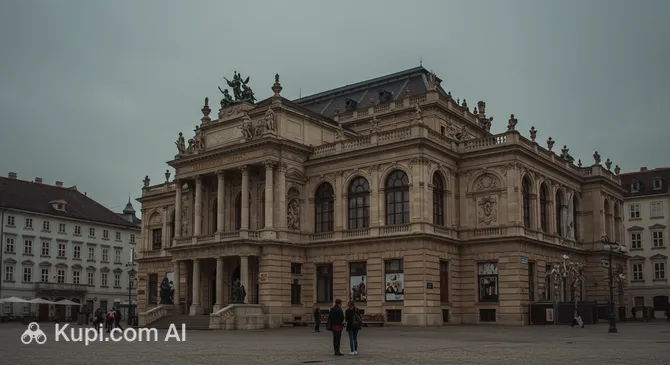
The history of the Graz Opera House is closely intertwined with the centuries-old history of Graz itself. The city, whose name comes from the Slavic word "Gradec" (meaning "small fortress") and was founded as early as the 6th century, had become an important trade center and the capital of Styria by the 12th century. This early development and the city's significance created fertile ground for arts and culture to flourish, eventually leading to the creation of such a prominent institution as the opera house.
The building of the modern Graz Opera House has its own significant history. It was officially opened in 1899, becoming one of the most beautiful theaters of its time. The design of this magnificent Neo-Baroque structure was developed by the famous Viennese architectural firm Fellner & Helmer, renowned for their numerous theater buildings across Central and Eastern Europe. This fact underscores Graz's aspiration for cultural leadership at the turn of the century.
The Habsburg dynasty, under whose rule the city remained since 1282, played a special role in the cultural development of Graz and, consequently, in supporting the theatrical arts. For centuries, Graz served as a residence for members of the imperial family. Their patronage and significant financial investments contributed not only to economic prosperity but also to the enrichment of cultural life, shaping the environment in which the Graz Opera House would later shine.
Despite various historical turmoils, including the difficult times of World War II when the opera building was damaged but subsequently restored, the Graz Opera House and the historic center of Graz have managed to preserve their unique character. Notably, the city's historic center, where the theater is located, suffered relatively little destruction overall. This preserved the unique architectural ensemble of Graz, recognized as a UNESCO World Heritage site, and ensured that the Graz Opera House could continue its activities surrounded by historic buildings, delighting art lovers to this day.