The Roman Theatre of Trieste is a majestic ancient architectural structure located in the heart of Trieste, in northeastern Italy. This ancient theater is one of the city's most significant historical monuments, drawing tourists with its rich history and impressive atmosphere of antiquity.
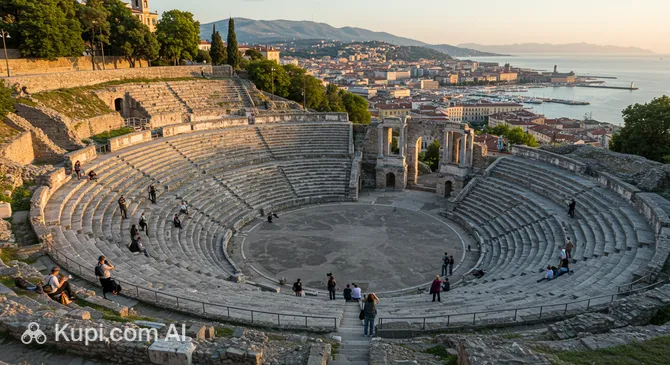
Traveler photos:
The theater was built at the end of the 1st century AD, presumably on the initiative and with the financial support of a local patrician, Quintus Petronius Modestus, whose name is mentioned in inscriptions found during excavations. Originally, it was located by the sea, which undoubtedly added to the spectacle of the performances and created a unique backdrop. Over time, due to changes in the coastline and urban expansion, the theater became embedded in the city's buildings but did not lose its grandeur.
The Roman Theatre of Trieste is a classic example of Roman theatrical architecture. Unlike many Greek theaters, which were often carved into natural hillsides, this was a free-standing stone structure. Its structure reflects the typical features of Roman engineering of that period, when theatrical buildings evolved from temporary wooden stages to monumental stone complexes. It is estimated that the theater could accommodate several thousand spectators.
Today, visitors can see the well-preserved parts of the semi-circular arena (orchestra), the lower tiers of the seating area (cavea), and the remains of the stage wall (scaenae frons). Exploring the ruins of the Roman Theatre is a true plunge into the past of Trieste, allowing you to touch history and imagine the cultural life of the ancient city. This site not only tells the story of Italy's Roman heritage but also serves as a stunning contrast to modern urban life.