Support

Basilica of Saint Anthony of Padua

About

The Basilica of Saint Anthony is not just the main church of Padua, but one of the greatest spiritual and cultural centers of all Italy. This Papal basilica, which locals affectionately call simply "Il Santo" (The Saint), is one of the most visited Christian shrines in the world, attracting millions of pilgrims and tourists every year. Its construction began in 1232, just one year after the death of Saint Anthony of Padua, and continued until 1310. The church was built to serve as the final resting place for the relics of this revered saint.

The exterior of the basilica captures the imagination with its eclecticism, harmoniously blending several architectural styles. The building's massiveness and its facade reflect the Romanesque style, the high apses and interior layout are Gothic, while the eight domes are reminiscent of Byzantine traditions, evoking associations with St. Mark's Basilica in Venice. Two elegant bell towers, resembling minarets, add a unique touch to the silhouette. This mix of styles reflects the long history of the church's construction and modifications, creating a unique and memorable architectural ensemble.
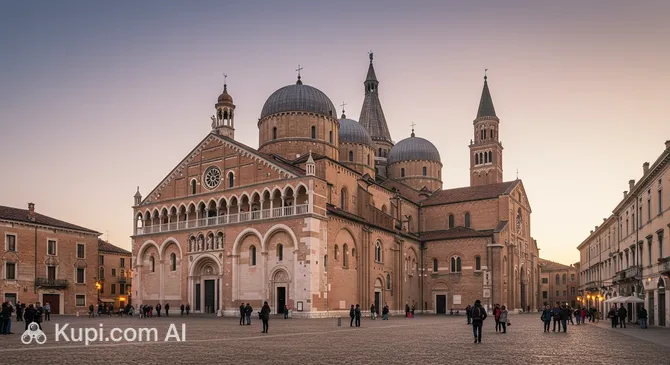
Basilica of Saint Anthony of Padua. Illustration.
Source: Kupi.com AI

Traveler photos:

The interior of the basilica is no less impressive. Its space is decorated with masterpieces by great masters, including sculptures by Donatello that adorn the high altar and works by Titian. However, the main shrine attracting pilgrims is the Chapel of the Relics. This Baroque-style chapel, designed by architect Filippo Parodi, houses the incorrupt relics of Saint Anthony. Among them are his tongue and jawbone, placed in precious reliquaries. A visit to the basilica is an opportunity not only to touch an important page of history and faith but also to see outstanding works of art.

Beyond its spiritual significance, the basilica is a true work of art. Its interior space is divided into three naves by majestic columns, and numerous chapels house Renaissance frescoes and sculptures. For example, the Chapel of Saint James is decorated with valuable frescoes, and the high altar is a masterpiece by Donatello. The Basilica of Saint Anthony is a place where history, faith, and art merge together, leaving a deep impression on every visitor.

Contacts

For any inquiries regarding visiting the Basilica of Saint Anthony, organizing tours, or the schedule of services, you can contact the church's information office. Staff will provide all the necessary information for pilgrims and tourists.

How to contactContact
AddressPiazza del Santo, 11, 35123 Padova PD, Italy
Phone number+39 049 822 5652
Websitewww.santantonio.org

What to Do

A visit to the Basilica of Saint Anthony is a deep and multifaceted experience available to both pilgrims and art lovers. The central point of attraction is the Chapel of the Ark (Cappella dell'Arca), where the tomb of the saint himself lies. This is the spiritual heart of the basilica, created in the 16th century. Here, visitors can see nine magnificent marble bas-reliefs depicting scenes from the life and miracles of Saint Anthony. Many pilgrims and tourists approach the tomb in silence to touch the green marble slab with their palm and immerse themselves in silent prayer or reflection—this is one of the most touching traditions of the place.

The Chapel of the Relics, also known as the Treasury Chapel, is equally impressive. It is a true Baroque masterpiece designed in the 17th century by Filippo Parodi. It is here that the most revered relics associated with Saint Anthony are kept. In precious reliquaries, which are masterpieces of the jeweler's art, you can see the saint's incorrupt tongue and jawbone. In addition to the main relics, the chapel also displays other valuables, including gifts presented to the saint as a sign of gratitude for miracles.

For lovers of Renaissance art, the main treasure of the basilica is the high altar, created by the great Florentine sculptor Donatello in the mid-15th century. Although the original composition was altered, today you can see a grand reconstruction including seven bronze statues of saints surrounding the Madonna and Child, and famous reliefs depicting the miracles of Saint Anthony. By examining these expressive sculptures, you can appreciate the craftsmanship that forever changed the course of European art.

Beyond the main shrines, it is worth spending time in other parts of this vast complex. Look into the Chapel of the Black Madonna—the oldest part of the church, a former church that was incorporated into the basilica. After exploring the richly decorated interiors, relax in one of the four serene monastery courtyards (cloisters). These quiet, arcade-lined spaces, where prominent residents of the city of Padua were once buried, allow you to catch your breath and fully experience the atmosphere of peace that reigns in this iconic place for all of Italy.

Getting There

Getting to the Basilica of Saint Anthony, located in the heart of Padua, is quite simple thanks to its central position and convenient transport links. For travelers arriving in Italy by train, the main entry point to the city is Stazione di Padova. From here, you can reach the basilica on foot in 25–30 minutes, enjoying views of the historic center along the way. This route passes through picturesque streets and squares, allowing you to immediately immerse yourself in the city's atmosphere.

If you prefer public transport, you can quickly reach the basilica from the station by tram or bus. The most convenient option is to take the SIR1 monorail tram heading south (towards Guizza) and get off at the "Santo" stop, which is located right by the cathedral. Numerous city buses also run to the basilica, including routes 3, 12, and 18, which stop nearby. The journey by public transport takes no more than 10–15 minutes.

Travelers arriving by car should note that the basilica is located within a Limited Traffic Zone (ZTL), where entry for non-residents is prohibited during certain hours. The best solution is to leave your car in one of the paid parking lots outside this zone. A large and convenient parking area is located at Prato della Valle (you can set the entrance address in your navigator: via LVIII Cavalleria 1), from where the basilica is just a few minutes' pleasant walk. This way, you can avoid fines and enjoy your visit to the shrine without rushing.

Nearest city: Padua

History & Facts

The history of the Basilica of Saint Anthony is inextricably linked with the miracles attributed to the saint. Construction began in 1232, just one year after his death, which testifies to the incredible veneration he enjoyed. One of the most intriguing details is the amazing story associated with the temple's main relic: the saint's incorrupt tongue. According to tradition, when his tomb was opened in 1263, 32 years after his passing, his body had decayed, but his tongue—the instrument of his fiery sermons—was found completely intact. For believers, this became a sign of divine recognition of his gift of eloquence.

Beyond its religious significance, the basilica is an important witness to the Renaissance. Right in front of the church stands one of the world's most famous equestrian statues—the monument to the condottiero Gattamelata, created by the great sculptor Donatello in the mid-15th century. It was one of the first large-scale bronze monuments since antiquity. Gattamelata, whose real name was Erasmo da Narni, was a famous military commander in the service of the Republic of Venice. His tomb is located inside the basilica itself, closely intertwining the shrine's history with the military and political life of Padua and all of Italy.

Another noteworthy fact is the church's special status. The Basilica of Saint Anthony is a Papal Basilica, meaning it is directly subject to the Holy See in Rome rather than the local diocesan bishop. This status underscores its international significance for the entire Catholic world. Each year, the shrine is visited by more than 6.5 million pilgrims, making it one of the most revered Christian centers on the planet. Thus, the basilica is not just an architectural monument, but a place where history, faith, and art create a unique and unforgettable atmosphere.

Time Needed

When planning a visit to the Basilica of Saint Anthony, it is worth setting aside 1.5 to 3 hours. This will be enough time for most visitors to unhurriedly see the main treasures and shrines of the church. In an hour and a half, you can get a general overview: walk through the majestic naves, see the saint's tomb in the Chapel of the Ark, look into the famous Chapel of the Relics, and appreciate the grand altar by Donatello. Such a tour will allow you to feel the grandeur of this unique place.

However, if you are an admirer of Renaissance art or wish to dive deeper into the spiritual atmosphere, your visiting time can easily increase to 3 hours or more. A detailed study of the numerous chapels with their frescoes and sculptures, as well as a visit to the adjacent museums (for an additional fee), will require extra time. It is also worth allowing time for a walk through the peaceful monastery courtyards. Pilgrims often spend more time here, dedicating it to prayer and reflection at the shrines.

Thus, for a brief introduction to the basilica in the city of Padua, an hour and a half is sufficient, but for a full immersion in its history, art, and spiritual life, it is better to plan at least 2–3 hours. Keep in mind that during peak tourist seasons or major religious holidays in Italy, the basilica can be crowded, which may also slightly increase the time needed for exploration.

Working Hours

The Basilica of Saint Anthony in Padua is open to visitors year-round; however, operating hours vary by season. During standard (winter) time, the church is open daily from 6:20 AM to 7:00 PM. With the transition to daylight saving time, the basilica stays open longer—from 6:20 AM to 7:45 PM. Entrance to the basilica itself is free, and for individual visits, advance booking is generally not required.

If you plan to visit the basilica as part of a group or wish to book a tour, it is recommended to contact the church's information office in advance for details and possible reservations. Since the schedule of services can affect access to certain parts of the church, it is always useful to check current information on the official website of the Basilica of Saint Anthony before your visit, especially if your trip coincides with major religious holidays.

6:15 – 19:30

Nearby

After exploring the majestic Basilica of Saint Anthony, don't be in a hurry to leave the area. The surroundings of the church are no less interesting and are filled with historical and cultural treasures that will perfectly complement your experience of Padua. A short walk will allow you to discover other iconic spots in the city, each possessing its own unique atmosphere.

The area around the basilica is the heart of the historic center, where you can find monuments of art and architecture at every turn. Below is a list of attractions located in the immediate vicinity of the church, with distances provided for your convenience in planning your route through this wonderful corner of Italy.

NameDistance
Equestrian Statue of Gattamelata0.1 km
Museum of the History of Medicine in Padua0.4 km
Prato della Valle0.5 km
Otium Bar Restaurant Pizzeria Lunch Café0.5 km
Jewish Ghetto of Padua0.6 km
Palazzo Zabarella0.6 km
Basilica of Saint Justina0.6 km

Have you reached the end of the page?

So the route has been studied inside and out