Support

Padua Cathedral

About

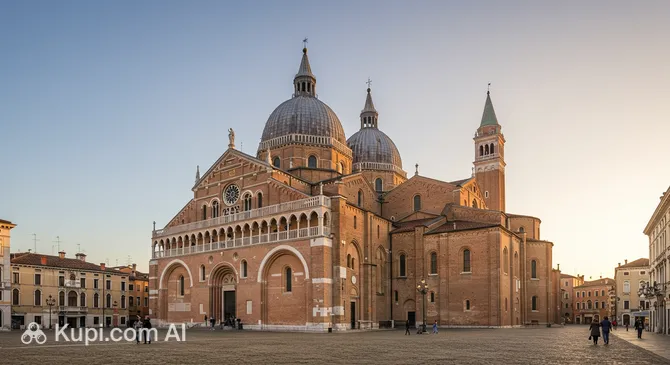
The majestic Padua Cathedral, officially known as the Cathedral Basilica of Saint Mary of the Assumption, is the spiritual heart of the city and the seat of the local bishop. Located in ancient Padua, this church beautifully represents Italy as a treasure trove of Renaissance art and centuries of history. Despite its facade remaining unfinished to this day, the cathedral impresses with its monumentality and austere classical appearance.
Padua Cathedral
Padua Cathedral. Иллюстрация. Источник: Kupi.com AI

The building we see today was begun in the mid-16th century on the site of ancient Christian churches, the first of which stood here as early as the 4th century. The architectural ensemble harmoniously combines elements from different eras: from Romanesque roots to Baroque additions and elegant elliptical domes. This site is not just a place of worship but a true open-air museum, housing priceless relics and works of art.

Special significance is added to the cathedral by its proximity to the ancient baptistery, which preserves unique medieval frescoes illustrating not only biblical stories but also the appearance of the city in past centuries. The Cathedral of Saint Mary of the Assumption is a place where the destinies of saints, bishops, and great architects intertwine, creating a unique atmosphere of tranquility and spiritual grandeur in the heart of a bustling city.

Contacts

To confirm Mass times or organize special visits, you can use the official communication channels. The cathedral is managed by the local diocese, and its staff is always ready to help visitors find their way and understand the visitation rules.

Below are the current contact details to help you plan your visit to this architectural landmark.

How to contactContact
AddressPiazza Duomo, 35139 Padova PD, Italy
Phone+39 049 662814
Websitewww.diocesipadova.it

What to Do

Inside Padua Cathedral, visitors are greeted by a harmonious interior where light and space prevail. The first thing to notice is the central nave with its majestic domes and graceful columns. Walking through the side aisles, take a look at the chapels of Saint Gregory Barbarigo and Saint Lorenzo Giustiniani, which are famous for their rich decoration and peaceful atmosphere, perfect for reflection.

A mandatory part of the visit is the cathedral's crypt—the Chapel of the Holy Cross, located under the presbytery. Here you can see ancient sarcophagi and altars, and touch the earliest history of the temple by exploring traces of Lombard workshops and the foundations of the first buildings. Archaeology enthusiasts will be interested in seeing fragments of ancient mosaics discovered during excavations north of the baptistery.

Don't forget to step out into the square to appreciate the contrast between the rugged brick facade and the elegant rose window, restored after the events of the First World War. If you have time left, be sure to visit the adjoining Bishop's Palace and the baptistery, where frescoes by Giusto de' Menabuoi literally bring the history of Christianity to life in the vibrant colors of the 14th century. This visit will give you a complete picture of the city's religious and artistic heritage.

Getting There

Once you are in charming Padua, finding the cathedral is easy, as it is located in the square of the same name in the historical center. If you arrive at the Padova Centrale main station, a pleasant walk to the landmark takes about 20 minutes through the picturesque streets of Corso Garibaldi and Via del Santo. For those who prefer comfort and speed, local taxis are always available and can take you to Piazza Duomo in just 5–10 minutes.

The city's public transport is also well-developed: buses No. 3, 12, 18, and 22 run regularly from the station toward the center. You should get off at the Duomo stop, which is in the immediate vicinity of the cathedral entrance. Additionally, you can use the Sir1 tram line to the Capolinea Sud station and then walk a bit, enjoying the atmosphere of the old quarters.

For travelers with a private or rented car, please note that the cathedral is located in a Limited Traffic Zone (ZTL). It is recommended to leave your car in one of the park-and-ride lots, for example, in the Prato della Valle area, and continue on foot or by electric scooter, which are very popular in this part of the city.

Ближайший город: Padua

History & Facts

The history of the main cathedral of Italy in this region dates back to deep antiquity, beginning shortly after the Edict of Milan in 313. The first cathedral building survived for centuries but was almost completely destroyed by the catastrophic earthquake of 1117. This event forced the citizens to build a new Romanesque basilica, which served as the city's spiritual center for a long time before giving way to a larger project.

The modern appearance of the cathedral is the result of an ambitious Renaissance reconstruction started in 1551. There is a long-standing legend that the project was designed by Michelangelo himself, though modern historians tend to view this as a beautiful myth. Outstanding masters such as Andrea della Valle and Giovanni Glori participated in the construction, which stretched over two centuries, finally being completed in the mid-18th century.

One of the cathedral's most notable features remains its unfinished facade. Although the main building was officially consecrated in 1754, the exterior decoration of the main entrance was never finished, giving the temple an austere yet majestic look. Archaeological excavations conducted inside and near the cathedral have revealed unique 4th-century mosaics and remains of ancient foundations, confirming the continuous religious significance of this site for over 1,500 years.

Time Needed

To fully appreciate the grandeur of Padua Cathedral and examine its architectural features in detail, the average tourist will need about 1–1.5 hours. This is enough time to leisurely stroll through the spacious naves, descend into the crypt, and appreciate the scale of the dome built in the 18th century. If you plan to visit the adjacent baptistery with its famous frescoes, you should add at least another half hour to your visit.

For those who want to combine a tour of the cathedral with a walk around Piazza Duomo and a visit to the Bishop's Palace, we recommend setting aside at least two hours for this area of the city. This will allow you to immerse yourself in the atmosphere of the city's religious center without rushing and take memorable photos of the facade, which looks particularly striking in natural daylight.

Working Hours

The doors of Padua Cathedral are open to worshippers and tourists daily, making it easy to fit a visit into any itinerary. The church's schedule is fairly consistent:

  • Monday – Saturday: 07:30 to 19:30
  • Sunday: 08:00 to 21:00

Please note that during holiday services or solemn Masses, access to certain parts of the cathedral, such as the presbytery or the crypt, may be temporarily restricted for sightseeing. It is recommended to remain quiet and show respect to those praying.

DayWorking hours
Понедельник7:30 – 19:30
Вторник7:30 – 19:30
Среда7:30 – 19:30
Четверг7:30 – 19:30
Пятница7:30 – 19:30
Суббота7:30 – 19:30
Воскресенье8:00 – 21:00

Nearby

Exploring the surroundings of the cathedral allows for a deeper dive into the city's cultural layers, as a historical monument is hidden around almost every corner. While walking through the streets of Padua, you will find that many iconic sites are within walking distance of each other.

Central squares and ancient palaces form a unified architectural ensemble that is especially beautiful in the rays of the setting sun. Below are the most interesting sites located near the Padua Cathedral:

NameDistance
Clock Tower0.1 km
Piazza dei Signori0.2 km
Piazza della Frutta0.3 km
Jewish Ghetto of Padua0.3 km
Palazzo della Ragione0.3 km
All'Ombra Della Piazza0.3 km
Palazzo Bo0.4 km

Reached the end of the page?

That means the route is fully explored