Support

Palazzo Zabarella

About

In the heart of the historic center of Padua stands the magnificent Palazzo Zabarella. This unique structure is a medieval palace-fortress that served as the residence of the noble Zabarella family for centuries. The building is easily recognizable by its characteristic crenelated roof and austere corner tower, reminiscent of times when architecture had to be defensive as well as beautiful.
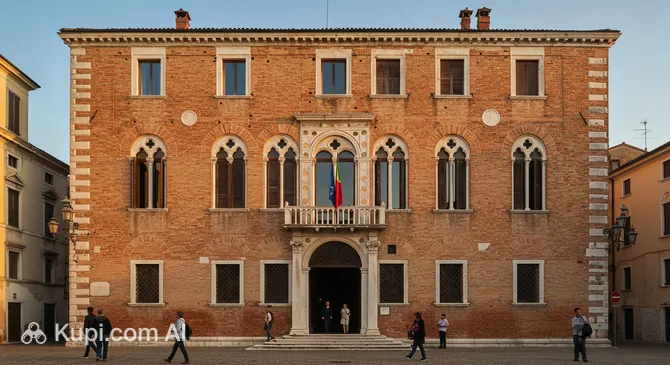
Palazzo Zabarella
Palazzo Zabarella. Иллюстрация. Источник: Kupi.com AI

Today, this historic landmark in Italy has been transformed into a dynamic cultural center. As the headquarters of the Bano Foundation, the palace attracts thousands of art lovers every year with its high-profile art exhibitions. The architectural style of Palazzo Zabarella is a striking blend: from the rugged medieval era to the elegant neoclassical facade designed in the 19th century by architect Daniele Danieletti.

Inside, guests will find not only masterpieces of painting but also genuine archaeological treasures. During restoration, the ruins of ancient Roman buildings were discovered beneath the palace floors, and today they sit harmoniously alongside refined interiors and the classical colonnades of the atrium. This is a place where history literally has its roots in antiquity while remaining a key point on the cultural map of modern Europe.

Contacts

For more information on current exhibitions and to plan your visit, you can use the following contact details:

How to contactContact
AddressVia Zabarella, 14, 35121 Padova PD, Italy
Phone+39 049 875 3100
Websitewww.zabarella.it

What to Do

The main reason to visit Palazzo Zabarella is its world-class temporary art exhibitions. Here, you can see canvases by world-renowned masters, with the displays being regularly updated to feature both classical and contemporary art. Keep an eye out: the palace halls themselves are decorated with magnificent frescoes by artists such as Francesco Hayez and Giovanni Carlo Bevilacqua.

Be sure to notice the architectural details: the massive masonry of the 12th-century medieval tower and the austere elegance of the neoclassical staircase and foyer. The courtyard with its colonnade is the perfect place to soak up the atmosphere of an old Italian residence. History buffs will be impressed by the archaeological excavations integrated into the museum space: fragments of Roman mosaics and foundations can be seen through special designated areas.

Beyond the exhibitions, the palace often hosts cultural evenings, lectures, and classical music concerts. This is a great opportunity to see the building "in action" and immerse yourself in the intellectual atmosphere of Padua. Before leaving, don't forget to stop by the souvenir shop, where you can often find exclusive catalogs for current exhibitions.

Getting There

Getting to Palazzo Zabarella is quite simple, as it is located in the heart of the historic center. If you arrive at the Padua railway station, the walk to the palace takes about 10–15 minutes. The route leads through picturesque city neighborhoods, which in itself is a pleasant start to your tour.

For those who prefer public transport, city buses serving stops in the central part of the city are a good option. You can also take a taxi or use a rental bike — Padua is famous for its convenient bike paths. Navigator coordinates: 45.406283° N, 11.879276° E.

If you are traveling by car, keep in mind that the palace is located in a ZTL (Limited Traffic Zone). The narrow old streets are not always convenient for driving, so it is better to leave your car at one of the parking lots outside the historical core and continue on foot, heading towards the Via San Francesco area.

Ближайший город: Padua

History & Facts

The history of this site dates back to deep antiquity: archaeologists have discovered traces of settlements here as far back as the 8th century BC. During the Roman Empire, crafts flourished on this plot, as evidenced by the fragments of mosaic floors and frescoes of ancient Patavium discovered here.

The architectural appearance of the palace itself began to take shape in the late 12th and early 13th centuries when the influential Zabarella family built a powerful tower and the main wing here. For four centuries, the palace served as a symbol of their power. Among the most famous representatives of the lineage was Cardinal Francesco Zabarella, who lived at the turn of the 14th and 15th centuries.

The building's appearance changed with the eras. In the 17th century, it underwent a major reconstruction under the direction of Tommaso Sforzana, and in 1802, Giacomo Zabarella updated the interiors in an exquisite neoclassical style. In the 20th century, the building served as both a bank office and even part of the famous Caffè Pedrocchi's casino.

The palace's modern life began in the 1980s when patron Federico Bano initiated a global restoration. Thanks to his efforts, between 1988 and 1996, the dilapidated building was transformed into a first-class cultural center while preserving a unique layering of eras from antiquity to the present day.

Time Needed

To leisurely browse the current art exhibition and admire the architectural details of the building itself, visitors usually need 1 to 2 hours. This is enough time to walk through the halls, examine the archaeological finds, and take a look at the inner courtyard.

If you plan to visit a temporary exhibition with an audio guide or take part in one of the cultural events, it's worth setting aside a bit more time. A visit to Palazzo Zabarella fits perfectly into a walking route through the city center, allowing for visits to nearby attractions.

Working Hours

Please note that Palazzo Zabarella may be temporarily closed to visitors between exhibition projects. The cultural center's operating hours depend directly on the schedule of current events and exhibitions.

Typically, the palace doors are open to visitors from Tuesday to Sunday, from 10:00 AM to 6:00 PM. However, before your visit, we strongly recommend checking the current schedule on the official website or by calling to ensure that tours are taking place on your chosen day.

Nearby

A walk around Palazzo Zabarella will allow you to see many iconic sites in a single day. The city's historic center is very compact, and an architectural masterpiece or a cozy square with centuries of history hides around literally every corner.

Check out the list of interesting sites located in the immediate vicinity:

NameDistance
Museum of the History of Medicine in Padua0.1 km
Palazzo Bo0.2 km
Pedrocchi Café0.2 km
Piazza della Frutta0.3 km
Jewish Ghetto of Padua0.3 km
Otium Bar Restaurant Pizzeria Lunch Café0.3 km
Palazzo della Ragione0.3 km

Reached the end of the page?

That means the route is fully explored