Support

Piazza dei Signori

About

Piazza dei Signori is one of the most elegant and significant historical squares, located in the very heart of the ancient city of Padua in Italy. For centuries, it served as the center of social life, a venue for official ceremonies and knightly tournaments, in contrast to the neighboring market squares. This is an iconic place where architectural monuments of different eras harmoniously intertwine, creating a unique atmosphere.
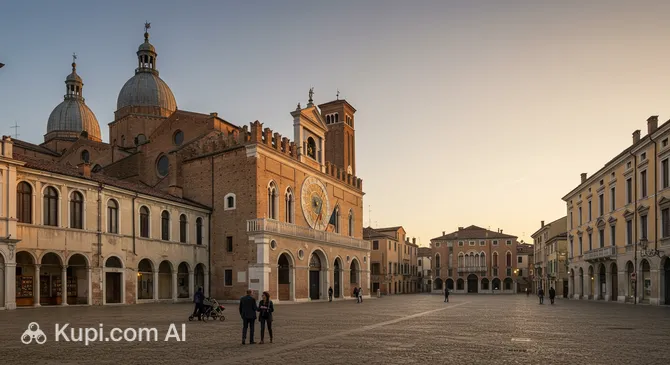
Piazza dei Signori. Illustration.
Source: Kupi.com AI

Traveller photos:

Emerging in the 14th century, the square has retained the special charm of the Middle Ages and the Renaissance. Walking through it, you will feel the spirit of history lingering around the old buildings. Today, Piazza dei Signori is not only a historical monument but also a popular spot for meetings, walks, and various city events, attracting both tourists and locals alike.

The main landmark and symbol of the square is the famous Clock Tower (Torre dell'Orologio), built in the Middle Ages. The tower features a unique astronomical clock that shows not only the time but also the positions of the planets and the phases of the moon. This 14th-century masterpiece of engineering still amazes with its complexity and beauty, serving as the true heart of Piazza dei Signori.

Contacts

Piazza dei Signori is a public space and is open to visitors 24/7. As it is a central city square, it does not have a specific contact phone number or email address. It is located in the heart of the historic center of Padua at Piazza dei Signori, 35139 Padova, and is easily accessible on foot from most of the city's other key attractions.

How to contactContact
AddressPiazza dei Signori, 35139 Padova PD, Italy
Websitewww.padovanet.it

What to Do

Visiting Piazza dei Signori means immersing yourself in the lively atmosphere of Padua's historic center. The main activity here is a leisurely stroll, during which you can admire the elegant facades of ancient buildings, such as the Palazzo del Capitanio and the Loggia del Consiglio. The main magnet for tourists is undoubtedly the majestic Clock Tower. Coming closer, you can see in detail the unique astronomical clock created in the 14th century, which still shows not only the time but also the phases of the moon and the signs of the zodiac.

Piazza dei Signori is not just an open-air museum, but the true heart of the city's social life. The square regularly becomes a stage for various events: from colorful fairs and farmers' markets to city festivals, concerts, and street performances. During the day, trade is in full swing here, and on summer evenings the space fills with the sounds of music, creating a festive mood. By visiting the square, you can observe the daily life of Paduans and feel the dynamic rhythm of modern Italy.

After your walk and sightseeing, you can relax in one of the many cafes or restaurants located around the perimeter of the square. Sitting at an outdoor table, it's pleasant to have a cup of coffee or enjoy local cuisine while watching the world go by. As twilight falls, Piazza dei Signori is transformed: beautiful lighting comes on, highlighting the architectural details and creating a unique romantic atmosphere, perfect for evening walks and memorable photos.

Getting There

Piazza dei Signori is conveniently located in the heart of Padua's historic center, making it very accessible for tourists. Most of the city's key attractions are within walking distance, so the simplest and most pleasant way to reach the square is a leisurely stroll. For example, the walk from Padua's main train station takes just 15–20 minutes on foot.

If you prefer public transport or are coming from more distant parts of the city, there is a convenient network of city buses and trams at your service. Many routes pass through the center; you will need to get off at one of the stops located in the immediate vicinity of Piazza dei Signori, such as Ponti Romani. This is a fast and economical way to reach your destination while avoiding potential traffic jams.

For travelers arriving by car, it is important to note that traffic and parking in the historic part of Padua, where the square is located, are strictly restricted (the so-called ZTL zone). To avoid fines and the hassle of finding a spot, it is recommended to leave your car in one of the many parking lots outside the city center, for example, near the station or Prato della Valle, and continue on foot or by public transport. This approach will allow you to enjoy a walk through the ancient quarters without any extra stress.

Nearest city: Padua

History & Facts

The history of Piazza dei Signori is inextricably linked with the ruling Carrara dynasty, which initiated a large-scale reconstruction of the city of Padua in the 14th century. At the behest of Lord Ubertino da Carrara, the square was intended to be a ceremonial space for official ceremonies, knightly tournaments, and public assemblies. Its creation was part of a grand project that included the construction of the tower at the Reggia palace, emphasizing the grandeur and authority of the city's rulers.

However, the square's fate was not always smooth. At the end of the 14th century, it suffered serious damage during a fierce conflict between the Carrara and Visconti families; this period even went down in history as the "period of devastation." It was only in the 15th century, with the arrival of the Venetians, that its revival began. The square was meticulously restored and once again became the main center of the city's social life, hosting lavish weddings, concerts, and other important city events.

One of the most prominent symbols of the square is the Clock Tower (Torre dell'Orologio), built in the first half of the 14th century. It is adorned with a unique astronomical clock—a true masterpiece of engineering and artistic thought, designed by Jacopo Dondi. The original mechanism was damaged during a fire, but in 1436 the clock was restored, and since then, this complex and beautiful mechanism has continued to fascinate residents and visitors alike as the heart of Piazza dei Signori.

Time Needed

When planning a visit to Piazza dei Signori, you should allow between 30 minutes and an hour and a half. For a quick look, to take a few photos against the backdrop of the famous Clock Tower and simply feel the atmosphere of this historic site in Padua, half an hour will be enough. This time is sufficient to cross the square and get a general idea of its beauty and architectural ensemble.

If you want to explore the sights in more detail and soak up the spirit of the square, it is better to set aside at least an hour. This will allow you to examine the unique astronomical clock without rushing, admire the elegant facades of ancient palazzos, and experience the slow pace of life that Italy is famous for. And if you decide to relax in one of the cozy cafes overlooking the square, feel free to add at least another half hour to your visit for full immersion in the atmosphere.

Working Hours

Since Piazza dei Signori is a public city space, access to it is open 24 hours a day, year-round. You are free to stroll through it at any time of day or night, enjoying its atmosphere. No tickets or advance booking are required to visit the square itself—entry is absolutely free for everyone.

However, please note that individual buildings and attractions located on the square, such as the famous Clock Tower (Torre dell'Orologio) or the surrounding cafes and shops, operate on their own schedules. Their opening hours may vary depending on the season, so if you plan to visit a specific establishment or climb the tower, it is recommended to check for up-to-date information on official websites or at tourist information centers in Padua.

Open 24/7

Nearby

Visiting Piazza dei Signori is just the beginning of exploring Padua's rich historical heritage. To truly feel the spirit of the city, it is worth exploring its surroundings as well. Right next to the square are other iconic sites, each of which tells its own unique story and will complement your impressions, allowing you to form a more complete picture of the cultural and architectural diversity of Padua.

A walk through the neighboring streets and squares will give you access to true gems. Just a few steps away, majestic palaces, ancient churches, and lively markets await, having shaped the appearance of this amazing city for centuries. Exploring these places won't take much time but will significantly enrich your journey.

NameDistance
Clock Tower0.1 km
Palazzo della Ragione0.1 km
All'Ombra Della Piazza0.1 km
Piazza della Frutta0.2 km
Padua Cathedral0.2 km
Palazzo Bo0.3 km
Jewish Ghetto of Padua0.3 km

Reached the bottom of the page?

Looks like you know this route inside out