Support

Guapi

About

Guapi is a captivating town situated along the banks of the river that shares its name, nestled within the lush Pacific region of the Cauca department. Known for its rich cultural heritage and surrounding biodiversity, this municipality offers a unique glimpse into the vibrant life of Colombia's Pacific coast. With a population of approximately 24,000 inhabitants, it serves as a vital urban center in an area dominated by dense rainforests and winding waterways.

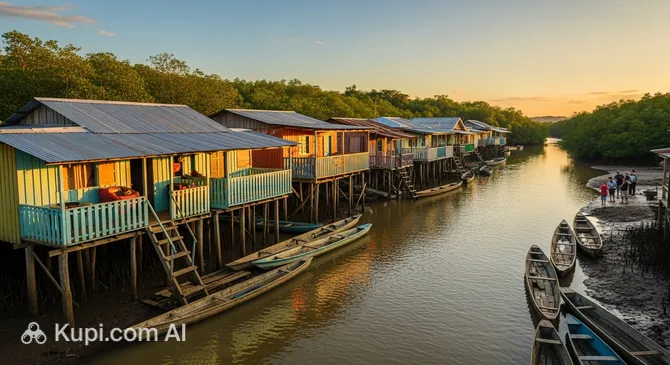
Guapi. Source: Kupi.Binoculars

The town is celebrated as a sanctuary of Afro-Colombian traditions, particularly renowned for its enchanting marimba music and traditional chants, which have been recognized by UNESCO. Delving into the history of Guapi reveals a community deeply connected to the rhythms of nature and the sea, where ancestral customs are proudly preserved. The atmosphere here is warm and welcoming, reflecting the spirited character of its people.

Travelers are often drawn to Guapi as the primary gateway to the spectacular Gorgona Island National Natural Park, a former prison turned eco-tourism paradise famous for whale watching and diving. Within the town itself, the riverside promenade offers a picturesque setting to enjoy fresh local cuisine, highlighting flavors of coconut and fresh seafood. Whether you are navigating the river on a traditional boat or listening to the soulful sounds of the marimba de chonta, Guapi promises an unforgettable adventure off the beaten path.

If you are seeking an authentic experience that combines pristine nature with profound cultural depth, Guapi invites you to explore its wonders. It is a destination that truly captures the magic of the Colombian Pacific.

Weather Overview

Guapi features a tropical climate characterized by very stable temperatures and high humidity throughout the year. The thermometer typically hovers around an average of 25°C, with daytime maximums reaching roughly 27°C and nighttime minimums staying comfortable near 23°C.

Due to its location in the Pacific region, precipitation is a defining characteristic of the local environment. When planning your trip and checking the weather in Guapi, you should expect frequent rainfall, as the area experiences between 27 and 31 wet days per month. While March sees the lowest accumulation of rain, months like May generally bring slightly higher precipitation levels, maintaining the region's lush and vibrant biodiversity.

Interesting Facts

Beyond its lush rainforests and riverbanks, Guapi preserves cultural treasures and historical curiosities that remain largely unknown to the average traveler.
  • The Floating Altars of the River: Every December, the town hosts the spectacular Balsadas tradition. Local families build elaborate, two-story wooden rafts on top of canoes, decorating them with lights and yellow corozo leaves. These illuminated floats drift down the river at night carrying statues of the Virgin Mary, accompanied by traditional music and fireworks, in a stunning display of faith and community that lights up the dark Pacific waters.

  • Home of the "Jungle Piano": Guapi is considered the heartland of the Marimba de Chonta, an instrument made from the wood of the chonta palm. The music produced here is so culturally significant that the traditional marimba chants of the South Pacific region were declared Intangible Cultural Heritage of Humanity by UNESCO. Locals say the instrument mimics the sounds of the rainforest and the sea.

  • Gateway to "Colombia's Alcatraz": This town serves as the main jumping-off point for reaching Gorgona Island. Before becoming a pristine National Natural Park famous for diving and whale watching, the island was a high-security prison for Colombia's most dangerous criminals. Today, nature has reclaimed the ruins, but the journey from Guapi still carries the mystique of traveling to a once-forbidden place.

  • The Matachines Festival: On December 28th, the Day of the Holy Innocents, the streets fill with "Matachines"—characters dressed in colorful, tattered costumes and masks. They carry whips and playfully chase residents in a tradition that blends satire with history, originally intended to mock the dress and manners of colonial ancestors and court officials.

How to Get There

Reaching Guapi is an adventure into the heart of the Colombian Pacific, a region known for its dense rainforests and winding rivers. Because the town is not connected to the country's interior by road, travel planning requires specific attention to air or river routes. You can find more about how to get to Guapi to choose the best itinerary for your trip.

The city of Guapi does not have a major international airport of its own; it is served by a small local airfield that receives connecting flights. Most travelers fly into Alfonso B. Aragon Airport (CLO) in the city of Cali, which is about 199 km away. As a major international hub, it offers the most reliable connections, and from there, you can take a direct flight to Guapi. Another option is Guillermo Leon Valencia Airport (PPN) in Popayán, located approximately 143 km from Guapi. While closer, this is a regional airport. It is important to note that due to the geography of the region, there is no overland transport (bus or taxi) from these cities to Guapi; a connecting flight is the standard method of travel.

For those already exploring the Pacific coast, La Florida Airport (TCO) in Tumaco is the closest facility listed, situated about 127 km away. However, travel from Tumaco to Guapi typically involves a scenic boat journey rather than a flight. Visitors should check schedules in advance, as connections in this remote region can be variable.

For clarity, here is a summary of the main airports in the wider region:

Airport Name City Passenger Traffic Km from City
Alfonso B. Aragon Airport Cali Large 199.0
Cano Airport Pasto Medium 146.1
Guillermo Leon Valencia Airport Popayán Medium 142.9
La Florida Airport Tumaco Small 127.2
San Luis Airport Ipiales Small 190.7

Main Attractions

While Guapi is often viewed as a transit point, the town and its immediate surroundings offer compelling experiences for travelers who appreciate nature and authentic culture. The destination is defined by its relationship with the water and the jungle, creating a unique set of attractions that revolve around eco-tourism and local heritage.

Gorgona National Natural Park is undoubtedly the region's crown jewel and the primary reason many tourists visit Guapi. Located approximately an hour and a half away by speedboat, this island was once a high-security prison but is now a pristine sanctuary for wildlife. It is one of the best places in the world for diving due to its rich coral reefs and marine life. Between July and October, it becomes a prime spot for watching humpback whales that migrate to these warm waters to give birth. Visitors can also explore the haunting ruins of the old penitentiary, which are slowly being reclaimed by the jungle.

Back on the mainland, the Guapi River Promenade (Malecón) serves as the social heart of the town. Walking along the riverbank offers a window into the daily life of the locals, where wooden canoes and speedboats constantly arrive and depart. It is an excellent place to witness spectacular sunsets over the water while enjoying the cool evening breeze. The promenade is lined with small shops and food stalls where you can sample local delicacies, such as coconut sweets and fresh seafood dishes that define the Pacific flavor.

In the center of town stands the Cathedral of San José, the most prominent architectural landmark in Guapi. Located on the main square, this church is not only a place of worship but also a gathering point for the community. Its structure is simple yet significant, reflecting the modest and resilient spirit of the town. During religious festivals and local celebrations, the square in front of the cathedral comes alive with music and processions, offering visitors a chance to see the deep-rooted traditions of the region.

For nature enthusiasts, a boat tour through the Mangrove Swamps surrounding the town is an unmissable activity. The intricate network of roots and waterways creates a mysterious and beautiful ecosystem that protects the coastline. Guided tours allow visitors to navigate these quiet channels, which are teeming with bird species, crabs, and mollusks (piangua). It is a peaceful escape that highlights the immense biodiversity of the Colombian Pacific coast just minutes from the urban center.

Local Cuisine

The cuisine of Guapi is a flavorful journey into the heart of the Colombian Pacific, where the bounty of the ocean meets the richness of the rainforest. The local gastronomy is heavily defined by the use of coconut milk and a unique blend of aromatic herbs grown in raised gardens known as azoteas, such as chillangua and pennyroyal. These ingredients create a distinctive, savory profile that transforms fresh catch from the river and sea into unforgettable meals.

Among the main dishes you must try is the famous encocado, a rich stew where fish, shrimp, or crab are simmered in a creamy, spiced coconut sauce. Another regional staple is the piangua, a black clam harvested by locals from the roots of the mangrove trees. It is often prepared in tamales or stewed with rice, offering a taste that is deeply connected to the local ecosystem. For a simpler but equally traditional meal, look for tapao de pescado, a hearty fish dish cooked with plantains that serves as a comfort food for many residents.

When it comes to beverages, Guapi offers tastes you will not find easily elsewhere. The region is the home of Viche, an ancestral alcoholic spirit distilled from sugar cane that holds deep cultural significance for Afro-Colombian communities. It is often used as a base for other drinks like arrechón or tumbacatre, which are mixed with spices and condensed milk. For a non-alcoholic refresher, try a glass of borojó juice, made from a nutrient-rich fruit native to the rainforest, often touted for its energizing properties.

The food culture here is informal, communal, and centered around freshness. You won't find many upscale restaurants; instead, the best food is often found in small, family-run establishments or stalls along the riverfront promenade. The local market is another hub where you can see the daily catch arriving and taste authentic home-style cooking. Dining in Guapi is about the experience of sharing a table near the water, accompanied by the warm hospitality of the locals who view cooking as an act of preserving their heritage.

Travel Tips

Visiting Guapi is a rewarding adventure that takes you off the standard tourist trail, so a little extra preparation goes a long way in ensuring a smooth trip. These practical tips are designed to help you navigate the unique environment of the Pacific coast and connect meaningfully with the local community.

  1. Clothing and Gear: Due to the high humidity and frequent rainfall, lightweight, quick-drying clothing is essential. Pack a sturdy rain poncho or waterproof jacket, as downpours can happen suddenly. Comfortable, non-slip walking shoes are a must, but if you plan to explore the mangroves or muddy trails, consider bringing or buying a pair of rubber boots (botas pantaneras), which are widely used by locals.

  2. Transportation: Within the town of Guapi, the most common way to get around is by mototaxi (motorcycle taxi) or three-wheeled tuk-tuks, as there are very few cars. For exploring the surrounding areas, beaches, or neighboring communities, river transport is the standard; small speedboats known as lanchas serve as the region's "buses." always agree on the fare before starting your journey.

  3. Finances: Cash is absolute king in Guapi. While some larger businesses might accept transfers, credit card terminals are rare to non-existent. There are very few ATMs in town, and they can occasionally run out of money or be out of service due to connection issues. It is highly advisable to withdraw sufficient Colombian Pesos (COP) in smaller denominations before you arrive.

  4. Health and Safety: Pharmacies are available in the town center for basic needs, but specific medications should be brought from home. Given the tropical rainforest climate, carrying strong insect repellent is crucial to protect against mosquito-borne illnesses. Always drink bottled or purified water, avoiding tap water to prevent stomach issues, and ensure you are up to date with vaccinations recommended for tropical zones, such as yellow fever.

  5. Communication: Spanish is the primary language spoken, and English is not widely understood. Learning a few basic phrases or downloading an offline translation app will be very helpful. Mobile signal can be spotty; the major operators (like Claro or Movistar) usually offer the best coverage, but be prepared for slower data speeds compared to major cities.

  6. Local Etiquette: The culture in Colombia's Pacific region is warm and communal. It is polite to greet people with a friendly "Buenas" when entering shops or passing by. The locals are proud of their Afro-Colombian heritage; always ask for permission before taking photographs of residents, especially during traditional celebrations or rituals, as a sign of respect.

  7. What to Avoid: Do not venture into isolated jungle areas or take boat trips without a trusted local guide. The tides significantly affect travel times and safety on the river, and local knowledge is indispensable for navigating these waters securely.

  8. Tides and Timing: Life in Guapi revolves around the river and the tides. If you are planning a boat trip to Gorgona Island or nearby mangroves, be aware that schedules often depend on the high tide. Ask the boat captains (lancheros) a day in advance about the best departure times to avoid getting stuck in low water.

By keeping these tips in mind, you will be well-equipped to embrace the laid-back rhythm and vibrant culture of Guapi. Enjoy the incredible music, the lush nature, and the genuine hospitality that make this corner of the Pacific so special.

Entertainment & Nightlife

Entertainment and nightlife in Guapi offer a vibrant, authentic immersion into the culture of Colombia's Pacific coast. Unlike the polished clubs of major metropolises, the evening scene here is raw, rhythmic, and deeply communal. The nightlife is less about exclusive venues and more about open-air socializing, where the sounds of salsa, reggaeton, and the traditional marimba music fill the humid tropical air. The atmosphere is casual and welcoming, with locals eager to share their heritage through dance and conversation.

The heartbeat of the town's nightlife is undoubtedly the Malecón (River Promenade). As the sun sets, this riverside strip transforms into a bustling social hub. It is lined with small kiosks, bars, and "estaderos" (open-air dance halls) where residents gather to cool off with a cold beer or a glass of viche, the region's ancestral sugarcane spirit. This is the best place to start your evening; the vibe is energetic yet relaxed, and the dress code is strictly casual and comfortable, suitable for the warm climate.

Another key area for evening activity is the Parque Principal (Central Square). While slightly quieter than the riverside, it serves as a gathering point for families and friends. On weekends, the streets connecting the square to the river often host impromptu street parties. The music is loud, and the dancing is spirited. If you are lucky, you might stumble upon a traditional arrullo—a community gathering centered around marimba music and chanting—which offers a profound spiritual and musical entertainment experience that is unique to this region.

For practical advice, the best time to experience Guapi's nightlife is on Friday and Saturday nights when the town is most alive. Prices are generally very affordable compared to larger cities, but you must carry cash (Colombian Pesos), as credit cards are rarely accepted in nightlife venues. To get around, mototaxis are the standard mode of transport; they are cheap and readily available, though walking is feasible within the small town center.

Regarding safety, while the main areas like the Malecón and the Central Square are generally safe and populated at night, it is advisable to stay within these well-lit zones. Avoid wandering into unlit side streets or the outskirts of town after dark. It is always best to go out in groups and, if you need to return to your accommodation late at night, ask the venue staff or a trusted local to help you hail a mototaxi.

Daytime entertainment in Guapi is quite different from the typical urban experience. You will not find large movie theaters, amusement parks, or shopping malls here. Instead, the "entertainment" is rooted in nature and cultural exploration. Visitors spend their days taking boat tours through the mangroves, visiting the local market to see the fresh catch, or preparing for excursions to nearby natural wonders. The town itself is a living museum of Afro-Colombian culture, where the daily rhythm of the river provides the main spectacle.

Parks & Museums

While Guapi may not boast the extensive manicured gardens or grand art museums found in large metropolises, its cultural and natural wealth is undeniable. The "parks" here are often the lush rainforests themselves, and the "museums" are the living traditions kept alive by the community. Visitors will find that the town’s green spaces are deeply integrated with the river and jungle, while its cultural venues are intimate spaces dedicated to music, history, and craftsmanship.

Gorgona National Natural Park is the region's most significant protected area and serves as a massive, open-air natural history museum. Although located offshore, it is inextricably linked to Guapi. Beyond its fame for whale watching, the park is a sanctuary of biodiversity, home to unique species like the blue anole lizard. It offers a pristine environment where visitors can hike through dense tropical forests to see waterfalls and observe the complex ecosystem of the Chocó biogeographic region in its purest form.

In the heart of the town lies the Parque Principal, the central square that functions as the urban living room of Guapi. Shaded by trees and surrounded by key municipal buildings, it is a modest but vital green space where the community gathers. It offers a stark contrast to the wild jungle surrounding the town, providing a paved, organized space for social interaction, children's play, and local events. It is the best spot to sit and observe the relaxed pace of daily life in the municipality.

For those interested in the region's history, the Old Penitentiary Ruins on Gorgona Island act as a haunting historical museum. While nature is reclaiming the structures, the remains of the prison blocks and administrative buildings tell the dark story of what was once known as the "Alcatraz of Colombia." Guided tours explain the penal colony's history from 1960 to 1984, offering a chilling yet fascinating glimpse into the past that contrasts sharply with the island's current role as an eco-tourism haven.

Within the town, the Casa de la Cultura (House of Culture) is the epicenter of artistic expression. Since Guapi is the cradle of marimba music, this venue is less of a static museum and more of a dynamic cultural center. Here, you can often witness rehearsals of traditional groups practicing the currulao and other Pacific rhythms. It serves as a guardian of the region's oral traditions and musical heritage, which are recognized by UNESCO, making it a must-visit for anyone wanting to understand the soul of the Colombian Pacific.

Architecturally, the Catedral de San José remains the most iconic structure in Guapi. Its design is functional yet imposing, dominating the skyline of the central square. Unlike the ornate colonial churches of the Andean interior, this cathedral reflects the practical and resilient nature of the Pacific coast's construction. Nearby, you can observe the traditional Palafito Architecture along the riverbanks—wooden houses built on stilts to accommodate the rising and falling tides, representing a centuries-old adaptation to the riverine environment.

For a truly authentic insight, ask around to visit the workshop of a local Marimba Luthier. These skilled craftsmen build the "pianos of the jungle" using chonta wood and guadua bamboo. Watching them tune the wooden keys by ear is an intimate cultural experience that offers a deeper appreciation for the region's music than any formal exhibit could provide.

Getting Around

The public transport system in Guapi is fundamentally different from what you might encounter in larger metropolitan areas. Due to the town's small size and its location in a remote riverine region, there is no formal mass transit infrastructure such as metros, trams, trolleybuses, or large city buses. Instead, the local transportation network is informal, agile, and adapted to the specific geography of the streets and the surrounding waterways.

The primary mode of urban transport within the town limits is the mototaxi (motorcycle taxi). These are ubiquitous and serve as the main way for residents and visitors to get from the airport to the town center or to move between neighborhoods. You will also see three-wheeled motorized vehicles, often referred to as tuk-tuks or motocarros, which offer a slightly more stable ride and protection from the rain. These vehicles essentially function as the city's taxi service, as standard automobile taxis are virtually non-existent here.

For travel beyond the immediate urban center, the river acts as the main highway. Public transport here takes the form of lanchas (speedboats) and traditional canoes. These boats depart from the main riverfront promenade and serve as the region's "buses," connecting the town with rural communities, the airport (which is across the river from some parts), and tourist sites like Gorgona Island. They operate on somewhat flexible schedules that are often dictated by the tides rather than a strict timetable.

The payment system in Guapi is exclusively cash-based. There are no electronic travel cards, transport apps, or ticket machines. You must carry local currency in small denominations to pay for your rides. Fares for mototaxis within the urban area are generally fixed at a low, standard rate for short trips, but for longer distances or boat trips, prices can vary. It is standard practice to ask for the price and agree on the fare with the driver or boat captain before starting your journey.

Tourists should be aware that ride-hailing apps like Uber or Cabify do not operate in this region. To catch a ride, you simply flag down an empty mototaxi or tuk-tuk on the street; they are usually plentiful during daylight hours. Operating hours are not official, but transport availability decreases significantly after dark. If you plan to be out late, it is advisable to arrange a pick-up in advance or ask a local establishment to help you find a trusted driver.

Given the compact nature of the town center, walking is a highly effective and pleasant alternative for getting around. Most key locations, including the cathedral, the main square, and the river promenade, are within walking distance of each other. Car rentals are not available, and considering the local infrastructure, they would not be practical. For a visitor, the combination of walking for short distances and using mototaxis for longer trips offers the most authentic and efficient way to navigate the city.

Accommodation

Accommodation in Guapi is characterized by its simplicity, functionality, and warm local hospitality, reflecting the town's status as a remote outpost in the Colombian Pacific. Travelers should not expect international luxury chains or sprawling all-inclusive resorts within the town itself. Instead, the accommodation landscape is dominated by small, budget-friendly hotels, family-run guesthouses (often called residencias), and modest hostels. These establishments focus on providing a clean, safe place to rest, often with essential amenities like air conditioning or fans, which are vital in the humid tropical climate.

The most convenient area for tourists to stay is undoubtedly near the River Promenade (Malecón) and the central plaza. Staying in this zone places you within walking distance of the main boat docks—crucial for early morning departures to Gorgona Island or river tours—and the town's social center, where most restaurants and shops are located. Being close to the river also allows you to enjoy the evening breeze and the lively atmosphere of the waterfront, which is the heart of Guapi’s social life.

For those planning a visit, a crucial booking tip is to manage your expectations regarding technology. Many local accommodations do not have a presence on major international booking platforms. While a few might be listed online, the most effective way to secure a room is often through direct contact via phone or WhatsApp, or simply by asking for recommendations upon arrival at the airport or dock. However, during major events like the Balsadas festival in December, booking in advance is highly recommended as the limited inventory fills up quickly.

Price ranges in Guapi are generally very affordable, catering largely to backpackers, researchers, and eco-tourists. Most options fall into the budget category, with prices significantly lower than in Colombia's major cities. Payment is almost exclusively in cash (Colombian Pesos); credit card facilities are rare, and relying on them can leave you stranded. Travelers should arrive with enough cash to cover their entire stay, as local ATMs can be unreliable.

Nearby Cities

For those looking to explore the surroundings, Guapi serves as an excellent base for day trips or short visits to several interesting nearby locations:

City Population Distance (km)
Timbio 4444444 136
Tumaco 212692 133
El Charco 42525 49
Barbacoas 38708 113
Patia 37781 108

El Charco is the closest neighbor on this list, located approximately 49 km from Guapi in the Nariño department. Accessible primarily by boat, this riverine town sits along the Tapaje River and offers an immersive experience into the daily life of the Pacific communities. Travelers can explore the surrounding mangrove ecosystems and observe local traditions that revolve closely around fishing and river navigation, making it an authentic extension of the Pacific cultural landscape.

Further south along the coast is Tumaco, known as the "Pearl of the Pacific." It is a major cultural and economic hub for the region, famous for its vibrant music scene and distinct gastronomy. While the distance makes it more of a short visit destination than a quick day trip, Tumaco entices visitors with its unique beaches like El Morro and a natural stone archway on the shore. It is an excellent place to dive deeper into Afro-Colombian heritage and enjoy some of the best seafood in the country.

Barbacoas offers a journey into the interior of the rainforest, situated on the banks of the Telembí River. This town is historically significant for its gold mining past, which shaped its development and local economy for centuries. A visit here provides a stark contrast to the coastal towns, highlighting the rich history of the river trade routes and the resilience of the communities living deep within the biodiverse Chocó biogeographic region.

These nearby destinations offer a glimpse into the diverse culture and landscapes of the region.

Shopping & Souvenirs

Shopping in Guapi is an experience defined by authenticity and local tradition rather than commercial luxury. As a remote municipality on the Pacific coast of Colombia, you will not find high-end fashion boutiques or international chain stores here. Instead, the retail scene offers a genuine glimpse into the daily life of the region, focusing on practical goods, fresh produce brought in by river, and unique artisanal crafts that reflect the Afro-Colombian heritage. It is a place to buy directly from the creators and producers, supporting the local economy in its most direct form.

The main commercial activity is concentrated along the River Promenade (Malecón) and the streets immediately surrounding the Parque Principal. This area serves as the town's open-air commercial hub. Walking along the riverfront, you will find a variety of small shops, known as tiendas or variedades, selling everything from clothing and footwear to hardware and household supplies. This strip is always bustling with activity as goods arrive by boat, creating a lively atmosphere where commerce mixes with social interaction.

Travelers looking for large shopping centers will not find them in Guapi. There are no shopping malls or department stores in the town. Retail is conducted almost exclusively through small, independent, family-owned businesses. This absence of large commercial developments preserves the town's traditional character, ensuring that your shopping experience is personal and intimate.

The most vibrant shopping destination is undoubtedly the local Market Place (Plaza de Mercado), located near the river docks. This is where the heart of Guapi beats loudest. Here, farmers and fishermen arrive in their canoes to sell fresh catch, exotic fruits like borojó and chontaduro, and locally grown herbs used in traditional Pacific cuisine. It is a sensory explosion of smells and colors, and the best place to observe the trade dynamics of the river communities.

For souvenirs, Guapi offers treasures that you cannot find anywhere else. The region is famous for its basketry and weaving, particularly hats and bags made from tetera or paja fibers, crafted by skilled local artisans. Another must-buy item is a bottle of Viche, the ancestral sugarcane spirit that is now recognized as a cultural heritage product; buying it here ensures you are getting the authentic, artisanal version. Music lovers might also look for traditional instruments, such as shakers (guasás) or miniature marimbas, which are symbols of the town's musical soul.

When planning to shop, keep in mind that cash is the only reliable form of payment. Very few, if any, shops accept credit or debit cards, and digital payment apps are not widely used due to connectivity issues. Store hours typically run from around 8:00 AM to 6:00 PM, though many smaller stalls may close for a lunch break around midday. On Sundays and holidays, activity may be slower, although the food markets often remain busy in the mornings.

Tax-free shopping or VAT refund schemes for tourists are not available in Guapi. The trade here is informal and local, operating outside the systems that typically support such tourist incentives. The prices you see are final, though friendly bargaining is sometimes acceptable in the market or with street vendors selling handicrafts.
Reached the end of the page?

That means the route is fully explored