Support

Skive

About

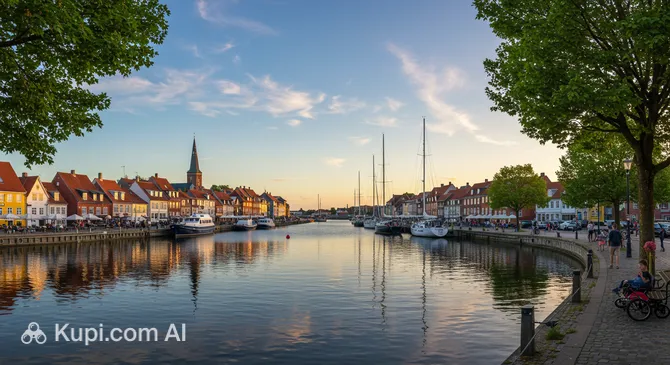
Skive is a picturesque town located at the mouth of the Karup Å river, where it flows into the Limfjord. This cozy corner, situated in the Central Jutland region, attracts travelers with its tranquility and harmonious blend of nature and urban environment. A trip here will allow you to see the real Denmark away from the noise of major metropolises, enjoying fresh sea air and the scenic landscapes of the Salling peninsula.

Skive. Illustration.
Source: Kupi.com AI

With a population of about 20,000 people, the town maintains an atmosphere of friendliness and comfort, yet serves as an important cultural and commercial center for the region. Skive's history is rooted deep in the past: having received market town status back in the Middle Ages, it has developed for centuries as an important hub on the map of Jutland, which is reflected in its architecture and traditions.

Among the main points of interest for tourists is Spøttrup Castle—one of the country's best-preserved medieval fortresses, located on the outskirts of the town. Within Skive itself, guests will find the Art Museum with its impressive collection of Danish art and a modern harbor, perfect for leisurely strolls. This town will be a wonderful discovery for those seeking inspiration in Scandinavian culture and the beauty of Northern nature.

Weather Overview

The climate in Skive is temperate and strongly influenced by its proximity to the Limfjord, making the weather changeable but fairly mild. Summers here are comfortable without exhausting heat, which is ideal for outdoor activities. The warmest months are July and August, when the average temperature is around 16–17°C, and during the daytime, the air often warms up to 20°C.

Winters in the region are cool, but generally without extreme frosts: in January and February, average figures stay around 3°C. Precipitation is distributed relatively evenly throughout the year, although autumn is considered the rainiest period—in October, the number of days with precipitation can reach 17. Spring arrives gradually, and by May it becomes noticeably warmer and drier.

Overall, expect a moderately warm summer with periodic rain and a cool, damp winter. To pack your suitcase correctly and choose the best dates for your visit, we recommend checking the current weather in Skive before your trip.

Average monthly temperature

Average monthly precipitation

Interesting Facts

Beyond its main attractions, Skive holds many fascinating secrets that can surprise even experienced travelers. Here are a few facts to help you see this Danish town from a new perspective.

  • Designer Intersections. Skive is known for its unique "11 Stars" project. Ordinary roundabouts in the town were transformed into works of art by the famous Jacob Jensen Design studio. Each one is decorated with giant sculptures made of granite, bronze, and steel, equipped with special lighting and serving as a kind of compass for drivers.

  • Green Capital. The town officially holds the title of "Energy City Skive" and is a pioneer in the field of renewable energy sources. Solar panels and biomass technologies are actively implemented here, with the aim of becoming the first fully carbon-neutral municipality in the region.

  • Underground Labyrinths. Very close to Skive, in the village of Mønsted, are the world's largest man-made limestone caves—Mønsted Kalkgruber. There are more than 60 kilometers of underground tunnels, some halls of which are as large as cathedrals. Additionally, these caves serve as a wintering ground for thousands of bats.

  • Hidden Frescoes. In Skive Old Church (Skive Gamle Kirke), you can see amazing paintings from 1522. Interestingly, these depictions of saints and satirical scenes were covered with whitewash shortly after the Reformation and remained hidden for centuries until they were accidentally discovered and restored at the end of the 19th century.

How to Get There

A journey to Central Jutland is always an encounter with Denmark's scenic nature and cozy atmosphere. When planning your route, it is worth researching the region's transport hubs in advance to choose the most convenient path. You can read more about how to get to Skive, and below we will look at the main options for arriving via the nearest airports and stations.

For international travelers, flying is often the most convenient option. There is no airport in the town of Skive itself, but you can fly into Aalborg Airport (AAL) in Aalborg, which is approximately 77 km from Skive. This is the nearest major aviation hub, and the journey from there by taxi or public transport takes about 2 hours and 15 minutes. Another popular option is Billund Airport (BLL), located in the town of Billund. This is the largest international airport on the peninsula, handling many flights. The distance to Skive is about 92 km, and the journey takes approximately 2 hours and 40 minutes.

For clarity, here is a summary of the main airports:

AirportPassenger trafficDistance
Aalborg Airport1.4 mln77 km
Billund Airport4.0 mln92 km
Aarhus Airport542 958103 km
Esbjerg Airport47 000121 km
Sonderborg Airport74 000185 km

Rail connections in Denmark are excellently developed, making a train journey a comfortable alternative. While Skive itself is not a major international rail hub, you can arrive at Aalborg Railway Station in Aalborg, which is about 76 km from Skive. From there, you can reach the town by taxi or bus in about 2 hours and 15 minutes. Aarhus H Station in Aarhus (about 86 km from Skive) is also an important transport hub, from where it is convenient to continue your journey deeper into the region.

Below is information on the nearest significant railway stations:

StationPassenger trafficDistance
Aalborg Railway Station2.2 mln76 km
Aarhus H Station6.3 mln86 km
Kristiansand Railway Station187 km
Gothenburg Central Station27 mln231 km
Helsingborg Central Station8.8 mln234 km

Main Attractions

Skive and its picturesque surroundings offer tourists a fascinating combination of medieval history, art, and natural beauty. Traveling through this region is an excellent opportunity to experience the authentic culture of Denmark and see unique sites preserved through the centuries that provide a deeper understanding of Jutland's traditions.

Spøttrup Castle (Spøttrup Borg). This site is rightfully considered the jewel of the region and one of the country's most impressive attractions. The castle is a magnificently preserved medieval fortress with powerful double ramparts and a water-filled moat. Visitors can not only explore the austere architecture of the defensive structure but also walk through the famous medicinal herb garden located on the grounds. In summer, historical reenactments and fairs are often held here, bringing the medieval atmosphere to life.

Skive Museum. Located in the heart of the town, this museum is part of the Museum Salling association. It will be of interest to those who want to see a harmonious blend of art and history. The exhibition features archaeological finds telling the ancient story of this land, as well as a significant collection of Danish painting, including works by 19th and 20th-century artists. Artifacts found in local peat bogs and burial mounds hold a special place in the collection.

Krabbesholm Manor (Krabbesholm Hovedgaard). This historic estate, located near the harbor and the fjord, is one of the oldest secular buildings in the region, dating back to the 16th century. The characteristic red-brick Gothic architecture attracts photographers and history buffs alike. Today, the building houses a prestigious folk high school for design, art, and architecture, giving the place a special creative atmosphere. A walk through the park surrounding the manor offers tranquility and beautiful views of the Limfjord.

Local Cuisine

Skive's gastronomic scene is inextricably linked to its location on the shores of the Limfjord and the fertile lands of the Salling peninsula. The local cuisine is a blend of the freshest seafood and the hearty farming traditions that Denmark is famous for. Natural ingredients are valued here, and many of the town's restaurants focus on products from local farmers and fishermen, creating menus that change with the seasons.

The main delicacy of the region is rightfully considered to be Limfjord oysters and mussels. Thanks to the cool, clean waters of the fjord, the shellfish here acquire a particularly rich flavor and firm texture. In local establishments, they are served both in the classic way—on ice with lemon—and steamed with white wine and herbs. Don't miss the chance to try traditional Danish smørrebrød—an open-faced sandwich on rye bread. In Skive, it is often prepared with marinated herring from Glyngøre, a small nearby town famous for its fishing traditions.

When it comes to drinks, it's impossible not to mention the town's pride—the Hancock Bryggerierne brewery. This is one of the oldest independent enterprises in the country, where ancient production methods are honored without the use of artificial additives. Be sure to try their famous Høker Bajer beer or the unique Sport-Cola soda, which has a cult status among Danes and has been produced using the same recipe for many decades.

The dining culture in Skive is characterized by a relaxed atmosphere that the Danes call "hygge." Locals love to dine in cozy harbor restaurants overlooking the yachts or in traditional inns (Kro) located in the surrounding area. There is no rush here: food is an occasion for long conversation. In summer, picnics by the water are popular, with smoked fish and fresh vegetables bought at the morning market as the main dishes.

Travel Tips

Skive is a town with a truly Danish character, where the tranquility of nature meets modern comfort. To ensure your stay here goes smoothly and leaves only pleasant memories, we have gathered several important practical recommendations to help you feel confident from the first minutes of your trip.

  1. Clothing and Essentials. The weather in the region, located by the Limfjord, can be windy and changeable at any time of year. The main principle for clothing is layering. Even in summer, be sure to bring a windbreaker and waterproof shoes for walks along the waterfront and through the forests. Also, don't forget a travel adapter (Denmark uses types K, C, and F), as your devices might not fit local sockets.

  2. Transport. Skive town center is quite compact and most pleasant to explore on foot. For trips to the surroundings, renting a bicycle is a great option—the infrastructure for this is perfectly developed. Public transport is represented by buses (Midttrafik system), for which tickets can be bought via the app or at vending machines. Taxis are expensive here, so it's better to rely on buses or your own strength to save your budget.

  3. Finances. The official currency is the Danish krone (DKK); euros are not accepted everywhere. Denmark is a country of triumphant cashless payments: bank cards (Visa, Mastercard) are accepted even in tiny kiosks and at markets. Cash may be needed in very rare cases. Tips are usually already included in the bill, but if you really liked the service, you can round up the amount—this will be received with gratitude.

  4. Health and Safety. Skive is a very safe town where you can walk peacefully even in the evening. The single emergency services number is 112. Pharmacies (Apotek) operate on standard schedules; there may be no 24-hour points in a small town, so it's better to have a minimal set of medicines with you. Water can be safely drunk from the tap—it is of excellent quality here.

  5. Communication. You likely won't notice a language barrier: practically all local residents, from students to retirees, speak English fluently. Nevertheless, learning a few words in Danish, such as "Tak" (thank you) or "Hej" (hello), will certainly earn you the sympathy of the townspeople. Free Wi-Fi is available in many cafes, hotels, and the town library.

  6. Local Etiquette. Danes value personal space and restraint. It is customary to say hello when entering a shop or a bus. An important trait of local culture is punctuality: it's best to arrive exactly on time for excursions or meetings. It is also not customary to speak loudly in public places.

  7. What to Avoid. The most serious mistake a tourist can make is stepping onto a bicycle lane. In Denmark, cyclists are the main participants in traffic; they ride fast, and a pedestrian in their lane creates a dangerous situation. Always look carefully at the markings on the sidewalks. Also, avoid photographing people without their permission—here it is considered an invasion of privacy.

  8. Store Opening Hours. Keep in mind that life in provincial Denmark settles down quite early. Most shops close at 5:30–6:00 PM on weekdays and around 2:00–3:00 PM on Saturday. On Sunday, only large supermarkets and bakeries are open, so plan your shopping in advance.

By following these simple tips, you can avoid minor inconveniences and focus entirely on the beauty of Skive. Enjoy the cozy atmosphere of "hygge," the taste of local products, and the hospitality of Jutland's residents!

Entertainment & Nightlife

Skive's nightlife, despite the town's modest size, can pleasantly surprise you with its variety and cozy, almost home-like atmosphere. You won't find endless blocks of neon signs here like in the capital, but the town center offers a great choice of places to have fun on a Friday or Saturday night. Most activity is concentrated in the compact center, where all key establishments are within walking distance of each other, making it easy to hop between locations throughout the night.

The heart of evening entertainment can be found around Nordbanevej and Torvestræde streets. This is where the local crowd gathers—from college students to older residents looking to unwind after the work week. The atmosphere in town is democratic and relaxed: strict dress codes are rare, and in most places, you'll be welcome in smart casual attire. The fun usually kicks off closer to midnight, although bars start filling up as early as 9:00–10:00 PM.

If you're looking for a place to dance and have high-energy fun, check out Zwei Grosse Bier Bar (Nordbanevej 23). This venue brings the spirit of Alpine resorts and their famous "apres-ski" parties to the Danish province. An atmosphere of eternal celebration reigns here: staff in Tyrolean costumes, dancing on tables (which is officially allowed and encouraged!), huge mugs of beer, and popular hits. It's the perfect spot for those wanting a loud night and new acquaintances.

For connoisseurs of a more relaxed evening and quality drinks, Potten Øl- & Vinstue (Torvestræde 2) is a true find. This is a classic Danish "bodega"—a traditional pub with history where time moves slower. The establishment is famous for its impressive beer selection: there are about 18 varieties on tap and many bottled options, including products from local microbreweries. The interior with dim lighting invites long conversations, and sometimes you can catch a live music evening or a game of dice with the local regulars.

Culture lovers should check the schedule for KulturCenter Skive. This is the region's main concert venue, regularly hosting performances by famous Danish comedians, theatrical productions, and live music concerts. An evening here can be combined with a visit to the cinema or dinner, creating an "all-in-one" program.

Practical Tips for Tourists:

  • Safety: Skive center is considered very safe even at night. The streets are well-lit, and serious incidents are very rare. However, as anywhere, do not leave your drinks unattended.
  • Transport: Night buses are rare, so the main way to get back to your hotel after midnight is by taxi. We recommend saving the number for the local service Skive Taxa or asking a bartender to call a car, as hailing one on the street can be difficult.
  • Prices: Alcohol in Denmark is not cheap. The average price for a glass of beer in a bar ranges from 45 to 60 kroner, while cocktails can cost 85–100 kroner. Many places offer "happy hours" early in the evening.

During the day, Skive's entertainment program shifts toward a more family-oriented and peaceful vibe. You can visit the Bowl'n'Fun center, popular for daytime recreation with children or friends, or stroll through the town's scenic parks, enjoying the quiet before the lively evening.

Parks & Museums

Skive is a town where the harmony between the urban environment and nature is felt at every step, and cultural institutions offer a deep dive into Jutland's traditions. For travelers, this means the opportunity to easily combine walks in picturesque green zones with educational excursions to unique museums, many of which are known far beyond the region.

Skive City Park (Skive Anlæg). This is a true green oasis in the town center, loved by both locals and tourists. The park was established at the end of the 19th century and has preserved the charm of an old garden with well-kept alleys, centuries-old trees, and small lakes inhabited by ducks. It is an ideal spot for a picnic or quiet reading in the shade. In summer, concerts are often held on the open-air stage, filling the air with music and a festive atmosphere.

Krabbesholm Forest (Krabbesholm Skov). Located near the harbor and the manor of the same name, this forest offers excellent opportunities for outdoor activities. There are scenic trails for hiking and running that wind among tall beech and oak trees. A walk through the forest will lead you to the shore of the Limfjord, opening up stunning views across the water. This place is especially beautiful in autumn when the foliage turns golden and crimson, creating incredible landscapes for photos.

Jenle Museum. Slightly away from the town, on the Salling peninsula, is the estate of the famous Danish poet Jeppe Aakjær. "Jenle" means "lonely" in the local dialect, and this place is truly imbued with an atmosphere of solitude and creativity. Visitors can tour the memorial rooms, which have preserved their early 20th-century furnishings, and walk along the "poet's path" in the surrounding natural park. This is an important cultural point for understanding the soul of Denmark and its literary heritage.

Fur Museum. Although it is located on the neighboring island of Fur (a short ferry crossing from near Skive), this museum is a must-visit on the region's cultural program. It is famous for its unique collection of fossils found in the local moler clay (diatomite), dating back over 55 million years. Here you can see fish, insects, and reptiles frozen in stone, making the visit a thrilling adventure for adults and children interested in natural history.

For those looking for hidden gems, we recommend heading to Lake Flyndersø. This is the largest heather moorland in the region, located south of Skive. The landscape here resembles the wild, untouched expanses of the past: heather, juniper, and the mirror-like surface of the lake. This place is rarely overcrowded with tourists, allowing you to enjoy the silence and observe rare birds, including the osprey.

Getting Around

The transport system in Skive is characterized by the organization and comfort typical of the region, although due to the town's compact size, many tourists prefer to get around on foot. The main form of public transport is buses, managed by the regional company Midttrafik. Town routes (usually yellow buses) connect the center with residential areas and the station, while regional routes (blue) allow you to reach the scenic corners of the Salling peninsula and neighboring towns. Schedules are strictly followed, and the vehicles are equipped with everything needed for a comfortable trip.

For travel over longer distances, rail connections play an important role. Skive Station serves regional trains that connect the town with major hubs such as Viborg and Aarhus. Trains are a fast and scenic way to explore the surroundings: the carriages are modern, quiet, and often equipped with free Wi-Fi, allowing you to plan the next stage of your journey while on the move.

The fare system in Denmark is unified and based on a zone system. The simplest option for a short visit is purchasing tickets through the Midttrafik app or RejseBillet mobile apps. This saves you from searching for change and overpaying. If you plan to travel a lot around the country, it's worth purchasing an anonymous transport card, the Rejsekort Anonym. It can be bought at major transport hubs and topped up as needed. Buying a ticket with cash from the driver is possible, but it costs more and often requires the exact amount in coins.

An important practical tip regarding the use of the Rejsekort card: the system is called "Check Ind / Check Ud." You must tap your card against the validator at the start of your journey and, crucially, remember to do it again when exiting at the "Check Ud" terminal. If you forget to check out, the maximum fare will be deducted from the card. To plan routes, we strongly recommend using the Rejseplanen app or website—it is the most accurate navigator, showing schedules, transfers, and the current trip price.

As an alternative to public transport, the bicycle is extremely popular. Skive has an extensive network of cycle paths, and renting a two-wheeled friend will allow you to be as mobile as possible and independent of schedules. Taxis in town are represented by the local service Skive Taxa. This is not a cheap luxury, and cars rarely stop on the street by a wave of the hand—it is customary to order them by phone or through an app. Car-sharing and international taxi aggregators are practically non-existent in the town, so for complete freedom of movement, it is better to consider classic car or bicycle rental.

Accommodation

Accommodation in Skive is primarily about comfort and proximity to nature. The town does not abound with huge chain skyscraper hotels but offers a decent selection of places to stay that will satisfy different categories of tourists. The hotel stock mainly consists of classic mid-range hotels, charming bed and breakfasts (B&Bs), and, of course, the high-quality campsites popular in Denmark.

Areas to stay. The choice of location depends on your plans. If you are traveling by train or want to be in the middle of the action, choose the town center. Shops, cafes, and cultural institutions are concentrated here in the pedestrian street area, and the station is within walking distance. For those seeking romance and peace, the harbor area and the surroundings of the Krabbesholm forest are ideal. Staying here guarantees fresh sea breezes, beautiful views of the Limfjord, and the chance to start the morning with a walk along the waterfront.

Special attention should be given to traditional Danish inns—Kro. Often located in the suburbs or picturesque rural areas around Skive, they offer more than just a place to sleep; they provide an immersion into the history and gastronomic traditions of the region. For budget travelers and outdoor enthusiasts, hostels and equipped motorhome sites are excellent alternatives, which are in high demand during the summer season.

Prices and Booking. The cost of accommodation in Skive corresponds to the general price level in the country: from moderately high to high. Budget options exist, but their number is limited. The peak tourist season falls in July and August when the weather is most favorable. During this period, as well as during local festivals, available rooms run out very quickly. The most reliable advice is to book your accommodation in advance, at least 2–3 months before your trip. You can use popular international aggregators as well as direct hotel websites, where special seasonal offers can sometimes be found.

Nearby Cities

For those who want to explore the surrounding area, Skive serves as an excellent starting point for day trips to several interesting nearby locations. Its convenient location in the heart of Jutland allows you to reach completely different towns in terms of spirit within just an hour, each opening up a new facet of Danish culture.

Just half an hour's drive away is Viborg—one of the oldest cities in the country. It attracts tourists with its majestic cathedral featuring unique frescoes and a charming historic center where you can wander endlessly along cobbled streets. It is the perfect place for an immersion into Denmark's medieval history.

Nature and outdoor activity lovers should head to Silkeborg, located in the famous Lake District. The town is surrounded by forests and lakes, where the historic paddle steamer Hjejlen operates. Additionally, it houses a museum with one of Europe's most famous archaeological finds—the "Tollund Man."

If you want to feel the rhythm of a larger city, visit Aalborg, the "Paris of the North" in Denmark. Here you will find the modern architecture of the House of Music, a famous waterfront, and the Kunsten Museum of Modern Art. Also interesting is Randers with its unique tropical zoo under a dome, which will transport you to a real jungle.

CityPopulationDistance
Viborg41 23926 km
Nykøbing Mors9 13528 km
Struer10 37529 km
Karup2 86130 km
Holstebro36 48934 km

These nearby destinations provide an insight into the diverse culture and landscapes of the region, making your journey through Jutland even more rich and memorable.

Shopping & Souvenirs

Shopping in Skive is an opportunity to enjoy the calm and cozy atmosphere characteristic of small Danish towns. You won't find the bustle of huge metropolises here, but you will appreciate the quality selection of goods, combining well-known European brands with unique products from local artisans. Strolling through the shops here often turns into an introduction to the aesthetics and design of Denmark, where every window is decorated with special taste.

The center of the town's commercial life is the pedestrian streets of Nørregade and Adelgade. These are picturesque promenades where most clothing, shoe, accessory, and home goods stores are concentrated. Walking here, you can browse small boutiques offering Scandinavian fashion or visit cozy bookstores. Between purchases, it's pleasant to stop at one of the sidewalk cafes for a cup of coffee and watch the slow rhythm of town life.

For those who prefer to shop in one place, the main attraction is the Søndercentret shopping center. Located in the southern part of the town center, it brings together about 30 stores under one roof, including a large supermarket, a pharmacy, electronics stores, and fashion boutiques. The glass roof of the passage fills the space with light, making shopping comfortable in any weather.

The special local flavor of Skive can be felt at the Rådhustorvet market square. On market days, local farmers and craftsmen gather here, offering fresh vegetables, fruits, cheeses, and flowers. It is a great place to buy products grown in the fertile lands of the Salling region. Periodically, flea markets are held in the town, where history buffs can find vintage interior items, tableware, and other interesting trinkets.

For souvenirs from Skive, it is worth bringing back products that reflect local traditions. Drinks from the famous local Hancock brewery, such as their classic beer or the legendary Sport-Cola soda, make excellent gifts. Also, look out for ceramics and glassware, for which the region is famous, and amber jewelry. In gourmet shops, you can find delicious handmade jams, honey, and chocolate.

When planning your shopping trip, keep in mind that operating hours in the province can differ from the capital. Usually, shops are open Monday to Thursday from 10:00 AM to 5:30 PM, and on Friday until 6:00 PM. Saturday is a short day, with trade ending around 2:00 PM. On Sunday, most non-grocery stores are closed. Bank cards are accepted everywhere, including international systems, so cash is almost unnecessary.

Tourists residing outside the European Union can take advantage of the Tax Free refund system for purchases over a certain amount (usually from 300 DKK) in a single store. Look for Global Blue or Tax Free Worldwide stickers on doors or at registers, and don't forget to ask the seller to issue a special check for presentation at customs when leaving the country.
Reached the end of the page?

That means the route is fully explored