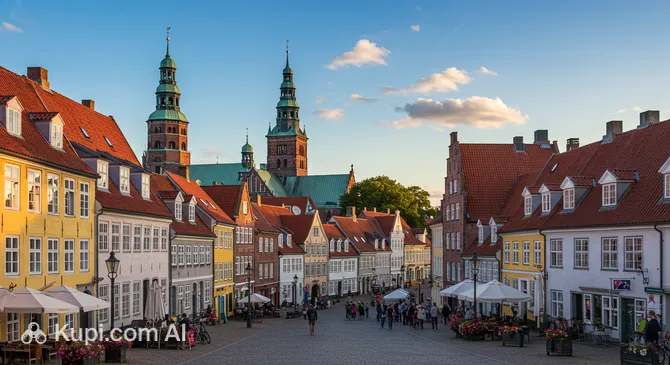
Viborg is a true oasis of comfort and tranquility, located in the very heart of the Jutland peninsula. The city is spread across picturesque hills surrounded by dense pine and oak forests, with scenic lakes bordering it to the south. This part of Denmark is famous for its pastoral landscapes and special harmony with nature, making the city a wonderful place for contemplation and relaxation.
Viborg. Illustration.
Source: Kupi.com AI
Despite its relatively small population of about 41,000 people, Viborg plays an important role as an administrative, religious, and educational center for the region. The rich history of Viborg is felt here at every turn: the medieval charm of old cobbled streets is wonderfully combined with modern Danish architecture and functionality.
Travelers often call this city the "Green Heart of Denmark" thanks to its many parks, botanical gardens, and unique natural landscapes. Viborg is an ideal destination for those who want to take a break from the hustle and bustle of big cities, enjoy the atmosphere of old Europe, and be inspired by the cultural heritage of the North.
Weather Overview
The climate in this region is temperate and heavily influenced by the sea, so exhausting heat or extreme frosts are rare here. Summer in the city is mild and comfortable: in the warmest months, July and August, the air warms up to an average of +20°C, while nights remain fresh with temperatures around +13°C, which is ideal for long walks.
Winter here is cool but without severe cold. In January and February, daytime temperatures usually stay slightly above zero, in the range of +3...+5°C, although light frosts are possible at night. A characteristic feature of the local climate is high humidity: precipitation falls quite regularly throughout the year, and the number of rainy days varies from 10 to 16 per month.
Since the weather in Viborg can be changeable, it's worth bringing waterproof clothing and comfortable shoes before your trip. Expect a moderately warm summer with occasional rain and a cool, damp winter that gives the old streets a special Northern atmosphere.
Average monthly temperature
Average monthly precipitation
Interesting Facts
Beyond the main attractions, Viborg holds many fascinating secrets and historical features that reveal themselves only to inquisitive travelers.
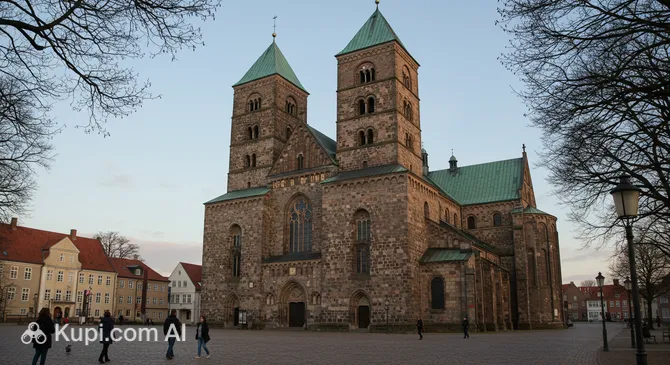
Viborg was for a long time the most important political center of Jutland, where the coronations of Danish kings took place. The majestic Viborg Cathedral serves as a reminder of the time when the power of monarchs was affirmed within these walls and decisions fateful for the country were made.
In the city's surroundings lie the Mønsted Limestone Mines—the largest man-made caves of this type in the world. It is a massive underground labyrinth where the temperature remains constant year-round and thousands of bats hibernate, creating a mystical atmosphere.
The city is steeped in legends of mysterious dungeons. Folklore suggests that an extensive network of medieval passages has been preserved under the old quarters, once connecting monasteries and important city buildings to hide their inhabitants from prying eyes.
Living history enthusiasts can head to the unique Iron Age village "Hvolris." This is not just a museum but an interactive open-air space where you can practice ancient crafts and immerse yourself in the life of the Scandinavians who lived here long before the Viking Age.
Viborg Cathedral. Illustration.
Source: Kupi.com AI
Traveler photos:
How to Get There
When planning a trip to the picturesque center of Jutland, it's worth thinking about the route in advance. Viborg is conveniently located relative to Denmark's key transport arteries, making it easy to get here by combining a flight with ground transport. You can study all ways to get to the city in detail, and below we will look at the main options via the nearest airports and stations.
Viborg itself does not have an airport, so travelers usually fly into nearby large cities. The closest hub is Aalborg Airport (IATA: AAL), located about 76.5 km away. This is an important regional hub receiving many flights. A trip from here to Viborg by rental car or transfer will take just over an hour. We recommend checking out information about Aalborg Airport if you choose this route.
Another popular and perhaps the most famous international hub in the region is Billund Airport (IATA: BLL), located 80.7 km from the city. It serves a huge passenger flow and is known for its proximity to Legoland. You can find more details on the page about Billund Airport. Aarhus Airport (IATA: AAR), located 77.8 km away, which serves Denmark's second-largest city, can also be a convenient option.
If you prefer ground transport, the Danish railway is an excellent choice. Viborg has its own railway station, so you won't need to take a taxi from other cities. The most convenient way is to travel to a major hub, such as Aarhus H Station (IATA: ZJH) in Aarhus (60.3 km) or Aalborg Railway Station (IATA: ZTG) in Aalborg (73.2 km).
Direct regional trains regularly depart from these major stations to Viborg station. This is the most comfortable and budget-friendly way to cover the last 60–70 kilometers: Danish trains are modern, run frequently, and allow you to enjoy the views from the window while avoiding the high costs of intercity taxis.
Below are the nearest major railway hubs through which you can plan your route:
Viborg is a city where history comes alive at every step, and modern entertainment fits harmoniously into the ancient landscape. A walk through the local sights will allow you to see different facets of this cozy Danish corner, from majestic religious architecture to atmospheric spots for relaxation.
The undisputed dominant feature of the city and its main symbol is Viborg Cathedral. It is one of the most significant monuments of Romanesque architecture in Northern Europe, whose twin towers are visible from almost anywhere in the city. Tourists are drawn here not only by the powerful granite facade but also by the unique interior decoration: the cathedral walls are decorated with magnificent frescoes by Joakim Skovgaard, often called the "Poor Man's Bible" for their clarity and expressiveness.
In the immediate vicinity of the cathedral is the Skovgaard Museum (Skovgaard Museet). While it might not be on everyone's "must-see" list, art lovers should definitely pay attention to it. The museum is dedicated to the creative dynasty that created the cathedral's famous frescoes and houses a rich collection of paintings and graphics, allowing for a deeper understanding of the region's cultural heritage.
Ølluminati Brewbar. Illustration.
Source: Kupi.com AI
Traveler photos:
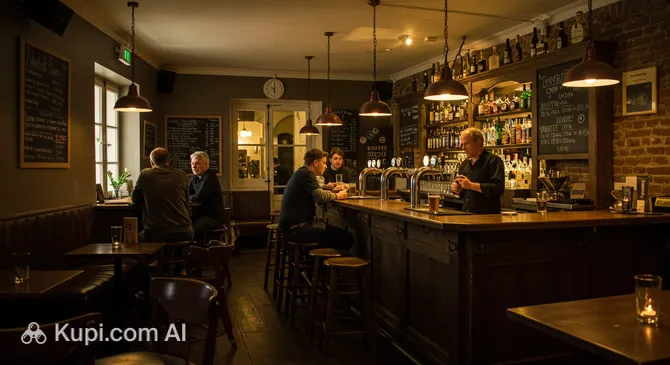
If you want a change of scenery and a taste of modern city life, stop by the Ølluminati Brewbar. This establishment is a great example of how the Danes create "hygge," their famous sense of coziness. Here, surrounded by craft drinks and a friendly atmosphere, you can spend a great evening after a long walk, chat with locals, and enjoy live music or board games.
For shopping enthusiasts and comfortable leisure, the Sct. Mathias Center operates in the city. This is a modern shopping mall located in the city center, offering a wide range of stores—from fashionable clothing to Danish design. It is a convenient place to buy souvenirs, have a bite in a cafe, and simply relax between visiting historical monuments.
Local Cuisine
Viborg's gastronomic scene is a harmonious blend of hearty peasant traditions and modern European trends. A trip here would be incomplete without experiencing the local cuisine, which is based on the freshest ingredients. The city's signature dish is rightfully considered the famous smørrebrød. This traditional open-faced sandwich is prepared here with special skill, generously topping rye bread with pickled herring, slices of meat, or farm cheese.
Local chefs pay great attention to the quality of products, often sourcing seasonal vegetables, fish, and meat from city markets. For those who love substantial meals, keep an eye out for Danish steak and other meat delicacies prepared according to old recipes. A wonderful place to get acquainted with this side of the culinary world is the The Golden Bull restaurant, where guests are offered classic dishes in a cozy atmosphere.
Sweet tooths won't be disappointed either: Danish pastry is a cult here, and the aroma of fresh buns beckons from numerous coffee shops. To accompany dinner or a light snack, locals prefer craft beer and apple cider produced by small regional breweries. The dining culture in Viborg is democratic: it is equally pleasant to have lunch in an exquisite restaurant, grab street food from a kiosk, or visit one of the gastronomic festivals, which are a true celebration of taste.
Travel Tips
Viborg is a city where medieval history is harmoniously interwoven with modern Scandinavian comfort. To ensure your trip to the heart of Jutland goes off without a hitch, we've gathered a list of practical recommendations to help you feel confident and avoid typical tourist mistakes.
Clothing and Essentials: The weather in this region is changeable, so the best wardrobe principle is layering. Even in summer, it's worth having a light windbreaker or raincoat with you, as an umbrella is often useless against the local wind. Since the historical center is paved with old cobblestones, be sure to bring comfortable flat shoes—heels will be impractical and potentially dangerous here.
Transport: Viborg is a compact city, and its atmospheric streets are best explored on foot. Public transport is represented by yellow city buses, whose schedules are easy to check in the Rejseplanen app. Taxis in Denmark are expensive, so for trips to the surroundings, we recommend renting a bike—it's the most popular and authentic way to get around.
Finances: The local currency is the Danish Krone (DKK), but Denmark is a country where cashless payment has truly triumphed. Bank cards are accepted everywhere: from museums to street hot dog stands. Cash might be needed in rare cases, but it's not worth exchanging large sums. Tips are generally already included in the bill, but rounding up the amount for excellent service is always appreciated.
Health and Safety: Viborg is an exceptionally safe city where you can comfortably walk even after dark. The tap water here is pure and tasty; you can safely drink it from the tap, which will help save on buying bottled water. Pharmacies are marked with the Apotek sign, and the single emergency number is 112.
Communication: There is practically no language barrier here: the vast majority of locals, including the older generation, speak excellent English. For mobile internet, you can buy a prepaid SIM card (e.g., Lebara or Lycamobile) at 7-Eleven supermarkets or kiosks, although free Wi-Fi is available in many cafes and on trains.
Local Etiquette: Danes value restraint, personal space, and politeness. It's customary to greet the staff when entering a shop. If you plan to visit someone's home, remember that punctuality here is not just courtesy, but a strict rule. Being even 5 minutes late requires a heads-up.
What to Avoid: The most important rule is to never walk on the bicycle paths. For Danes, this is sacred territory, and a pedestrian on a bike lane risks not only hearing angry shouts but also creating a real accident. Also, do not cross the road on a red light, even if the street is empty—it's customary here to strictly follow traffic rules.
Shop Opening Hours: Keep in mind that the rhythm of life in provincial Denmark is relaxed. Most shops (except large supermarkets) close at 17:30–18:00 on weekdays and around 14:00 on Saturdays. On Sundays, many shops in the center may be closed, so plan your shopping in advance.
Viborg is an incredibly welcoming and cozy city that opens up to those who respect its way of life. By following these simple tips, you can avoid minor everyday inconveniences and fully focus on enjoying the unique atmosphere of Jutland's ancient capital.
Entertainment & Nightlife
Entertainment and nightlife in Viborg, much like the city itself, are characterized by a special coziness and the absence of capital-city bustle. You won't find massive mega-clubs with long queues here, but you can immerse yourself in the atmosphere of true Danish "hygge." Evening leisure is focused on socializing, quality drinks, and good music, making the city attractive for those who value soulfulness and comfort.
The epicenter of evening life is the central pedestrian streets, particularly the area around Sct. Mathias Gade and Gravene square. This is where most of the popular pubs and bars are concentrated, filling with people closer to the weekend. The crowd is very diverse: from students of the local animation school to tourists and older residents. The dress code in most places is as democratic as possible—casual style (jeans and comfortable shoes) is appropriate almost everywhere.
If you're looking for a place with a unique atmosphere, be sure to check out Ølluminati Brewbar. This venue has become a real magnet for craft beer lovers and those who enjoy an informal setting. It often hosts small concerts, quizzes, or just friendly gatherings over board games. It's a perfect example of how a bar in Denmark becomes more than just a place to drink—it's a real community hub.
For those who prefer to start their evening with gastronomic impressions, dinner at The Golden Bull restaurant (Den Gyldne Okse) is a wonderful start. After a hearty meal, you can go for a walk through the nighttime city or continue the evening in one of the neighboring cocktail bars. Many establishments stay open until midnight on weekdays and until 02:00–03:00 on Fridays and Saturdays.
Regarding safety, Viborg can easily be called one of the calmest cities for nighttime walks. The crime rate here is extremely low, and returning to your hotel on foot through the well-lit streets of the center is completely safe. If you stay out very late or your hotel is on the outskirts, it's better to use a taxi. Hailing a car on the street is not common—it's most reliable to book a ride via an app (such as Dantaxi) or ask a bartender to call one for you.
During the day, the city offers quieter but no less interesting entertainment. The cultural program might include visiting theaters or museums mentioned earlier. In good weather, locals and tourists head to parks like Borgvold, where you can rent a boat or canoe for a trip on the lakes. This is a great way to recharge before an active evening.
Parks & Museums
Viborg wonderfully combines monumental history with the living breath of nature. The city is literally immersed in greenery, and its cultural life is not limited to ancient legends—there is room here for both modern art and cozy gardens for leisurely walks.
Borgvold Park is perhaps the favorite leisure spot for locals and tourists alike. Nestled between two lakes, Nørresø and Søndersø, this English-style park was laid out back in the 19th century. Here you can not only walk along shady alleys among centuries-old trees but also rent a boat or a pedal boat to enjoy the city panorama from the water. In summer, open-air concerts are often held here, creating a unique festive atmosphere.
For those seeking solitude and silence, the Latin Garden (Latinerhaven) is an ideal place. This small but incredibly atmospheric garden is located in the historical center, next to the cathedral. It is laid out on the site where monks grew medicinal plants and herbs in the Middle Ages. Today, you can see many rare flowers and shrubs here, and the strict geometry of the paths and antique benches invite reflection.
The cultural map of the city is equally rich and diverse. Art lovers should visit the Viborg Kunsthal. It is one of the most interesting exhibition venues in Denmark, located in the historic building of a former distillery. The gallery specializes in contemporary art, presenting bold installations and works by both Danish and international artists. The contrast between the old industrial architecture and the avant-garde exhibits makes a strong impression.
It is impossible to talk about the city's culture without mentioning its main architectural gem—Viborg Cathedral. Although it is an active church, it also functions as a museum of monumental painting thanks to its famous frescoes. This place is the starting point for immersing yourself in the region's history, as it was around this cathedral that the appearance of old Viborg was formed over centuries.
If you want to see the real old town, head to Sct. Mogens Gade. This is an open-air museum where time seems to have stood still. Cobblestone pavements and colorful houses with tiled roofs have been preserved here since the 16th-17th centuries. A walk through this quarter will make you feel like a resident of medieval Denmark.
Insider Tip: Be sure to visit the Sønæs recreational area on the shores of the South Lake. This is a modern landscape park that transforms depending on water levels and weather. Picturesque wooden walkways are laid out right over the water, making it a perfect spot to catch the sunset with a camera in hand.
Getting Around
Viborg's transport system is organized simply and efficiently, which is typical for the region. Since there is no metro or trams in the city, the main form of public transport is buses. They are managed by the regional company Midttrafik. City routes are served by noticeable yellow buses that run through the main districts and connect the center with residential quarters. Blue regional buses are used for trips to the suburbs. Schedules are followed with enviable precision, and the interiors are always clean and comfortable.
The fare system is based on a zone principle: the ticket price depends on how many zones you cross. For tourists, the most convenient way to pay is through mobile apps such as the Midttrafik app or the nationwide Rejsebillet. You can link a bank card to these and buy single tickets immediately before boarding. If you prefer cash, a ticket can be bought from the driver when entering, but keep an important rule in mind: only Danish krones are accepted, and the driver will likely require exact change, as they may not have change for large banknotes.
The Rejseplanen app or website is an indispensable assistant for planning routes. This service builds the optimal route, shows departure times in real-time, and calculates the exact cost of the trip. You usually don't need to validate electronic tickets on the bus; it's enough to show your smartphone screen to the driver when entering if asked. Transport operating hours depend on the route: main lines run from early morning until late evening, but on weekends and holidays, intervals increase, and night services may be absent.
An alternative to buses is a taxi, but it's worth remembering that the rates here are quite high. Hailing a car on the street is not common; it's more reliable to book a ride through the Dantaxi app or by phone. Car sharing is less developed in small towns than in metropolises, so for freedom of movement, many travelers choose to rent a car from international rental offices, which are often located near airports or major railway stations.
However, the most popular and authentic way to get around remains the bicycle. Viborg is crisscrossed with a network of convenient bike paths, and two-wheeled transport has priority on the road here. Rental points can be found in the city center or at some hotels. Given the compactness of the historical center and the scenic views around the lakes, a bike ride often turns out to be faster and more pleasant than a bus trip.
Accommodation
Viborg offers travelers not so much massive hotel complexes of international chains, but rather cozy and atmospheric places to stay, steeped in local flavor. The accommodation stock consists mainly of small family hotels, traditional Danish inns (known as "kro"), and modern apartments. Here you can find everything from budget hostels for young people to elegant boutique hotels located in renovated historical buildings.
The most popular and convenient area to stay is undoubtedly the historical center. By staying here, you will be within walking distance of cobbled streets, the best restaurants, and the main architectural monuments. Living in the center means hearing the church bells every morning and enjoying views of the old town. The main landmark here is the majestic Viborg Cathedral, around which tourist life is concentrated.
Viborg Cathedral. Illustration.
Source: Kupi.com AI
Traveler photos:
For those who prefer to be closer to nature, the areas around lakes Søndersø and Nørresø are excellent options. High-quality campsites and cottages are often located here, which are in high demand during the summer season. This is an ideal choice for travelers with a car or fans of morning jogs by the water who wish to combine city comfort with the peace of a countryside holiday.
Booking tip: Viborg is a popular destination for domestic tourism in Denmark, especially during the summer months and the Christmas holiday period. Therefore, it is strongly recommended to book accommodation in advance, at least 2–3 months before your trip. During peak season, the best "price-quality" options are snapped up very quickly.
The price range in the city varies from medium to high, which is traditional for Scandinavia. Budget accommodation (hostels or simple B&B rooms) will be cheaper, but their numbers are limited. Booking is most convenient through major international online platforms, although many small guest houses have their own websites where you can sometimes find better deals with direct booking.
Nearby Cities
For those who want to explore the surrounding area, Viborg serves as an excellent starting point for day trips to several interesting nearby locations.
Just an hour's drive away is Aarhus—Denmark's second-largest city, often called the cultural capital of Jutland. It's worth coming here for the famous ARoS art museum with its rainbow panorama and the unique open-air museum "The Old Town" (Den Gamle By), where you can literally step into the past and see how Danes lived in different eras.
Nature lovers will certainly enjoy Silkeborg, located in the heart of the Lake District. It is an ideal place for boat trips on the world's oldest coal-fired paddle steamer, Hjejlen, and hiking in the picturesque hills. If you are traveling with children, Randers is an excellent choice, known for its unique domed zoo "Randers Tropical Zoo," where a jungle ecosystem is recreated.
These nearby destinations provide an insight into the region's diverse culture and landscapes, making your trip through Jutland even more rewarding and memorable.
Shopping & Souvenirs
Shopping in Viborg is not a race for exclusive brands, but a pleasant and relaxed pastime steeped in the atmosphere of Danish coziness. The city offers a balanced mix of well-known chain stores and small private shops where you can find unique locally-made goods. There is no big-city hustle here, and the compact center allows you to visit all the interesting spots on foot, enjoying the architecture and stopping for coffee breaks.
The heart of the city's commercial life is the pedestrian street Sct. Mathias Gade. It stretches through the entire center, and this is where most of the boutiques for clothing, shoes, home goods, and accessories are concentrated. Walking along this street, you will find both popular Scandinavian high-street brands and shops with designer items famous for their minimalism and quality. In the alleys branching off the main artery, cozy bookstores and vintage shops are often hidden.
If you prefer to do all your shopping in one place under one roof, the main point of interest is the Sct. Mathias Center. This is a modern shopping complex located right in the city center. It houses dozens of shops offering everything from electronics and cosmetics to fashionable clothing and sports goods. It's a great place to hide from the weather and continue shopping in comfort.
Sct. Mathias Center. Illustration.
Source: Kupi.com AI
Traveler photos:
For lovers of an authentic atmosphere, the local markets are of interest. On Saturdays, trade in fresh farm products often unfolds in the central squares like Hjultorvet or Nytorv. Here you can buy seasonal vegetables, fruits, homemade cheeses, and honey. During the pre-Christmas period, the city squares are transformed, filling with market stalls selling mulled wine and handmade crafts.
As souvenirs from Viborg, it is worth bringing back items of famous Danish design—whether it's stylish tableware, textiles, or small interior decorations that will help create "hygge" in your home. Also, look out for gastronomic gifts: high-quality Danish chocolate, licorice sweets (an acquired taste, but very traditional), or a bottle of local craft beer or schnapps.
When planning your shopping trip, keep the local working hours in mind. Most shops are open from 10:00 to 17:30 or 18:00 on weekdays. On Fridays, some may stay open a bit longer, but on Saturdays, the working day usually ends as early as 14:00 or 15:00. Sunday in Denmark is traditionally a day off for commerce, with the exception of large supermarkets and flower shops. Payment is made by bank card almost everywhere, even at markets, but having a few cash krones for small purchases wouldn't hurt.
Tourists residing outside the European Union can take advantage of the Tax Free system. In stores marked with a special sign (usually Global Blue), you can get a tax refund check for purchases over a certain amount. Don't forget to ask for a Tax Free form at the checkout and present your passport to get some of your money back when leaving the EU.