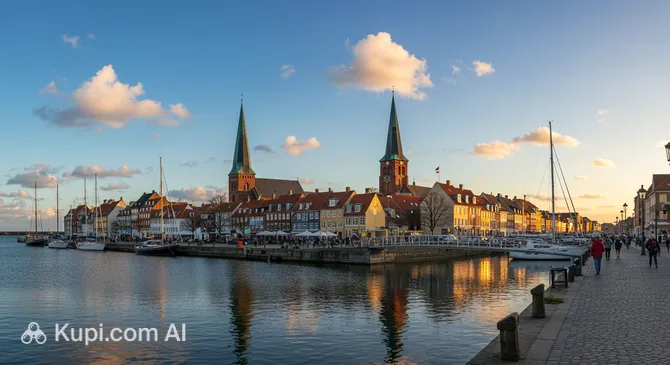
Struer's transport system is compact and efficient, which fully corresponds to the steady pace of life in this small port town. Since the town center is small, many attractions are within walking distance of each other. However, for trips to the surrounding area or neighboring regions, public transport becomes an indispensable assistant, offering comfort and punctuality.
The main transport hub is Struer Railway Station. Historically, the town developed precisely as an important railway hub, and today this importance remains. Regional trains regularly depart from here towards Aalborg, Aarhus, and Esbjerg. The carriages are modern, equipped with Wi-Fi and power outlets, making the trip a pleasant part of the journey. This is the fastest way to reach the major cities in the region.
The bus network complements the railway communication. Both urban and regional routes operate in the town. Buses are generally painted blue or yellow. It is important to remember that intervals may increase in the evening and on weekends, so it is better to check the schedule in advance. You enter the bus through the front door and exit through the middle or back door. Don't forget to press the Stop button on the handrail so the driver stops at your required stop.
The fare system in the region is unified and based on zones: the price of a ticket depends on how many zones you cross. For tourists, the most convenient ways to pay are:
Mobile Apps: The easiest option is to use the Rejsebillet app or the apps of local transport operators. You can link a bank card to them and buy tickets in a few clicks. The electronic ticket must be shown to the driver or inspector on the smartphone screen.
Ticket Machines: Red and gray terminals are installed at the railway station where you can buy single tickets with cash or card. On buses, drivers sometimes accept cash (small bills), but this is becoming less popular every year, and it is better to rely on cashless payment.
Rejsekort: This is a plastic rechargeable card used by locals. For a short visit, buying it is not always practical due to the cost of the card itself (about 80 DKK), but there is an anonymous version, Rejsekort Anonymous, which can be purchased at major points of sale and used by a whole group.
For route planning, it is strongly recommended to download the Rejseplanen app. This is the main navigator for public transport, which builds routes considering all transfers, shows current departure times, platform numbers, and ticket prices in real-time. It supports English and is an indispensable tool for any traveler in this area.
Given the town's status and its terrain, a bicycle is an excellent alternative to public transport. Struer is equipped with high-quality bike lanes, and two-wheeled transport is highly regarded here. Bicycles can be rented at specialized shops or some hotels. This will give you freedom of movement and the opportunity to enjoy views of the Limfjord at your own pace.
Taxi services in the town work reliably, but trip prices are quite high compared to the European average. Popular international taxi apps (like Uber) are not available here, so it is better to order a car by phone through local operators or look for one at the taxi stand by the station. If you plan to travel a lot along the coast, it makes sense to consider renting a car, which will provide maximum flexibility.