Support

PortoVecchio

About

Porto-Vecchio is a true sunny gem of southeastern Corsica, one of the most picturesque regions in France. The town is nestled on the shores of a magnificent bay, where the turquoise waters of the Mediterranean lap against snow-white beaches surrounded by fragrant maquis scrubland. Porto-Vecchio stands on a small hill, which not only provides breathtaking panoramic views but historically served as a natural defense for its residents. Just 25 kilometers away lies another famous Corsican town, Bonifacio, and the surroundings of Porto-Vecchio are rich with pristine forests and fertile plains.
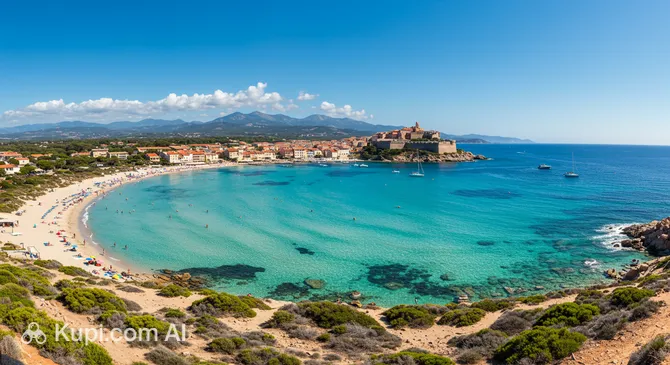
Porto-Vecchio. Illustration.
Source: Kupi.com AI

With a population of about 11,748, Porto-Vecchio retains the atmosphere of an intimate and very cozy place where every traveler will find something for themselves. Despite its relatively small size, the town is rightfully considered one of Corsica's most popular resorts. It attracts guests from all over the world with its unique atmosphere of a relaxed Mediterranean celebration, where ancient traditions and modern comfort are harmoniously intertwined.

The town's magnificent beaches, such as Palombaggia and Santa Giulia, known for their fine white sand and crystal-clear water, lend Porto-Vecchio a special appeal. The historic center, with its ancient bastions and ramparts, charms visitors with narrow cobbled streets, old arched passages, and lively squares. In summer, the old town literally comes to life, filled with music, laughter, and the aromas of local cuisine wafting from numerous cafes and restaurants.

Porto-Vecchio is a place where time seems to slow down, allowing you to enjoy every moment filled with sun, sea breeze, and unique Corsican charm. If you are looking for the perfect combination of beach relaxation, historical discoveries, and stunning natural landscapes, Porto-Vecchio should definitely be on your must-visit list.

You can find more interesting facts on the Porto-Vecchio history page
Weather Overview

The climate in Porto-Vecchio is characterized by hot, dry summers and mild winters. The warmest months are July and August, when the average temperature stays around 25.3-25.4°C, and the maximum can reach nearly 30°C. There is virtually no rainfall during these summer months. The coldest month is January, with an average temperature of about 8.7°C. There is little precipitation in winter and the shoulder seasons, but the number of rainy days increases, especially in November.

In general, expect a warm, sunny summer with minimal rainfall and a mild winter with occasional rain. To plan your trip in the best possible way, check out more detailed information: weather in Porto-Vecchio by month.

Average monthly temperature

Average monthly precipitation

Interesting Facts

Beyond its famous beaches and lively harbor, Porto-Vecchio hides many surprising stories and little-known details that make it even more alluring for curious travelers. Here are just a few of them:

Porto-Vecchio Citadel. Illustration.
Source: Kupi.com AI

Traveler photos:

  • The town was founded by the Genoese in 1539 as a strategic fortress. Interestingly, the first settlers had to abandon the area due to an invasion of malarial mosquitoes. It was only later that the development of cork production, which still flourishes here today, gave the town a second wind, and souvenirs made from cork oak bark became popular local goods.

  • The famous 18th-century British writer and traveler James Boswell was so impressed by Porto-Vecchio that he called it one of the most remarkable harbors in Europe, specifically noting the beauty of its bay and the town's unique location on a hill.

  • In the vicinity of Porto-Vecchio, you can touch deep antiquity. Unique prehistoric monuments have been preserved here, such as Casteddu d’Araghju – an impressive megalithic fortress shrouded in legends, reached by a picturesque path through the maquis scrubland.

  • Porto-Vecchio is famous not only for its natural beauty but also for its ancient architecture. A walk through the town is a journey through time among bastions like the Citadel of Porto-Vecchio, watchtowers, and cozy squares that create the atmosphere of a medieval fairy tale. In the evenings, music festivals featuring traditional Corsican songs are often held here.

How to Get There

Reaching the charming town of Porto-Vecchio, located on the island of Corsica in France, can be done in several ways; however, air travel is the most popular and convenient method. Combined routes using ferries are also possible.

The main air route to Porto-Vecchio is via one of the airports in Corsica or neighboring Sardinia. The closest and most convenient is Sud-Corse Airport (FSC), located in Figari, just 18.1 km from Porto-Vecchio. This is a regional airport, and a trip from it to the town center by taxi or bus takes approximately 40-50 minutes. The airport receives flights from various French cities and some European countries, especially during the tourist season.

Another popular option is Ajaccio Napoleon Bonaparte Airport (AJA). This international airport is located in the city of Ajaccio, about 54.1 km from Porto-Vecchio. It serves a larger number of international and domestic flights. A car journey from Ajaccio Airport to Porto-Vecchio takes approximately 1.5-2 hours.

You can also consider flying into Olbia Costa Smeralda Airport (OLB). It is located in the city of Olbia on the neighboring island of Sardinia (Italy), about 79.5 km from Porto-Vecchio (the distance includes the sea crossing). This is a large international airport with an extensive route network. However, keep in mind that getting from Olbia to Porto-Vecchio will require a ferry crossing from Sardinia to Corsica, which adds time and expense to your journey.

For convenience, here is a summary of the main airports from which you can reach Porto-Vecchio:

AirportPassenger trafficDistance
Sud Corse Airport877 07018 km
Ajaccio Napoleon Bonaparte Airport1.6 mln54 km
Olbia Costa Smeralda Airport3.2 mln80 km
Bastia Poretta Airport1.5 mln108 km
Sainte Catherine Airport400 226112 km

There is no direct rail link to Porto-Vecchio, as the town is on the island of Corsica. Corsica's rail network is limited and not connected to the mainland system. If you plan to travel part of the way by train, you will need to aim for major railway hubs on mainland Italy or France, then use a ferry and land transport to reach Porto-Vecchio.

For example, one of the largest stations in the region is Roma Termini Station in Rome (Italy), located approximately 270 km from Porto-Vecchio (distance includes the sea route). This is a massive transport hub with numerous international and domestic connections. From Rome, you would need to get to one of the ports (such as Civitavecchia), from where ferries depart for Corsica, and then continue your journey to Porto-Vecchio on the island.

Another example is Ostiense Station, also in Rome, located about 269 km from Porto-Vecchio. As with Roma Termini, this would require further travel via a port and ferry crossing. Given the significant distance and the need for combined transport, traveling by train to the mainland stations closest to Corsica is more of a segment of a larger route than a direct way to reach Porto-Vecchio.

Below is information about some major railway stations on the mainland that could be part of your route to Porto-Vecchio when using ferry crossings:

StationPassenger trafficDistance
Ostiense Railway Station5.8 mln269 km
Roma Termini Station150 mln270 km
Tiburtina Railway Station51 mln273 km
La Spezia Centrale Station7 mln283 km
Firenze Santa Maria Novella Station59 mln291 km

In addition to flights and combined train/ferry routes, Porto-Vecchio can be reached by car using ferry crossings from mainland France (e.g., from Nice, Marseille, or Toulon) or Italy (e.g., from Livorno, Genoa, or from Sardinia). Corsica has a well-developed road network, allowing for comfortable travel between towns and exploration of the island's beauty.

Main Attractions

Porto-Vecchio, a charming town in the south of Corsica, attracts travelers not only with its magnificent beaches but also with its rich history reflected in its landmarks. A walk through this town promises many interesting discoveries.

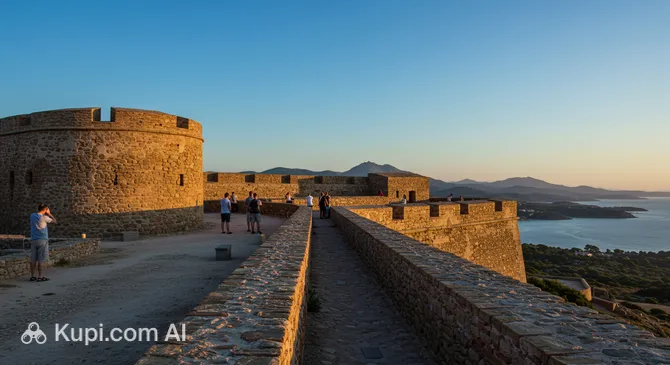
The heart of the old town and its main historical jewel is the Citadel of Porto-Vecchio. This Genoese fortress, built in the 16th century, once served as a reliable defense against pirate raids. Today, its powerful walls and narrow cobbled streets preserve a medieval atmosphere. Climbing to the top, you will be rewarded with stunning panoramic views of the picturesque bay and its surroundings. It is an ideal place for leisurely walks and getting to know the town's historical heritage.

Porto-Vecchio Citadel. Illustration.
Source: Kupi.com AI

Traveler photos:

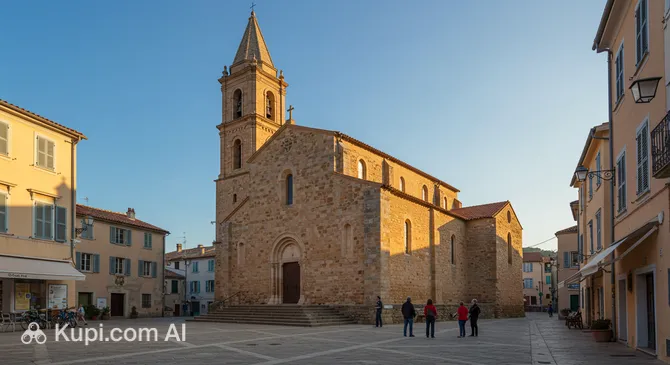
Not far from the citadel is another iconic landmark – the Church of St. John the Baptist (Église Saint-Jean-Baptiste). Built in the 19th century on the foundations of an older chapel, it is a beautiful example of religious architecture. Its granite facade and bell tower dominate the square, serving as an important landmark and spiritual center for local residents. Inside, one can see a modest but dignified interior.

Church of Saint John the Baptist. Illustration.
Source: Kupi.com AI

Traveler photos:

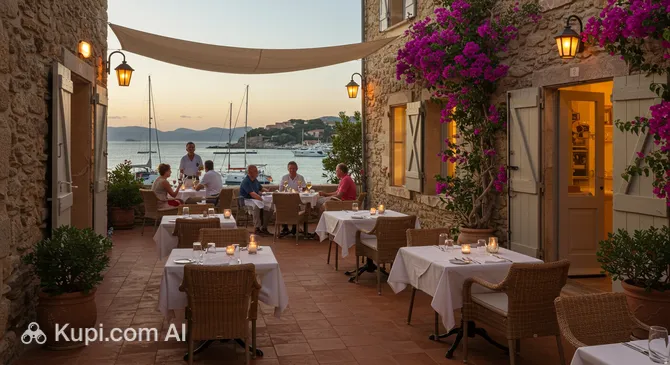
After an eventful walk through historical sites, it is worth stopping by one of the cozy establishments to get acquainted with the local cuisine. For example, the Casa Corsa restaurant offers guests traditional Corsican dishes. This is a wonderful opportunity not only to eat well but also to feel the island's hospitality while enjoying an authentic atmosphere. Such places allow for a deeper immersion into the region's culture.

Casa Corsa. Illustration.
Source: Kupi.com AI

Traveler photos:

Local Cuisine

The gastronomy of Porto-Vecchio is a true immersion into the heart of Corsican cuisine, where every dish preserves centuries-old traditions and the island's aromas. While here, you must try fiadone – a delicate lemon cheesecake made from sheep's milk cheese, which is a signature local dessert. Equally worthy of attention are hearty dishes such as the famous wild boar sausages, prepared according to ancient recipes, and the fragrant brocciu cheese, which Corsicans lovingly add to many dishes, from salads to pies.

Thanks to its coastal location, Porto-Vecchio is famous for an abundance of the freshest seafood. On the menus of local restaurants and taverns, you will find oysters, mussels, lobster, and a variety of fish, just delivered from fishing boats. Particularly popular are the rich seafood soup and appetizing pasta with cuttlefish ink – dishes that convey the true taste of the Mediterranean.

Casa Corsa. Illustration.
Source: Kupi.com AI

Traveler photos:

To get to know the local flavors more deeply, stop by the colorful farmers' markets of Porto-Vecchio. Here you can buy freshly baked bread, fragrant cheeses, mountain honey, and, of course, excellent olive oil. Don't miss the chance to try traditional sweets like canistrelli – crumbly biscuits with anise or lemon. Many restaurants, such as Casa Corsa, offer authentic dishes prepared from these local products.

Local drinks perfectly complement a meal. Corsican wines, known for their rich taste and aroma, deserve special attention. They can be tasted both in restaurants and in cozy bars, for example, by stopping into Shirley's Bar. Among non-alcoholic options, fresh juices from local fruits are popular, as is fragrant coffee, which is a pleasant way to finish lunch. Locals and tourists enjoy food in a variety of establishments: from small family cafes and coastal taverns to gastronomic restaurants and lively markets where you can snack on fresh produce.

The gastronomic scene of Porto-Vecchio is bright and diverse, offering travelers unforgettable culinary experiences. Throughout the year, various food festivals are also held here, where you can not only try chestnut delicacies and other local specialties but also immerse yourself in the atmosphere of true Corsican hospitality.

Travel Tips

Welcome to Porto-Vecchio! To make your journey through this charming Corsican town as comfortable and pleasant as possible, we have prepared some practical tips. They will help you better find your way and enjoy every moment of your holiday.

  1. What to pack: clothing and useful small items

    The climate in Porto-Vecchio is Mediterranean. In summer (June-August), pack light, breathable clothing, swimwear, sunscreen, a hat, and sunglasses. In spring and autumn, clothes that can be layered and a light jacket for evenings will be useful. In winter, you will need warmer clothing and a raincoat. Be sure to bring comfortable shoes for walking through the old town and the picturesque surroundings. Don't forget an adapter for Type E sockets (standard for France). Modest clothing covering shoulders and knees may be required when visiting churches, although this rule is less strictly followed in resort towns.

  2. Getting around the town and its surroundings

    The center of Porto-Vecchio is quite compact and is best explored on foot. Public transport within the town itself is limited, though buses may connect it with some beaches and neighboring settlements. Taxis are available but can be expensive. For a full exploration of Corsica's magnificent beaches and mountains, it is highly recommended to rent a car. Book it in advance, especially during peak season. Keep in mind that roads in Corsica can be narrow and winding.

  3. Financial matters: currency, cards, and tipping

    The official currency is the Euro (EUR). You can exchange money at banks or exchange offices, but it is usually more advantageous to withdraw cash from ATMs. Credit and debit cards (Visa, MasterCard) are widely accepted in shops, restaurants, and hotels. American Express may not be accepted everywhere. Inform your bank about your trip to avoid card blocks. ATMs (DAB) are easy to find in town. An approximate daily budget per person (excluding accommodation) can range from 70 to 150 euros and upwards, depending on your preferences. In restaurants, a service charge (\"service compris\") is usually included in the bill, but it is customary to leave a small tip (5-10% of the bill) or round up the amount for good service.

  4. Health and safety

    Pharmacies (\"Pharmacie\") are easily recognized by a green cross. Check the schedule of duty pharmacies (\"pharmacie de garde\") for after-hours needs. In case of a medical emergency, call 112. EU citizens are recommended to carry a European Health Insurance Card (EHIC). We advise all tourists to take out travel insurance. Porto-Vecchio is generally a safe town. Observe standard precautions: watch your belongings in crowded places and on beaches, and do not leave valuables unattended. Always use sunscreen and drink plenty of water, especially during the hot summer months.

  5. Language and connectivity

    The official language is French. Some locals also speak the Corsican language (Corsu). In tourist areas (hotels, restaurants), staff often speak English, but knowing a few basic phrases in French (e.g., \"Bonjour\" – Hello, \"Merci\" – Thank you, \"S'il vous plaît\" – Please) will be very helpful and appreciated by locals. A local operator's SIM card can be purchased at mobile shops or supermarkets. Wi-Fi is available in most hotels, cafes, and restaurants.

  6. Local etiquette and communication

    It is customary to say hello: \"Bonjour\" (Good day) during the day and \"Bonsoir\" (Good evening) in the evening. When meeting, people usually shake hands. Among acquaintances, \"la bise\" (kisses on the cheek) is common. Corsicans are proud of their culture and island, so a respectful attitude and interest in local traditions will be valued. Try not to make noise in public places, especially in residential areas and during the lunch break when some small shops may be closed.

  7. What to avoid

    Try not to be excessively loud, especially in public places or near residential buildings. Don't assume that everyone around speaks English fluently; an attempt to speak French is always appreciated. Categorically avoid leaving trash on beaches and in natural areas – Corsica's nature is unique and requires careful treatment.

  8. Bonus tip: explore the surroundings!

    Porto-Vecchio is an excellent starting point for exploring southern Corsica. Don't miss the chance to visit world-famous beaches such as Palombaggia and Santa Giulia, as well as picturesque mountain ranges like the Aiguilles de Bavella. Plan day trips and book accommodation and car rentals in advance, especially if traveling in peak season (July-August), as demand is very high.

We hope these tips help you plan an unforgettable trip to Porto-Vecchio. Enjoy the beauty of Corsica, its hospitality, and its unique atmosphere!

Entertainment & Nightlife

Porto-Vecchio, a charming town in Corsica, offers its guests not only magnificent beaches and historical landmarks but also a lively evening and nightlife, especially during the summer season. As the sun sets, the town transforms, opening up many opportunities for those seeking entertainment after a busy day.

The main center of nightlife in Porto-Vecchio is the marina (port) area and the old town. Numerous bars, restaurants with terraces, and several clubs are concentrated along the waterfront and in the narrow streets of the historic center. The atmosphere here is usually relaxed and stylish, attracting both tourists and locals. Many venues offer live music or DJ sets, especially on weekends. The dress code in most places is casual, but some of the more fashionable clubs may require a dressier look.

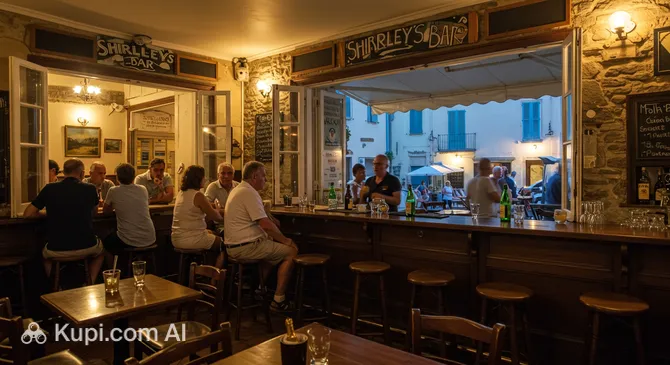
Shirley's Bar. Illustration.
Source: Kupi.com AI

Traveler photos:

Among the popular places to spend an evening, Shirley's Bar stands out, known for its cozy atmosphere and a good selection of drinks. For a dinner that transitions into a pleasant evening, consider the Casa Corsa restaurant, which offers local cuisine in a stylish setting. Nightlife usually comes alive after 10:00 PM - 11:00 PM, and clubs stay open until the early morning, especially in July and August. Prices in bars and clubs can vary but generally correspond to a popular tourist destination.

Practical Tips:

When to visit: The peak season is summer, when all venues are open and parties are held. During the rest of the year, the nightlife is more tranquil.

Transport: In the town center, you can move around on foot. For trips to the outskirts or back to your hotel at night, it is better to take a taxi. It is recommended to find out local taxi service numbers in advance or use ride-hailing apps.

Safety: Porto-Vecchio is considered quite a safe town. However, as with everywhere, you should take standard precautions: keep an eye on your personal belongings, especially in crowded places, and avoid poorly lit, deserted streets late at night.

While the focus here is on nightlife, Porto-Vecchio also offers interesting leisure options during the day. You can explore the historic Citadel of Porto-Vecchio, which offers beautiful views, or visit the Church of St. John the Baptist. There are no large theme parks in the town, but its natural beauty and historical heritage more than compensate for this, offering a rich program for daytime exploration before your evening adventures.

Parks & Museums

Porto-Vecchio charms its guests not so much with an abundance of traditional city parks or large museum complexes, but with magnificent natural landscapes and a rich historical heritage that together create a unique atmosphere for exploration and relaxation.

Regarding green spaces, it's worth noting that Porto-Vecchio is famous primarily for its incredible beaches and coastal areas, which serve as natural recreation zones. Although there may not be extensive classical parks within the town itself, its surroundings offer incomparable opportunities for enjoying nature. Beaches such as Palombaggia and Santa Giulia, with their crystal-clear water and pine groves, are true natural gems, ideal for swimming, sunbathing, and simply relaxing in the fresh air.

The cultural and historical heritage of Porto-Vecchio is vividly represented by its ancient structures. Be sure to visit the Citadel of Porto-Vecchio – the town's historical heart. A walk along its ancient walls and narrow streets will allow you to immerse yourself in the past and enjoy panoramic views of the bay. This place breathes history and preserves the memory of the Genoese period.

Another iconic architectural and spiritual site is the Church of St. John the Baptist. Located in the old town, it draws attention with its austere yet elegant facade and is an important place for locals and an interesting site for tourists interested in religious architecture and the history of Corsica.

To get an authentic experience of Porto-Vecchio, don't limit yourself to just the well-known landmarks. Stroll through the lively marina, where you can admire the yachts and enjoy the atmosphere of a seaside town, or stop by the local market to try fresh Corsican products and delicacies. It is these moments that allow you to deeply feel the spirit of this charming place.

Getting Around

Getting around Porto-Vecchio and its surroundings can be done in several ways, the choice of which depends on your plans and distances. The historic town center itself is quite compact and lends itself to walking; however, transport will be needed to visit the beaches or more distant areas.

The main form of public transport in Porto-Vecchio is buses. Routes typically exist connecting the town center with popular beaches such as Palombaggia and Santa Giulia, as well as with the port. Schedules and routes can change depending on the season, becoming more frequent in the summer months. It is best to check information about routes and schedules locally – at the tourist office or at bus stops. During the tourist season, a small tourist train (petit train) may also run, offering sightseeing tours of the town and its immediate surroundings – this is more of an attraction than a full-fledged mode of transport, but it can be convenient for a first introduction to Porto-Vecchio.

The fare payment system on buses is generally simple. Tickets can most often be purchased directly from the driver upon boarding. The cost of travel is usually low. Sometimes multi-trip or day passes may be available, which can be advantageous if you plan to use buses frequently. It is recommended to have small change for payment.

Regarding practical tips, tickets bought from the driver usually do not require additional validation. Buses run according to a schedule that should be checked in advance, especially if you plan trips in the early morning or late evening, as well as on weekends when the number of services may be reduced. During the peak season, buses on popular routes can be overcrowded.

Among alternative ways of moving around, taxis are popular. They can be found at designated stands or called by phone. Taxis are convenient for trips to the airport, the station, or places where public transport doesn't go, as well as at night. However, this is a more expensive option compared to the bus.

For more freedom of movement, especially if you plan to explore not only Porto-Vecchio but also other parts of Corsica, renting a car is an excellent option. There are several rental offices in the town and at the nearby airport. You can also rent a scooter or a bicycle – this is a wonderful way for leisurely trips around the outskirts and to the nearest beaches. Bike rental is particularly convenient for short distances and allows you to enjoy the scenery.

Don't forget about walking, especially within the old town of Porto-Vecchio with its narrow streets and picturesque views. Many attractions, shops, and restaurants are within walking distance of each other. When planning your movements, consider the season, time of day, and distances to choose the most comfortable and suitable mode of transport for you.

Accommodation

Porto-Vecchio offers a wide choice of accommodation options capable of meeting the needs of many different travelers, from those seeking budget options to lovers of luxury. Here you will find charming boutique hotels, comfortable mid-range hotels, fashionable full-service resorts, as well as many private apartments and villas for rent. The latter are particularly popular with families with children and large groups who prefer a secluded holiday with home comforts.

When choosing a place to stay in Porto-Vecchio, it is worth looking at areas located near the historic center and the picturesque marina. This will put you within walking distance of main attractions, such as the famous Citadel of Porto-Vecchio and the Church of St. John the Baptist, as well as numerous cafes, restaurants, and shops. For those dreaming of a beach holiday, accommodation options near the famous beaches of Palombaggia or Santa Giulia are suitable, although they may be somewhat removed from the town's bustle.

Although no specific hotels are listed in the provided attractions, Porto-Vecchio is famous for its variety of high-quality lodging. You can find small, cozy family-run hotels as well as larger hotel complexes with swimming pools, restaurants, and other amenities.

It is highly recommended to book your accommodation in Porto-Vecchio well in advance, especially if your trip is planned for the peak tourist season in July and August. During this time, demand for accommodation increases significantly, and the best options can be quickly snapped up. The price range varies from relatively budget offers to luxury apartments and villas. The most common booking methods are popular international online platforms, as well as direct booking through the official websites of hotels or real estate agencies.

Nearby Cities

For those who want to explore the surroundings, Porto-Vecchio serves as an excellent starting point for trips to several interesting nearby locations. Some are ideal for day trips, while others, located further away and requiring a ferry crossing, are better considered as options for a short visit, perhaps with an overnight stay.

From Porto-Vecchio, it is easy to reach Ajaccio, the administrative center of Corsica and the birthplace of Napoleon Bonaparte. This city, located just 58 km away, attracts visitors with its rich history, charming old town with narrow streets, and picturesque waterfront. Here you can visit the Maison Bonaparte museum, walk through Place Foch, and enjoy views of the Gulf of Ajaccio. Ajaccio offers a unique blend of Corsican culture and French charm, making it a wonderful option for a fulfilling day trip.

If you have more time and are ready for a longer journey, including a ferry crossing to the mainland, you might consider a trip to famous French Riviera cities such as Nice (about 288 km) or Cannes (286 km). Nice is famous for its iconic Promenade des Anglais, pebble beaches, numerous museums including the Matisse Museum and Marc Chagall National Museum, and its lively old town (Vieux Nice). Cannes is world-renowned for its film festival, luxury boutiques, and sandy beaches on the Boulevard de la Croisette. Given the significant travel time involved, including the ferry, such trips are better planned as short visits, perhaps with an overnight stay, rather than a quick day excursion from Porto-Vecchio.

CityPopulationDistance
Figari1 43817 km
Solenzara1 30028 km
Propriano4 00033 km
La Maddalena11 23343 km
Ajaccio71 36158 km

These nearby destinations provide insight into the diverse culture and landscapes of the region, both on Corsica itself and along the famous French Riviera.

Shopping & Souvenirs

Porto-Vecchio offers a pleasant and authentic shopping experience, especially for those seeking local Corsican goods and souvenirs. The town is not famous for massive shopping malls but charms visitors with its small boutiques, craft shops, and stores where unique products and delicacies can be found.

The main shopping areas are concentrated in the historic city center, particularly in the streets adjacent to the Citadel of Porto-Vecchio and around the lively Place de la République. It is also worth strolling along the waterfront in the port area, where you can find shops selling beachwear, clothing, and souvenirs. Here you will find many small shops offering clothes, jewelry, Corsican knives, ceramics, and local food products.

There are no large, modern shopping centers in the traditional sense in Porto-Vecchio. Shopping here is more intimate, focused on boutiques and specialty stores. However, on the outskirts of town, you can find several supermarkets that sell some industrial goods in addition to groceries.

Be sure to visit the local market, which usually operates in the mornings a few times a week (most often on Sundays, but it's best to check the schedule locally). Here you can buy fresh local products: fruits, vegetables, cheeses (especially the famous Corsican sheep cheese), charcuterie, honey, olive oil, and wine. You can also find products from local artisans at the market.

From Porto-Vecchio, it's worth bringing home traditional Corsican souvenirs: local delicacies (chestnut flour and products made from it, jams, honey, myrtle liqueur), handicrafts (ceramics, wooden items, Corsican knives), aromatic herbs, and essential oils. Jewelry made with local coral is also popular, though be sure of its authenticity.

Shops in Porto-Vecchio are usually open from the morning (around 9:00-10:00 AM) until evening (7:00-8:00 PM) with a long lunch break typical of southern France (roughly from 12:30 PM to 3:00 PM or even 4:00 PM), especially outside the peak tourist season. On Sunday, many shops may be closed, except for souvenir stalls and some grocery stores in tourist zones. Both cash and bank cards (Visa, Mastercard) are accepted. In small shops and at the market, it is preferable to have cash on hand.

Tourists from non-EU countries can take advantage of the Tax Free system when making purchases over a certain amount in a single store (usually over 100 euros, though the amount may change). To do this, you must ask the seller for a special Tax Free check and present it along with your purchases at customs when leaving the European Union.

Reached the end of the page?

That means the route is fully explored